 Site Type
 Featured
 Fonts
Fonts Skins
Skins
“It is finished”
[powerpress]
an excerpt from today’s reflection by Don Schwager: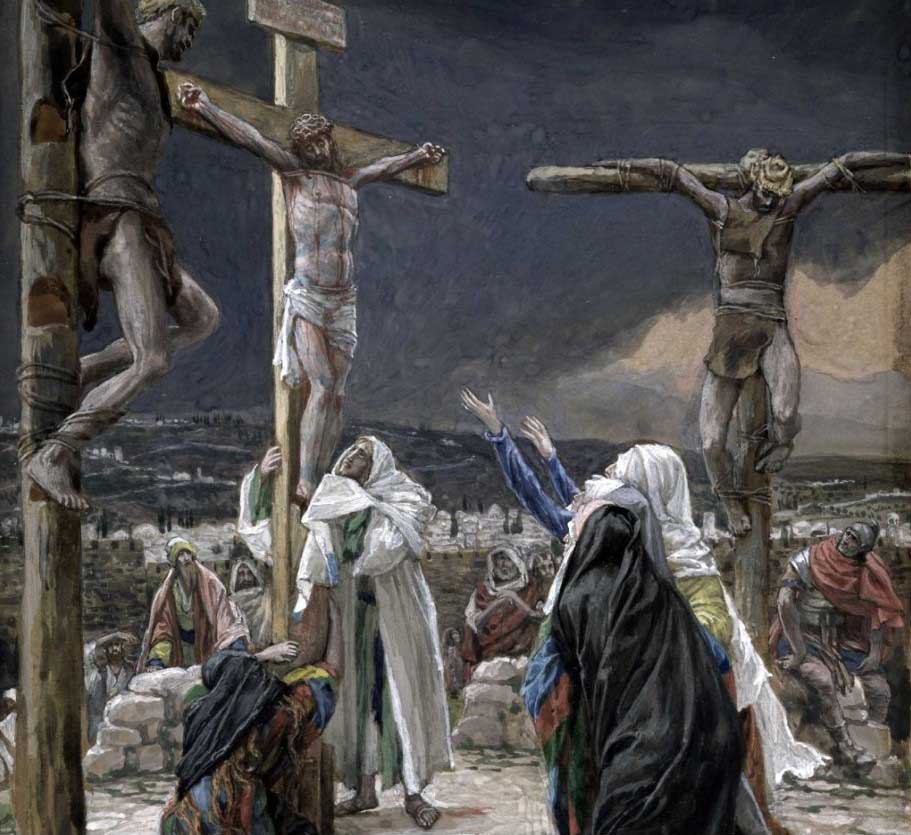
We can find no greater proof of God’s love for us than the willing sacrifice of his Son on the cross. Jesus’ parting words, “It is finished!” express triumph rather than defeat. Jesus bowed his head and gave up his spirit knowing that the strife was now over and the battle was won. Even on the cross Jesus knew the joy of victory. What the Father sent him into the world to do has now been accomplished. Christ offered himself without blemish to God and he put away sin by the sacrifice of himself (see Hebrews 9:24-26). Augustine of Hippo (430-543 A.D) comments on those who stood at the cross of Jesus:
“As they were looking on, so we too gaze on his wounds as he hangs. We see his blood as he dies. We see the price offered by the redeemer, touch the scars of his resurrection. He bows his head, as if to kiss you. His heart is made bare open, as it were, in love to you. His arms are extended that he may embrace you. His whole body is displayed for your redemption. Ponder how great these things are. Let all this be rightly weighed in your mind: as he was once fixed to the cross in every part of his body for you, so he may now be fixed in every part of your soul.” (GMI 248)
In the cross of Christ we see the triumph of Jesus over his enemies – sin, Satan, and death. Christian writers down through the centuries have sung the praises of the Cross of Christ. Paul the Apostle exclaimed, “But far be it from me to glory except in the cross of our Lord Jesus Christ” (Galatians 6:14). Hear what Gregory Nazianzen (329-389 AD), an early church father and bishop of Constantinople, wrote about the triumph of Christ’s exaltation on the cross :
“Many indeed are the wondrous happenings of that time: God hanging from a cross, the sun made dark and again flaming out; for it was fitting that creation should mourn with its creator. The temple veil rent, blood and water flowing from his side: the one as from a man, the other as from what was above man; the earth shaken, the rocks shattered because of the rock; the dead risen to bear witness to the final and universal resurrection of the dead. The happenings at the sepulcher and after the sepulcher, who can fittingly recount them? Yet no one of them can be compared to the miracle of my salvation. A few drops of blood renew the whole world, and do for all men what the rennet does for the milk: joining us and binding us together. (On the Holy Pasch, Oration 45.1)
Rupert of Deutz (1075-1129), a Benedictine theologian and abbot, wrote:
“The cross of Christ is the door to heaven, the key to paradise, the downfall of the devil, the uplifting of mankind, the consolation of our imprisonment, the prize for our freedom.”
The Cross of Christ is the safeguard of our faith, the assurance of our hope, and the throne of love. It is also the sign of God’s mercy and the proof of forgiveness. By his cross Jesus Christ has pardoned us and set us free from the tyranny of sin. He paid the price for us when he made atonement for our sins. The way to peace, joy, and righteousness in the kingdom of God and the way to victory over sin and corruption, fear and defeat, despair and death is through the cross of Jesus Christ. Do you follow the Lord Jesus in his way of the cross with joy, hope, and confidence? “Lord Jesus Christ, by your death on the cross you have won pardon for us and freedom from the tyranny of sin and death. May I live in the joy and freedom of your victory over sin and death.” for the full reflection visit : Daily Reading and Meditation
Tags: catholic, catholic podcast, catholic prayer
This entry was posted on Friday, April 18th, 2014 at 6:21 am
You can follow any responses to this entry through the RSS 2.0 feed.
Episode 24 – The Holy Rule of St. Benedict: A Spiritual Path for Today’s World with Fr. Mauritius Wilde O.S.B., PhD.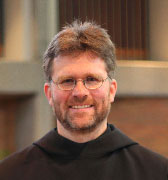
The Monk, the Missionary Spirit and Evangelization
[powerpress]
From the Holy Rule of St. Benedict:
PROLOGUE
Listen, O my son, to the precepts of thy master, and incline the ear of thy heart, and cheerfully receive and faithfully execute the admonitions of thy loving Father, that by the toil of obedience thou mayest return to Him from whom by the sloth of disobedience thou hast gone away.
To thee, therefore, my speech is now directed, who, giving up thine own will, takest up the strong and most excellent arms of obedience, to do battle for Christ the Lord, the true King.
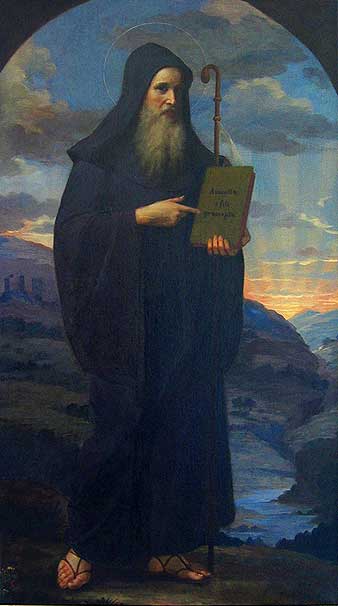
 For more information about the ministry of the the Missionary Benedictines of Christ the King Priory in Schuyler, Nebraska visit here:
Tags: evangelization, Holy Rule of St. Benedict
This entry was posted on Thursday, April 17th, 2014 at 4:53 pm
You can follow any responses to this entry through the RSS 2.0 feed.
USCCA39  Chapter 30 - Marital Fidelity pt 2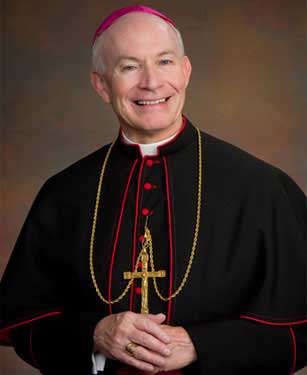
[powerpress]
Archbishop Lucas offers insights on the US Catholic Catechism for Adults Chapter 30:
THREATS TO MARRIAGE The Catechism lists the following behaviors as acts that undermine the purpose and dignity of marriage.
- Adultery is gravely sinful because it violates God’s call to a loving covenant of fidelity between a married man and woman. The act of adultery is an injustice to the wounded spouse. It weakens the institution of marriage and the stability of the family.
- Divorce is contrary to the natural law for it breaks the promise “to which the spouses freely consented to live with each other till death†(CCC, no. 2384). Jesus clearly taught that God’s original plan for marriage excluded divorce (cf. Mt 5:31-32, 9:3-9; Mk 10:9; Lk 16:18; 1 Cor 7:10-11). Marriage is an indissoluble union. Jesus removed the accommodations for divorce that had been tolerated under the Old Law.
- The couple may be allowed a separation in certain cases, such as when adultery is occurring or some type of abuse is present. A separation can be, at times, a prudent action to take. “If civil divorce remains the only possible way of ensuring certain legal rights, the care of the children, or the protection of inheritance, it can be tolerated and does not constitute a moral offense†(CCC, no. 2383). In such cases, a Catholic can still receive the Sacraments.
- Cohabitation (an unmarried couple living together) involves the serious sin of fornication. It does not conform to God’s plan for marriage and is always wrong and objectively sinful. Cohabitation does not guarantee successful married life, as has been revealed in the painful experience of many, and is detrimental to future commitment.
- Polygamy (having more than one spouse at a time) violates the understanding of the equal dignity that a man and woman bring to marriage and contradicts the unitive purpose of marriage.
- Attempts to justify same-sex unions or relationships or to give them matrimonial status also contradict God’s plan—as revealed from the beginning both in nature and in Revelation—for marriage to be a lifelong union of a man and a woman.
United States Conference of Catholic Bishops (USCCB) (2012-04-02). United States Catholic Catechism for Adults (Kindle Locations 5936-5951). United States Conference of Catholic Bishops (USCCB). Kindle Edition.
The Most Reverend George J. Lucas leads the Archdiocese of Omaha.Â
For other episodes in the visit our Archbishop George Lucas page
This programs is based on:
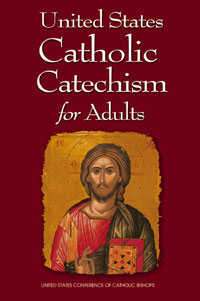
More information can be found here.
We wish to thank the USCCB for the permissions granted for use of  relevant material used in this series.
[ezcc]
Tags: Catholic Catechism, George Lucas, United States Catholic Catechism
This entry was posted on Thursday, April 17th, 2014 at 4:17 pm
You can follow any responses to this entry through the RSS 2.0 feed.
FG#14 – The Way of Trust and Love Ep 3Â – Fountains of Grace: reflections on contemporary spiritual classics with Donna Garrett Join host Donna Garrett, with Fr. James Perez, LC, as they discuss the spiritual classic “The Way of Trust and Love: A Retreat Guided By St. Therese of Lisieux” by Fr. Jacques Philippe. [powerpress] Discussed in this episode, among other topics, from “The Way of Trust and Love”
We began to look more deeply into humility in the previous chapter. I think a good definition of humility may be this: being in the right relation to ourselves, which enables us to be in the right relation to God and to other people; relating to ourselves according to the truth of what and how we are. One of its essential aspects , as we have seen, is peacefully accepting our weakness and inner poverty.
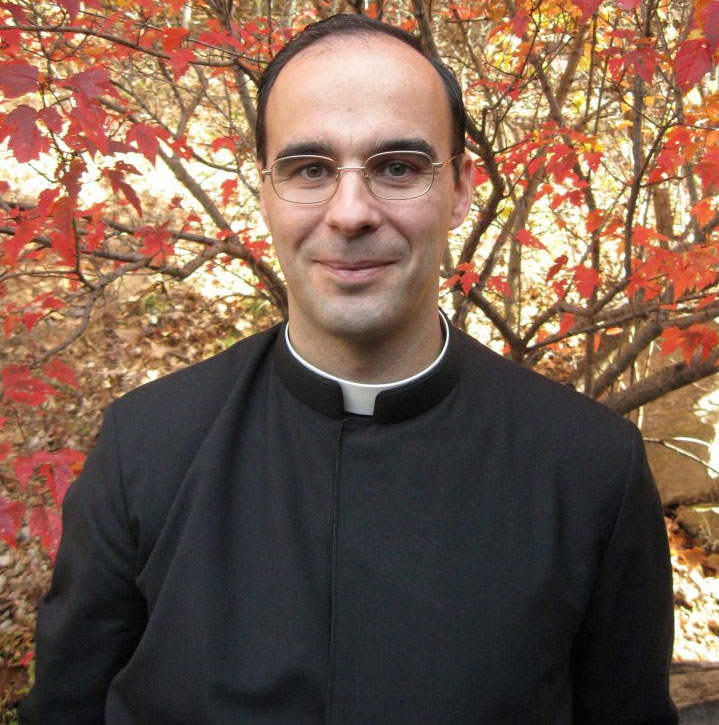
Fr. James Perez, LC, joins Donna for this series
If we accept ourselves as we are, we also accept God’s love for us. But if we reject ourselves, if we despise ourselves, we shut ourselves off from the love God has for us, we deny that love. If we accept ourselves in our weakness, our limitations, it will also be easier for us to accept other people. Often, quite simply, we can’t get along with other people because we can’t get along with ourselves . We have all experienced this at some point. Sometimes we are unhappy with ourselves because we’ve made mistakes or fallen into a fault that humiliates us, so we are really annoyed with ourselves. That makes us bad-tempered and even aggressive with others. What does this mean? Just that we make others pay for our difficulty in accepting our own inner poverty. Not accepting our limitations, we take it out on other people … This reaction is very common, and obviously unfair and contrary to the truth. Most of our conflicts others are nothing more than a projection of the conflicts we are having with ourselves. The opposite is also true. The more we accept ourselves as we are and are reconciled to our own weakness, the more we can accept other people and love them as they are.
For other episodes in the this series click here “Fountains of Grace w/Donna Garrett“
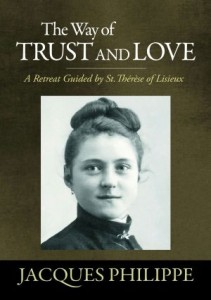 You can find “The Way of Trust and Love” here
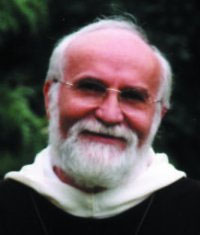
Fr. Jacques Philippe
Tags: catholic, catholic podcast, catholic prayer
This entry was posted on Thursday, April 17th, 2014 at 3:57 pm
You can follow any responses to this entry through the RSS 2.0 feed.
“How much more will your Father who is in heaven give good things to those who ask him!”
[powerpress]
an excerpt from today’s reflection by Don Schwager: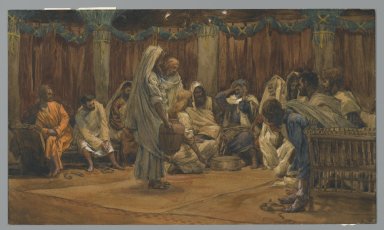
Does your love waver when you encounter bitter disappointments and injury from others? As Jesus’ hour of humiliation draws near he reveals to his disciples the supreme humility which shaped the love he had for them. He stoops to perform a menial task reserved for servants – the washing of smelly, dirty feet. In stooping to serve his disciples Jesus knew he would be betrayed by one of them and that the rest would abandon him through disloyalty. Such knowledge could have easily led to bitterness or hatred. Jesus met the injury of betrayal and disloyalty with the greatest humility and supreme love.
Jesus loved his disciples to the very end, even when they failed him and forsook him. The Lord loves each of us unconditionally. His love has power to set us free to serve others with Christ-like compassion and humility. Does the love of Christ rule in your heart, thoughts, intentions and actions?
Saint Augustine of Hippo in his sermon for this day, wrote:
“He had the power of laying down his life; we by contrast cannot choose the length of our lives, and we die even if it is against our will. He, by dying, destroyed death in himself; we are freed from death only in his death. His body did not see corruption; our body will see corruption and only then be clothed through him in incorruption at the end of the world. He needed no help from us in saving us; without him we can do nothing. He gave himself to us as the vine to the branches; apart from him we cannot have life.Finally, even if brothers die for brothers, yet no martyr by shedding his blood brings forgiveness for the sins of his brothers, as Christ brought forgiveness to us. In this he gave us, not an example to imitate but a reason for rejoicing. Inasmuch, then, as they shed their blood for their brothers, the martyrs provided “the same kind of meal” as they had received at the Lord’s table. Let us then love one another as Christ also loved us and gave himself up for us.”
“Lord Jesus, your love conquers all and never fails. Help me to love others freely, with heart-felt compassion , kindness and goodness. Where there is injury, may I sow peace rather than strife.”
for the full reflection visit : Daily Reading and Meditation
Tags: catholic, catholic podcast, catholic prayer
This entry was posted on Thursday, April 17th, 2014 at 11:14 am
You can follow any responses to this entry through the RSS 2.0 feed.
SP#7Â The School of Prayer: Foundations for the New Evangelization
 [powerpress]
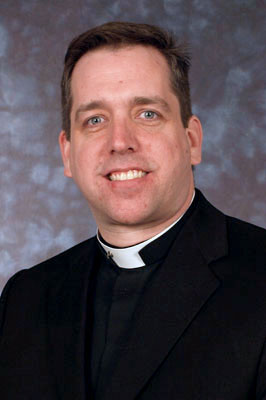
Fr. Scott Traynor talks about the importance of “spiritual friendship or companionship”.  He discusses “heart-sharing” between spouses, but also in friendship with others.  He give us models on how this can look.  Fr. Scott also helps us to understand the difference between ordinary relationships and the unique gift of the “spiritual friendship”.  What is a healthy sharing relationship and what are the signs of unhealthy ones which we may want to avoid.
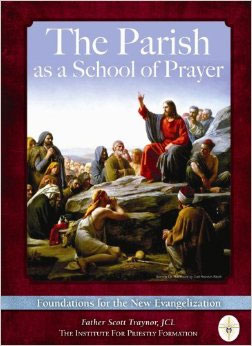
In Father Scott Traynor’s book, Blessed John Paul II’s memorable call to make of the parish a school of prayer takes on flesh and becomes concretely attainable. Those you read these faith-filled pages will find renewed desire to create such parishes and a clear road-map toward this goal.
–Father Timothy Gallagher, OMV
Father Scott Traynor received his STB from the Pontifical Gregorian University and his JCL from Catholic University of America. He has been an instructor and spiritual director for many of the programs at the Institute for Priestly Formation.
Father Traynor is a retreat master and spiritual director who has travelled the country as a speaker at various conferences, diocesan gatherings and national conferences.. He is especially sought after to present on the topics of prayer, discernment and priestly identity and mission.
He serves the Rector of the St. John Vianney Theological Seminary in Denver Colorado.

Tags: catholic, catholic podcast, catholic prayer
This entry was posted on Wednesday, April 16th, 2014 at 4:36 pm
You can follow any responses to this entry through the RSS 2.0 feed.
Episode 9Â -The Way of Mystery: The Eucharist and Moral Living 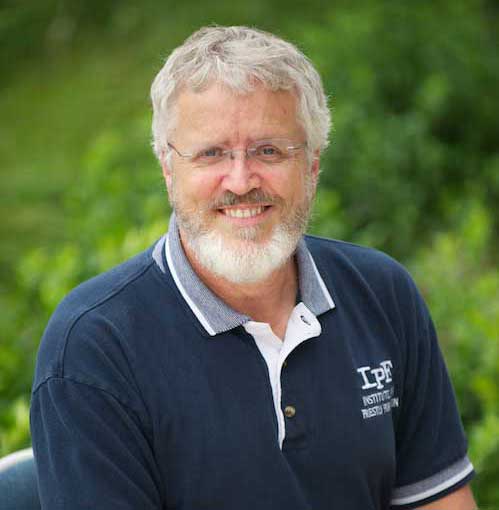
The Liturgy of the Eucharist part 1 : The offertory and the priesthood…what is the role of the priest in the sacrifice of the Mass and what are some of the challenges faced by the priest today.
[powerpress]
For more episodes in “The Way of Mystery” Series click here
Deacon James Keating, PhD, the director of Theological Formation for the Institute for Priestly Formation, located at Creighton University, in Omaha, is making available to â€Discerning Hearts†and all who listen, his series of programs entitled “The Way of Mysteryâ€.
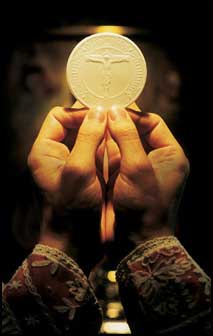 The Vatican II documents remind us that the spiritual journey is not made in a vacuum, that God has chosen to save us, not individually, but as The People of God. The Eucharist must help Christians to make their choices by discerning out of Christ’s paschal mystery. For this process to take place, however, Christians must first understand how the Eucharist puts them in touch with Christ’s passion, death, and resurrection, and what concrete implications being in touch with this mystery has for their daily lives.

For more information on the “Institute of Priestly Formation†and for other material available by Deacon Keating, just click here
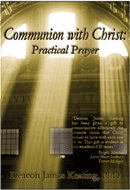
Don’t forget to pickup a copy of “Communion with Christ†, it is one of the best audio sets on prayer…ever!
Check out Deacon Keating’s “Discerning Heart†page
Tags: Deacon Keating, james keating, Liturgy of the Eucharist, theological formation
This entry was posted on Wednesday, April 16th, 2014 at 4:17 pm
You can follow any responses to this entry through the RSS 2.0 feed.
In”The Seven Big Myths about Marriage: What Science, Faith and Philosophy Teach Us about Love and Happiness”, Dr. Christopher Kaczor,  along with his wife Jennifer, shines an important light of truth on one of the most important issues of our day.  Beginning with basic foundational principals and understandings, Dr. Kaczor rationally examines key issues in the marriage debate and carefully, and quite thoroughly, debunks the leading “myths” about marriage.  An excellent resource and HIGHLY recommended for all who care about and engage in the discussions on marriage.
[powerpress]
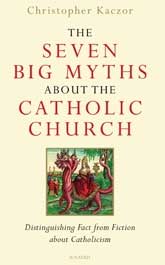
You can find the book here
If I were a pastor, I would make this book required reading for engaged couples in all my marriage classes. —Peter Kreeft, Ph.D., Author, Jacob s Ladder: Ten Steps to Truth
The media portrayals of the public debates over marriage and its meaning often generate more heat than light. In this carefully crafted and accessible book, Professor Kaczor provides just the sort of illumination that is absent from those portrayals. I cannot think of a better book that offers such a clear and winsome account of marriage and its meaning, and what that tells us about human dignity and happiness. —Francis J. Beckwith, Professor of Philosophy, Baylor University
‘Don’t miss:
IP#182 Dr. Christopher Kaczor – The Seven Big Myths About the Catholic Church on Inside the Pages
and
“Life Issues” ….In Conversation with Dr. Christopher Kaczor
Tags: catholic, catholic podcast, catholic prayer
This entry was posted on Wednesday, April 16th, 2014 at 1:47 pm
You can follow any responses to this entry through the RSS 2.0 feed.

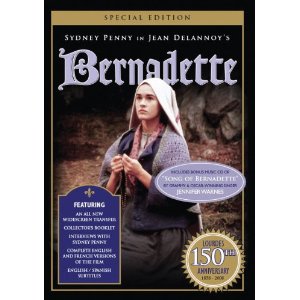
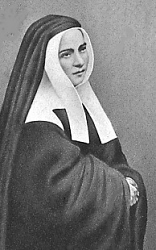 The best movie on the life of St. Bernadette is actually a pair of films starring Sydney Penny and distributed by Ignatius Press: “Bernadette” and “The Passion of Bernadette”. Sydney does an extraordinary job capturing the feverent love, joy and enthusiasm that encapsulates the heart of St. Bernadette. They are a joy to watch…our little saint is no sad victim, but instead a tremendous witness to the virtuous life and the grace of God.
[powerpress]
Tags: catholic, catholic podcast, catholic prayer
This entry was posted on Wednesday, April 16th, 2014 at 12:46 am
You can follow any responses to this entry through the RSS 2.0 feed.
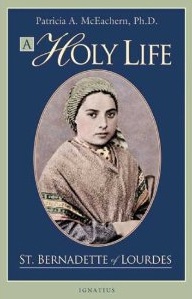
 One of the finest translations of St. Bernadette’s writings (her diary, etc) has been done by Patricia McEachern. The book is called “A Holy Life: The Writings of St. Bernadette of Lourdes”. It’s just beautiful. It reveals so much about this holy soul, St. Bernadette! Her “little way” was much like another holy soul, St. Therese…who knew these daughters of France would have so much in common. But then again, should we really be surprised?
[powerpress]
 You can find the book here
Tags: Patricia McEachern, st. bernadette, St. Bernadette of Lourdes
This entry was posted on Wednesday, April 16th, 2014 at 12:45 am
You can follow any responses to this entry through the RSS 2.0 feed.
The tragedy of the betrayal
[powerpress]
an excerpt from today’s reflection by Don Schwager: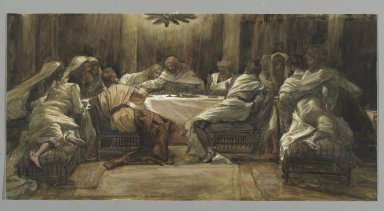
Why did Judas betray his Master? Was his treachery motivated by greed, bitter disappointment with Jesus, or hatred because of disillusionment? It may be that Judas never intended for his Master to die. Maybe he thought Jesus was proceeding too slowly and not acting aggressively enough in setting up his messianic kingdom. Perhaps Judas wanted to force Jesus’ hand by compelling him to act. Nonetheless, his tragedy was his refusal to accept Jesus as he was.
Origen, a 3rd century bible scholar and church father, comments on Judas’ betrayal: “Let us consider what Judas said to the Jewish priests: What will you give me if I hand him over to you? He was willing to take money in exchange for handing over the Word of God. They do the same thing who accept sensual or worldly goods in exchange for handing over and casting out from their souls the Savior and Word of truth who came to dwell with them. Indeed, it would be fitting to apply Judas’s example to all who show contempt for the Word of God and betray him, as it were, by committing sin for the sake of money or for any selfish motive. People who behave in this way appear openly to be calling out to the powers of the enemy who offer worldly gain in return for the sin of betraying God’s Word, saying, What will you give me if I hand him over to you? And they gave him thirty pieces of silver. The number of coins they gave Judas was equivalent to the number of years the Savior had sojourned in this world. For at the age of thirty, he was baptized and began to preach the gospel, like Joseph was thirty years old when he began to gather grain for his brothers (Genesis 41:46). Just as at that time the grain was prepared by God for the sons of Israel but given also to the Egyptians, so also the gospel was prepared for the saints but preached also to the unfaithful and wicked.†[Commentary on Matthew 78.]
Jesus knew beforehand what would befall him. As Jesus ate the passover meal with his twelve apostles he put them under trial and suspicion (one of you will betray me) to teach them to examine themselves rightly, lest they be highminded and think themselves more strong than they were. We, also must examine ourselves in the light of God’s truth and grace and ask him to strengthen us in faith, hope, and love that we may not fail him or forsake him when we are tempted. Do you pray with confidence in the words Jesus gave us to pray: Do not lead us into temptation, but deliver us from evil (Matthew 6:13)?
“God our Father, we are exceedingly frail and indisposed to every virtuous and gallant undertaking. Strengthen our weakness, we beseech you, that we may do valiantly in this spiritual war; help us against our own negligence and cowardice, and defend us from the treachery of our unfaithful hearts; for Jesus Christ’s sake.” (Prayer of Thomas a Kempis)
for the full reflection visit : Daily Reading and Meditation
Tags: catholic, catholic podcast, catholic prayer
This entry was posted on Wednesday, April 16th, 2014 at 12:09 am
You can follow any responses to this entry through the RSS 2.0 feed.
Episode 4 The Daily Prayer of Discernment: The Ignatian Wisdom of the Examen Prayer with Fr. Timothy Gallagher.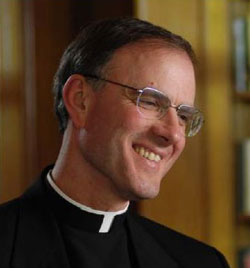
 The third step – REVIEW – this is point where the “Discernment of Spirits – the 14 Rules” and the Examen intersect.  With  God, we review the day. We look for the stirrings in our hearts and the thoughts that God has given us this day. We also look for those that have not been of God. IWe review our choices in response to both, and throughout the day in general.
[powerpress]
As outlined from the Spiritual Exercises of St. Ignatius of Loyola
(translated from the autograph by Fr. E. Mullan, S.J. Â 1909Â in the public domain)
METHOD FOR MAKING THE GENERAL EXAMEN
It contains in it five Points.First Point. The first Point is to give thanks to God our Lord for the benefits received.
Second Point. The second, to ask grace to know our sins and cast them out.
Third Point. The third, to ask account of our soul from the hour that we rose up to the present Examen, hour by hour, or period by period: and first as to thoughts, and then as to words, and then as to acts, in the same order as was mentioned in the Particular Examen.
Fourth Point. The fourth, to ask pardon of God our Lord for the faults.
Fifth Point. The fifth, to purpose amendment with His grace.OUR FATHER.
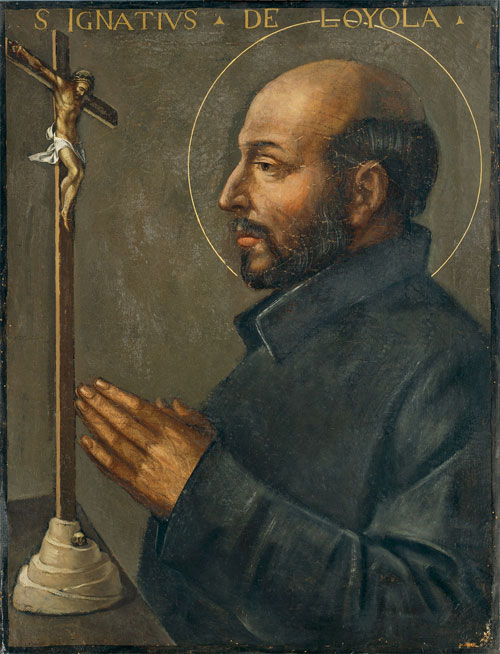
Father Timothy M. Gallagher, O.M.V., was ordained in 1979 as a member of the Oblates of the Virgin Mary, a religious community dedicated to retreats and spiritual formation according to the Spiritual Exercises of St. Ignatius. Â Fr. Gallagher is featured on the EWTN series “Living the Discerning Life: Â The Spiritual Teachings of St. Ignatius of Loyola”. Â For more information on books and audio available for purchase from Fr. Timothy Gallagher check out his website: www.frtimothygallagher.org
For the other episodes in this series check out
Fr. Timothy Gallagher’s “Discerning Hearts†page
Tags: discernment of spirits, Timothy Gallagher
This entry was posted on Monday, April 14th, 2014 at 4:43 pm
You can follow any responses to this entry through the RSS 2.0 feed.
Episode 39- Regnum Novum: Bringing forth the New Evangelization through Catholic Social Teaching with Omar Gutierrez  – We continue the study of the “Compendium of the Social Doctrine of the Church” Â Chapter 12 “Social Doctrine and Ecclesial Action”
[powerpress]

CHAPTER TWELVE
SOCIAL DOCTRINE AND ECCLESIAL ACTION
I. PASTORAL ACTION IN THE SOCIAL FIELD
a. Social doctrine and the inculturation of faith
b. Social doctrine and social pastoral activity
c. Social doctrine and formation
d. Promoting dialogue
e. The subjects of social pastoral activity
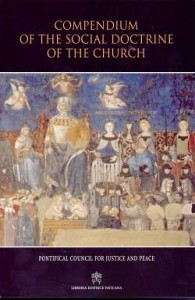
We live at a very special time. The confluence of many things has brought forth the clear need to be able to articulate the Social Teaching of the Catholic Church in a way that is accessible and applicable. This is not to be an effort where high-minded theories are to be bandied about. Rather, this is a time of opportunity wherein we can apply the Social Doctrine to the concrete so as to bring about a New Kingdom, a Revolution. – Omar G.
Also visit Omar’s “Discerning Hearts” page Catholic Social Teaching 101
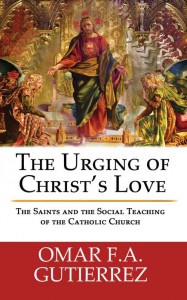
You can find Omar Gutierrez’s book here
In The Urging of Christ’s Love Omar Gutiérrez tells the stories of eleven people who lived their lives in pursuit of Christ Jesus. Each Saint, Blessed or Servant of God is considered in the context of Catholic Social Teaching. Then at the end of each chapter a prayer is offered and quotes from the Compendium of the Social Doctrine of the Church are provided in order to link the lessons we can learn from the saint’s life to Church teaching. By discovering some new saint friends, and rediscovering some old ones, The Urging of Christ’s Love presents Catholic Social Teaching in an accessible and important way.
Tags: catholic, catholic podcast, catholic prayer
This entry was posted on Monday, April 14th, 2014 at 3:45 pm
You can follow any responses to this entry through the RSS 2.0 feed.
 [powerpress]
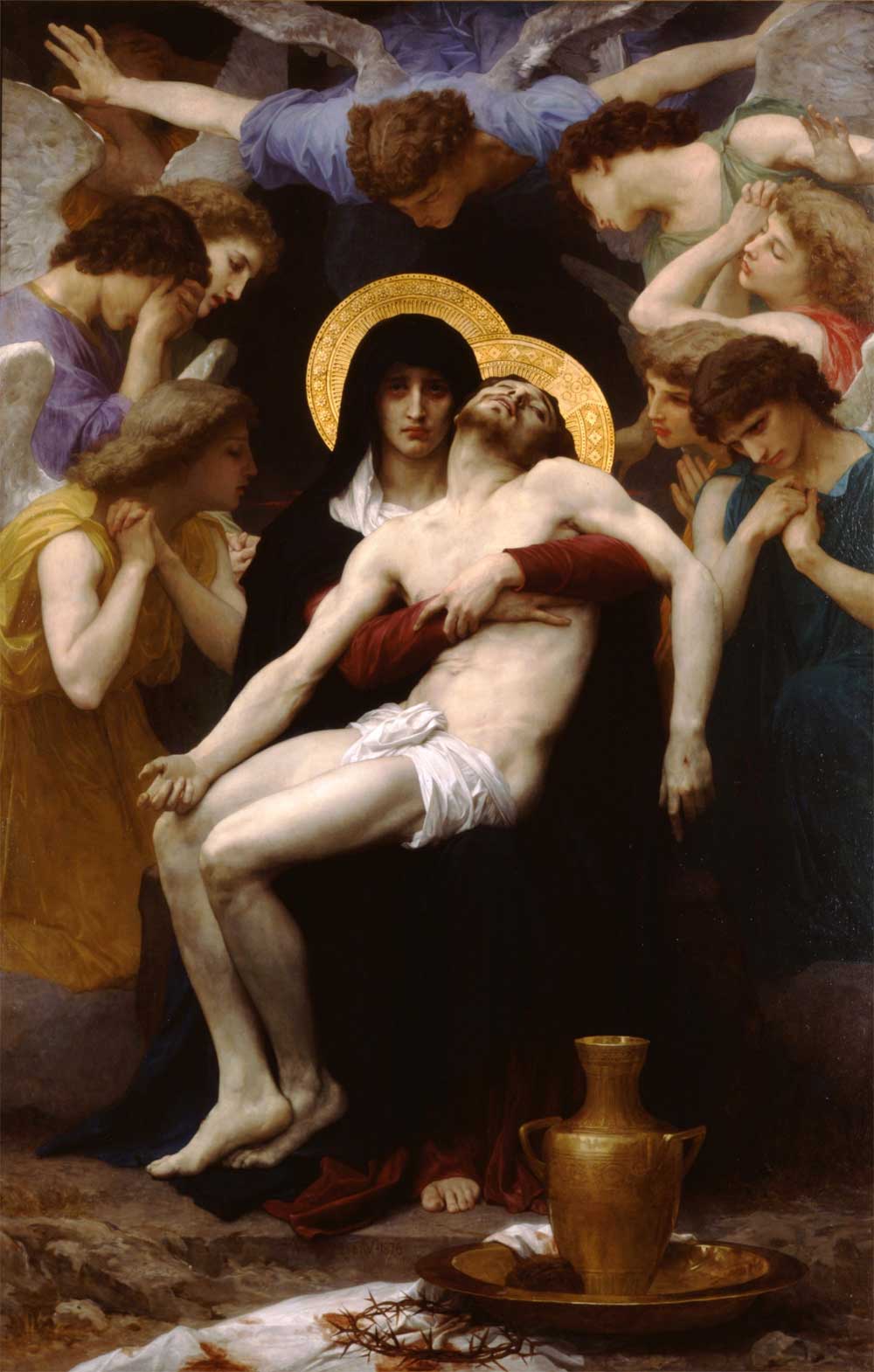
Fr. James Rafferty and Deacon James Keating offered a Lenten Morning of Reflection on behalf of the Institute for Priestly Formation entitled “Into Your Hands I Commend My Spiritâ€.
William-Adolphe Bouguereau’s “Pieta” was used as the vocal point for reflection, as well as the following passages:
From  John 3:16-17
For God so loved the world that he gave*Â his only Son, so that everyone who believes in him might not perish but might have eternal life.k17For God did not send his Son into the world to condemn*Â the world, but that the world might be saved through him.l
Excerpts from Pope Francis’ encyclical “Light of Faith“:
Our culture has lost its sense of God’s tangible presence and activity in our world. We think that God is to be found in the beyond, on another level of reality, far removed from our everyday relationships. But if this were the case, if God could not act in the world, his love would not be truly powerful, truly real, and thus not even true, a love capable of delivering the bliss that it promises. It would make no difference at all whether we believed in him or not. Christians, on the contrary, profess their faith in God’s tangible and powerful love which really does act in history and determines its final destiny: a love that can be encountered, a love fully revealed in Christ’s passion, death and resurrection.
Yet it is precisely in contemplating Jesus’ death that faith grows stronger and receives a dazzling light; then it is revealed as faith in Christ’s steadfast love for us, a love capable of embracing death to bring us salvation. This love, which did not recoil before death in order to show its depth, is something I can believe in; Christ’s total self-gift overcomes every suspicion and enables me to entrust myself to him completely.
-
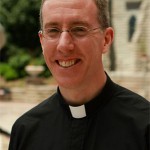
- Fr. James Rafferty, S.T.D. Director of Programs and Mission
-

- Deacon James Keating, Ph.D. Director of Theological Formation
Tags: catholic, catholic podcast, catholic prayer
This entry was posted on Monday, April 14th, 2014 at 6:42 am
You can follow any responses to this entry through the RSS 2.0 feed.
“Extravagant love for Jesus“
[powerpress]
an excerpt from today’s reflection by Don Schwager: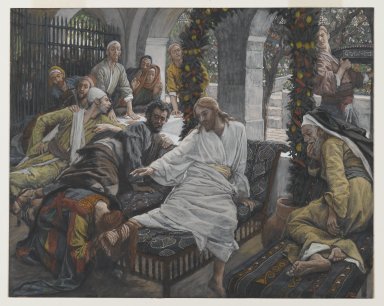
Do you know the love that knows no bounds? As Jesus dines with his beloved friends, Mary does something which only love can do. She took the most precious thing she had and spent it all on Jesus. Her love was not calculated but extravagant. Mary’s action was motivated by one thing, and one thing only, namely, her love for Jesus and her gratitude for God’s mercy. She did something, however, a Jewish woman would never do in public. She loosed her hair and anointed Jesus with her tears. It was customary for a woman on her wedding day to bound her hair. For a married woman to loosen her hair in public was a sign of grave immodesty. Mary was oblivious to all around her, except for Jesus. She took no thought for what others would think, but what would please her Lord. In humility she stooped to anoint Jesus’ feet and to dry them with her hair. How do you anoint the Lord’s feet and show him your love and gratitude?
The gospel records that the whole house was filled with the perfume of the ointment. What Mary had done brought sweetness not only in the physical sense, but the spiritual sense as well. Her lovely deed shows the extravagance of love – a love that we cannot outmatch. The Lord Jesus showed us the extravagance of his love in giving the best he had by pouring out his own blood for our sake and by anointing us with his Holy Spirit. The Apostle Paul says that nothing will be able to separate us from the love of God in Christ Jesus (Romans 8:39). Do you allow the love of Christ to rule in all your thoughts and intentions, and in all your words and deeds?
Why was Judas critical of Mary’s lovely deed? Judas viewed her act as extravagant wastefulness because of greed. A person views things according to what it inside the heart and soul. Judas was an embittered man and had a warped sense of what was precious and valuable, especially to God. Jesus had put Judas in charge of their common purse, no doubt because he was gifted in financial matters. The greatest temptation we can face will often come in the area of our greatest strength or gifting. Judas used money entrusted to him for wrong and hurtful purposes. He allowed greed and personal gain to corrupt his heart and to warp his view of things. He was critical towards Mary because he imputed unworthy motives. Do you examine your heart correctly when you impute wrong or unworthy motives towards others?
“Give us, Lord, a lively faith, a firm hope, a fervent charity, a love of you. Take from us all lukewarmness in meditation, dullness in prayer. Give us fervor and delight in thinking of you and your grace, your tender compassion towards me. The things we pray for, good Lord, give us grace to labor for: through Jesus Christ our Lord.” (Prayer of Sir Thomas More, 16th century)
for the full reflection visit : Daily Reading and Meditation
Tags: catholic, catholic podcast, catholic prayer
This entry was posted on Monday, April 14th, 2014 at 6:41 am
You can follow any responses to this entry through the RSS 2.0 feed.