 Site Type
 Featured
 Fonts
Fonts Skins
Skins
 “Mercy in the City:  How to Feed the Hungry, Give Drink to the Thirsty, Visit the Imprisoned, and Keep Your Day Job” is an outstanding book! Kerry Weber has crafted a work that is an engaging page turner that is a  joy to read.  She shares her story of trying to “perform” all the Christian acts of mercy during Lent one year.  What she encounters is the living Christ in each of her experiences.  Kerry  is a wonderful story-teller. After reading “Mercy in the City”,  I dare you not to be inspired to take on the challenge to “Go in peace to love and serve the Lord”.
[powerpress]
 You can find the book here
“Kerry Weber is one of the liveliest, brightest, most provocative and most articulate voices on the Catholic scene today. Â With stories that are both profound and lighthearted (and often at the same time) her marvelous new book will help you locate mercy in your daily life. Â This is that rare book that will indeed make you laugh and cry, but also pray and serve. Â Highly recommended.”
– James Martin, SJ author of My Life with the Saints and Jesus: A Pilgrimage
“This engaging book will take you to the heart of what it means to try to practice mercy in a cruel world. It helps us to remember that so much of what we take for granted — food, water to drink, clothing, and shelter — are a luxury to many, even in a land of plenty. From a soup line and homeless shelter to death row on San Quentin, the author makes us see the humanity of those we’d prefer to ignore. And if you’re looking for a book that cites both Basil the Great and ‘The Muppets Take Manhattan,’ this is for you!”
– Kathleen Norris, author of The Cloister Walk and Acedia and Me
Tags: catholic, catholic podcast, catholic prayer
This entry was posted on Monday, April 7th, 2014 at 1:12 pm
You can follow any responses to this entry through the RSS 2.0 feed.
Episode 3 The Daily Prayer of Discernment: The Ignatian Wisdom of the Examen Prayer with Fr. Timothy Gallagher.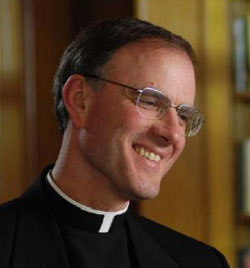
 The conversation continues on the subject of the first step in the Examen – GRATITUDE.  Why?  Because first, above all things, God is love.  So at the start of the prayer, we should recall the gift of love God has blessed us with that day and give Him thanks and praise….and be concrete.  Fr. Gallagher offers examples of what that could look like.  Then the conversation begins on the next step – PETITION.  Asking God to show you what see clearly the spiritual realities of that day. Â
[powerpress]
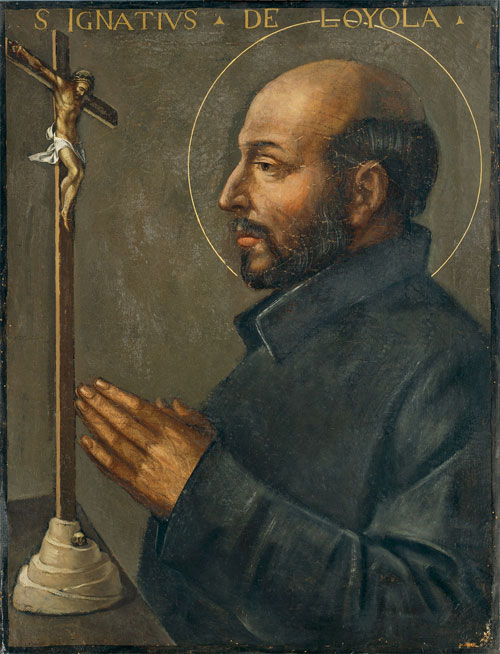
As outlined from the Spiritual Exercises of St. Ignatius of Loyola
(translated from the autograph by Fr. E. Mullan, S.J. Â 1909Â in the public domain)
METHOD FOR MAKING THE GENERAL EXAMEN
It contains in it five Points.First Point. The first Point is to give thanks to God our Lord for the benefits received.
Second Point. The second, to ask grace to know our sins and cast them out.
Third Point. The third, to ask account of our soul from the hour that we rose up to the present Examen, hour by hour, or period by period: and first as to thoughts, and then as to words, and then as to acts, in the same order as was mentioned in the Particular Examen.
Fourth Point. The fourth, to ask pardon of God our Lord for the faults.
Fifth Point. The fifth, to purpose amendment with His grace.OUR FATHER.
Father Timothy M. Gallagher, O.M.V., was ordained in 1979 as a member of the Oblates of the Virgin Mary, a religious community dedicated to retreats and spiritual formation according to the Spiritual Exercises of St. Ignatius. Â Fr. Gallagher is featured on the EWTN series “Living the Discerning Life: Â The Spiritual Teachings of St. Ignatius of Loyola”. Â For more information on books and audio available for purchase from Fr. Timothy Gallagher check out his website: www.frtimothygallagher.org
For the other episodes in this series check out
Fr. Timothy Gallagher’s “Discerning Hearts†page
Tags: Examen, Timothy Gallagher
This entry was posted on Monday, April 7th, 2014 at 12:44 pm
You can follow any responses to this entry through the RSS 2.0 feed.
“Go, and do not sin again“
[powerpress]
an excerpt from today’s reflection by Don Schwager: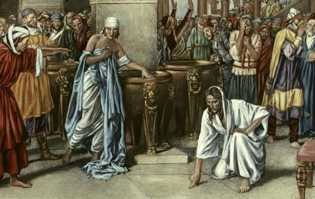
The Gospel accounts frequently describe how Jesus had to face unjust accusations made by the Pharisees, the ruling elders of Israel. They were upset with Jesus’ teaching and they wanted to discredit him in any way they could. They wanted to not only silence him, but to get rid of him because of his claim to speak with God’s authority. When a moral dilemma or difficult legal question arose, it was typical for the Jews to take the matter to a rabbi for a decision. The scribes and the Pharisees brought to Jesus a woman who had been caught in the act of adultery. John writes that they wanted to “test” Jesus on the issue of retribution so ” they might have some charge to bring against him” (John 8:6).
Jewish law treated adultery as a serious crime since it violated God’s ordinance and wreaked havoc on the stability of marriage and family life. It was one of the three gravest sins punishable by death. If Jesus said the woman must be pardoned, he would be accused of breaking the law of Moses. If he said the woman must be stoned, he would lose his reputation for being the merciful friend of sinners.
Jesus then does something quite unexpected – he begins to write in the sand. The word for “writing” which is used here in the Gospel text has a literal meaning “to write down a record against someone” (for another example see Job 13:26). Perhaps Jesus was writing down a list of the sins of the accusers standing before him. Jesus now turns the challenge towards his accusers. In effect he says: Go ahead and stone her! But let the man who is without sin be the first to cast a stone. The Lord leaves the matter to their own consciences.
Pardon, restoration, and new life
When the adulterous woman is left alone with Jesus, he both expresses mercy and he strongly exhorts her to not sin again. The scribes wished to condemn, Jesus wished to forgive and to restore the sinner to health. His challenge involved a choice – either to go back to her former way of sin and death or to reach out to God’s offer of forgiveness, restoration, and new life in his kingdom of peace and righteousness. Jesus gave her pardon and a new start on life. God’s grace enables us to confront our sin for what it is – unfaithfulness to God, and to turn back to God with a repentant heart and a thankful spirit for God’s mercy and forgiveness. Do you know the joy of repentance and a clean conscience?
“God our Father, we find it difficult to come to you, because our knowledge of you is imperfect. In our ignorance we have imagined you to be our enemy; we have wrongly thought that you take pleasure in punishing our sins; and we have foolishly conceived you to be a tyrant over human life. But since Jesus came among us, he has shown that you are loving, that you are on our side against all that stunts life, and that our resentment against you was groundless. So we come to you, asking you to forgive our past ignorance, and wanting to know more and more of you and your forgiving love, through Jesus Christ our Lord.” (Prayer of Saint Augustine)
for the full reflection visit : Daily Reading and Meditation
Tags: catholic, catholic podcast, catholic prayer
This entry was posted on Monday, April 7th, 2014 at 6:41 am
You can follow any responses to this entry through the RSS 2.0 feed.
Episode 6 – The Cross of Christ restores… – Fifth Week
In “The Power of the Cross”, Michael Dubruiel penned a truly exceptional meditation on the Cross of Christ which  serves beautifully as a source for reflection any time of the year, but it is particularly poignant and compelling during the weeks of Lent. Several years ago Bruce and I had the chance to have a series of conversations with Michael during Lent using his book for reflection…it was a big hit with the audience. Those discussions have been remastered and made available once again here. Michael died unexpectedly in February of 2009, but his gifts continue to be shared through his books and many other venues, and hopefully through this humble portal. The sentiments and teachings Michael offers is truly timeless.
[powerpress]
Episode 6 – The Cross of Christ restores… – Michael discusses:
Day 22 – Life
Day 29 – Forgiveness
Day 30 – The Image of God
Day 31 – Our Freedom
Day 32 – Obedience
Day 33 – The Dignity of Work
Day 34 – Justice
Michael’s wife, author Amy Welborn, has made “The Power of the Cross” available as a free e-book available over the internet ! Â I HIGHLY encourage you to download this exceptional work…there also plans to make it once again available as a paperback book.
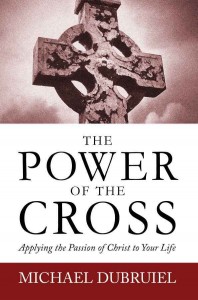 The Power of the Cross is now available as a free e-book,
check out more information by going here
Check out more at the Discerning Hearts’ Michael Dubruiel page
Tags: michael dubruiel, The Power of the Cross
This entry was posted on Sunday, April 6th, 2014 at 5:30 pm
You can follow any responses to this entry through the RSS 2.0 feed.
Episode 6 – The Cross of Christ restores… – Fifth Week
In “The Power of the Cross”, Michael Dubruiel penned a truly exceptional meditation on the Cross of Christ which serves beautifully as a source for reflection any time of the year, but it is particularly poignant and compelling during the weeks of Lent. Several years ago Bruce and I had the chance to have a series of conversations with Michael during Lent using his book for reflection…it was a big hit with the audience. Those discussions have been remastered and made available once again here. Michael died unexpectedly in February of 2009, but his gifts continue to be shared through his books and many other venues, and hopefully through this humble portal. The sentiments and teachings Michael offers is truly timeless.
[powerpress]
Episode 6 – The Cross of Christ restores… – Michael discusses:
Day 28 – Life
Day 29 – Forgiveness
Day 30 – The Image of God
Day 31 – Our Freedom
Day 32 – Obedience
Day 33 – The Dignity of Work
Day 34 – Justice
Michael’s wife, author Amy Welborn, has made “The Power of the Cross” available as a free e-book available over the internet ! Â I HIGHLY encourage you to download this exceptional work…there also plans to make it once again available as a paperback book.
The Power of the Cross is now available as a free e-book,
check out more information by going here
Check out more at the Discerning Hearts’ Michael Dubruiel page
Tags: michael dubruiel, The Power of the Cross
This entry was posted on Sunday, April 6th, 2014 at 12:32 pm
You can follow any responses to this entry through the RSS 2.0 feed.
“Reaction to Jesus’ words“
[powerpress]
an excerpt from today’s reflection by Don Schwager:
When resistance and opposition to God’s word rears it head how do you respond? With fear and doubt? Or with faith and courage? The prophet Jeremiah was opposed by his own people because the words he spoke in God’s name did not sit right with them. They plotted to silence him and to “cut him off from the land of the living” (Jeremiah 11:19). Jeremiah responded with meekness and prophetic insight “like a gentle lamb led to the slaughter” (Jeremiah 11:18).
No one could be indifferent for long when confronted with Jesus and his message. It caused division for many in Israel. Some believed he was a prophet, some the Messiah, and some believed he was neither. The reaction of the officers was bewildered amazement. They went to arrest him and returned empty-handed because they never heard anyone speak as he did. The reaction of the chief priests and Pharisees was contempt. The reaction of Nicodemus was timid. His heart told him to defend Jesus, but his head told him not to take the risk.
Who is Jesus for you? And are you ready to give him your full allegiance? There will often come a time when we have to take a stand for Christ and for the gospel. To stand for Jesus may provoke mockery or unpopularity. It may even entail hardship, sacrifice, and suffering. There are fundamentally two choices we must choose between: to have our lives fueled by God’s selfless love for others or by our own self-centered love and selfish desires, to be loyal to God’s wise rule and kingdom laws or to the standards of a worldly kingdom opposed to God, to be servants of Jesus our Master or slaves of sin and Satan. Are you ready to stand for Jesus and to show him honor and loyalty whatever it may cost you?
“Lord Jesus, your Gospel brings joy and freedom. May I be loyal to you always, even though it produce a cross on earth, that I may share in your crown in eternity.”
for the full reflection visit : Daily Reading and Meditation
Tags: Lord Jesus, prophet Jeremiah
This entry was posted on Saturday, April 5th, 2014 at 12:36 am
You can follow any responses to this entry through the RSS 2.0 feed.
“The Father’s witness“
[powerpress]
an excerpt from today’s reflection by Don Schwager: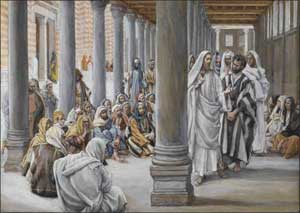
Do you know the joy of the gospel and a life fully submitted to Jesus Christ? Jesus’ opponents refused to accept his divine authority and claim to be the only begotten Son from the Father. They demanded evidence for his Messianic claim and equality with God. Jesus answers their charges with the supporting evidence of witnesses. The law of Moses had laid down the principle that the unsupported evidence of one person shall not prevail against a man for any crime or wrong in connection with any offence he committed (see Deuteronomy 17:6). At least two or three witnesses were needed. Jesus begins his defense by citing John the Baptist as a witness, since John publicly pointed to Jesus as the Messiah and had repeatedly borne witness to him (see John 1:19, 20, 26, 29, 35, 36). Jesus also asserts that a greater witness to his identity are the signs and miracles he performed. He cites his works, not to point to himself but to point to the power of God working in and through him. He cites God the Father as his supreme witness.
Jesus asserts that the scriptures themselves, including the first five books of Moses, point to him as the Messiah, the promised Savior. The problem with the scribes and Pharisees was that they did not believe what Moses had written. They desired the praise of their fellow humans and since they were so focused on themselves, they became blindsighted to God. They were so preoccupied with their own position as authorities and interpreters of the law that they became hardened and unable to understand the word of God. Their pride made them deaf to God’s voice. Scripture tells us that God reveals himself to the lowly, to those who trust not in themselves, but who trust God and listen to God’s word with an eagerness to learn and to obey. The Lord Jesus reveals to us the mind and heart of God. Through the gift of the Holy Spirit he opens our ears so that we may hear his voice and he fills our hearts and minds with the love and knowledge of God.
“Lord Jesus, fill me with your Holy Spirit that I may listen to your word attentively and obey it joyfully.”
for the full reflection visit : Daily Reading and Meditation
Tags: God the Father, Jesus, Lord Jesus, The law of Moses
This entry was posted on Thursday, April 3rd, 2014 at 12:04 am
You can follow any responses to this entry through the RSS 2.0 feed.
 In “The Protestant’s Dilemma: How the Reformation’s Shocking Consequences Point to the Truth of Catholicism”, author/apologist Devin Rose carefully reflects on various Protestant claims and carries them to their logical conclusion.  By incorporating, at times, his own intellectual journey from Protestantism to Catholicism, he simply presents a strong case for the authority of Catholic Church teaching.  The format of the book is excellent for apologetic study. Addressing the basics of the faith, as well as the particulars of Catholic Social Teaching, he gently, but meticulously offers a sound manual of instruction that should be in the library of every one of us called to the “New Evangelization”.
[powerpress]
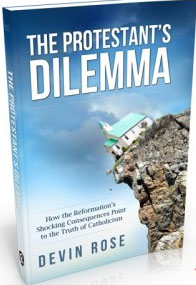
You can find the book here
From the book description:
What if Protestantism were true? What if the Reformers really were heroes, the Bible the sole rule of faith, and Christ s Church just an invisible collection of loosely united believers? As an Evangelical, Devin Rose used to believe all of it. Then one day the nagging questions began. He noticed things about Protestant belief and practice that didn t add up. He began following the logic of Protestant claims to places he never expected it to go -leading to conclusions no Christians would ever admit to holding. In The Protestant s Dilemma, Rose examines over thirty of those conclusions, showing with solid evidence, compelling reason, and gentle humor how the major tenets of Protestantism – if honestly pursued to their furthest extent – wind up in dead ends. The only escape? Catholic truth. Rose patiently unpacks each instance, and shows how Catholicism solves the Protestant s dilemma through the witness of Scripture, Christian history, and the authority with which Christ himself undeniably vested his Church. The Protestant s Dilemma is the perfect book for non-Catholics trying to work through their own nagging doubts, or for Catholics looking for a fresh way to deepen their understanding of the Faith
Tags: catholic, catholic podcast, catholic prayer
This entry was posted on Monday, March 31st, 2014 at 6:32 am
You can follow any responses to this entry through the RSS 2.0 feed.
 Show 61 ” Building a Kingdom of Love” – Are you blind although you can see?
[powerpress]
Gospel JN 9:1-41
As Jesus passed by he saw a man blind from birth.
His disciples asked him,
“Rabbi, who sinned, this man or his parents,
that he was born blind?â€
Jesus answered,
“Neither he nor his parents sinned;
it is so that the works of God might be made visible through him.
We have to do the works of the one who sent me while it is day.
Night is coming when no one can work.
While I am in the world, I am the light of the world.â€
When he had said this, he spat on the ground
and made clay with the saliva,
and smeared the clay on his eyes,
and said to him,
“Go wash in the Pool of Siloam†—which means Sent—.
So he went and washed, and came back able to see.
His neighbors and those who had seen him earlier as a beggar said,
“Isn’t this the one who used to sit and beg?â€
Some said, “It is, “
but others said, “No, he just looks like him.â€
He said, “I am.â€
So they said to him, “How were your eyes opened?â€
He replied,
“The man called Jesus made clay and anointed my eyes
and told me, ‘Go to Siloam and wash.’
So I went there and washed and was able to see.â€
And they said to him, “Where is he?â€
He said, “I don’t know.â€
They brought the one who was once blind to the Pharisees.
Now Jesus had made clay and opened his eyes on a sabbath.
So then the Pharisees also asked him how he was able to see.
He said to them,
“He put clay on my eyes, and I washed, and now I can see.â€
So some of the Pharisees said,
“This man is not from God,
because he does not keep the sabbath.â€
But others said,
“How can a sinful man do such signs?â€
And there was a division among them.
So they said to the blind man again,
“What do you have to say about him,
since he opened your eyes?â€
He said, “He is a prophet.â€
Now the Jews did not believe
that he had been blind and gained his sight
until they summoned the parents of the one who had gained his sight.
They asked them,
“Is this your son, who you say was born blind?
How does he now see?â€
His parents answered and said,
“We know that this is our son and that he was born blind.
We do not know how he sees now,
nor do we know who opened his eyes.
Ask him, he is of age;
he can speak for himself.â€
His parents said this because they were afraid
of the Jews, for the Jews had already agreed
that if anyone acknowledged him as the Christ,
he would be expelled from the synagogue.
For this reason his parents said,
“He is of age; question him.â€
So a second time they called the man who had been blind
and said to him, “Give God the praise!
We know that this man is a sinner.â€
He replied,
“If he is a sinner, I do not know.
One thing I do know is that I was blind and now I see.â€
So they said to him,
“What did he do to you?
How did he open your eyes?â€
He answered them,
“I told you already and you did not listen.
Why do you want to hear it again?
Do you want to become his disciples, too?â€
They ridiculed him and said,
“You are that man’s disciple;
we are disciples of Moses!
We know that God spoke to Moses,
but we do not know where this one is from.â€
The man answered and said to them,
“This is what is so amazing,
that you do not know where he is from, yet he opened my eyes.
We know that God does not listen to sinners,
but if one is devout and does his will, he listens to him.
It is unheard of that anyone ever opened the eyes of a person born blind.
If this man were not from God,
he would not be able to do anything.â€
They answered and said to him,
“You were born totally in sin,
and are you trying to teach us?â€
Then they threw him out.
When Jesus heard that they had thrown him out,
he found him and said, ADo you believe in the Son of Man?â€
He answered and said,
“Who is he, sir, that I may believe in him?â€
Jesus said to him,
“You have seen him,
the one speaking with you is he.â€
He said,
“I do believe, Lord,†and he worshiped him.
Then Jesus said,
“I came into this world for judgment,
so that those who do not see might see,
and those who do see might become blind.â€
Some of the Pharisees who were with him heard this
and said to him, “Surely we are not also blind, are we?â€
Jesus said to them,
“If you were blind, you would have no sin;
but now you are saying, ‘We see,’ so your sin remains
Lectionary for Mass for Use in the Dioceses of the United States, second typical edition, Copyright © 2001, 1998, 1997, 1986, 1970 Confraternity of Christian Doctrine;
Msgr. John A. Esseff is a Roman Catholic priest in the Diocese of Scranton. He was ordained on May 30th 1953, by the late Bishop William J. Hafey, D.D. at St. Peter’s Cathedral in Scranton, PA. Msgr. Esseff served a retreat director and confessor to Blessed Mother Teresa. He continues to offer direction and retreats for the sisters of the missionaries of charity around the world. Msgr. Esseff encountered St. Padre Pio, who would become a spiritual father to him. He has lived in areas around the world, serving in the Pontifical missions, a Catholic organization established by Bl. Pope John Paul II to bring the Good News to the world especially to the poor. Msgr. Esseff assisted the founders of the Institute for Priestly Formation and continues to serve as a spiritual director for the Institute. He continues to serve as a retreat leader and director to bishops, priests and sisters and seminarians and other religious leaders around the world.
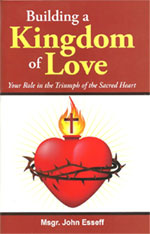
To obtain a copy of Msgr. Esseff’s book by visiting here
Be sure to visit Msgr. Esseff’s website “Building a Kingdom of Love”
Tags: catholic, catholic podcast, catholic prayer
This entry was posted on Monday, March 31st, 2014 at 5:51 am
You can follow any responses to this entry through the RSS 2.0 feed.
“Unless you see signs and wonders you will not believe”
[powerpress]
an excerpt from today’s reflection by Don Schwager: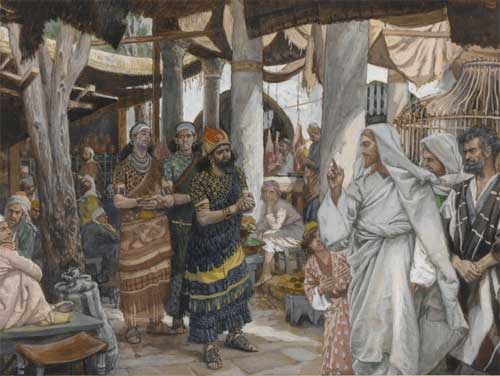
Do you approach the Lord Jesus with expectant faith for healing, pardon, and transformation in Christ-like holiness? Isaiah prophesied that God would establish a new heavens and earth when he came to restore his people. Jesus’ miracles are signs that manifest the presence and power of God’s kingdom. When a high ranking official, who was very likely from King Herod’s court, heard the reports of Jesus’ preaching and miracles, he decided to seek Jesus out for an extraordinary favor. If this story happened today the media headlines would probably say: “High ranking official leaves capital in search of miracle cure from a small town carpenter.”
It took raw courage for a high ranking court official to travel twenty miles in search of Jesus, the Galilean carpenter. He had to swallow his pride and put up with some ridicule from his cronies. And when he found the healer carpenter, Jesus seemed to put him off with the blunt statement that people would not believe unless they saw some kind of miracle or sign from heaven. Jesus likely said this to test the man to see if his faith was in earnest. If he turned away discouraged or irritated, he would prove to be insincere. Jesus, perceiving his faith, sent him home with the assurance that his prayer had been heard. It was probably not easy for this man to leave Jesus and go back home only with the assuring word that his son would be healed. Couldn’t Jesus have come to this man’s home and touched his dying child? The court official believed in Jesus and took him at his word without doubt or hesitation. He was ready to return home and face ridicule and laughter because he trusted in Jesus’ word.
God’s mercy shows his generous love – a love that bends down in response to our misery and wretchedness. Is there any area in your life where you need healing, pardon, change, and restoration? If you seek the Lord with trust and expectant faith, he will not disappoint you. He will meet you more than half way and give you what you need. The Lord Jesus never refused anyone who put their trust in him. Surrender your doubts and fears, your pride and guilt at his feet, and trust in his saving word and healing love.
“Lord Jesus, your love never fails and your mercy is unceasing. Give me the courage to surrender my stubborn pride, fear and doubts to your surpassing love, wisdom and knowledge. Make be strong in faith, persevering in hope, and constant in love.”
for the full reflection visit : Daily Reading and Meditation
Tags: catholic, catholic podcast, catholic prayer
This entry was posted on Monday, March 31st, 2014 at 12:15 am
You can follow any responses to this entry through the RSS 2.0 feed.
Episode 5 – The Cross of Christ teaches us… – Fourth Week
In “The Power of the Cross”, Michael Dubruiel penned a truly exceptional meditation on the Cross of Christ which serves beautifully as a source for reflection any time of the year, but it is particularly poignant and compelling during the weeks of Lent. Several years ago Bruce and I had the chance to have a series of conversations with Michael during Lent using his book for reflection…it was a big hit with the audience. Those discussions have been remastered and made available once again here. Michael died unexpectedly in February of 2009, but his gifts continue to be shared through his books and many other venues, and hopefully through this humble portal. The sentiments and teachings Michael offers is truly timeless.
[powerpress]
Episode 5 – The Cross of Christ unites… – Michael discusses:
Day 22 – Blindness
Day 23 – Lagtime
Day 24 – Weakness
Day 25 – Death
Day 26 – Our Choices
Day 27 – Truth
Day 28 – The Way to True Unity
Michael’s wife, author Amy Welborn, has made “The Power of the Cross” available as a free e-book available over the internet ! Â I HIGHLY encourage you to download this exceptional work…there also plans to make it once again available as a paperback book.
The Power of the Cross is now available as a free e-book,
check out more information by going here
Check out more at the Discerning Hearts’ Michael Dubruiel page
Tags: michael dubruiel, The Power of the Cross
This entry was posted on Sunday, March 30th, 2014 at 10:30 am
You can follow any responses to this entry through the RSS 2.0 feed.
“God, be merciful to me a sinner!“
[powerpress]
an excerpt from today’s reflection by Don Schwager:
How can we know if our prayer is pleasing to God or not? The prophet Hosea, who spoke in God’s name, said: “I desire steadfast love and not sacrifice” (Hosea 6:6). The prayers and sacrifices we make to God mean nothing to him if they do not spring from a heart of love for God and for one’s neighbor. How can we expect God to hear our prayers if we do not approach him with humility and with a contrite heart that seeks mercy and forgiveness? We stand in constant need of God’s grace and help. That is why Scripture tells us that “God opposes the proud, but gives grace to the humble” (James 4:6; Proverbs 3:34).
Jesus reinforced this warning with a vivid story of two people at prayer. Why did the Lord accept one person’s prayer and reject the 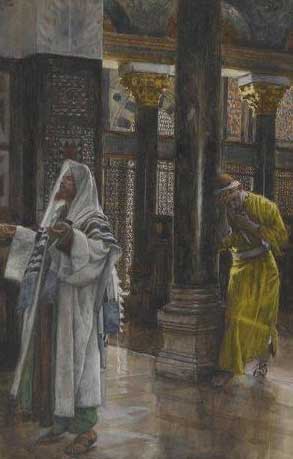 other’s prayer? Luke gives us a hint: despising one’s neighbor closes the door to God’s heart. Expressing disdain and contempt for others is more than being mean-minded. It springs from the assumption that one is qualified to sit in the seat of judgment and to publicly shame those who do not conform to our standards and religious practices. Jesus’ story caused offense to the religious-minded Pharisees who regarded “tax collectors” as unworthy of God’s grace and favor. How could Jesus put down a “religious person” and raise up a “public sinner”?
Jesus’ parable speaks about the nature of prayer and our relationship with God. It does this by contrasting two very different attitudes towards prayer. The Pharisee, who represented those who take pride in their religious practices, exalted himself at the expense of others. Absorbed with his own sense of self-satisfaction and self-congratulation, his boastful prayer was centered on his good religious practices rather than on God’s goodness, grace, and pardon. Rather than humbling himself before God and asking for God’s mercy and help, this man praised himself while despising those he thought less worthy. The Pharisee tried to justify himself before God and before those he despised; but only God can justify us. The tax collector, who represented those despised by religious-minded people, humbled himself before God and begged for mercy. His prayer was heard by God because he had true sorrow for his sins. He sought God with humility rather than with pride.
This parable presents both an opportunity and a warning. Pride leads to self-deception and spiritual blindness. True humility helps us to see ourselves as we really are in God’s eyes and it inclines us to seek God’s help and mercy. God dwells with the humble of heart who recognize their own sinfulness and who acknowledge God’s mercy and saving grace. I dwell in the high and holy place, and also with him who is of a contrite and humble spirit (Isaiah 57:15). God cannot hear us if we boast in ourselves and despise others. Do you humbly seek God’s mercy and do you show mercy to others, especially those you find difficult to love and to forgive?
“Lord Jesus, may your love and truth transform my life – my inner thoughts, intentions, and attitudes, and my outward behavior, speech, and actions. Where I lack charity, kindness, and foreberance, help me to embrace your merciful love and to seek the good of my neighbor, even those who cause me ill-favor or offense. May I always love as you have loved and forgive others as you have forgiven.”
for the full reflection visit : Daily Reading and Meditation
Tags: God's mercy, Lord Jesus, religious practices
This entry was posted on Saturday, March 29th, 2014 at 9:16 am
You can follow any responses to this entry through the RSS 2.0 feed.
Episode 2 The Daily Prayer of Discernment: The Ignatian Wisdom of the Examen Prayer with Fr. Timothy Gallagher. 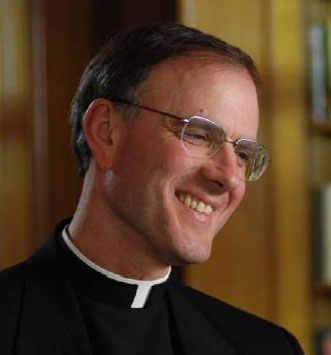
 The First Step in the Examen Prayer:  Gratitude.  Taking time out of the day when our hearts are free to receive the Lord’s presence.  Prayer always takes two persons in relationship…ourselves and God.  Then together with the Lord, we see what the gifts of love God has poured out upon us.  The key in this first step, is not to look for our missteps (that may come later), but to look for the gifts and give thanks.
[powerpress]
As outlined from the Spiritual Exercises of St. Ignatius of Loyola
(translated from the autograph by Fr. E. Mullan, S.J. Â 1909Â in the public domain)
METHOD FOR MAKING THE GENERAL EXAMEN
It contains in it five Points.First Point. The first Point is to give thanks to God our Lord for the benefits received.
Second Point. The second, to ask grace to know our sins and cast them out.
Third Point. The third, to ask account of our soul from the hour that we rose up to the present Examen, hour by hour, or period by period: and first as to thoughts, and then as to words, and then as to acts, in the same order as was mentioned in the Particular Examen.
Fourth Point. The fourth, to ask pardon of God our Lord for the faults.
Fifth Point. The fifth, to purpose amendment with His grace.OUR FATHER.
Father Timothy M. Gallagher, O.M.V., was ordained in 1979 as a member of the Oblates of the Virgin Mary, a religious community dedicated to retreats and spiritual formation according to the Spiritual Exercises of St. Ignatius. Â Fr. Gallagher is featured on the EWTN series “Living the Discerning Life: Â The Spiritual Teachings of St. Ignatius of Loyola”. Â For more information on books and audio available for purchase from Fr. Timothy Gallagher check out his website: www.frtimothygallagher.org
For the other episodes in this series check out
Fr. Timothy Gallagher’s “Discerning Hearts†page
Tags: Daily Prayer, Timothy Gallagher
This entry was posted on Friday, March 28th, 2014 at 4:24 pm
You can follow any responses to this entry through the RSS 2.0 feed.
“Love the Lord with all your heart, soul, mind, and strength”
[powerpress]
an excerpt from today’s reflection by Don Schwager: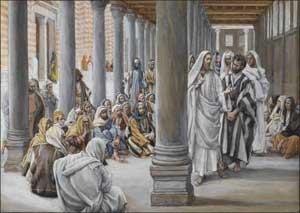
How does love and obedience to God’s law go together? The Pharisees prided themselves in the knowledge of the law and their ritual requirements. They made it a life-time practice to study the six hundred and thirteen precepts of the Old Testament along with the numerous rabbinic commentaries. They tested Jesus to see if he correctly understood the law as they did. Jesus startled them with his profound simplicity and mastery of the law of God and its purpose. What does God require of us? Simply that we love as he loves! God is love and everything he does flows from his love for us. God loved us first and our love for him is a response to his exceeding grace and kindness towards us. The love of God comes first and the love of neighbor is firmly grounded in the love of God. The more we know of God’s love and truth the more we love what he loves and reject what is hateful and contrary to his will.
What makes our love for God and his commands grow in us? Faith in God and hope in his promises strengthen us in the love of God. They are essential for a good relationship with God, for being united with him. The more we know of God the more we love him and the more we love him the greater we believe and hope in his promises. The Lord, through the gift of the Holy Spirit, gives us a new freedom to love as he loves (Galatians 5:13). Do you allow anything to keep you from the love of God and the joy of serving others with a generous heart? Paul the Apostle says: hope does not disappoint us, because God’s love has been poured into our hearts through the Holy Spirit which has been given to us (Romans 5:5). Do you know the love which conquers all?
“We love you, O our God; and we desire to love you more and more. Grant to us that we may love you as much as we desire, and as much as we ought. O dearest friend, who has so loved and saved us, the thought of whom is so sweet and always growing sweeter, come with Christ and dwell in our hearts; that you keep a watch over our lips, our steps, our deeds, and we shall not need to be anxious either for our souls or our bodies. Give us love, sweetest of all gifts, which knows no enemy. Give us in our hearts pure love, born of your love to us, that we may love others as you love us. O most loving Father of Jesus Christ, from whom flows all love, let our hearts, frozen in sin, cold to you and cold to others, be warmed by this divine fire. So help and bless us in your Son.” (Prayer of Anselm, 12th century)
for the full reflection visit : Daily Reading and Meditation
Tags: catholic, catholic podcast, catholic prayer, Faith in God, relationship with God
This entry was posted on Friday, March 28th, 2014 at 5:09 am
You can follow any responses to this entry through the RSS 2.0 feed.
“If it is by the finger of God”
[powerpress]
an excerpt from today’s reflection by Don Schwager: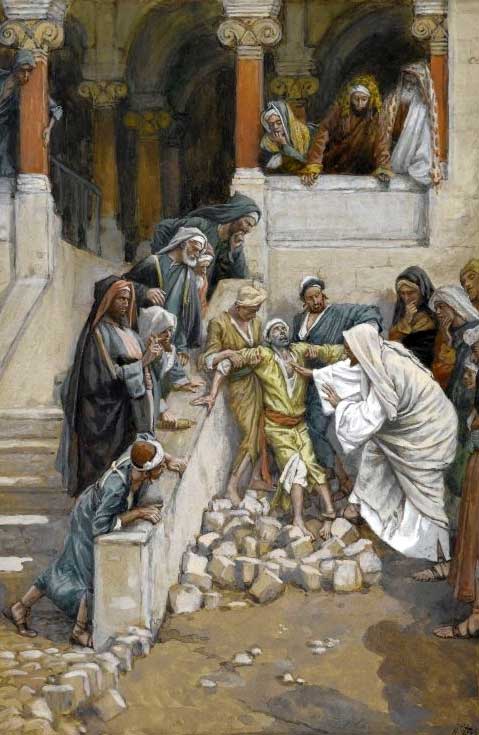
Jesus’ numerous exorcisms brought freedom to many who were troubled and oppressed by the work of evil spirits. Jesus himself encountered personal opposition and battled with Satan when he was put to the test in the wilderness just before his public ministry. He overcame the evil one through his obedience to the will of his Father. Some of the Jewish leaders reacted vehemently to Jesus’ healings and exorcisms and they opposed him with malicious slander. How could he get the power and authority to release individuals from Satan’s power? They assumed that he had to be in league with Satan. They attributed his power to Satan rather than to God.
Jesus answers their charge with two arguments. There were many exorcists in Palestine in Jesus’ time. So Jesus retorted by saying that they also incriminate their own kin who cast out demons. If they condemn Jesus they also condemn themselves. In his second argument he asserts that no kingdom divided against itself cannot survive for long? We have witnessed enough civil wars in our own time to prove the destructive force at work here for the annihilation of whole peoples and their land. If Satan lends his power against his own forces then he is finished. How can a strong person be defeated except by someone who is stronger? Jesus asserted his power and authority to cast out demons as a clear demonstration of the reign of God. Jesus’ reference to the finger of God points back to Moses’ confrontation with Pharoah and his magicians who represented Satan and the kingdom of darkness (see Exodus 8:19). Jesus claims to be carrying on the tradition of Moses whose miracles freed the Israelites from bondage by the finger of God. God’s power is clearly at work in the exorcisms which Jesus performed and they give evidence that God’s kingdom has come.
Jesus makes it clear that there are no neutral parties. We are either for Jesus or against him, for the kingdom of God or against it. There are two kingdoms in opposition to one another – the kingdom of God and the kingdom of darkness under the rule of Satan. If we disobey God’s word, we open to door to the power of sin and Satan in our lives. If you want to live in freedom from sin and Satan, then your house – your life and all you possess – must be occupied by Jesus where he is enthroned as Lord and Savior. Is the Lord Jesus the Master of your home, heart, mind, and will?
“O Lord, our God, grant us, we beseech you, patience in troubles, humility in comforts, constancy in temptations, and victory over all our spiritual foes. Grant us sorrow for our sins, thankfulness for your benefits, fear of your judgment, love of your mercies, and mindfulness of your presence; now and for ever.” (Prayer by John Cosin)
for the full reflection visit : Daily Reading and Meditation
Tags: catholic, catholic podcast, catholic prayer
This entry was posted on Thursday, March 27th, 2014 at 12:03 am
You can follow any responses to this entry through the RSS 2.0 feed.