 Site Type
 Featured
 Fonts
Fonts Skins
Skins
FG#13 – The Way of Trust and Love Ep 2 – Fountains of Grace: reflections on contemporary spiritual classics with Donna Garrett
Join host Donna Garrett, with Fr. James Perez, LC, as they discuss the spiritual classic “The Way of Trust and Love: A Retreat Guided By St. Therese of Lisieux” by Fr. Jacques Philippe.
[powerpress]
Discussed in this episode, among other topics, from “The Way of Trust and Love”
The fact that we can’t save ourselves is something we acknowledge in words, but in fact we find it very hard to accept. We’d all like to be saved by our own efforts, to be strong and robust, to boast about our successes, to shine in other people’s eyes, even on the spiritual level. Worldly people want to be highly regarded because they have luxurious cars, expensive watches, designer clothes, professional prestige, and go around with beautiful people. As good Christians, we may want to stand out for our virtues, charisms, experience, and sound judgment. Then we consider that we are on the right path. But in fact we’re in danger of ending up with exactly the same mindset as the worldly people described above. Very often, without realizing it, we have a worldly outlook on the spiritual life: self-fulfillment, self-affirmation, expansion of ego, etc. And spiritual pride, we must be aware, is sometimes more destructive than social, worldly pride.
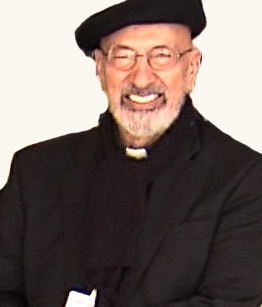
Fr. James Perez, LC, joins Donna for this series
We cannot be saved by what we do; we can only be saved by grace, when God’s freely given love comes, takes hold of us, and transforms us, sometimes gently and progressively, but sometimes in a spectacular way. In general, the transformation is fairly slow and progressive, without our always being able to notice the action of grace.
Philippe, Jacques (2012-06-07). The Way of Trust and Love – A Retreat Guided by St. Therese of Lisieux (Kindle Locations 445-454). Scepter Publishers. Kindle Edition.
For other episodes in the this series click here “Fountains of Grace w/Donna Garrett“
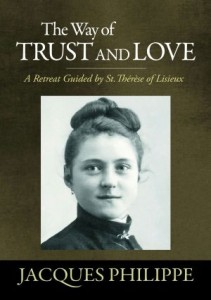
You can find “The Way of Trust and Love” here
Fr. Jacques Philippe
Tags: catholic, catholic podcast, catholic prayer
This entry was posted on Monday, February 24th, 2014 at 3:51 am
You can follow any responses to this entry through the RSS 2.0 feed.
 [powerpress]
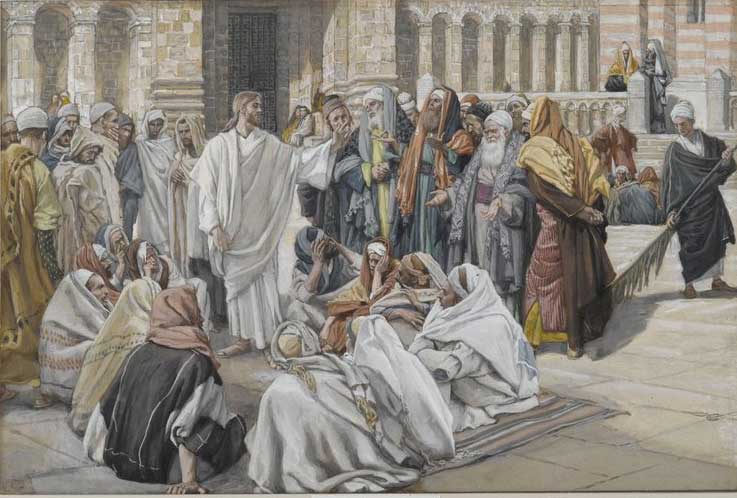
Gospel MT 5:38-48
Jesus said to his disciples:
“You have heard that it was said,
An eye for an eye and a tooth for a tooth.
But I say to you, offer no resistance to one who is evil.
When someone strikes you on your right cheek,
turn the other one as well.
If anyone wants to go to law with you over your tunic,
hand over your cloak as well.
Should anyone press you into service for one mile,
go for two miles.
Give to the one who asks of you,
and do not turn your back on one who wants to borrow.
 “You have heard that it was said,
You shall love your neighbor and hate your enemy.
But I say to you, love your enemies
and pray for those who persecute you,
that you may be children of your heavenly Father,
for he makes his sun rise on the bad and the good,
and causes rain to fall on the just and the unjust.
For if you love those who love you, what recompense will you have?
Do not the tax collectors do the same?
And if you greet your brothers only,
what is unusual about that?
Do not the pagans do the same?
So be perfect, just as your heavenly Father is perfect.â€
Lectionary for Mass for Use in the Dioceses of the United States, second typical edition, Copyright © 2001, 1998, 1997, 1986, 1970 Confraternity of Christian Doctrine;
Tags: catholic, catholic podcast, catholic prayer
This entry was posted on Monday, February 24th, 2014 at 1:19 am
You can follow any responses to this entry through the RSS 2.0 feed.
 Episode 19 – The Holy Rule of St. Benedict: A Spiritual Path for Today’s World with Fr. Mauritius Wilde O.S.B., PhD.
[powerpress]
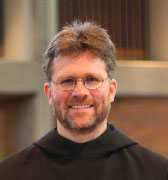
In this episode, Fr. Maurtius is joined by his fellow Missionary Benedictines,  Sr. Fidelis Marie Lanowich  and Sr. Gabriel Mary Oestreich of the Immaculata Monastery, Norfolk, NE and Br. Damian Cayetano of Christ the King Priory, Schuyler, NE.  The group  discusses what drew them to the Holy Rule of St. Benedict.  They share their discernment process concerning their vocational call, the response of family and friends.  They discuss the experience of finding “home” within the life of their communities.
Father Mauritius Wilde, OSB, Ph.D., did his philosophical, theological and doctoral studies in Europe. He is the author of several books and directs retreats regularly. He serves as Prior of our monastery in Schuyler.
 For more information about the ministry of the the Missionary Benedictines of Christ the King Priory in Schuyler, Nebraska visit here:
Tags: Holy Rule of St. Benedict, Missionary Benedictines
This entry was posted on Thursday, February 20th, 2014 at 2:17 pm
You can follow any responses to this entry through the RSS 2.0 feed.
Dr. Matthew Bunson discusses the life, times and teachings of St. Gregory the Great part 2
 [powerpress]
Born: 540 AD, Rome, Italy
Gregory the Great, Pope (c. 540-604)
-Â Pastoral Rule
-Â Register of Letters
From Vatican.va, an excerpt from the teachings ofPope Benedict XVI General Audience 2008
In the theological plan that Gregory develops regarding his works, the past, present and future are compared. What counted for him more than anything was the entire arch of salvation history, that continues to unfold in the obscure meanderings of time. In this perspective it is significant that he inserted the news of the conversion of the Angles in the middle of his Book of Morals, a commentary on Job: to his eyes the event constituted a furthering of the Kingdom of God which the Scripture treats. Therefore, it could rightly be mentioned in the commentary on a holy book. According to him the leaders of Christian communities must commit themselves to reread events in the light of the Word of God: in this sense the great Pontiff felt he had the duty to orient pastors and the faithful on the spiritual itinerary of an enlightened and correct lectio divina, placed in the context of one’s own life.
Before concluding it is necessary to say a word on the relationship that Pope Gregory nurtured with the Patriarchs of Antioch, of Alexandria and of Constantinople itself. He always concerned himself with recognizing and respecting rights, protecting them from every interference that would limit legitimate autonomy. Still, if St Gregory, in the context of the historical situation, was opposed to the title “ecumenical” on the part of the Patriarch of Constantinople, it was not to limit or negate this legitimate authority but rather because he was concerned about the fraternal unity of the universal Church. Above all he was profoundly convinced that humility should be the fundamental virtue for every Bishop, even more so for the Patriarch. Gregory remained a simple monk in his heart and therefore was decisively contrary to great titles. He wanted to be – and this is his expression –servus servorum Dei. Coined by him, this phrase was not just a pious formula on his lips but a true manifestation of his way of living and acting. He was intimately struck by the humility of God, who in Christ made himself our servant. He washed and washes our dirty feet. Therefore, he was convinced that a Bishop, above all, should imitate this humility of God and follow Christ in this way. His desire was to live truly as a monk, in permanent contact with the Word of God, but for love of God he knew how to make himself the servant of all in a time full of tribulation and suffering. He knew how to make himself the “servant of the servants”. Precisely because he was this, he is great and also shows us the measure of true greatness.
For more visit Vatican.va
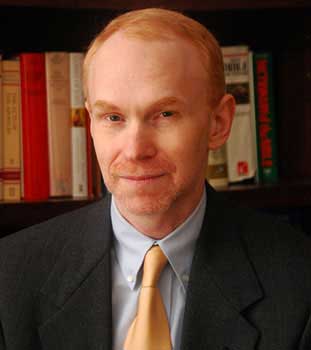
Dr. Matthew Bunson, Senior Fellow of the St. Paul Center for Biblical Theology, is one of the United States’ leading authorities on the papacy and the Church.
His books include: The Encyclopedia of Catholic History; The Encyclopedia of Saints; Papal Wisdom; All Shall Be Well; Encyclopedia of the Roman Empire; and The Angelic Doctor: The Life and World of St. Thomas Aquinas; The Pope Encyclopedia; We Have a Pope! Benedict XVI, the first Catholic biography of the Holy Father in the English language; the Encyclopedia of U.S. Catholic History; Pope Francis. His also the editor of OSV’s “The Catholic Answer” magazine.
Tags: matthew bunson, the Doctors of the Church
This entry was posted on Thursday, February 20th, 2014 at 12:40 pm
You can follow any responses to this entry through the RSS 2.0 feed.
THE WAY OF PERFECTION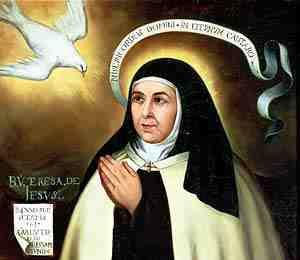
By
St. Teresa of Avila
Chapter 17 & 18
[powerpress]
For the pdf containing the complete text and footnotes click here
How not all souls are fitted for contemplation and how some take
long to attain it. True humility will walk happily along the road
by which the Lord leads it.Continues the same subject and shows how much greater are the
trials of contemplatives than those of actives. This chapter offers
great consolation to actives
For other audio chapters of
“The Way of Perfection”
THE WAY OF PERFECTION
by
ST. TERESA OF AVILA
Translated & Edited by
E. ALLISON PEERS
from the Critical Editon of
P. SILVERIO DE SANTA TERESA, C.D.
Tags: st. teresa of avila, The Way of Perfection
This entry was posted on Thursday, February 20th, 2014 at 10:20 am
You can follow any responses to this entry through the RSS 2.0 feed.
It was with great joy we had the opportunity to talk with Fr. Thomas Dubay.  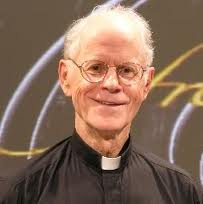   His work on “Fire Within” and all the programs he gave us on EWTN were instrumental in my spiritual growth. In those early days, he was like having a distant spiritual director who guided me, as well as the rest of us, toward a deeper relationship with Christ.
[powerpress]
He told me once, “Kris, the best theology books are the lives of the saints; you study them and you won’t be led astray.”  Fr. Thomas Dubay, in a very real way, helped inspire the work of this blog and it’s mission.
Here’s a host of books by Fr. Thomas Dubay
Tags: catholic, catholic podcast, catholic prayer
This entry was posted on Thursday, February 20th, 2014 at 8:58 am
You can follow any responses to this entry through the RSS 2.0 feed.
Mortal Sin
[powerpress ]
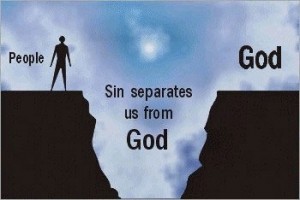 You know, we shouldn’t kid ourselves that we can’t earn God’s love. That’s about as foolish as a kid down the street trying to earn his way into my family by mowing my lawn every week. To be reborn in Christ is to be adopted as God’s son or daughter, 1 something that could never be purchased or earned.
Nevertheless, there are still certain requirements for remaining part of that family. Just as a child can get himself kicked out of the house or even disinherited, so too we can separate ourselves from God’s grace through what the Church traditionally calls mortal sin.2 These sins can take the form of co-mmission, such as hatred or adultery, or o-mission, such as ignoring those in need or refusing to forgive someone.
Paul exhorts us in 1 Corinthians 10 to not be like the Israelites, who, in spite of having been liberated from the slavery of Egypt, baptized in the Red Sea, and fed with manna from heaven in the desert, failed to enter the Promised Land because of their disobedience.3
So if today you hear his voice, brothers and sisters, harden not your hearts!
1 -Â cf. 1 Jn. 3:1
2 -Â cf. Mt. 7:21; Rom. 6:21; 8:12; 1 Cor. 6:9-10; 7:19; Gal. 5:17-21; Js. 1:15; 1 Jn. 2:4; 3:22; 5:3; Rev. 2:5, 12:17; 14:12;
22:11; etc.
2 -Â 1 Cor. 10:1-6
Tags: catholic, catholic podcast, catholic prayer
This entry was posted on Thursday, February 20th, 2014 at 6:52 am
You can follow any responses to this entry through the RSS 2.0 feed.
Episode 4 -The Way of Mystery: The Eucharist and Moral Living 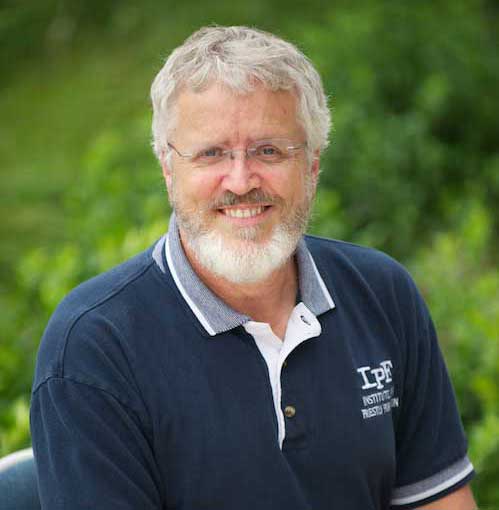
Prayer and our active participation in the Mass: the introductory rite and the Liturgy of the Word
[powerpress]
For more episodes in “The Way of Mystery” Series click here
Deacon James Keating, PhD, the director of Theological Formation for the Institute for Priestly Formation, located at Creighton University, in Omaha, is making available to â€Discerning Hearts†and all who listen, his series of programs entitled “The Way of Mysteryâ€.
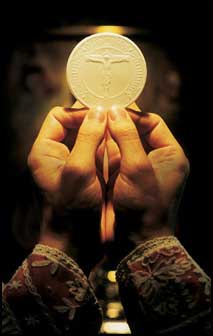 The Vatican II documents remind us that the spiritual journey is not made in a vacuum, that God has chosen to save us, not individually, but as The People of God. The Eucharist must help Christians to make their choices by discerning out of Christ’s paschal mystery. For this process to take place, however, Christians must first understand how the Eucharist puts them in touch with Christ’s passion, death, and resurrection, and what concrete implications being in touch with this mystery has for their daily lives.

For more information on the “Institute of Priestly Formation†and for other material available by Deacon Keating, just click here
Don’t forget to pickup a copy of “Communion with Christ†, it is one of the best audio sets on prayer…ever!
Check out Deacon Keating’s “Discerning Heart†page
Tags: institute for priestly formation, james keating, liturgy of the word, the eucharist, theological formation
This entry was posted on Wednesday, February 19th, 2014 at 2:20 pm
You can follow any responses to this entry through the RSS 2.0 feed.
Episode 10-Â The Church: Â Reflecting the Light of Christ
[powerpress]
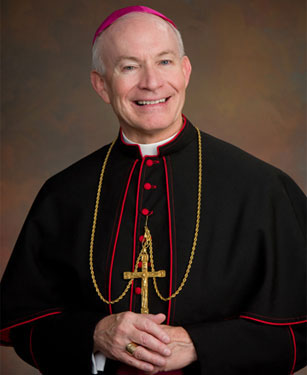
Archbishop Lucas offers insights on the US Catholic Catechism for Adults Chapter 10:
The Church is the continuing manifestation of the Father, Son, and Holy Spirit. Â The Church exists by the will of God the Father and his plan to gather all people under the Lordship of his Son. Â As Head of the Church, Jesus Christ continues to fill her with his life and saving grace, pouring into her the Holy Spirit with his gifts of unity, peace, and love.
The Most Reverend George J. Lucas leads the Archdiocese of Omaha.Â
For other episodes in the visit our Archbishop George Lucas page
This programs is based on:
More information can be found here.
We wish to thank the USCCB for the permissions granted for use of  relevant material used in this series.
Also we wish to thank Omar Gutierrez and Teresa Monaghen  for their vocal talents in this episode.
Tags: Catholic Catechism, George Lucas, light of christ
This entry was posted on Wednesday, February 19th, 2014 at 1:55 pm
You can follow any responses to this entry through the RSS 2.0 feed.
Is Jesus Calling? A Spiritual Guide to Discerning Your Vocational Call with Fr. Paul Hoesing – episode 4:Â 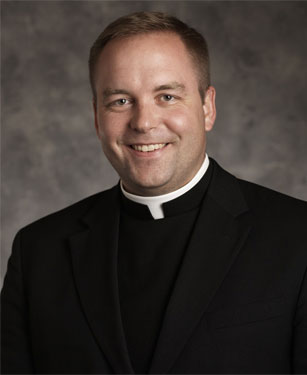
The Fourth Spiritual Lesson: It Takes Time. “The Father simply wants you to trust him enough to take the next step, not the 10th or 20th step. He wants you to focus on going from A to B, not on going from A to Z. When you take that step, Jesus will reveal the next one.”
Questions: What is the next step God is asking of you? Are you afraid to take it? If you are, ask him into the situation or reality that causes you fear. Are you focusing too far down the road?
[powerpress]
The Fifth Spiritual Lesson: Your Peace is Found in Jesus. “Christ’s presence is enjoyable; it gives us peace, stillness, clarity and gratitude. Our job is to desire it.”
Questions: Where do you experience peace, stillness, clarity or gratitude in God? Wherever that is happening in your life, you need to do two things: (1) realize that this is the presence of Christ and ; (2) desire it throughout your day…above all thins. Relish his presence, enjoy his presence, long fro his presence, keep coming back to his presence, adore his presence and express gratitude for his presence.
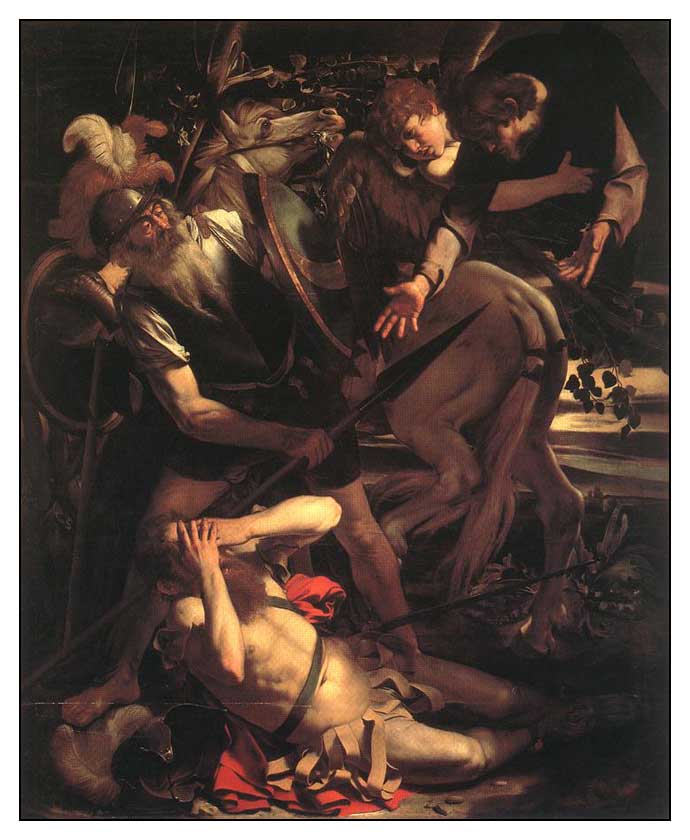
Based on “Is Jesus Calling You To Be A Catholic Priest: A helpful guide”, published by National Conference of Diocesan Vocation Director.
Fr. Paul Hoesing serves as the Vocation Director for the Archdiocese of Omaha, NE.
Check out “For Your Vocation.org“
Tags: Paul Hoesing, Spiritual Lesson
This entry was posted on Wednesday, February 19th, 2014 at 1:37 pm
You can follow any responses to this entry through the RSS 2.0 feed.
 [powerpress]
From Omar F. A. Gutierrez (found on his blog)
I cannot tell you how many times I have heard this complaint from well-meaning Catholics: “We have a 40 Days for Life and a March for Life and a Novena for Life, but why don’t the bishops get behind a 40 Days for Poverty or a March to End Poverty campaign? Why can’t the bishops give equal time to all the other life issues?†Here’s what I usually say:
1) I think it is important to agree that poverty is a life issue. Likewise, it is important to agree that addressing poverty and its many causes is part of our responsibility as Catholics. So saying things like, “Helping the poor is the business of local churches and charities and is not the work of the government†is nonsense and actually counters Catholic Social Teaching. The government does and must have a role if for no other reason than to reinforce the notion that alleviating the affects of poverty is a communal responsibility. The level of governmental involvement is debatable, but that it should be involved really isn’t.
2) But then it needs to be pointed out to the well-meaning Catholic that there is no single legislative embodiment of the perpetuation of poverty. There is no one law that exists in our land which states, “poverty is a good thing,†or “we want poor people,†or “being poor is a Constitutional necessity.†There is, however, a singular decision that has enshrined abortion on demand, a singular legal decision which has created a structure around abortion that is one of the most permissive in the entire world, a singular argument that is so legally unsound that even supporters of abortion think it is bad law. That law is Roe v. Wade, and it needs to be overturned.
Saying that poverty needs to be overturned might be a nice sound bite, but it is meaningless. There is no single legal strategy that will ever eradicate poverty, indeed, Our Lord tells us that poverty will always exist. I know many who cringe at the mention of this fact, but it is a fact, and it means only what it means. We will always have the poor with us.
3)  To this many respond, “Well, we’ll always have abortion too.†Yes, that’s right, which is why the strategic goal of the U.S. Bishops is not to thwart abortions for all time. Thanks to sin, abortion will always be with us. Therefore, our goal is not to undue sin but rather to overturn legalized abortion. The goal is always to finally put an end to the legal structure that allows one class of persons to snuff out the life of another class of persons. Put otherwise, our goal is to make abortion illegal not impossible. There is no way to make it impossible, and making poverty illegal is nonsensical.
4)  There is another crucial difference. We have all this public pro-life work because there are still so many Americans and even many Catholics who are convinced that abortion is okay. Though there are some who callously dismiss the plight of the poor as a punishment for their own laziness, it is nevertheless the case that expressing this opinion is roundly condemned by our culture. Everyone knows, even if they dare to think it, that blaming the poor for their poverty is asinine. It’s considered “edgy†to say so when it is said. And no one runs on a platform that says, “let the poor stay poor.†Democrats accuse Republicans of just that, but they have to infer that’s the case because no one would dare say it publicly. That’s the difference.
When was the last time you saw reps for “Catholics for Poverty†on TV?
We do have Catholics, on the other hand, who think that abortion is alright. There are even Catholic University professors who teach that abortion can be a moral act. Heck, we have an entire political party dedicated not just to keeping abortion legal but to making sure it’s free for whoever wants one, along with Catholics who vote for candidates who publicly say “abortion is a Constitutional right†and “I don’t want my daughters punished with a child.â€
5) Also, by defending the rights of the unborn, the bishops actually are advocating for the poor. The effort to help the poor will always fail so long as Americans continue to think that the life of the unborn child is expendable. The popes have said repeatedly, in all sorts of different ways, that a legal structure and a culture that rejects the life of the unborn innocent cannot hope to achieve a social justice that will honestly address the needs of the poor. The rights to labor, a just wage, education, health care, family and the rest are all “false and illusory,†to quote John Paul the Great, if the right to life is not defended to the maximum.
6) The truth is that the bishops’ do advocate for the poor, here and abroad. On state levels and at the national, they do advocate for those policy decisions that help the poor. Now, I don’t always agree with them on what helps the poor and what doesn’t, but they are far from silent about it. We could probably be reminded more often about our own responsibilities. No doubt there are a few prelates here or there who could take a cue from Pope Francis and give up the “trappings†of the ecclesial machine. Certainly, Catholics with means (even myself – as meager as my means are) could be more generous with our donations to fund poverty relief, especially those which address the root causes of poverty and build up family life.
But while all that may be true, abortion is singularly odious because of the laws that protect it and because of a culture that defends it. God bless all those who work for life . We need more of them, and we need more Catholics who love the poor to get behind the pro-life movement and to stop supporting candidates who perpetuate this genocide.
Omar F. A. Guiterrez, M.A. , Special Assistant  to Archbishop George Lucas of the Archdiocese of Omaha.  He’s also the author of “The Urging of Christ’s Love:  The Saints and The Social Teaching of the Catholic”
Tags: catholics
This entry was posted on Tuesday, February 18th, 2014 at 6:08 pm
You can follow any responses to this entry through the RSS 2.0 feed.
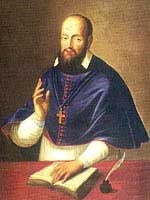 Introduction to the Devout Life
By
St. Francis de Sales
read by Omar F. A. Guiterrez
Chapter 11 -Â The Third Meditation : Â [powerpress]
For the pdf containing the complete text and footnotes click here
Other audio meditations from the Introduction of the Devout Life
Of the Gifts of God
Preparation.
1. PLACE yourself in the Presence of God.
2. Ask Him to inspire your heart.Considerations.
1. Consider the material gifts God has given you—your body, and the means for its preservation; your health, and all that maintains it; your friends and many helps. Consider too how many persons more deserving than you are without these gifts; some suffering in health or limb, others exposed to injury, contempt and trouble, or sunk in poverty, while God has willed you to be better off.
2. Consider the mental gifts He has given you. Why are you not stupid, idiotic, insane like many you wot of? Again, God has favoured you with a decent and suitable education, while many have grown up in utter ignorance.
3. Further, consider His spiritual gifts. You are a child of His Church, God has taught you to know Himself from your youth. How often has He given you His Sacraments? what inspirations and interior light, what reproofs, He has given to lead you aright; how often He has forgiven you, how often delivered you from occasions of falling; what opportunities He has granted for your soul’s progress! Dwell somewhat on the detail, see how Loving and Gracious God has been to you.Affections and Resolutions.
1. Marvel at God’s Goodness. How good He has been to me, how abundant in mercy and plenteous in loving-kindness! O my soul, be thou ever telling of the great things the Lord has done for thee!
2. Marvel at your own ingratitude. What am I, Lord, that Thou rememberest me? How unworthy am I! I have trodden Thy Mercies under root, I have abused Thy Grace, turning it against Thy very Self; I have set the depth of my ingratitude against the deep of Thy Grace and Favour.
3. Kindle your gratitude. O my soul, be no more so faithless and disloyal to thy mighty Benefactor! How should not my whole soul serve the Lord, Who has done such great things in me and for me?
4. Go on, my daughter, to refrain from this or that material indulgence; let your body be wholly the servant of God, Who has done so much for it: set your soul to seek Him by this or that devout practice suitable thereto. Make diligent use of the means provided by the Church to help you to love God and save your soul. Resolve to be constant in prayer and seeking the Sacraments, in hearing God’s Word, and in obeying His inspirations and counsels.Conclusion.
1. Thank God for the clearer knowledge He has given you of His benefits and your own duty.
2. Offer your heart and all its resolutions to Him.
3. Ask Him to strengthen you to fulfil them faithfully by the Merits of the Death of His Son.OUR FATHER, etc.
Gather the little spiritual bouquet.
Tags: spiritual gifts, st francis de sales
This entry was posted on Tuesday, February 18th, 2014 at 2:28 pm
You can follow any responses to this entry through the RSS 2.0 feed.
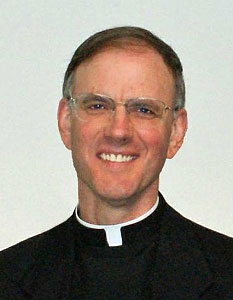 Episode 12-The Tenth Rule:
Let him who is in consolation think how he will be in the desolation which will come after, taking new strength for then.
[powerpress]
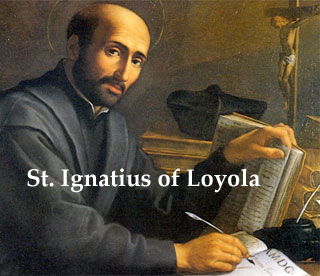 The Discernment of Spirits: Setting the Captives Free – Serves as an introduction to the Spiritual Exercises of St. Ignatius of Loyola
The 14 Rules for Discerning Spirits –
“The Different Movements Which Are Caused In The Soul”
as outlined by St. Ignatius of Loyola can be found here
Father Timothy M. Gallagher, O.M.V., was ordained in 1979 as a member of the Oblates of the Virgin Mary, a religious community dedicated to retreats and spiritual formation according to the Spiritual Exercises of St. Ignatius. Â Fr. Gallagher is featured on the EWTN series “Living the Discerning Life: Â The Spiritual Teachings of St. Ignatius of Loyola”.Â
For more information on how to obtain copies of Fr. Gallaghers’s various books and audio which are available for purchase, please visit  his  website: www.frtimothygallagher.org
 For the other episodes in this series visit
Fr. Timothy Gallagher’s “Discerning Hearts†page
Tags: discernment of spirits, Father Timothy M. Gallagher, Timothy Gallagher
This entry was posted on Tuesday, February 18th, 2014 at 6:49 am
You can follow any responses to this entry through the RSS 2.0 feed.
 [powerpress]
How are you tempted? Â What is your weakness? What is the remedy?
Reading 1 Â Â Â JAS 1:12-18
for when he has been proven he will receive the crown of life
that he promised to those who love him.
No one experiencing temptation should say,
“I am being tempted by Godâ€;
for God is not subject to temptation to evil,
and he himself tempts no one.
Rather, each person is tempted when lured and enticed by his desire.
Then desire conceives and brings forth sin,
and when sin reaches maturity it gives birth to death.Do not be deceived, my beloved brothers and sisters:
all good giving and every perfect gift is from above,
coming down from the Father of lights,
with whom there is no alteration or shadow caused by change.
He willed to give us birth by the word of truth
that we may be a kind of first fruits of his creatures
Lectionary for Mass for Use in the Dioceses of the United States, second typical edition, Copyright © 2001, 1998, 1997, 1986, 1970 Confraternity of Christian Doctrine;
Tags: catholic, catholic podcast, catholic prayer
This entry was posted on Tuesday, February 18th, 2014 at 6:37 am
You can follow any responses to this entry through the RSS 2.0 feed.
 Episode 10- Seeking Truth with Sharon Doran -Announcement of the Kingdom Of God (PART 1) [powerpress]
Episode 11 –
Announcement of the Kingdom Of God  (part 1)
“Repent, for the Kingdom of God is at hand.â€
With these words, Jesus proclaimed the coming of God’s Kingdom.
People have always clamored for a King and Israel had good and bad Kings throughout her history. But Jesus Christ is the true King, the eternal King, the KING of KINGS and Lord of Lords.
Through his bride the Church, his kingdom reigns on earth and in heaven.
As partakers of the sacraments, we return to the divine nature God initially intended.
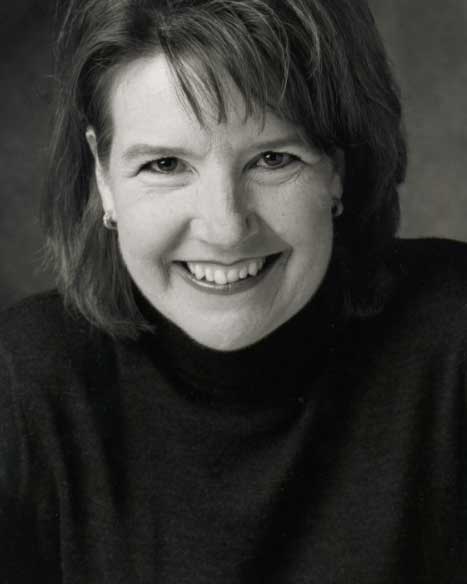
Sharon Doran serves as the teaching director of “Seeking Truth.†An experienced Bible Study teacher, Sharon has a passion for scripture that will motivate and challenge you to immerse yourself in God’s Word and apply His message to your every day life.
 “Seeking Truth†is an in depth Catholic Bible Study, commissioned by the Archdiocese of Omaha in response to John Paul II’s call to the New Evangelization as well as Pope Benedict XVI’s exhortation for all Catholics to study scripture. To learn more go to:www.seekingtruth.net
Tags: kingdom of god, Sharon Doran, the Kingdom Of God
This entry was posted on Tuesday, February 18th, 2014 at 4:49 am
You can follow any responses to this entry through the RSS 2.0 feed.