 Site Type
 Featured
 Fonts
Fonts Skins
Skins
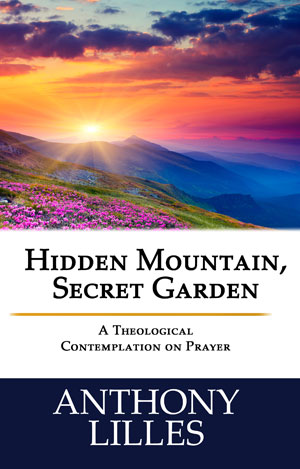
BTP#34 – “Hidden Mountain, Secret Garden” – The Mystery of Faith in the Wisdom of the Saints. Â In this episode Dr. Lilles discusses the writing of his book.
[powerpress]
 In this episode Dr. Lilles discusses the writing of his book, “Hidden Mountain, Secret Garden:  A Theological Contemplation of Prayer”.  What is a “mystic” and what is the particular calling of Carmelite spirituality is also addressed.  St. Therese, St. Teresa of Avila, St. John of the Cross, and Blessed Elizabeth of the Trinity are highlighted.
Dr.Anthony Lilles is a Catholic husband and father of three teaching Spiritual Theology at St. John Vianney Theological Seminary. He  teaches spiritual theology and spiritual direction to transitional deacons, and the spiritual classics to the men who enter the Spirituality Year, a year of prayer in preparation for seminary formation.  He is the author of the “Beginning to Pray”  Catholic blog spot.
For other episodes in the series visit the Discerning Hearts page for Dr. Anthony Lilles
Tags: Anthony Lilles, Lilles, Secret Garden
This entry was posted on Tuesday, February 18th, 2014 at 1:17 am
You can follow any responses to this entry through the RSS 2.0 feed.
FG#12 – The Way of Trust and Love Ep 1 – Fountains of Grace: reflections on contemporary spiritual classics with Donna Garrett
Join host Donna Garrett, with Fr. James Perez, LC, as they discuss the spiritual classic “The Way of Trust and Love:Â A Retreat Guided By St. Therese of Lisieux“Â by Fr. Â Jacques Philippe.
[powerpress]
Discussed in this episode, among other topics, Â from “The Way of Trust and Love” page 9
This is what Thérèse said:
Fr. James Perez, LC, joins Donna for this series
You know, Mother, that I have always desired to be a saint, but alas, I have always realized, when I compared myself to the saints, that there is between them and me the same difference as exists between a mountain whose summit is lost in the skies, and the obscure grain of sand trodden underfoot by passers-by. Instead of getting discouraged, I said to myself: “God could not inspire us with desires that were unrealizable, so despite my littleness I can aspire to holiness. It is impossible for me to grow up, I must put up with myself as I am , with all my imperfections; but I want to find how to get to Heaven by a little way that is quite straight, quite short: a completely new little way. We are in an age of inventions; now one doesn’t have to make the effort to climb up a stairway in rich people’s houses, because an elevator does the work much better. I too would like to find an elevator to lift me up to Jesus, for I am too little to climb up the steep stairway of perfection.†Then I looked in the holy books for some sign of the elevator that I desired, and I read these words that had come forth from the mouth of Eternal Wisdom: “Whoever is VERY LITTLE let him come to me†[Proverbs 9: 4]. So I came, guessing that I had found what I sought. Wishing to know, O my God, what you would do for a little child who answered your call, I continued my search and this is what I found: “As a mother caresses her baby, so I will comfort you; I will carry you at my breast and rock you in my lap†[Isaiah 66: 13, 12]. Ah! never had such tender, melodious words come to rejoice my soul; the elevator that would lift me up to Heaven is your arms, O Jesus! To reach perfection, I do not need to grow up. On the contrary, I need to stay little, to become more and more little. O my God, you have surpassed my expectations, and I wish to sing of your mercies.For other episodes in the this series click here “Fountains of Grace w/Donna Garrett“
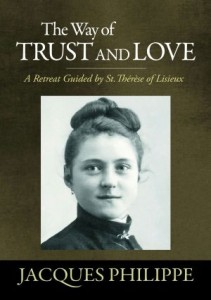
You can find “The Way of Trust and Love” here
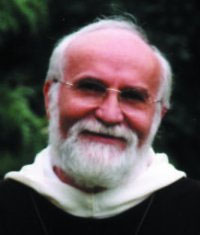
Fr. Jacques Philippe
Tags: catholic, catholic podcast, catholic prayer
This entry was posted on Tuesday, February 18th, 2014 at 12:59 am
You can follow any responses to this entry through the RSS 2.0 feed.
Episode 3 -The Way of Mystery: The Eucharist and Moral Living 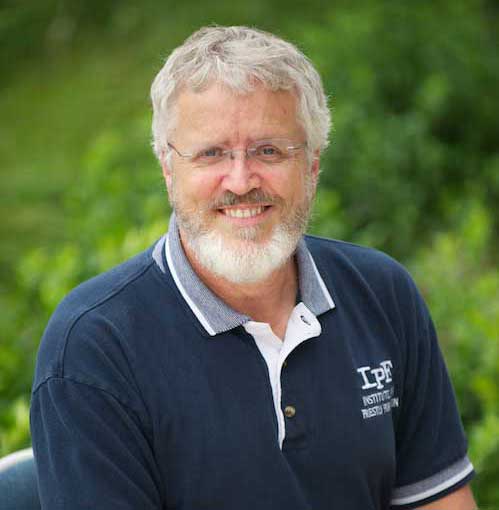
The Paschal Mystery and the importance of the Mass in our life of prayer
[powerpress]
For more episodes in “The Way of Mystery” Series click here
Deacon James Keating, PhD, the director of Theological Formation for the Institute for Priestly Formation, located at Creighton University, in Omaha, is making available to â€Discerning Hearts†and all who listen, his series of programs entitled “The Way of Mysteryâ€.
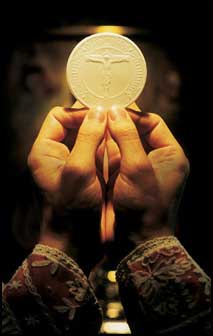 The Vatican II documents remind us that the spiritual journey is not made in a vacuum, that God has chosen to save us, not individually, but as The People of God. The Eucharist must help Christians to make their choices by discerning out of Christ’s paschal mystery. For this process to take place, however, Christians must first understand how the Eucharist puts them in touch with Christ’s passion, death, and resurrection, and what concrete implications being in touch with this mystery has for their daily lives.

For more information on the “Institute of Priestly Formation†and for other material available by Deacon Keating, just click here
Don’t forget to pickup a copy of “Communion with Christ†, it is one of the best audio sets on prayer…ever!
Check out Deacon Keating’s “Discerning Heart†page
Tags: institute for priestly formation, james keating, paschal mystery, theological formation
This entry was posted on Wednesday, February 12th, 2014 at 2:01 pm
You can follow any responses to this entry through the RSS 2.0 feed.
USCCA9- Episode 9-Â Receive the Holy Spirit
[powerpress]
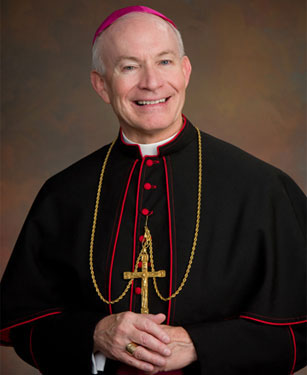
Archbishop Lucas offers insights on the US Catholic Catechism for Adults Chapter 9:
The Holy Spirit is dynamic, transforming our bodies into temples of God and  our souls into dwelling places for Christ.  Sometimes called the Paraclete, a term that describes him as adovcate and consoler, the Holy Spirit wants to fill us with inspiration and encouragement
The Most Reverend George J. Lucas leads the Archdiocese of Omaha.Â
For other episodes in the visit our Archbishop George Lucas page
This programs is based on:
More information can be found here.
We wish to thank the USCCB for the permissions granted for use of  relevant material used in this series.
Also we wish to thank Omar Gutierrez, Teresa Monaghen, and Bruce McGregor for their vocal talents in this episode.
Tags: George Lucas, the Holy Spirit
This entry was posted on Wednesday, February 12th, 2014 at 1:40 pm
You can follow any responses to this entry through the RSS 2.0 feed.
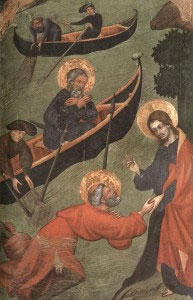
Is Jesus Calling? A Spiritual Guide to Discerning Your Vocational Call with Fr. Paul Hoesing – episode 3: 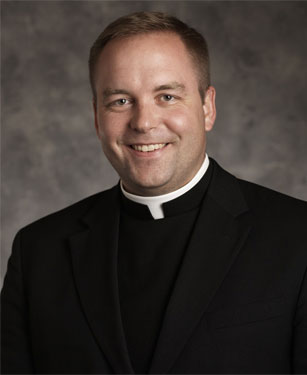 The Third Spiritual Lesson: Trust God. “When the thought of your vocation comes into your mind and heart, if you keep it to yourself in your mind, dwelling on it over and over trying to figure it out or trying to control it or trying to get rid of it, then you will be choosing not to trust.”
Questions: Where are the particular classrooms in the general school of dependence where you are being invited to trust in God? What are the storms in your life that make your mind race causing confusion in you? Jesus wants do to something for you there. Focus him. Bring it to him. Desire his love in it.
[powerpress]
Based on “Is Jesus Calling You To Be A Catholic Priest: A helpful guide”, published by National Conference of Diocesan Vocation Director.
Fr. Paul Hoesing serves as the Vocation Director for the Archdiocese of Omaha, NE.
Check out “For Your Vocation.org”
Tags: Paul Hoesing, Spiritual Lesson
This entry was posted on Thursday, February 6th, 2014 at 9:19 am
You can follow any responses to this entry through the RSS 2.0 feed.
Episode 11 -The Ninth Rule:
There are three principal reasons why we find ourselves desolate.
The first is, because of our being tepid, lazy or negligent in our spiritual exercises; and so through our faults, spiritual consolation withdraws from us.
The second, to try us and see how much we are and how much we let ourselves out in His service and praise without such great pay of consolation and great graces.
The third, to give us true acquaintance and knowledge, that we may interiorly feel that it is not ours to get or keep great devotion, intense love, tears, or any other spiritual consolation, but that all is the gift and grace of God our Lord, and that we may not build a nest in a thing not ours, raising our intellect into some pride or vainglory, attributing to us devotion or the other things of the spiritual consolation.
[powerpress]
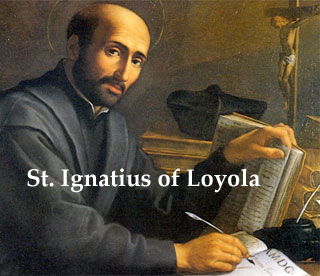 The Discernment of Spirits: Setting the Captives Free – Serves as an introduction to the Spiritual Exercises of St. Ignatius of Loyola
The 14 Rules for Discerning Spirits –
“The Different Movements Which Are Caused In The Soul”
as outlined by St. Ignatius of Loyola can be found here
Father Timothy M. Gallagher, O.M.V., was ordained in 1979 as a member of the Oblates of the Virgin Mary, a religious community dedicated to retreats and spiritual formation according to the Spiritual Exercises of St. Ignatius. Â Fr. Gallagher is featured on the EWTN series “Living the Discerning Life: Â The Spiritual Teachings of St. Ignatius of Loyola”.Â
For more information on how to obtain copies of Fr. Gallaghers’s various books and audio which are available for purchase, please visit  his  website: www.frtimothygallagher.org
 For the other episodes in this series visit
Fr. Timothy Gallagher’s “Discerning Hearts†page
Tags: catholic, catholic podcast, catholic prayer
This entry was posted on Thursday, February 6th, 2014 at 12:41 am
You can follow any responses to this entry through the RSS 2.0 feed.
 Episode 3 St. Catherine of Siena:  Her Life and Teachings with Fr. Thomas McDermott-
[powerpress]
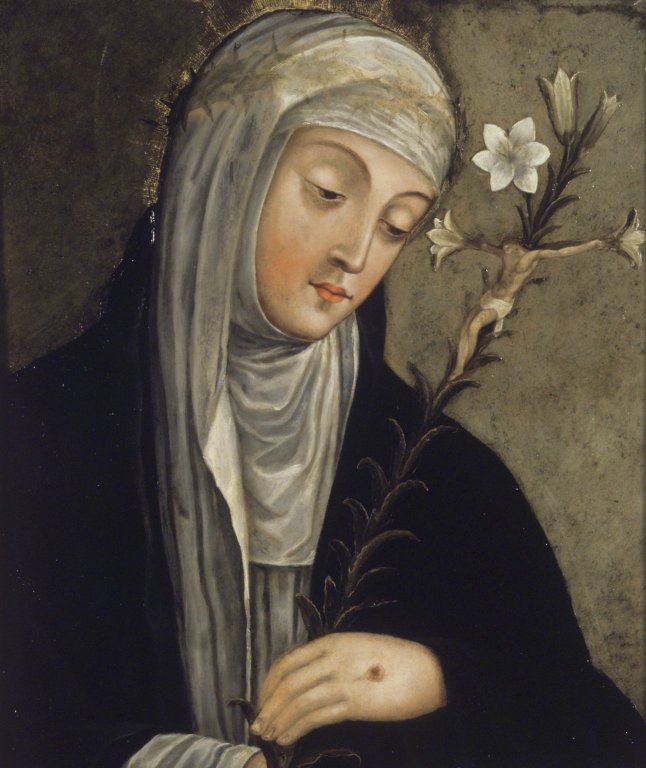 In this episode, Fr. McDermott discusses the experience of St. Catherine’s “Mystical Espousal” and it’s spiritual relevance.
 The virtues are discussed as central to St. Catherine’s teachings and the importance of properly understanding their value in our lives.  The response to the needs of one’s neighbor is emphasized.  In particular, the special interaction with Andrea, the woman with cancer, is presented as an extraordinary moment of grace which aided in St. Catherine’s spiritual maturity and growth in holiness.  Fr. McDermott addresses the contemporary “controversy” over the actions taken in this particular experience.Â
The other experiences of the summer 1380, the exchange of hearts the mystical death are discussed, as well as, the saint’s invisible stigmata.
Fr. Thomas McDermott, OP is Regent of Studies for the Dominican Province of St. Albert the Great and is the author of “Catherine of Siena: Spiritual Development in Her Life and Teaching” (Paulist, 2008) and  “Filled with all the Fullness of God: An Introduction to Catholic Spirituality”.  He obtained a doctorate in spiritual theology from the Angelicum and taught for several years at Kenrick-Glennon Seminary in St. Louis.  He crrently serves as pastor at St. Vincent Ferrer, in Chicago, IL.
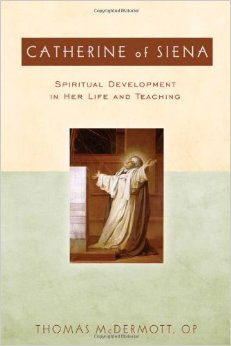
Our series is based on “Catherine of Siena”
by Fr. McDermott
Tags: catherine of siena, st catherine of siena, Thomas McDermott
This entry was posted on Wednesday, February 5th, 2014 at 11:59 am
You can follow any responses to this entry through the RSS 2.0 feed.
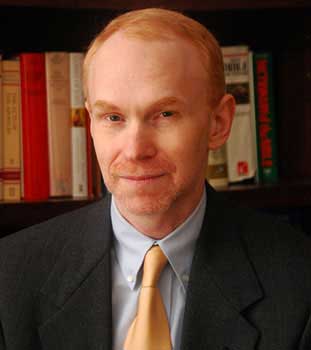
Dr. Matthew Bunson discusses the life, times and teachings of St. Gregory the Great
 [powerpress]
Today I would like to present the figure of one of the greatest Fathers in the history of the Church, one of four Doctors of the West, Pope St Gregory, who was Bishop of Rome from 590 to 604, and who earned the traditional title of Magnus/the Great. Gregory was truly a great Pope and a great Doctor of the Church! He was born in Rome about 540 into a rich patrician family of the gens Anicia, who were distinguished not only for their noble blood but also for their adherence to the Christian faith and for their service to the Apostolic See. Two Popes came from this family: Felix III
(483-492), the great-great grandfather of Gregory, and Agapetus (535-536). The house in which Gregory grew up stood on the Clivus Scauri, surrounded by majestic buildings that attested to the greatness of ancient Rome and the spiritual strength of Christianity. The example of his parents Gordian and Sylvia, both venerated as Saints, and those of his father’s sisters, Aemiliana and Tharsilla, who lived in their own home as consecrated virgins following a path of prayer and self-denial, inspired lofty Christian sentiments in him.
In the footsteps of his father, Gregory entered early into an administrative career which reached its climax in 572 when he became Prefect of the city. This office, complicated by the sorry times, allowed him to apply himself on a vast range to every type of administrative problem, drawing light for future duties from them. In particular, he retained a deep sense of order and discipline: having become Pope, he advised Bishops to take as a model for the management of ecclesial affairs the diligence and respect for the law like civil functionaries . Yet this life could not have satisfied him since shortly after, he decided to leave every civil assignment in order to withdraw to his home to begin the monastic life, transforming his family home into the monastery of St Andrew on the Coelian Hill. This period of monastic life, the life of permanent dialogue with the Lord in listening to his word, constituted a perennial nostalgia which he referred to ever anew and ever more in his homilies. In the midst of the pressure of pastoral worries, he often recalled it in his writings as a happy time of recollection in God, dedication to prayer and peaceful immersion in study. Thus, he could acquire that deep understanding of Sacred Scripture and of the Fathers of the Church that later served him in his work.
But the cloistered withdrawal of Gregory did not last long. The precious experience that he gained in civil administration during a period marked by serious problems, the relationships he had had in this post with the Byzantines and the universal respect that he acquired induced Pope Pelagius to appoint him deacon and to send him to Constantinople as his “apocrisarius” – today one would say “Apostolic Nuncio” in order to help overcome the last traces of the Monophysite controversy and above all to obtain the Emperor’s support in the effort to check the Lombard invaders. The stay at Constantinople, where he resumed monastic life with a group of monks, was very important for Gregory, since it permitted him to acquire direct experience of the Byzantine world, as well as to approach the problem of the Lombards, who would later put his ability and energy to the test during the years of his Pontificate. After some years he was recalled to Rome by the Pope, who appointed him his secretary. They were difficult years: the continual rain, flooding due to overflowing rivers, the famine that afflicted many regions of Italy as well as Rome. Finally, even the plague broke out, which claimed numerous victims, among whom was also Pope Pelagius II. The clergy, people and senate were unanimous in choosing Gregory as his successor to the See of Peter. He tried to resist, even attempting to flee, but to no avail: finally, he had to yield. The year was 590.
For more visit Vatican.va
Dr. Matthew Bunson, Senior Fellow of the St. Paul Center for Biblical Theology, is one of the United States’ leading authorities on the papacy and the Church.
His books include: The Encyclopedia of Catholic History; The Encyclopedia of Saints; Papal Wisdom; All Shall Be Well; Encyclopedia of the Roman Empire; and The Angelic Doctor: The Life and World of St. Thomas Aquinas; The Pope Encyclopedia; We Have a Pope! Benedict XVI, the first Catholic biography of the Holy Father in the English language; the Encyclopedia of U.S. Catholic History; Pope Francis. His also the editor of OSV’s “The Catholic Answer” magazine.
Tags: matthew bunson, pope benedict xvi
This entry was posted on Wednesday, February 5th, 2014 at 5:18 am
You can follow any responses to this entry through the RSS 2.0 feed.
USCCA8- Episode 8-Â The Saving Death and Resurrection of Christ
[powerpress]
Archbishop Lucas offers insights on the US Catholic Catechism for Adults Chapter 8:
Because Christ’s suffering and death was the instruments of salvation, from what did he save us? Â We needed to be saved from sin and its damaging effects. Â God’s plan to save us involved having the Son of God enter into this world to be like us in all things except sin. Â Divine love made this possible.
The Most Reverend George J. Lucas leads the Archdiocese of Omaha.Â
For other episodes in the visit our Archbishop George Lucas page
This programs is based on:
More information can be found here.
We wish to thank the USCCB for the permissions granted for use of  relevant material used in this series.
Also we wish to thank Omar and Miriam Gutierrez for their vocal talents in this episode.
Tags: Catholic Catechism, George Lucas, Saving Death and Resurrection of Christ
This entry was posted on Tuesday, February 4th, 2014 at 12:07 pm
You can follow any responses to this entry through the RSS 2.0 feed.
God’s Plan for Marriage
[powerpress
The Pharisees asked Jesus if he thought it was lawful for a man to divorce his wife.
Jesus responded by pointing them back to God’s original plan: “From the beginning,†Jesus explained, “God made them male and female. For this reason a man shall leave his father and mother, and the two shall become one flesh. So they are no longer two but one flesh. Therefore what God has joined together, no one must separate.â€1
Jesus came to restore what was lost in the Fall, to make us new creations who live by the power of the Holy Spirit. We should recognize that the strife and troubles of our world are not normal, but the result of the Fall and sin.
Therefore, Catholic marriages should not look like secular marriages. They are sacramental, which means that our marriages are to be the very thing in our lives that God uses to help us grow in holiness. Those who truly put Christ and the sacraments at the center of their marriage will find that in spite of the challenges, their love for one another will grow and help lead them closer in union to God.
1 – Mk. 10:6-9
Tags: God's Plan, Jesus, Marriage God's Plan
This entry was posted on Tuesday, February 4th, 2014 at 12:59 am
You can follow any responses to this entry through the RSS 2.0 feed.
Episode 18 – The Holy Rule of St. Benedict: A Spiritual Path for Today’s World with Fr. Mauritius Wilde O.S.B., PhD.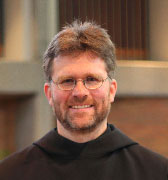
Listening to God’s Voice…Obedience
[powerpress]
From the Holy Rule of St. Benedict:
CHAPTER V
Of ObedienceThe first degree of humility is obedience without delay. This becometh those who, on account of the holy subjection which they have promised, or of the fear of hell, or the glory of life everlasting, hold nothing dearer than Christ. As soon as anything hath been commanded by the Superior they permit no delay in the execution, as if the matter had been commanded by God Himself. Of these the Lord saith: “At the hearing of the ear he hath obeyed Me” (Ps 17[18]:45). And again He saith to the teachers: “He that heareth you heareth Me” (Lk 10:16).Such as these, therefore, instantly quitting their own work and giving up their own will, with hands disengaged, and leaving unfinished what they were doing, follow up, with the ready step of obedience, the work of command with deeds; and thus, as if in the same moment, both matters — the master’s command and the disciple’s finished work — are, in the swiftness of the fear of God, speedily finished together, whereunto the desire of advancing to eternal life urgeth them. They, therefore, seize upon the narrow way whereof the Lord saith: “Narrow is the way which leadeth to life” (Mt 7:14), so that, not living according to their own desires and pleasures but walking according to the judgment and will of another, they live in monasteries, and desire an Abbot to be over them. Such as these truly live up to the maxim of the Lord in which He saith: “I came not to do My own will, but the will of Him that sent Me” (Jn 6:38).This obedience, however, will be acceptable to God and agreeable to men then only, if what is commanded is done without hesitation, delay, lukewarmness, grumbling or complaint, because the obedience which is rendered to Superiors is rendered to God. For He Himself hath said: “He that heareth you heareth Me” (Lk 10:16). And it must be rendered by the disciples with a good will, “for the Lord loveth a cheerful giver (2 Cor 9:7). ” For if the disciple obeyeth with an ill will, and murmureth, not only with lips but also in his heart, even though he fulfil the command, yet it will not be acceptable to God, who regardeth the heart of the murmurer. And for such an action he acquireth no reward; rather he incurreth the penalty of murmurers, unless he maketh satisfactory amendment.
Father Mauritius Wilde, OSB, Ph.D., did his philosophical, theological and doctoral studies in Europe. He is the author of several books and directs retreats regularly. He serves as Prior of our monastery in Schuyler.
 For more information about the ministry of the the Missionary Benedictines of Christ the King Priory in Schuyler, Nebraska visit here:
Tags: catholic, catholic podcast, catholic prayer
This entry was posted on Monday, February 3rd, 2014 at 10:30 am
You can follow any responses to this entry through the RSS 2.0 feed.
Episode 10 -The Eighth Rule: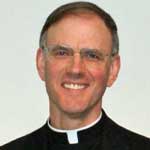
Let him who is in desolation labor to be in patience, which is contrary to the vexations which come to him: and let him think that he will soon be consoled, employing against the desolation the devices, as is said in the sixth Rule.
[powerpress]
The Discernment of Spirits: Setting the Captives Free – Serves as an introduction to the Spiritual Exercises of St. Ignatius of Loyola
The 14 Rules for Discerning Spirits –
“The Different Movements Which Are Caused In The Soul”
as outlined by St. Ignatius of Loyola
can be found here
Father Timothy M. Gallagher, O.M.V., was ordained in 1979 as a member of the Oblates of the Virgin Mary, a religious community dedicated to retreats and spiritual formation according to the Spiritual Exercises of St. Ignatius. Â Fr. Gallagher is featured on the EWTN series “Living the Discerning Life: Â The Spiritual Teachings of St. Ignatius of Loyola”.Â
For more information on how to obtain copies of Fr. Gallaghers’s various books and audio which are available for purchase, please visit  his  website: www.frtimothygallagher.org
 For the other episodes in this series visit
Fr. Timothy Gallagher’s “Discerning Hearts†page
Tags: discernment of spirits, Father Timothy M. Gallagher, Timothy Gallagher
This entry was posted on Monday, February 3rd, 2014 at 4:38 am
You can follow any responses to this entry through the RSS 2.0 feed.
THE WAY OF PERFECTION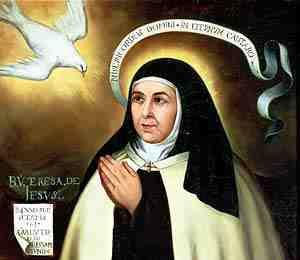
By
St. Teresa of Avila
Chapter 16
[powerpress]
For the pdf containing the complete text and footnotes click here
Describes the difference between perfection in the lives of contemplatives and in the lives of those who are content with mental prayer. Explains how it is sometimes possible for God to raise a distracted soul to perfect contemplation and the reason for this. This chapter and that which comes next are to be noted carefully.
For other audio chapters of
“The Way of Perfection”
THE WAY OF PERFECTION
by
ST. TERESA OF AVILA
Translated & Edited by
E. ALLISON PEERS
from the Critical Editon of
P. SILVERIO DE SANTA TERESA, C.D.
Tags: st. teresa of avila, The Way of Perfection
This entry was posted on Sunday, February 2nd, 2014 at 2:26 pm
You can follow any responses to this entry through the RSS 2.0 feed.
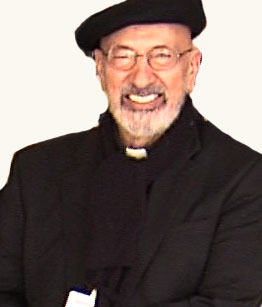 Show 57″ Building a Kingdom of Love” – The Presentation in the Temple
[powerpress]
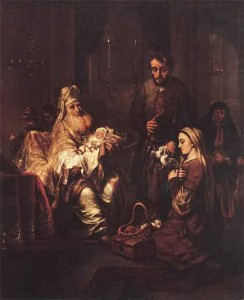
Msgr. Esseff reflects on the teaching of the Sacred Scriptures for the Feast of the Presentation in the Temple .Do your recognize His Presence?:
Gospel lk 2:22-40
When the days were completed for their purification
according to the law of Moses,
Mary and Joseph took Jesus up to Jerusalem
to present him to the Lord,
just as it is written in the law of the Lord,
Every male that opens the womb shall be consecrated to the Lord,
and to offer the sacrifice of
a pair of turtledoves or two young pigeons,
in accordance with the dictate in the law of the Lord.Now there was a man in Jerusalem whose name was Simeon.
This man was righteous and devout,
awaiting the consolation of Israel,
and the Holy Spirit was upon him.
It had been revealed to him by the Holy Spirit
that he should not see death
before he had seen the Christ of the Lord.
He came in the Spirit into the temple;
and when the parents brought in the child Jesus
to perform the custom of the law in regard to him,
he took him into his arms and blessed God, saying:“Now, Master, you may let your servant go
in peace, according to your word,
for my eyes have seen your salvation,
which you prepared in the sight of all the peoples:
a light for revelation to the Gentiles,
and glory for your people Israel.â€The child’s father and mother were amazed at what was said about him;
and Simeon blessed them and said to Mary his mother,
“Behold, this child is destined
for the fall and rise of many in Israel,
and to be a sign that will be contradicted
—and you yourself a sword will pierce—
so that the thoughts of many hearts may be revealed.â€
There was also a prophetess, Anna,
the daughter of Phanuel, of the tribe of Asher.
She was advanced in years,
having lived seven years with her husband after her marriage,
and then as a widow until she was eighty-four.
She never left the temple,
but worshiped night and day with fasting and prayer.
And coming forward at that very time,
she gave thanks to God and spoke about the child
to all who were awaiting the redemption of Jerusalem.When they had fulfilled all the prescriptions
of the law of the Lord,
they returned to Galilee, to their own town of Nazareth.
The child grew and became strong, filled with wisdom;
and the favor of God was upon him.
Lectionary for Mass for Use in the Dioceses of the United States, second typical edition, Copyright © 2001, 1998, 1997, 1986, 1970 Confraternity of Christian Doctrine;
Msgr. John A. Esseff is a Roman Catholic priest in the Diocese of Scranton. He was ordained on May 30th 1953, by the late Bishop William J. Hafey, D.D. at St. Peter’s Cathedral in Scranton, PA. Msgr. Esseff served a retreat director and confessor to Blessed Mother Teresa. He continues to offer direction and retreats for the sisters of the missionaries of charity around the world. Msgr. Esseff encountered St. Padre Pio, who would become a spiritual father to him. He has lived in areas around the world, serving in the Pontifical missions, a Catholic organization established by Bl. Pope John Paul II to bring the Good News to the world especially to the poor. Msgr. Esseff assisted the founders of the Institute for Priestly Formation and continues to serve as a spiritual director for the Institute. He continues to serve as a retreat leader and director to bishops, priests and sisters and seminarians and other religious leaders around the world.
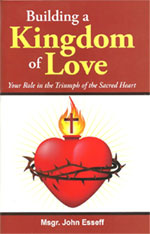
To obtain a copy of Msgr. Esseff’s book by visiting here
Be sure to visit Msgr. Esseff’s website “Building a Kingdom of Love”
Tags: catholic, catholic podcast, catholic prayer
This entry was posted on Sunday, February 2nd, 2014 at 7:23 am
You can follow any responses to this entry through the RSS 2.0 feed.
Episode 10- Seeking Truth with Sharon Doran – The Temptation of Jesus (PART 2)  [powerpress]
Sharon Doran serves as the teaching director of “Seeking Truth.†An experienced Bible Study teacher, Sharon has a passion for scripture that will motivate and challenge you to immerse yourself in God’s Word and apply His message to your every day life.
Episode 10 –
Temptation of Jesus
Matthew 4, Mark 1 and Luke 4 (part 2)
Temptation…. Who can resist it? Led by the Holy Spirit, Jesus goes out to the desert tobattle Satan, the father of lies. Drawing from the Hebrew Scriptures, Sharon shows how this pivotal event in the ministry of Jesus is connected with so many Old Testament figures: Adam, Elijah, Elisha and King David. In addition, Sharon teaches us that the temptations before Jesus are no different than the ones Adam faced, no different than the ones we face. But armed with the Word of God, Jesus triumphs over the Evil One and the angels are sent to minister to Him.
 “Seeking Truth†is an in depth Catholic Bible Study, commissioned by the Archdiocese of Omaha in response to John Paul II’s call to the New Evangelization as well as Pope Benedict XVI’s exhortation for all Catholics to study scripture. To learn more go to:www.seekingtruth.net
Tags: Desert Temptation of Jesus, Sharon Doran, Temptation of Jesus
This entry was posted on Sunday, February 2nd, 2014 at 5:37 am
You can follow any responses to this entry through the RSS 2.0 feed.