 Site Type
 Featured
 Fonts
Fonts Skins
Skins
Episode 12-The Way of Mystery: The Eucharist and Moral Living 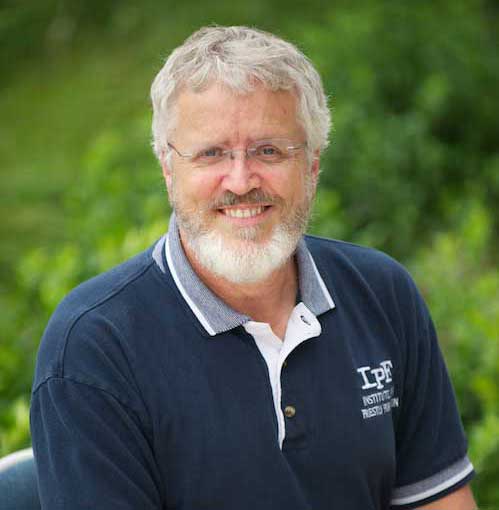
 The Liturgy of the Eucharist part 4 : the Communion Rite…The moment of radical surrender…can we do it? We when come forward to communion, what are doing…what are we saying? Will we allow ourselves to be transformed? The moment of silence…will we allow ourselves to be transformed within so we can go out to transform the culture for Christ?
[powerpress]
For more episodes in “The Way of Mystery” Series click here
Deacon James Keating, PhD, the director of Theological Formation for the Institute for Priestly Formation, located at Creighton University, in Omaha, is making available to â€Discerning Hearts†and all who listen, his series of programs entitled “The Way of Mysteryâ€.
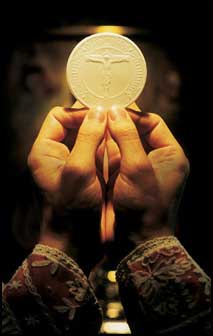 The Vatican II documents remind us that the spiritual journey is not made in a vacuum, that God has chosen to save us, not individually, but as The People of God. The Eucharist must help Christians to make their choices by discerning out of Christ’s paschal mystery. For this process to take place, however, Christians must first understand how the Eucharist puts them in touch with Christ’s passion, death, and resurrection, and what concrete implications being in touch with this mystery has for their daily lives.

For more information on the “Institute of Priestly Formation†and for other material available by Deacon Keating, just click here
Don’t forget to pickup a copy of “Communion with Christ†, it is one of the best audio sets on prayer…ever!
Check out Deacon Keating’s “Discerning Heart†page
Tags: catholic, catholic podcast, catholic prayer, cathollc spirituality, Deacon Keating, james keating, the eucharist, theological formation
This entry was posted on Wednesday, May 14th, 2014 at 4:19 pm
You can follow any responses to this entry through the RSS 2.0 feed.
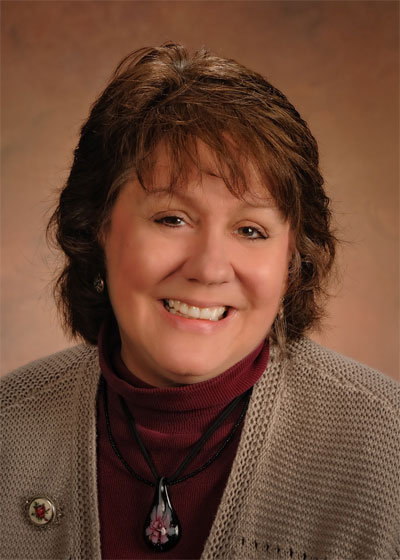 What a joy to discover “Embracing Edith Stein:  Wisdom for Women from St. Teresa Benedicta of the Cross” by author Anne Costa.  Far from a clinical dissertation on Edith Stein’s writings, Anne introduces us to a woman with whom she has shared a rich spiritual friendship.  By learning from and then implementing  her wealth of teaching, Anne gives a saint who can help us to grow in faith and wisdom .  Highly recommended!
[powerpress]
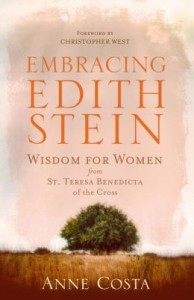 You can find the book here
From the book description:
Embracing Edith Stein shows how the different aspects of the life and teachings of St. Teresa Benedicta of the Cross can serve as a guide for women and their unique vocation today. Written in a friendly, conversational style, this is one woman sharing the story of her friendship with this saint with her readers.
Tags: Anne Costa, catholic, catholic podcast, catholic prayer, cathollc spirituality, spiritual friendship, St. Teresa Benedicta, Wisdom for Women
This entry was posted on Wednesday, May 14th, 2014 at 6:48 am
You can follow any responses to this entry through the RSS 2.0 feed.
Episode 7 The Daily Prayer of Discernment: The Ignatian Wisdom of the Examen Prayer with Fr. Timothy Gallagher.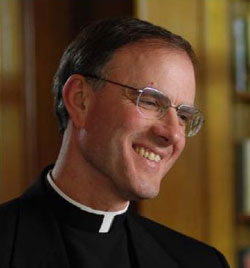
Fr. Gallagher continues to discuss the  the fifth step – RENEWAL – which is how we move forward after our encounter with God in our prayer.
[powerpress]
As outlined from the Spiritual Exercises of St. Ignatius of Loyola
(translated from the autograph by Fr. E. Mullan, S.J. Â 1909Â in the public domain)
METHOD FOR MAKING THE GENERAL EXAMEN
It contains in it five Points.First Point. The first Point is to give thanks to God our Lord for the benefits received.
Second Point. The second, to ask grace to know our sins and cast them out.
Third Point. The third, to ask account of our soul from the hour that we rose up to the present Examen, hour by hour, or period by period: and first as to thoughts, and then as to words, and then as to acts, in the same order as was mentioned in the Particular Examen.
Fourth Point. The fourth, to ask pardon of God our Lord for the faults.
Fifth Point. The fifth, to purpose amendment with His grace.OUR FATHER.
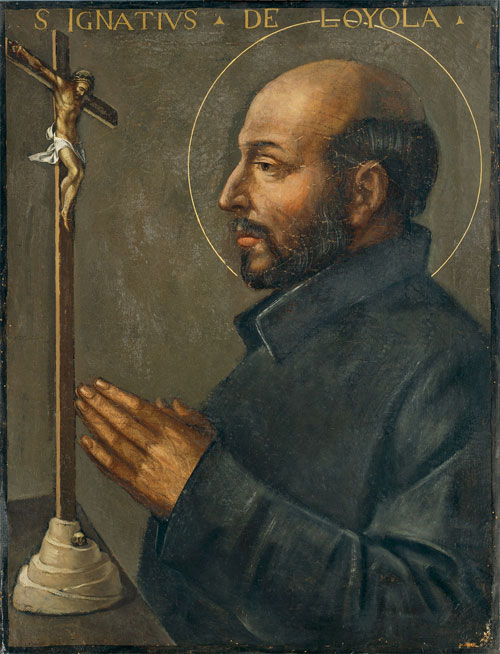
Father Timothy M. Gallagher, O.M.V., was ordained in 1979 as a member of the Oblates of the Virgin Mary, a religious community dedicated to retreats and spiritual formation according to the Spiritual Exercises of St. Ignatius. Â Fr. Gallagher is featured on the EWTN series “Living the Discerning Life: Â The Spiritual Teachings of St. Ignatius of Loyola”. Â For more information on books and audio available for purchase from Fr. Timothy Gallagher check out his website: www.frtimothygallagher.org
For the other episodes in this series check out
Fr. Timothy Gallagher’s “Discerning Hearts†page
Tags: catholic, catholic podcast, catholic prayer, cathollc spirituality, Father Timothy M. Gallagher, Timothy Gallagher
This entry was posted on Tuesday, May 13th, 2014 at 4:14 pm
You can follow any responses to this entry through the RSS 2.0 feed.
[powerpress]Msgr. Esseff reflects on Our Lady of Fatima and the power of the Holy Rosary. It is a tremendous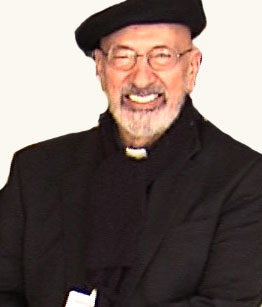 instrument of peace to those who pray in Our Lady’s garden of prayer. Â Anyone seeking
 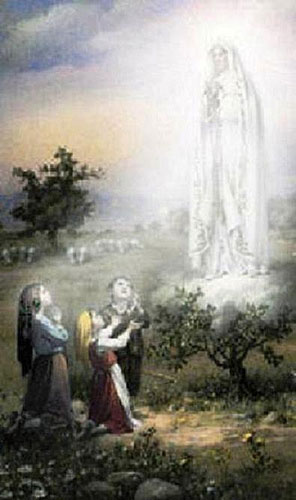 peace in the world, as well in their own lives, should turn to Our Lady and her Holy Rosary. Â The way to the face of God can be found in the Holy Rosary and all the mysteries contained in this treasury of grace.
Tags: catholic, catholic podcast, catholic prayer, cathollc spirituality
This entry was posted on Tuesday, May 13th, 2014 at 7:36 am
You can follow any responses to this entry through the RSS 2.0 feed.
[powerpress]
Join Bruce and I as we discuss Our Lady of Fatima with Teresa Monaghen of the Pro Sanctity Movement.
She also shares with us the complying memory of May 13, 1981 when she was in the square at St. Peter’s and St. John Paul II was shot.
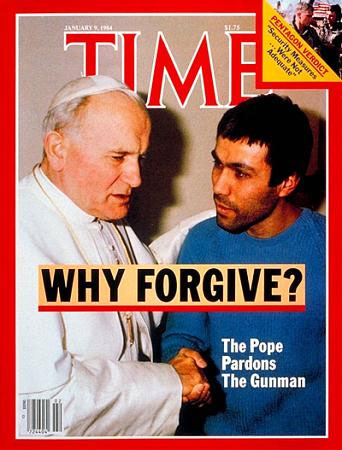
For more on the Message of Fatima click here
Tags: catholic, catholic podcast, catholic prayer, cathollc spirituality, john paul ii, Join Bruce, teresa monaghen
This entry was posted on Tuesday, May 13th, 2014 at 5:32 am
You can follow any responses to this entry through the RSS 2.0 feed.
Fr. Andrew Apostoli does a tremendous job covering all the varied aspects of the events of Fatima and the  call  of Our Lady of Fatima. He conveys the “immaculate” heart of the message, as well as tackling the “controversies” that have plagued the events over the years.  Because of the prophetic nature of her messages, Our Lady of Fatima has been the subject of much controversy and speculation. In this book, Father Andrew Apostoli carefully analyzes the events that took place in Fatima and clears up lingering questions and doubts about their meaning. He also challenges the reader to hear anew the call of Our Lady to prayer and sacrifice, for the world is ever in need of generous hearts willing to make reparation for those in danger of losing their way to God.
Lady of Fatima. He conveys the “immaculate” heart of the message, as well as tackling the “controversies” that have plagued the events over the years. Â Because of the prophetic nature of her messages, Our Lady of Fatima has been the subject of much controversy and speculation. In this book, Father Andrew Apostoli carefully analyzes the events that took place in Fatima and clears up lingering questions and doubts about their meaning. He also challenges the reader to hear anew the call of Our Lady to prayer and sacrifice, for the world is ever in need of generous hearts willing to make reparation for those in danger of losing their way to God.
[powerpress]
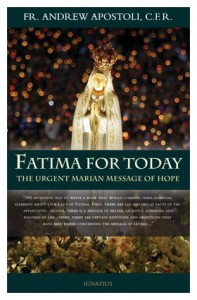
Check out the book here
“As was so dramatically obvious during the visit of Pope Benedict XVI to Fatima in May, 2010, Our Lady’s apparitions in 1917 remain powerfully compelling for us today. There she was an evangelist, calling us to prayer, conversion of heart, and penance, pointing to Jesus and repeating her words at Cana, ‘Do whatever He tells you.’ This book brings it all home.”
-Most Reverend Timothy Dolan, Archbishop of New York
“For us, Fatima is a sign of the presence of faith, of the fact that it is precisely from the little ones that faith gains new strength, one which is not limited to the little ones but has a message for the entire world and touches history here and now, and sheds light on this history . . . Even now there is tribulation, in every conceivable form, and power threatens to trample down faith. Even now, then, there is a need for the answer about which the Mother of God spoke to the children at Fatima.”
-Pope Benedict XVI
Tags: andrew apostoli, catholic, catholic podcast, catholic prayer, cathollc spirituality, lady of fatima, pope benedict xvi
This entry was posted on Tuesday, May 13th, 2014 at 12:28 am
You can follow any responses to this entry through the RSS 2.0 feed.
USCCA41 Â Chapter 32 – Tell the Truth: The 8th Commandment
[powerpress]
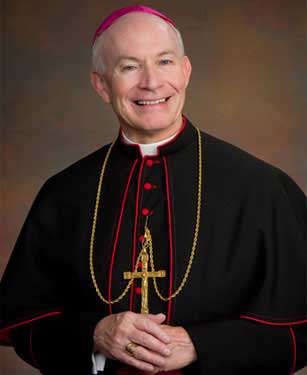
Archbishop Lucas offers insights on the US Catholic Catechism for Adults Chapter 32:
“Lying is the most direct offense against the truth…. By injuring man’s relation to truth and to his neighbor, a lie offends against the fundamental relation of man and of his word to the Lord†(CCC, no. 2483). People sin against the truth when they are guilty of ruining the reputation of another by telling lies, when they practice rash judgment, or when they engage in detraction (the unjust telling of someone’s faults), perjury (lying under oath), or calumny (telling lies about another).
Scripture is clear about the evil of lying. In the Sermon on the Mount, Jesus said, “Let your ‘Yes’ mean ‘Yes’ and your ‘No’ mean ‘No.’ Anything more is from the evil one†(Mt 5:37). This reminds us not only that we need to be truthful, but also that hypocrisy—saying one thing while doing the opposite—is a sin against truth.
In the Gospel of John, Jesus describes the devil as father of lies (cf. Jn 8:44). St. Paul discouraged lying: “Stop lying to one anotherâ€(Col 3:9); “Speak the truth, each one to his neighbor, for we are members one of another†(Eph 4:25).
Happily, history is filled with stories of people who valued the truth so highly that they were willing to die for it. St. John Fisher (1469-1535) and St. Thomas More (1478-1535) surrendered their lives rather than approve of the divorce of King Henry VIII or deny the truth that the pope is Christ’s appointed head of the Church. During World War II, Franz Jagerstatter, an Austrian farmer, refused to accept the lies of the Nazis, and he was martyred for his commitment to Christ’s truth. During the French Revolution, a convent of Carmelite nuns chose to ignore laws that disbanded their monastery and continued to live together as a community. They courageously went to the guillotine rather than abandon the truth for which their vows stood.
United States Conference of Catholic Bishops (USCCB) (2012-04-02). United States Catholic Catechism for Adults (Kindle Locations 6248-6261). United States Conference of Catholic Bishops (USCCB). Kindle Edition.
The Most Reverend George J. Lucas leads the Archdiocese of Omaha.Â
For other episodes in the visit our Archbishop George Lucas page
This programs is based on:
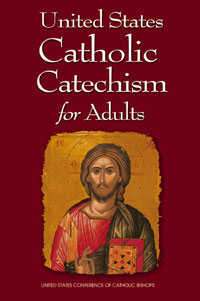
More information can be found here.
We wish to thank the USCCB for the permissions granted for use of  relevant material used in this series.
Tags: catholic, catholic podcast, catholic prayer, cathollc spirituality, George Lucas, United States Catholic Catechism, United States Conference of Catholic Bishops
This entry was posted on Wednesday, April 30th, 2014 at 4:06 am
You can follow any responses to this entry through the RSS 2.0 feed.
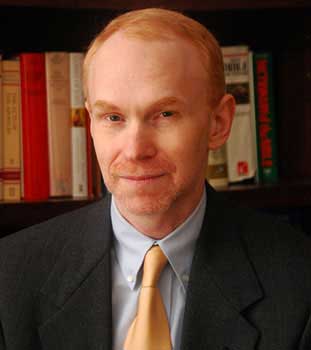
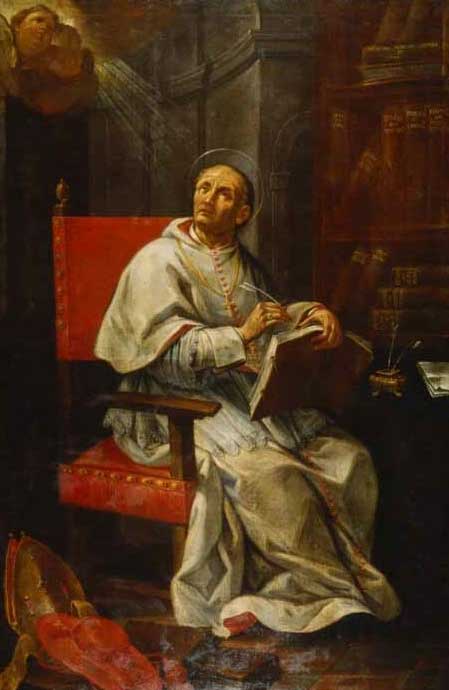
Dr. Matthew Bunson discusses the life, times and teachings of St. Peter Damian
 [powerpress]
-
Born: 1007, Ravenna, Italy
-
Died: February 23, 1072, Faenza, Italy
From Vatican.va, an excerpt from the teachings of Pope Benedict XVI General Audience 2009
St Peter Damian, who was essentially a man of prayer, meditation and contemplation, was also a fine theologian: his reflection on various doctrinal themes led him to important conclusions for life. Thus, for example, he expresses with clarity and liveliness the Trinitarian doctrine, already using, under the guidance of biblical and patristic texts, the three fundamental terms which were subsequently to become crucial also for the philosophy of the West: processio, relatio and persona (cf. Opusc. XXXVIII: PL CXLV, 633-642; and Opusc. II and III: ibid., 41 ff. and 58 ff). However, because theological analysis of the mystery led him to contemplate the intimate life of God and the dialogue of ineffable love between the three divine Persons, he drew ascetic conclusions from them for community life and even for relations between Latin and Greek Christians, divided on this topic. His meditation on the figure of Christ is significantly reflected in practical life, since the whole of Scripture is centred on him. The “Jews”, St Peter Damian notes, “through the pages of Sacred Scripture, bore Christ on their shoulders as it were” (Sermo XLVI, 15). Therefore Christ, he adds, must be the centre of the monk’s life: “May Christ be heard in our language, may Christ be seen in our life, may he be perceived in our hearts” (Sermo VIII, 5). Intimate union with Christ engages not only monks but all the baptized. Here we find a strong appeal for us too not to let ourselves be totally absorbed by the activities, problems and preoccupations of every day, forgetting that Jesus must truly be the centre of our life.
Communion with Christ creates among Christians a unity of love. In Letter 28, which is a brilliant ecclesiological treatise, Peter Damian develops a profound theology of the Church as communion. “Christ’s Church”, he writes, is united by the bond of charity to the point that just as she has many members so is she, mystically, entirely contained in a single member; in such a way that the whole universal Church is rightly called the one Bride of Christ in the singular, and each chosen soul, through the sacramental mystery, is considered fully Church”. This is important: not only that the whole universal Church should be united, but that the Church should be present in her totality in each one of us. Thus the service of the individual becomes “an expression of universality” (Ep 28, 9-23). However, the ideal image of “Holy Church” illustrated by Peter Damian does not correspond as he knew well to the reality of his time. For this reason he did not fear to denounce the state of corruption that existed in the monasteries and among the clergy, because, above all, of the practice of the conferral by the lay authorities of ecclesiastical offices; various Bishops and Abbots were behaving as the rulers of their subjects rather than as pastors of souls. Their moral life frequently left much to be desired. For this reason, in 1057 Peter Damian left his monastery with great reluctance and sorrow and accepted, if unwillingly, his appointment as Cardinal Bishop of Ostia. So it was that he entered fully into collaboration with the Popes in the difficult task of Church reform. He saw that to make his own contribution of helping in the work of the Church’s renewal contemplation did not suffice. He thus relinquished the beauty of the hermitage and courageously undertook numerous journeys and missions.
Because of his love for monastic life, 10 years later, in 1067, he obtained permission to return to Fonte Avellana and resigned from the Diocese of Ostia. However, the tranquillity he had longed for did not last long: two years later, he was sent to Frankfurt in an endeavour to prevent the divorce of Henry iv from his wife Bertha. And again, two years later, in 1071, he went to Monte Cassino for the consecration of the abbey church and at the beginning of 1072, to Ravenna, to re-establish peace with the local Archbishop who had supported the antipope bringing interdiction upon the city.
On the journey home to his hermitage, an unexpected illness obliged him to stop at the Benedictine Monastery of Santa Maria Vecchia Fuori Porta in Faenza, where he died in the night between 22 and 23 February 1072.
For more visit Vatican.va
Dr. Matthew Bunson, Senior Fellow of the St. Paul Center for Biblical Theology, is one of the United States’ leading authorities on the papacy and the Church.
His books include: The Encyclopedia of Catholic History; The Encyclopedia of Saints; Papal Wisdom; All Shall Be Well; Encyclopedia of the Roman Empire; and The Angelic Doctor: The Life and World of St. Thomas Aquinas; The Pope Encyclopedia; We Have a Pope! Benedict XVI, the first Catholic biography of the Holy Father in the English language; the Encyclopedia of U.S. Catholic History; Pope Francis. His also the editor of OSV’s “The Catholic Answer” magazine.
Tags: catholic, catholic podcast, catholic prayer, cathollc spirituality
This entry was posted on Tuesday, April 29th, 2014 at 8:37 am
You can follow any responses to this entry through the RSS 2.0 feed.
Episode 11 -The Way of Mystery: The Eucharist and Moral Living
The Liturgy of the Eucharist part 3 : The Eucharistic Prayer…God teaching us to pray. What are we doing in our participation and are we truly ready to receive the Body of Christ? Should we, in integrity, receive the Truth of Christ in Communion…do we really believe?
[powerpress]
For more episodes in “The Way of Mystery” Series click here
Deacon James Keating, PhD, the director of Theological Formation for the Institute for Priestly Formation, located at Creighton University, in Omaha, is making available to â€Discerning Hearts†and all who listen, his series of programs entitled “The Way of Mysteryâ€.
The Vatican II documents remind us that the spiritual journey is not made in a vacuum, that God has chosen to save us, not individually, but as The People of God. The Eucharist must help Christians to make their choices by discerning out of Christ’s paschal mystery. For this process to take place, however, Christians must first understand how the Eucharist puts them in touch with Christ’s passion, death, and resurrection, and what concrete implications being in touch with this mystery has for their daily lives.
For more information on the “Institute of Priestly Formation†and for other material available by Deacon Keating, just click here
Don’t forget to pickup a copy of “Communion with Christ†, it is one of the best audio sets on prayer…ever!
Check out Deacon Keating’s “Discerning Heart†page
Tags: body of christ, catholic, catholic podcast, catholic prayer, cathollc spirituality, james keating, the eucharist, theological formation
This entry was posted on Tuesday, April 29th, 2014 at 7:49 am
You can follow any responses to this entry through the RSS 2.0 feed.
 Episode 16- Seeking Truth with Sharon Doran -Announcement of the Kingdom Of God (PART 2)
[powerpress]
Episode 16 –
Beatitudes (part 2)
“Blessed are…..â€
The Beatitudes. So familiar, yet do we really understand them?
In this lecture, Sharon blazes through the history of Israel, setting the stage for a deeper understanding of the meaning of the Beatitudes.
The occupied, oppressed nation of Israel was yearning for a savior, a savior that would rid them of centuries of foreign occupation.
Then Jesus arrives, working amazing miracles.
Could He be the One??
Expectations are high, but expectations are turned inside-out as Jesus proclaims the paradoxical truths of the Beatitudes.
Sharon Doran serves as the teaching director of “Seeking Truth.†An experienced Bible Study teacher, Sharon has a passion for scripture that will motivate and challenge you to immerse yourself in God’s Word and apply His message to your every day life.
 “Seeking Truth†is an in depth Catholic Bible Study, commissioned by the Archdiocese of Omaha in response to John Paul II’s call to the New Evangelization as well as Pope Benedict XVI’s exhortation for all Catholics to study scripture. To learn more go to:www.seekingtruth.net
Tags: beatitudes, catholic, catholic podcast, catholic prayer, cathollc spirituality, Sharon Doran, The Beatitudes
This entry was posted on Tuesday, April 29th, 2014 at 6:45 am
You can follow any responses to this entry through the RSS 2.0 feed.
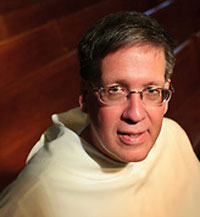 Episode 8Â St. Catherine of Siena: Her Life and Teachings with Fr. Thomas McDermott
[powerpress]
 In this final episode, Fr. McDermott discuss the final step of the spiritual life which is actually comprised of two stages: “perfect love” and  “perfect union”. On the “Christ-Bridge” we find ourselves with St. Catherine at the “mouth” of Christ which corresponds to the first chapter of the “Song of Songs”.  Fr. McDermott expands on St. Catherine’s teachings on the role we have as sons and daughters of the Father.
Fr. McDermott then offers a summation of St. Catherine’s teachings as a conclusion for our discussions.
Fr. Thomas McDermott, OP is Regent of Studies for the Dominican Province of St. Albert the Great and is the author of “Catherine of Siena: Spiritual Development in Her Life and Teaching” (Paulist, 2008) and “Filled with all the Fullness of God: An Introduction to Catholic Spirituality”. He obtained a doctorate in spiritual theology from the Angelicum and taught for several years at Kenrick-Glennon Seminary in St. Louis. He crrently serves as pastor at St. Vincent Ferrer, in Chicago, IL.
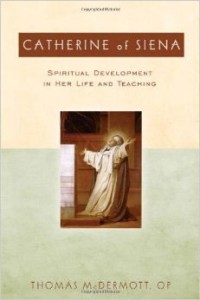
Our series is based on “Catherine of Siena”
by Fr. McDermott
Tags: catholic, catholic podcast, catholic prayer, cathollc spirituality, McDermott, st catherine of siena, Thomas McDermott
This entry was posted on Tuesday, April 29th, 2014 at 5:24 am
You can follow any responses to this entry through the RSS 2.0 feed.
Episode 16- Regnum Novum: Bringing forth the New Evangelization through Catholic Social Teaching with Omar Gutierrez -  St. John XXIII , Pacem in Terras (Peace on Earth) and the Natural Law
[powerpress]
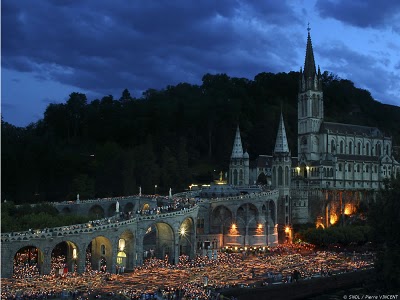
We live at a very special time. The confluence of many things has brought forth the clear need to be able to articulate the Social Teaching of the Catholic Church in a way that is accessible and applicable. This is not to be an effort where high-minded theories are to be bandied about. Rather, this is a time of opportunity wherein we can apply the Social Doctrine to the concrete so as to bring about a New Kingdom, a Revolution. – Omar G.
Pacem in Terris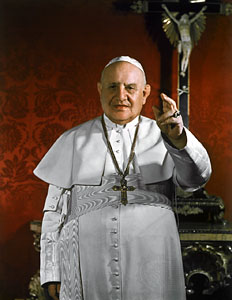  (Peace on Earth) was a papal encyclical issued by Pope John XXIII on 11 April 1963.
Also visit Omar’s “Discerning Hearts” page Catholic Social Teaching 101
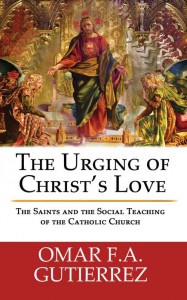
You can find Omar Gutierrez’s book here
In The Urging of Christ’s Love Omar Gutiérrez tells the stories of eleven people who lived their lives in pursuit of Christ Jesus. Each Saint, Blessed or Servant of God is considered in the context of Catholic Social Teaching. Then at the end of each chapter a prayer is offered and quotes from the Compendium of the Social Doctrine of the Church are provided in order to link the lessons we can learn from the saint’s life to Church teaching. By discovering some new saint friends, and rediscovering some old ones, The Urging of Christ’s Love presents Catholic Social Teaching in an accessible and important way.
Tags: catholic, catholic podcast, catholic prayer, cathollc spirituality
This entry was posted on Monday, April 28th, 2014 at 7:34 am
You can follow any responses to this entry through the RSS 2.0 feed.
Episode 26- The Holy Rule of St. Benedict: A Spiritual Path for Today’s World with Fr. Mauritius Wilde O.S.B., 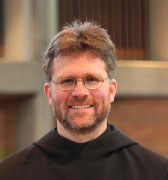 PhD.
PhD.
“In place of serving self…the community meal”
[powerpress]
From the Holy Rule of St. Benedict:
CHAPTERÂ XXIV
The degree of excommunication or punishment ought to be meted out according to the gravity of the offense, and to determine that is left to the judgment of the Abbot. If, however, anyone of the brethren is detected in smaller faults, let him be debarred from eating at the common table. The following shall be the practice respecting one who is excluded from the common table: that he does not intone a psalm or an antiphon nor read a lesson in the oratory until he hath made satisfaction; let him take his meal alone, after the refection of the brethren; thus: if, for instance, the brethren take their meal at the sixth hour that brother will take his at the ninth, and if the brethren take theirs at the ninth, he will take his in the evening, until by due satisfaction he obtaineth pardon.
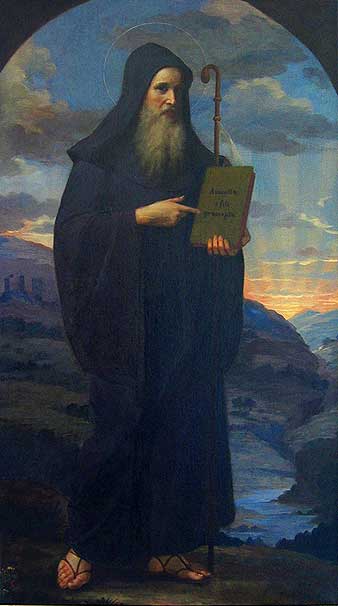
 For more information about the ministry of the the Missionary Benedictines of Christ the King Priory in Schuyler, Nebraska visit here:
Tags: catholic, catholic podcast, catholic prayer, cathollc spirituality
This entry was posted on Monday, April 28th, 2014 at 6:38 am
You can follow any responses to this entry through the RSS 2.0 feed.
Episode 6 The Daily Prayer of Discernment: The Ignatian Wisdom of the Examen Prayer with Fr. Timothy 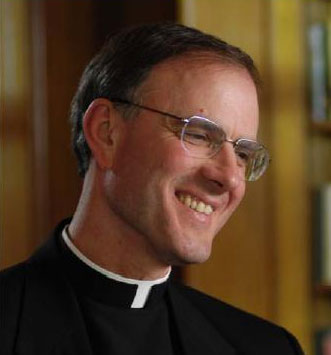 Gallagher.
Fr. Gallagher continues to discuss the fourth step – Â FORGIVENESS. Â Then we approach the fifth step – RENEWAL – which is how we move forward after our encounter with God in our prayer.
[powerpress]
As outlined from the Spiritual Exercises of St. Ignatius of Loyola
(translated from the autograph by Fr. E. Mullan, S.J. Â 1909Â in the public domain)
METHOD FOR MAKING THE GENERAL EXAMEN
It contains in it five Points.First Point. The first Point is to give thanks to God our Lord for the benefits received.
Second Point. The second, to ask grace to know our sins and cast them out.
Third Point. The third, to ask account of our soul from the hour that we rose up to the present Examen, hour by hour, or period by period: and first as to thoughts, and then as to words, and then as to acts, in the same order as was mentioned in the Particular Examen.
Fourth Point. The fourth, to ask pardon of God our Lord for the faults.
Fifth Point. The fifth, to purpose amendment with His grace.OUR FATHER.
Father Timothy M. Gallagher, O.M.V., was ordained in 1979 as a member of the Oblates of the Virgin Mary, a religious community dedicated to retreats and spiritual formation according to the Spiritual Exercises of St. Ignatius. Â Fr. Gallagher is featured on the EWTN series “Living the Discerning Life: Â The Spiritual Teachings of St. Ignatius of Loyola”. Â For more information on books and audio available for purchase from Fr. Timothy Gallagher check out his website: www.frtimothygallagher.org
For the other episodes in this series check out
Fr. Timothy Gallagher’s “Discerning Hearts†page
Tags: catholic, catholic podcast, catholic prayer, cathollc spirituality, Father Timothy M. Gallagher, Timothy Gallagher
This entry was posted on Monday, April 28th, 2014 at 5:22 am
You can follow any responses to this entry through the RSS 2.0 feed.
Mark answers – 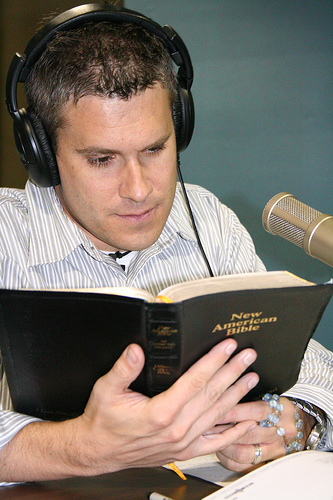
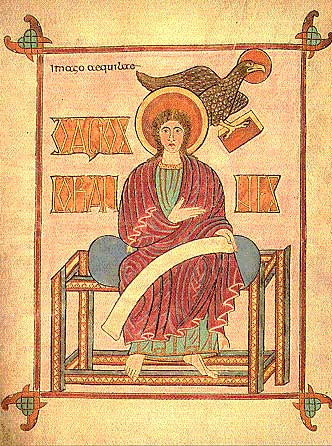
The Gospel of John..it’s time, context, importance and relevance for today. Who was John? Who were the people he was addressing? What makes it unique?
[powerpress]
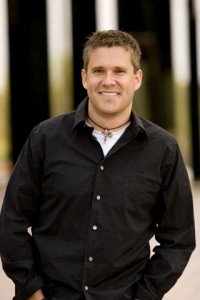
[ powerpress] Mark Hart is an author, speaker, director and teacher, Mark’s work both written and spoken, is known across the country and world. While he serves as the Vice President of LIFE TEEN, he is known to tens of thousands simply as the “Bible Geek ®†Mark passionately echoes the gospel to all he encounters. He is as deep as he is funny, and his love for his wife and daughters and son is second only to his immense love for Jesus Christ.
Visit Mark at www.lifeteen.com
Tags: catholic, catholic podcast, catholic prayer, cathollc spirituality, mark hart
This entry was posted on Thursday, April 24th, 2014 at 10:34 am
You can follow any responses to this entry through the RSS 2.0 feed.