 Site Type
 Featured
 Fonts
Fonts Skins
Skins
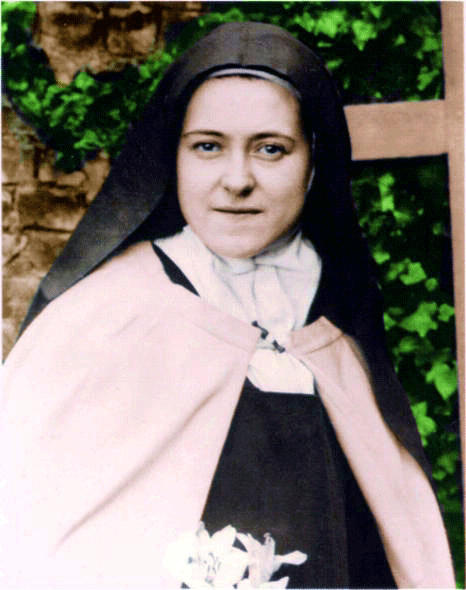 OK, everyone lets put the Little Flower to work (it brings her great joy, don’tcha know)! Today begins the novena to St. Therese of Lisieux. Her feast day is Oct. 1. She’s only merely huge… why she’s only slightly enormous…barely gigantic in all the little ways…she’s Our Little Flower.  A Doctor of the Church, who’s little way leads to the greatest love.
Teresa of Elkhorn, (Teresa Monaghen of course) leads us in our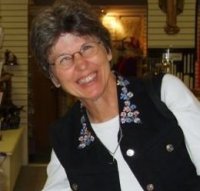 Novena to St. Therese.
Tags: catholic, catholic podcast, catholic prayer, cathollc spirituality, little flower, novena to st therese, saints, st. therese, teresa monaghen
This entry was posted on Wednesday, September 22nd, 2010 at 4:11 pm
You can follow any responses to this entry through the RSS 2.0 feed.
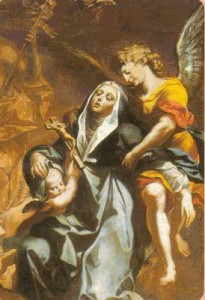 There’s somethng that happens when you not only read and recite but when you also hear…when you listen deeply and profoundly. The private revelation which was given to St. Bridget of Sweden that day in the chapel of the church of St. Paul’s Outside the Walls in Rome over 600 years ago is still one of the most poignant and compelling moments in all mystical experiences. The Church has deemed this worthy of belief to the extent that it can edify one’s faith rather than hurt; that indeed if practiced and nurtured it could open the heart for an outpouring of grace.
The “Pieta Prayers” of St. Bridget of Sweden can be a challenging practice in today’s world. To help foster a greater understanding and devotion to Our Lord’s Passion, Discerning Hearts has produced a MP3 Downloadable audio which we hope will assist you in some way.
[powerpress = “Devotionals-Prayers”]Â (featuring Bruce McGregor and Denise Wharton)
For the complete texts, promises and ecclesial advisements click here
Tags: 15 prayers of st bridget, catholic, catholic podcast, catholic prayer, cathollc spirituality, devotion, Discerning Hearts, hope, mp3 downloadable, mystic, mystic of the Church, mystical experiences, pieta, prayers, private revelation, st bridget of sweden, Sweden, women of the middle ages
This entry was posted on Saturday, September 18th, 2010 at 5:12 pm
You can follow any responses to this entry through the RSS 2.0 feed.
Dr. Patricia Cooney Hathaway concentrates on helping women understand the relationship between 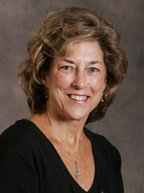 faith and human experience during the middle years within the context of the whole life cycle. This book is EXCELLENT! She explores the wrenching and puzzling questions women in their middle years need to ask: Who am I? Who am I with? Where am I going in terms of a life plan? What aids or blocks my growth? Is God a personal God who is invested in my life? Do I have a personal destiny related to God? What is the meaning of suffering? What is my fate after death?  Drawing from the Mystical Doctors of the Church, Dr. Hathaway offeres an ou
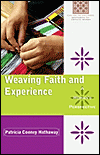 tstanding spiritual resource for women.
[powerpress]
Click here to pick up a copy of Patricia’s book
Tags: catholic, catholic podcast, catholic prayer, cathollc spirituality, Cooney Hathaway, human experience, Patricia Cooney Hathaway, women
This entry was posted on Tuesday, September 14th, 2010 at 8:56 pm
You can follow any responses to this entry through the RSS 2.0 feed.
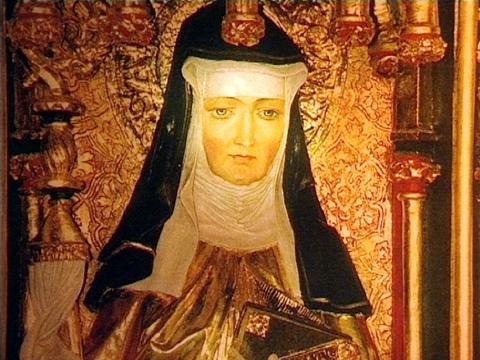 St. Hildegard was a woman who was a great mystic, writer, poet, musician, artist and a devout Benedictine nun!   She valued the hierachy and authority of the Church, and even sought counsel and received validation from the great mystical doctor of the Church, St. Bernard of Clairvaux.Â
Papal Summer Residence, Castel Gandolfo
Wednesday, 1st September 2010“Saint Hildegard of Bingen
Dear Brothers and Sisters,
In 1988, on the occasion of the Marian Year, Venerable John Paul II wrote an Apostolic Letter entitled Mulieris Dignitatem on the precious role that women have played and play in the life of the Church. “The Church”, one reads in it, “gives thanks for all the manifestations of the feminine “genius’ which have appeared in the course of history, in the midst of all peoples and nations; she gives thanks for all the charisms that the Holy Spirit distributes to women in the history of the People of God, for all the victories which she owes to their faith, hope and charity: she gives thanks for all the fruits of feminine holiness” (n. 31).
Various female figures stand out for the holiness of their lives and the wealth of their teaching even in those centuries of history that we usually call the Middle Ages. Today I would like to begin to present one of them to you: St Hildegard of Bingen, who lived in Germany in the 12th century. She was born in 1098, probably at Bermersheim, Rhineland, not far from Alzey, and died in 1179 at the age of 81, in spite of having always been in poor health. Hildegard belonged to a large noble family and her parents dedicated her to God from birth for his service. At the age of eight she was offered for the religious state (in accordance with the Rule of St Benedict, chapter 59), and, to ensure that she received an appropriate human and Christian formation, she was entrusted to the care of the consecrated widow Uda of Gölklheim and then to Jutta of Spanheim who had taken the veil at the Benedictine Monastery of St Disibodenberg. A small cloistered women’s monastery was developing there that followed the Rule of St Benedict. Hildegard was clothed by Bishop Otto of Bamberg and in 1136, upon the death of Mother Jutta who had become the community magistra (Prioress), the sisters chose Hildegard to succeed her. She fulfilled this office making the most of her gifts as a woman of culture and of lofty spirituality, capable of dealing competently with the organizational aspects of cloistered life. A few years later, partly because of the increasing number of young women who were knocking at the monastery door, Hildegard broke away from the dominating male monastery of St Disibodenburg with her community, taking it to Bingen, calling it after St Rupert and here she spent the rest of her days. Her manner of exercising the ministry of authority is an example for every religious community: she inspired holy emulation in the practice of good to such an extent that, as time was to tell, both the mother and her daughters competed in mutual esteem and in serving each other.
During the years when she was superior of the Monastery of St Disibodenberg, Hildegard began to dictate the mystical visions that she had been receiving for some time to the monk Volmar, her spiritual director, and to Richardis di Strade, her secretary, a sister of whom she was very fond. As always happens in the life of true mystics, Hildegard too wanted to put herself under the authority of wise people to discern the origin of her visions, fearing that they were the product of illusions and did not come from God. She thus turned to a person who was most highly esteemed in the Church in those times: St Bernard of Clairvaux, of whom I have already spoken in several Catecheses. He calmed and encouraged Hildegard. However, in 1147 she received a further, very important approval. Pope Eugene iii, who was presiding at a Synod in Trier, read a text dictated by Hildegard presented to him by Archbishop Henry of Mainz. The Pope authorized the mystic to write down her visions and to speak in public. From that moment Hildegard’s spiritual prestige continued to grow so that her contemporaries called her the “Teutonic prophetess”.
This, dear friends, is the seal of an authentic experience of the Holy Spirit, the source of every charism: the person endowed with supernatural gifts never boasts of them, never flaunts them and, above all, shows complete obedience to the ecclesial authority. Every gift bestowed by the Holy Spirit, is in fact intended for the edification of the Church and the Church, through her Pastors, recognizes its authenticity.
I shall speak again next Wednesday about this great woman, this “prophetess” who also speaks with great timeliness to us today, with her courageous ability to discern the signs of the times, her love for creation, her medicine, her poetry, her music, which today has been reconstructed, her love for Christ and for his Church which was suffering in that period too, wounded also in that time by the sins of both priests and lay people, and far better loved as the Body of Christ. Thus St Hildegard speaks to us; we shall speak of her again next Wednesday. Thank you for your attention.”
God is the foundation for everything
This God undertakes, God gives.
Such that nothing that is necessary for life is lacking.
Now humankind needs a body that at all times honors and praises God.
This body is supported in every way through the earth.
Thus the earth glorifies the power of God.
Visit the Discerning Hearts
St. Hildegard von Bingen page
for more on this Doctor of the Church
Tags: Anglican Episcopal, catholic, catholic podcast, catholic prayer, cathollc spirituality, Church, holy father, Matthew Fox, mystic, mystic of the Church, mystical visions, New Agers, st bernard of clairvaux, st hildegard of bingen, st. hildegarde, Vatican Information Service, women of the middle ages
This entry was posted on Thursday, September 2nd, 2010 at 3:14 pm
You can follow any responses to this entry through the RSS 2.0 feed.
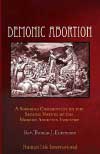
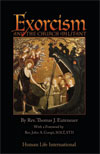
“Demonic Abortion” is the provocative new book by Fr. Thomas Euteneur. It is a  companion to his incredibly successful “Exorcism and the Church Militant”. For anyone engaged in the Pro-life struggle, what he reveals really is not a surprise at all. Fr. Euteneur articulates what we have held in our hearts, but in many cases could not describe fully…the heart just knows this evil has a leader and a purpose. But the great news is that the victory is the Lord’s and He has given us all we need to engage in this battle for the hearts, minds, and souls of our brothers and sisters affected by demonic abortion.   This IS the spiritual battle of our time, from it all other evil pales in comparison. BE NOT AFRAID! Knowing the enemy is half the battle. The Church Militant is called now to stand…to stand for the unborn and their mothers, to stand with Our Lady, to stand up for the Gospel of Life.
[powerpress]
Pick up a copy of either one or both
(go for both they are more than worth it) at www.exorcismbook.com
Tags: catholic, catholic podcast, catholic prayer, cathollc spirituality
This entry was posted on Thursday, September 2nd, 2010 at 1:23 pm
You can follow any responses to this entry through the RSS 2.0 feed.
Gary Jansen’s book is a great way to help any and all who are seeking to “Exercise” their soul. As Fr. James Martin has said, “Jansen offers  straightforward advice on how to begin, or deepen, your relationship with the One who loved us into being”. I couldn’t agree more…let the workout begin!
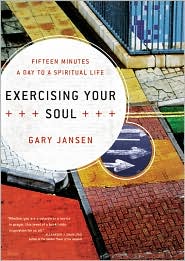
Gary’s book can be found at Amazon.com
[powerpress]
Tags: catholic, catholic podcast, catholic prayer, cathollc spirituality, Gary Jansen, James Martin, Jansen, Pages Gary Jansen, straightforward advice
This entry was posted on Thursday, August 26th, 2010 at 9:16 am
You can follow any responses to this entry through the RSS 2.0 feed.
Litany of Loreto
[powerpress]
V. Lord, have mercy.
R. Christ have mercy.
V. Lord have mercy. Christ hear us.
R. Christ graciously hear us.
God the Father of heaven, have mercy on us.
God the Son, Redeemer of the world, have mercy on us.
God the Holy Spirit, have mercy on us.
Holy Trinity, one God, have mercy on us.
Holy Mary, pray for us. 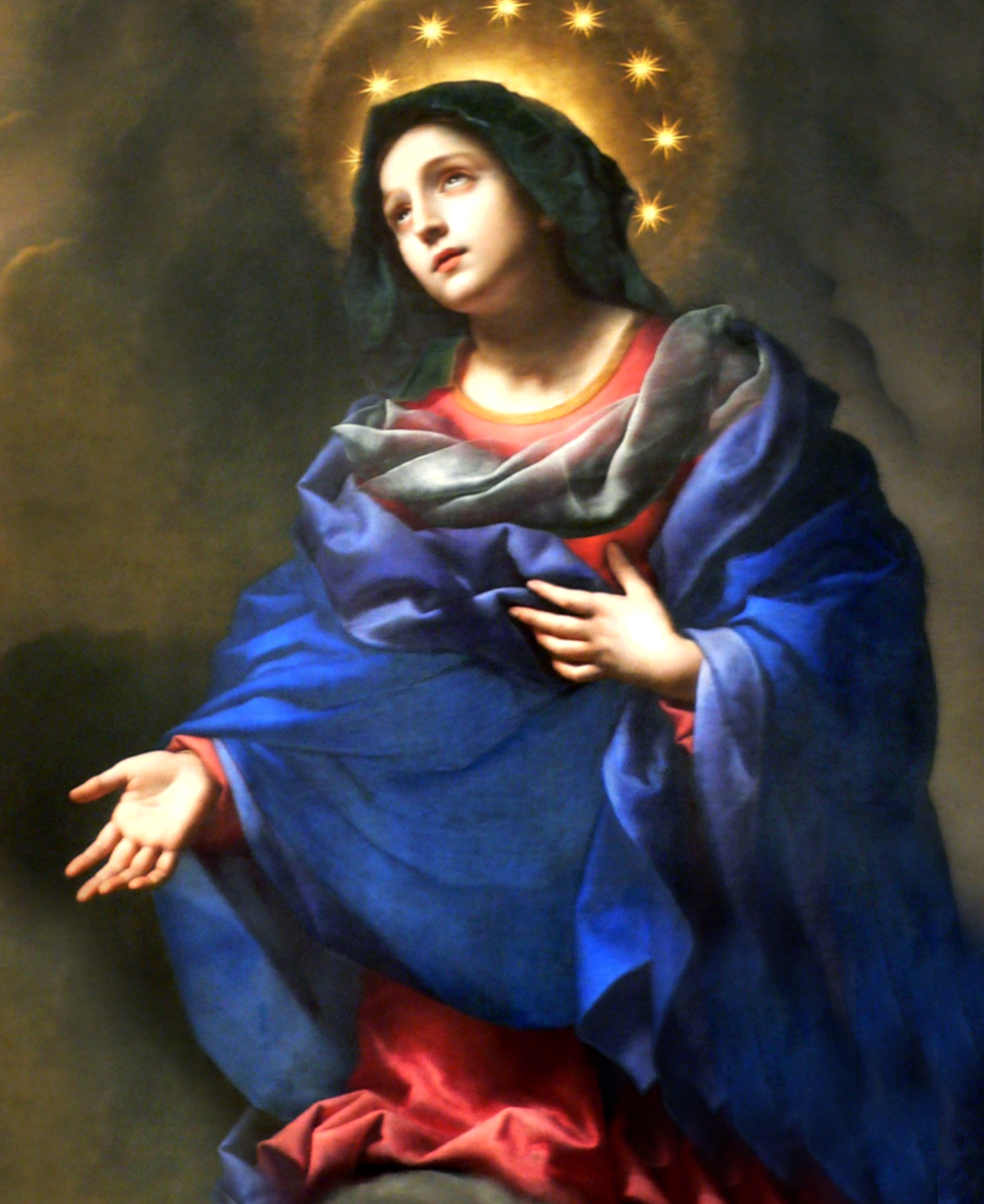
Holy Mother of God, pray for us.
Holy Virgin of Virgins, [etc.]
Mother of Christ,
Mother of divine grace,
Mother most pure,
Mother most chaste,
Mother inviolate,
Mother undefiled,
Mother most amiable,
Mother most admirable,
Mother of good Counsel,
Mother of our Creator,
Mother of our Savior,
Virgin most prudent,
Virgin most venerable,
Virgin most renowned,
Virgin most powerful,
Virgin most merciful,
Virgin most faithful,
Mirror of justice,
Seat of wisdom,
Cause of our joy,
Spiritual vessel,
Vessel of honor,
Singular vessel of devotion,
Mystical rose,
Tower of David,
Tower of ivory,
House of gold,
Ark of the covenant,
Gate of heaven,
Morning star,
Health of the sick,
Refuge of sinners,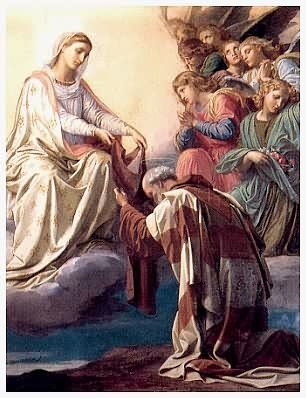
Comforter of the afflicted,
Help of Christians,
Queen of Angels,
Queen of Patriarchs,
Queen of Prophets,
Queen of Apostles,
Queen of Martyrs,
Queen of Confessors,
Queen of Virgins,
Queen of all Saints,
Queen conceived without original sin,
Queen assumed into heaven,
Queen of the most holy Rosary,
Queen of families,
Queen of peace,
V. Lamb of God, Who takest away the sins of the world,
R. Spare us, O Lord.
V. Lamb of God, Who takest away the sins of the world,
R. Graciously hear us, O Lord.
V. Lamb of God, Who takest away the sins of the world,
Have mercy on us.
V. Pray for us, O holy Mother of God.
R. That we may be made worthy of the promises of Christ.
Let us pray. Grant, we beseech Thee, O Lord God, that we thy servants may enjoy perpetual health of mind and body, and by the glorious intercession of blessed Mary, ever Virgin, may we be freed from present sorrow, and rejoice in eternal happiness. Through Christ our Lord. R. Amen.
Tags: catholic, catholic podcast, catholic prayer, cathollc spirituality, God the Father, God the Holy Spirit, Holy Mary, Holy Mother of God, holy trinity
This entry was posted on Wednesday, August 25th, 2010 at 11:10 pm
You can follow any responses to this entry through the RSS 2.0 feed.