 Site Type
 Featured
 Fonts
Fonts Skins
Skins
“Do not let your hearts be troubled!†[powerpress] an excerpt from today’s reflection by Don Schwager: Do you allow any troubles to rob you of God’s peace? As much as we try to avoid it, we all inevitably encounter trouble and difficulties we find hard to endure. Jesus knew his disciples would have to face trials and persecution after he left them to return to his Father in heaven. Adversity can make us lose hope and become discouraged, or it can press us closer to God and to his promises. “It is the LORD who goes before you; he will be with you, he will not fail you or forsake you; do not fear or be dismayed” (Deuteronomy 31:8). Just as God went ahead of the Israelites in the wilderness to lead them safely to the promised land, Jesus tells his disciples that he is going ahead to prepare a place for them in God’s house – a place of refuge, peace, and security, and everlasting happiness. God’s house is never closed nor crowded – there is plenty of room for everyone who believes in God and in his beloved Son, the Lord Jesus Christ. The greatest fear in this present life – whether it be the separation and loss of life to a loved one or the threat to one’s own life – is put to rest by Jesus’ promise that we will live forever with him and the Father in their heavenly home with a great company of saints and angels who will be our friends forever as well. Do you know the way to the Father’s house? Jesus expected his disciples to know where he was going and what their ultimate destination would be as well. Thomas, who was both a doubter and a realist, spoke for all the disciples when he said, “we neither know where you are going nor how we shall get there on our own?” If you have never been to another land or traveled down an unfamiliar road, you naturally want to know what your destination is and how to get there safe and sound. During the middle of the 15 year civil war in Lebanon, at a time when many believers had been isolated and cut off from contact with outside Christians, I attempted to find a way to visit. Since I had never traveled there before, nor spoke the language, I was helpless without a guide. Fortunately a Christian friend from Lebanon met me half-way and personally guided me safely through unfamiliar territory, including some challenging road-blocks and check-points along the way. “Lord Jesus, you fill us with the joy of your saving presence and you give us the hope of everlasting life with the Father in Heaven. Show me the Father that I may always know and glorify him.” for the full reflection visit : Daily Reading and Meditation
Tags: catholic, catholic podcast, catholic prayer, cathollc spirituality, closer to God, Lord Jesus, Lord Jesus Christ
This entry was posted on Friday, May 16th, 2014 at 12:20 am
You can follow any responses to this entry through the RSS 2.0 feed.
A delight to discuss Catholic Social Teaching with Dr. Joseph Capizzi, Associate Professor of Moral Theology at the Catholic University of America.   He is co-editor of a phenomenal new resource entitled “A Catechism for Business: Tough Ethical Questions and Insights from Catholic Teaching”.  A rare work which makes the complex issues of ethics,  found in our society, simple and accessible for lay faithful reflection and deeper study.  Truly, a must have, not only for thebusiness office, but for every Catholic home and parish.
[powerpress]
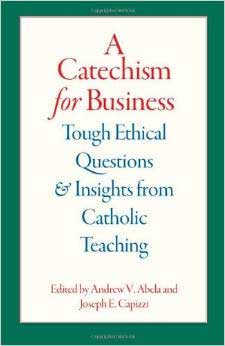 You can find the book here
This is a brilliantly conceived and executed handbook. I imagine that it will be translated into many languages around the world. A Catechism for Business is the most practical handbook of Christian social teaching in relation to the vocation of persons in business ever produced.
Michael Novak, 1994 Templeton LaureateThe Church’s social teachings are a “best-kept secret” because they are often presented as answers without questions. Dr. Capizzi and Dean Abela have provided the questions, from the heart of the business enterprise, along with accurate but succinct responses from Catholic social doctrine. In their expert hands, the teaching has a chance to be heard.
Francis Cardinal George, O.M.I., Archbishop of ChicagoWork is not only a necessary activity but a beautiful expression of our creative nature, and this book is a vital resource for anyone who wishes to align work–and the workplace–according to God’s love and vision of the human person. Authors Abela and Capizzi do a great service to Christians in providing the most relevant Catholic teachings on the matters of labor, business, employment, wages, economic systems, and a myriad of related issues so relevant and so contentious in today’s world.
Carl Anderson, Supreme Knight, Knights of Columbus, and author, A Civilization of Love: What Every Catholic Can Do to Transform the World
Tags: Catechism, catholic, catholic podcast, catholic prayer, catholic social teaching, Catholic University of America, cathollc spirituality, Joseph Capizzi
This entry was posted on Thursday, May 15th, 2014 at 10:19 am
You can follow any responses to this entry through the RSS 2.0 feed.
Episode 1 – History, with Arms Upraised
[powerpress]
The Resilient Church with Mike Aquilina, offers a fascinating look at the trials and triumphs of the Catholic Church over the past two thousand years. Fast-paced sketches of critical periods in church history give readers perspective on the challenges faced by the church today. Mike Aquilina does not shrink from the realities of the past, including badly behaved leaders and those who betrayed the Lord. Yet he also leaves us all with well-founded hope for the future: God remains faithful in every circumstance and fulfills his promise to remain with his church always.
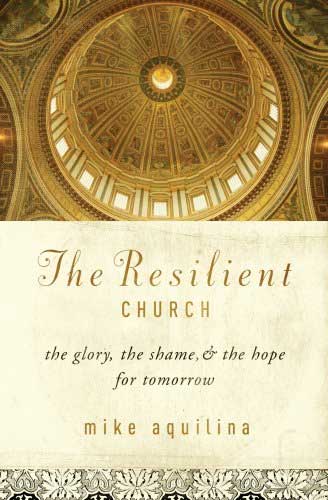
Also visit Mike’s “Discerning Hearts†page for more audio downloads and information!
Tags: catholic, catholic podcast, catholic prayer, cathollc spirituality, church history, mike aquilina, Resilient Church
This entry was posted on Thursday, May 15th, 2014 at 9:19 am
You can follow any responses to this entry through the RSS 2.0 feed.
USCCA42Â Chapter 33 – Practice Purity of Heart: The 9th Commandment 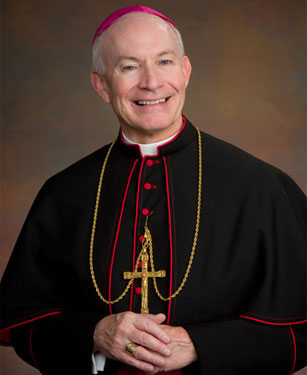
[powerpress]
Archbishop Lucas offers insights on the US Catholic Catechism for Adults Chapter 33:
MODESTY Modesty is a virtue necessary for purity. It flows out of the virtues of temperance, chastity, and self-control. A modest person dresses, speaks, and acts in a manner that supports and encourages purity and chastity, and not in as manner that would tempt or encourage sinful sexual behavior. Modesty protects the mystery of the person in order to avoid exploiting the other. This attitude instills in us the patience and reserve we need for avoiding unbecoming behavior. Modest relationships reflect the connection between the marital state and sexual behavior. Modest behavior respects the boundaries of intimacy that are imbedded in our natures by the natural law and the principles of sexual behavior laid out in Divine Revelation. Modesty ensures and supports purity of heart, a gift that enables us to see God’s plan for personal relationships, sexuality, and marriage.
United States Conference of Catholic Bishops (USCCB) (2012-04-02). United States Catholic Catechism for Adults (Kindle Locations 6383-6389). United States Conference of Catholic Bishops (USCCB). Kindle Edition.
The Most Reverend George J. Lucas leads the Archdiocese of Omaha.Â
For other episodes in the visit our Archbishop George Lucas page
This programs is based on:
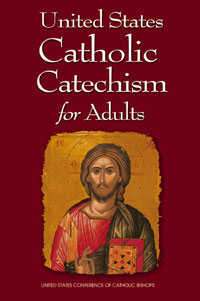
More information can be found here.
We wish to thank the USCCB for the permissions granted for use of  relevant material used in this series.
Tags: catholic, Catholic Catechism, catholic podcast, catholic prayer, cathollc spirituality, George Lucas, United States Conference of Catholic Bishops
This entry was posted on Thursday, May 15th, 2014 at 8:58 am
You can follow any responses to this entry through the RSS 2.0 feed.
THE WAY OF PERFECTION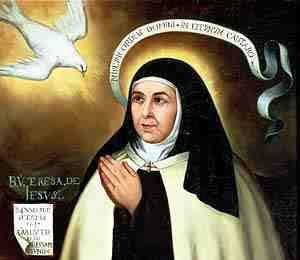
By
St. Teresa of Avila
Chapter 22
[powerpress]
For the pdf containing the complete text and footnotes click here
Explains the meaning of mental prayer.
For other audio chapters of
“The Way of Perfection”
THE WAY OF PERFECTION
by
ST. TERESA OF AVILA
Translated & Edited by
E. ALLISON PEERS
from the Critical Editon of
P. SILVERIO DE SANTA TERESA, C.D.
Tags: catholic, catholic podcast, catholic prayer, cathollc spirituality, st. teresa of avila, The Way of Perfection
This entry was posted on Thursday, May 15th, 2014 at 1:19 am
You can follow any responses to this entry through the RSS 2.0 feed.
“The one who receives me”
[powerpress]
an excerpt from today’s reflection by Don Schwager:
How do you treat those who cause you grief or harm, especially those who are close to you in some way? In his last supper discourse, Jesus addressed the issue of fidelity and disloyalty in relationships. Jesus knew beforehand that one of his own disciples would betray him. Such knowledge could have easily led Jesus to distance himself from such a person and to protect himself from harm’s way. Instead, Jesus expresses his love, affection, and loyalty to those who were his own, even to the one he knew would “stab him in the back” when he got the opportunity. Jesus used a quotation from Psalm 4:9 which describes an act of treachery by one’s closest friend. In the culture of Jesus’ day, to eat bread with someone was a gesture of friendship and trust. Jesus extends such friendship to Judas right at the moment when Judas is conspiring to betray his master. The expression lift his heel against me reinforces the brute nature of this act of violent rejection.
Jesus loved his disciples to the end and proved his faithfulness to them even to death on the cross. Through his death and resurrection Jesus opened a new way of relationship and friendship with God. Jesus tells his disciples that if they accept him they also accept the Father who sent him. This principle extends to all who belong to Christ and who speak in his name. To accept the Lord’s messenger is to accept Jesus himself. The great honor and the great responsibility a Christian has is to stand in the world for Jesus Christ. As his disciples and ambassadors (2 Cor. 5:20), we are called to speak for him and to act on his behalf. Are you ready to stand for Jesus at the cross of humiliation, rejection, opposition, and suffering?
“Eternal God, who are the light of the minds that know you, the joy of the hearts that love you, and the strength of the wills that serve you; grant us so to know you, that we may truly love you, and so to love you that we may fully serve you, whom to serve is perfect freedom, in Jesus our Lord.” (Prayer of Saint Augustine)
for the full reflection visit : Daily Reading and Meditation
Tags: catholic, catholic podcast, catholic prayer, cathollc spirituality, jesus christ, resurrection Jesus
This entry was posted on Thursday, May 15th, 2014 at 12:11 am
You can follow any responses to this entry through the RSS 2.0 feed.
Episode 27- The Holy Rule of St. Benedict: A Spiritual Path for Today’s World with Fr. Mauritius Wilde O.S.B., 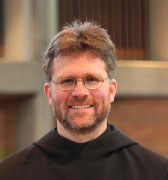 PhD.
PhD.
“To contemplate the Holy Eucharist”
[powerpress]
From the Holy Rule of St. Benedict:
PROLOGUE
Listen, O my son, to the precepts of thy master, and incline the ear of thy heart, and cheerfully receive and faithfully execute the admonitions of thy loving Father, that by the toil of obedience thou mayest return to Him from whom by the sloth of disobedience thou hast gone away.
To thee, therefore, my speech is now directed, who, giving up thine own will, takest up the strong and most excellent arms of obedience, to do battle for Christ the Lord, the true King.
In the first place, beg of Him by most earnest prayer, that He perfect whatever good thou dost begin, in order that He who hath been pleased to count us in the number of His children, need never be grieved at our evil deeds. For we ought at all times so to serve Him with the good things which He hath given us, that He may not, like an angry father, disinherit his children, nor, like a dread lord, enraged at our evil deeds, hand us over to everlasting punishment as most wicked servants, who would not follow Him to glory.

 For more information about the ministry of the the Missionary Benedictines of Christ the King Priory in Schuyler, Nebraska visit here:
Tags: catholic, catholic podcast, catholic prayer, cathollc spirituality, Holy Rule of St. Benedict
This entry was posted on Wednesday, May 14th, 2014 at 4:46 pm
You can follow any responses to this entry through the RSS 2.0 feed.
Episode 12-The Way of Mystery: The Eucharist and Moral Living 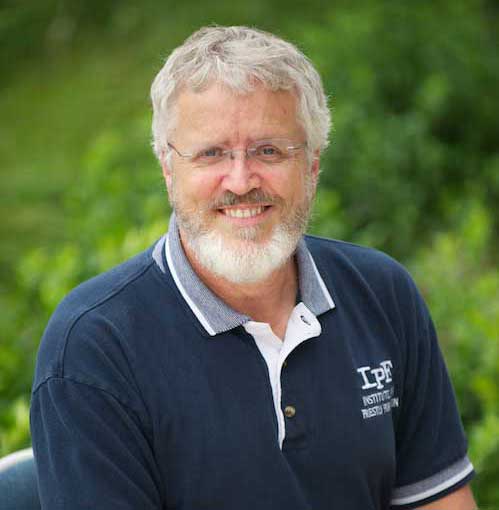
 The Liturgy of the Eucharist part 4 : the Communion Rite…The moment of radical surrender…can we do it? We when come forward to communion, what are doing…what are we saying? Will we allow ourselves to be transformed? The moment of silence…will we allow ourselves to be transformed within so we can go out to transform the culture for Christ?
[powerpress]
For more episodes in “The Way of Mystery” Series click here
Deacon James Keating, PhD, the director of Theological Formation for the Institute for Priestly Formation, located at Creighton University, in Omaha, is making available to â€Discerning Hearts†and all who listen, his series of programs entitled “The Way of Mysteryâ€.
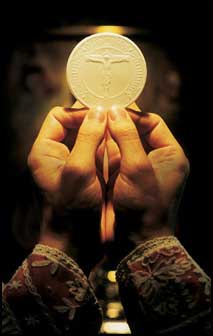 The Vatican II documents remind us that the spiritual journey is not made in a vacuum, that God has chosen to save us, not individually, but as The People of God. The Eucharist must help Christians to make their choices by discerning out of Christ’s paschal mystery. For this process to take place, however, Christians must first understand how the Eucharist puts them in touch with Christ’s passion, death, and resurrection, and what concrete implications being in touch with this mystery has for their daily lives.

For more information on the “Institute of Priestly Formation†and for other material available by Deacon Keating, just click here
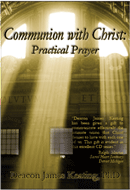
Don’t forget to pickup a copy of “Communion with Christ†, it is one of the best audio sets on prayer…ever!
Check out Deacon Keating’s “Discerning Heart†page
Tags: catholic, catholic podcast, catholic prayer, cathollc spirituality, Deacon Keating, james keating, the eucharist, theological formation
This entry was posted on Wednesday, May 14th, 2014 at 4:19 pm
You can follow any responses to this entry through the RSS 2.0 feed.
 What a joy to discover “Embracing Edith Stein:  Wisdom for Women from St. Teresa Benedicta of the Cross” by author Anne Costa.  Far from a clinical dissertation on Edith Stein’s writings, Anne introduces us to a woman with whom she has shared a rich spiritual friendship.  By learning from and then implementing  her wealth of teaching, Anne gives a saint who can help us to grow in faith and wisdom .  Highly recommended!
[powerpress]
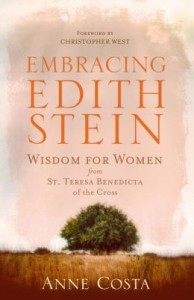 You can find the book here
From the book description:
Embracing Edith Stein shows how the different aspects of the life and teachings of St. Teresa Benedicta of the Cross can serve as a guide for women and their unique vocation today. Written in a friendly, conversational style, this is one woman sharing the story of her friendship with this saint with her readers.
Tags: Anne Costa, catholic, catholic podcast, catholic prayer, cathollc spirituality, spiritual friendship, St. Teresa Benedicta, Wisdom for Women
This entry was posted on Wednesday, May 14th, 2014 at 6:48 am
You can follow any responses to this entry through the RSS 2.0 feed.
“I have come as light into the world, that whoever believes in me may not remain in darkness”
[powerpress]
an excerpt from today’s reflection by Don Schwager:
The distinctive feature of Jesus’ relationship with his disciples was his personal and unconditional love for them. He loved his own to the very end (John 13:1). He loved his disciples selflessly and generously because his love was wholly directed to their good. His love was costly and sacrificial – he gave not only the best he had, but all that he had. He gave his very own life in order to bring the abundant everlasting life of the eternal Father to those who believed in him.
The love of Jesus Christ compels us to give our best not only to God but to our neighbor who is created in the image and likeness of God. God’s love purifies and transforms us into the likeness of Christ. The Lord Jesus promises that those who abide in his love will bear much fruit for the kingdom of God – fruit that will last for eternity as well (John 15:16). If you seek to unite your heart with the heart of Jesus, you will bear great fruit in your life – the fruit of joy, peace, friendship, and love that lasts forever.
“Lord Jesus, make me fruitful in your love, mercy, kindness, and compassion. May there be nothing in my life which keeps me from your love and joy.”
for the full reflection visit : Daily Reading and Meditation
Tags: catholic, catholic podcast, catholic prayer, cathollc spirituality, daily reading, don schwager, Lord Jesus
This entry was posted on Wednesday, May 14th, 2014 at 12:55 am
You can follow any responses to this entry through the RSS 2.0 feed.
Episode 7 The Daily Prayer of Discernment: The Ignatian Wisdom of the Examen Prayer with Fr. Timothy Gallagher.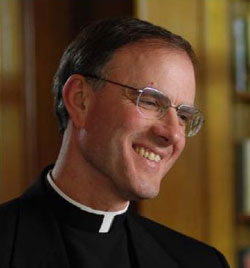
Fr. Gallagher continues to discuss the  the fifth step – RENEWAL – which is how we move forward after our encounter with God in our prayer.
[powerpress]
As outlined from the Spiritual Exercises of St. Ignatius of Loyola
(translated from the autograph by Fr. E. Mullan, S.J. Â 1909Â in the public domain)
METHOD FOR MAKING THE GENERAL EXAMEN
It contains in it five Points.First Point. The first Point is to give thanks to God our Lord for the benefits received.
Second Point. The second, to ask grace to know our sins and cast them out.
Third Point. The third, to ask account of our soul from the hour that we rose up to the present Examen, hour by hour, or period by period: and first as to thoughts, and then as to words, and then as to acts, in the same order as was mentioned in the Particular Examen.
Fourth Point. The fourth, to ask pardon of God our Lord for the faults.
Fifth Point. The fifth, to purpose amendment with His grace.OUR FATHER.
Father Timothy M. Gallagher, O.M.V., was ordained in 1979 as a member of the Oblates of the Virgin Mary, a religious community dedicated to retreats and spiritual formation according to the Spiritual Exercises of St. Ignatius. Â Fr. Gallagher is featured on the EWTN series “Living the Discerning Life: Â The Spiritual Teachings of St. Ignatius of Loyola”. Â For more information on books and audio available for purchase from Fr. Timothy Gallagher check out his website: www.frtimothygallagher.org
For the other episodes in this series check out
Fr. Timothy Gallagher’s “Discerning Hearts†page
Tags: catholic, catholic podcast, catholic prayer, cathollc spirituality, Father Timothy M. Gallagher, Timothy Gallagher
This entry was posted on Tuesday, May 13th, 2014 at 4:14 pm
You can follow any responses to this entry through the RSS 2.0 feed.
[powerpress]Msgr. Esseff reflects on Our Lady of Fatima and the power of the Holy Rosary. It is a tremendous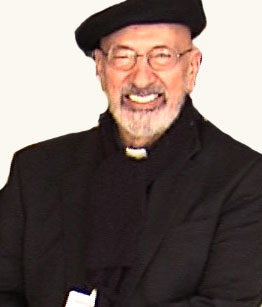 instrument of peace to those who pray in Our Lady’s garden of prayer. Â Anyone seeking
 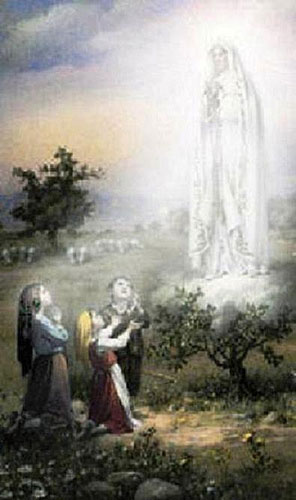 peace in the world, as well in their own lives, should turn to Our Lady and her Holy Rosary. Â The way to the face of God can be found in the Holy Rosary and all the mysteries contained in this treasury of grace.
Tags: catholic, catholic podcast, catholic prayer, cathollc spirituality
This entry was posted on Tuesday, May 13th, 2014 at 7:36 am
You can follow any responses to this entry through the RSS 2.0 feed.
[powerpress]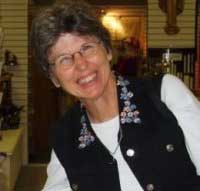
Join Bruce and I as we discuss Our Lady of Fatima with Teresa Monaghen of the Pro Sanctity Movement.
She also shares with us the complying memory of May 13, 1981 when she was in the square at St. Peter’s and St. John Paul II was shot.
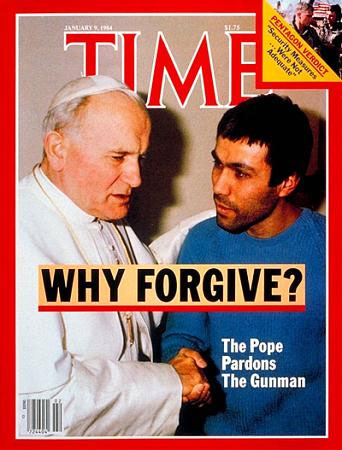
For more on the Message of Fatima click here
Tags: catholic, catholic podcast, catholic prayer, cathollc spirituality, john paul ii, Join Bruce, teresa monaghen
This entry was posted on Tuesday, May 13th, 2014 at 5:32 am
You can follow any responses to this entry through the RSS 2.0 feed.
Fr. Andrew Apostoli does a tremendous job covering all the varied aspects of the events of Fatima and the  call  of Our Lady of Fatima. He conveys the “immaculate” heart of the message, as well as tackling the “controversies” that have plagued the events over the years.  Because of the prophetic nature of her messages, Our Lady of Fatima has been the subject of much controversy and speculation. In this book, Father Andrew Apostoli carefully analyzes the events that took place in Fatima and clears up lingering questions and doubts about their meaning. He also challenges the reader to hear anew the call of Our Lady to prayer and sacrifice, for the world is ever in need of generous hearts willing to make reparation for those in danger of losing their way to God.
Lady of Fatima. He conveys the “immaculate” heart of the message, as well as tackling the “controversies” that have plagued the events over the years. Â Because of the prophetic nature of her messages, Our Lady of Fatima has been the subject of much controversy and speculation. In this book, Father Andrew Apostoli carefully analyzes the events that took place in Fatima and clears up lingering questions and doubts about their meaning. He also challenges the reader to hear anew the call of Our Lady to prayer and sacrifice, for the world is ever in need of generous hearts willing to make reparation for those in danger of losing their way to God.
[powerpress]
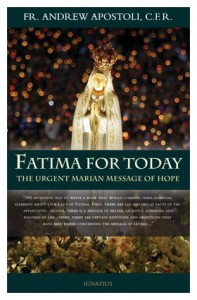
Check out the book here
“As was so dramatically obvious during the visit of Pope Benedict XVI to Fatima in May, 2010, Our Lady’s apparitions in 1917 remain powerfully compelling for us today. There she was an evangelist, calling us to prayer, conversion of heart, and penance, pointing to Jesus and repeating her words at Cana, ‘Do whatever He tells you.’ This book brings it all home.”
-Most Reverend Timothy Dolan, Archbishop of New York
“For us, Fatima is a sign of the presence of faith, of the fact that it is precisely from the little ones that faith gains new strength, one which is not limited to the little ones but has a message for the entire world and touches history here and now, and sheds light on this history . . . Even now there is tribulation, in every conceivable form, and power threatens to trample down faith. Even now, then, there is a need for the answer about which the Mother of God spoke to the children at Fatima.”
-Pope Benedict XVI
Tags: andrew apostoli, catholic, catholic podcast, catholic prayer, cathollc spirituality, lady of fatima, pope benedict xvi
This entry was posted on Tuesday, May 13th, 2014 at 12:28 am
You can follow any responses to this entry through the RSS 2.0 feed.
“My sheep hear my voice, and no one shall snatch them out of my hand”
[powerpress]
an excerpt from today’s reflection by Don Schwager:
How secure is your faith and trust in God? Scripture describes God’s word as a “lamp for our feet and a light for our steps”(Psalm 119:105). The Jewish Feast of the Dedication is also called the Festival of Lights or Hanakkuh. This feast was held in late December, near the time when Christians celebrate the feast of Christmas. This is the time of year when the day is shortest and the night longest. Jesus used this occasion to declare that he is the true light of the world (John 8:12). In his light we can see who God truly is and we can find the true path to heaven.
Jesus speaks of the tremendous trust he has in God his Father and the tremendous trust we ought to have in him because he is our good shepherd (John 10:11). Sheep without a shepherd are defenseless against prey, such as wolves, and often get lost and bewildered without a guide. That is why shepherds literally live with their sheep out in the open field and mountain sides. The shepherd guards his sheep from the dangers of storms, floods, and beasts of prey. The shepherd leads his sheep to the best places for feeding and the best streams for drinking. He finds the best place for their rest and safety at night. The sheep recognize the voice of their shepherd and heed his call when he leads them to safe pasture and rest.
We are very much like sheep who stray, we become easy prey to forces which can destroy us – sin, Satan, and a world in opposion to God and his people. The Lord Jesus came not only to free us from Satan’s snares and the grip of sin, he came to personally lead us to the best of places where we can feed on his “word of life” and drink from the “living waters” of his Holy Spirit. The sheep who heed the voice of Jesus, the good shepherd, have no fear. He leads them to the best of places – everlasting peace, joy, and fellowship with God and his people.
In this present life we will encounter trials, difficulties, and persecution. We can face them alone or we can follow Jesus, the true shepherd, who will bring us safely through every difficulty to the place of peace and security with God. Do you listen to the voice of the Good Shepherd and heed his commands?
“Lord Jesus, you are the Good Shepherd who secures what is best for us. I place all my hope and trust in you. Open my ears to hear your voice today and to follow your commands.”
for the full reflection visit :Â Daily Reading and Meditation
Tags: catholic, catholic podcast, catholic prayer, cathollc spirituality
This entry was posted on Tuesday, May 13th, 2014 at 12:15 am
You can follow any responses to this entry through the RSS 2.0 feed.