 Site Type
 Featured
 Fonts
Fonts Skins
Skins
[powerpress]Mike Aquilina offers the compelling story of the St. Perpetua and her great friend and sister in the faith, St. Felicity.
From CNA:
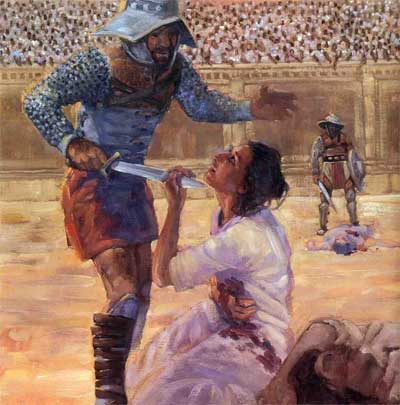
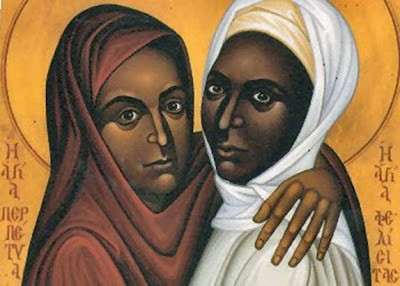
Saints Perpetua and Felicity were martyrs who died for the faith around the year 203.
St. Perpetua was a young, well-educated, noblewoman and mother living in the city of Carthage in North Africa. Her mother was a Christian and her father was a pagan. In terms of her faith, Perpetua followed the example of her mother. Despite the pleas of her father to deny her faith, Perpetua did the very opposite, and fearlessly proclaimed it. At the age of 22, she was imprisoned for her faith. While in prison she continued to care for her infant child and put up with the tortures designed to make her renounce her faith. Perpetua remained steadfast until the end. St. Perpetua was sacrificed at the games as a public spectacle for not renouncing her faith.
St. Felicity was a pregnant slave girl who was imprisoned with St. Perpetua. Little is known about the life of St. Felicity because, unlike Perpetua, she did not keep a diary of her life. After imprisonment and torture, Felicity was also condemned to die at the games. Only a few days before her execution, Felicity gave birth to a daughter who was secretly taken away to be cared for by some of the Faithful.The feast of these Saints is March 7.
Tags: faith, mike aquilina, mother, perpetua
This entry was posted on Friday, March 7th, 2014 at 12:22 am
You can follow any responses to this entry through the RSS 2.0 feed.
“Fasting for the kingdom of God”
[powerpress]
an excerpt from today’s reflection by Don Schwager:
Are you hungry for God? Hungering for God and fasting for his kingdom go hand in hand. When asked why he and his disciples did not fast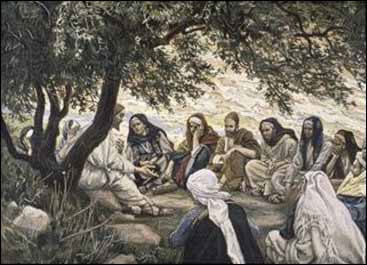 Jesus used the vivid picture of a wedding celebration. In Jesus’ time the newly wed celebrated their honeymoon at home for a whole week with all the guests! This was a time of great feasting and celebrating. Jesus points to himself as the bridegroom and his disciples as the bridegroom’s friends. He alludes to the fact that God takes delight in his people as a groom delights in his bride (Isaiah 62:5). To be in God’s presence is pure delight and happiness. But Jesus also reminds his followers that there is a time for fasting and for humbling oneself in preparation for the coming of God’s kingdom and for the return of the Messianic King. The Lord’s disciples must also bear the cross of affliction and purification. For the disciple there is both a time for rejoicing in the Lord’s presence and celebrating his goodness and a time for seeking the Lord with humility, fasting, and mourning for sin. If we hunger for the Lord, he will not disappoint us. His grace draws us to his throne of mercy and favor. Do you seek the Lord with confident trust and allow his Holy Spirit to transform your life with his power and grace?
What kind of fasting is pleasing to God? Fasting can be done for a variety of reasons – to gain freedom from some bad habit, addiction, or vice, to share in the suffering of those who go without, or to grow in our hunger for God and for the things of heaven. Basil the Great wrote: “Take heed that you do not make fasting to consists only in abstinence from meats. True fasting is to refrain from vice. Shred to pieces all your unjust contracts. Pardon your neighbors. Forgive them their trespasses.†Do you hunger to know God more, to grow in his holiness, and to live the abundant life of grace he offers you?
“Come Lord, work upon us, set us on fire and clasp us close, be fragrant to us, draw us to your loveliness, let us love, let us run to you.” (Prayer of St. Augustine)
for the full reflection visit : Daily Reading and Meditation
Tags: catholic, catholic podcast, catholic prayer
This entry was posted on Friday, March 7th, 2014 at 12:13 am
You can follow any responses to this entry through the RSS 2.0 feed.
“Whoever loses his life for my sake will save it”
[powerpress]
an excerpt from today’s reflection by Don Schwager:
Do you know the healing, transforming power of the cross? When Jesus predicted his passion his disciples were dismayed. 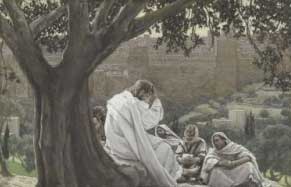 Rejection and crucifixion meant defeat and condemnation, not victory and freedom. How could Jesus’ self-denial, suffering and death lead to victory and life? Through his obedience to his Father’s will, Jesus reversed the curse of Adam’s disobedience. His death on the cross won pardon for the guilty, freedom for the oppressed, healing for the afflicted, and new life for those condemned to death. His death makes possible our freedom to live as sons and daughters of God. There’s a certain paradox in God’s economy. We lose what we gain, and we gain what we lose. When we try run our life our own way, we end up losing it to futility. Only God can free us from our ignorance and sinful ways. When we surrender our lives to God, he gives us new life in his Spirit and the pledge of eternal life. God wants us to be spiritually fit to serve him at all times. When the body is very weak or ill, we make every effort to nurse it back to health. How much more effort and attention should we give to the spiritual health of our hearts and minds!
The cross of Jesus Christ leads to freedom and victory over sin and death. What is the cross which Christ commands me to take up each day as his disciple? When my will crosses with his will, then his will must be done. The way of the cross involves sacrifice, the sacrifice of laying down my life each and every day for Jesus’ sake. What makes such sacrifice possible and “sweet” is the love of God poured out for us in the blood of Jesus Christ. Paul the Apostle reminds us that “God’s love has been poured into our hearts through the Holy Spirit” (Romans 5:5). We can never outgive God. He always gives us more than we can expect or imagine. Are you ready to lose all for Christ in order to gain all with Christ?
“Lord Jesus, I give you my hands to do your work. I give you my feet to go your way. I give you my eyes to see as you do. I give you my tongue to speak your words. I give you my mind that you may think in me. I give you my spirit that you may pray in me. Above all, I give you my heart that you may love in me, your Father, and all mankind. I give you my whole self that you may grow in me, so that it is you, Lord Jesus, who live and work and pray in me.” (Prayer from The Grail)
for the full reflection visit : Daily Reading and Meditation
Tags: Jesus, jesus christ, Lord Jesus
This entry was posted on Thursday, March 6th, 2014 at 12:47 am
You can follow any responses to this entry through the RSS 2.0 feed.
[powerpress]
From Dr. Anthony Lilles’ blog “Beginning to Pray”
During Lent, we dedicate ourselves to prayer, fasting and almsgiving. Â These practices are simple ways of expressing our gratitude to Jesus for what He has done for us. Â This in fact is the very nature of penance. Â Penance is love which responds to mercy – and this love is not content with words, thoughts and feelings. Â This love needs to express itself in a prayer the cries from the heart, in sacrifice that really costs, and in little hidden acts of kindness which comfort those who most need it.
Why do we allow God to implicate us in the plights of others, especially during Lent? Â God’s love suffers the personal plight each of us. Â He does this because He does not want us to suffer alone. Â So He seeks us out in our suffering – the suffering that we have brought on ourselves and the suffering that others have brought on us. Â He is concerned about our dignity and He is ready to do whatever it takes that we might be rectified and stand with Him who is Love Himself. Â The extent to which He enters into our misery for this purpose is revealed on the Cross. Â If we are to be His disciples, we must pick up our cross and follow Him. Â This is how the Lord extends His saving mystery through space and time – He loves us so much He implicates us in this great work of His Love.
No matter how many times we fail, no matter how great our weaknesses, no matter how inadequate we are to the demands of love — He is there with us, loving us, providing exactly what we need in the moment, and this because He really loves us that much. Â How can we not respond by offering Him food and drink when we recognize Him in the disguise of those who hunger and thirst? Â How can we not respond by forgoing a little comfort and convenience when He has already suffered so much discomfort and inconvenience for us? Â How can we not respond by praying for those who need the love of God when He has never forgotten us in His love for the Father?
When prayer, sacrifice and generosity come together in thanksgiving to God for His goodness to us, deep places of the heart are purified and we rediscover the joy humanity was meant to know from the beginning. Â Lent is all about this joy – a joy God’s love allows us to know, the joy of being sons and daughters of God, the joy of heart so beautiful it would be wrong not to share it with those who need a little joy as well.
Dr. Anthony Lilles is the author of “Hidden Mountain, Secret Garden”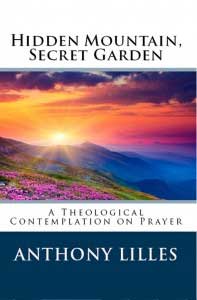
Available at Amazon.com as an ebook (click here), a paperback edition (click here).  You may also order a paperback edition at createspace.com.
Tags: catholic, catholic podcast, catholic prayer
This entry was posted on Wednesday, March 5th, 2014 at 1:56 pm
You can follow any responses to this entry through the RSS 2.0 feed.
Episode 1 – The Preliminary Lenten Days – Ash Wednesday through Saturday of that week.
[powerpress]
In “The Power of the Cross”, Michael Dubruiel penned a truly exceptional meditation on the Cross of Christ which  serves beautifully as a source for reflection any time of the year, but it is particularly poignant and compelling during the weeks of Lent. Several years ago Bruce and I had the chance to have a series of conversations with Michael during Lent using his book for reflection…it was a big hit with the audience. Those discussions have been remastered and made available once again here. Michael died unexpectedly in of February 2009, but his gifts continue to be shared through his books and many other venues, and hopefully through this humble portal. The sentiments and teachings Michael offers is truly timeless.
Episode 1 – The Preliminary Lenten Days – Michael discusses:
Ash Wednesday – Eternal Life or Death?
Thursday – Jesus’ Invitation
Friday – How Much We Need Jesus
Saturday – A Matter of Life and Death
Michael’s wife, author Amy Welborn, has made “The Power of the Cross” available as a free e-book available over the internet ! Â I HIGHLY encourage you to download this exceptional work…there also plans to make it once again available as a paperback book.
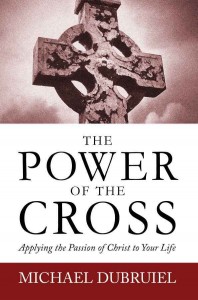 The Power of the Cross is now available as a free e-book,
check out more information by going here
Check out more at the Discerning Hearts’ Michael Dubruiel page
Tags: michael dubruiel, The Power of the Cross
This entry was posted on Wednesday, March 5th, 2014 at 9:10 am
You can follow any responses to this entry through the RSS 2.0 feed.
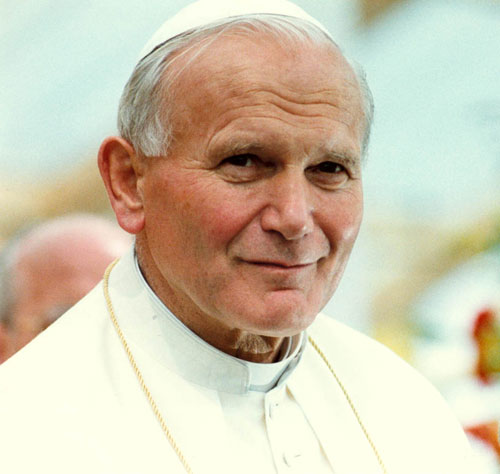
“We must find a way to discuss the human future intellectually. Â The universal moral law written on the human heart is precisely that kind of grammar which is needed if the world is to engage in this discussion of it’s future” Â Bl. Pope John Paull II
[powerpress]
WOL1 – Episode 1 – What is “liberal modernity”?  Maybe not so modern?  The revolution in political philosophy…like the thought of  Thomas Hobbes, John Locke…what is “good” and what are the problems.  Why is it important to discern between “self-interest” and the dignity of each human person?  Why is Bl. John Paul’s thought relevant to Western Liberalism?  What is the “Culture of Death” and the climate of moral confusion?  The moral law is the path to life.
The Way of Life, Carson Holloway examines the fundamental philosophers of modernity-from Hobbes to Toqueville-to suggest that John Paul II’s critique of modernity is intended not to reject, but to improve. Thus, claims Holloway, it is appropriate for liberal modernity to attend to the Pope’s thought, receiving it not as the attack of an enemy but as the criticism of a candid friend.
 Â
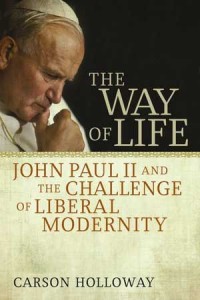
This series is based on Dr. Holloway’s book “The Way of Life”
Tags: catholic, catholic podcast, catholic prayer
This entry was posted on Wednesday, March 5th, 2014 at 8:22 am
You can follow any responses to this entry through the RSS 2.0 feed.
“When you pray, fast, and give alms”
[powerpress]
an excerpt from today’s reflection by Don Schwager: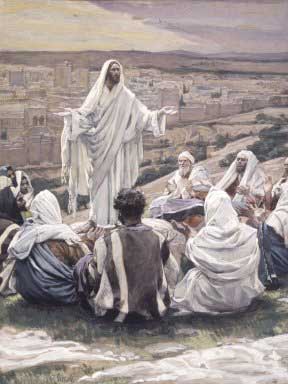
Why did Jesus single out prayer, fasting, and almsgiving for his disciples? The Jews considered these three as the cardinal works of the religious life. These were seen as the key signs of a pious person, the three great pillars on which the good life was based. Jesus pointed to the heart of the matter. Why do you pray, fast, and give alms? To draw attention to yourself so that others may notice and think highly of you? Or to give glory to God? The Lord warns his disciples of self-seeking glory – the preoccupation with looking good and seeking praise from others. True piety is something more than feeling good or looking holy. True piety is loving devotion to God. It is an attitude of awe, reverence, worship and obedience. It is a gift and working of the Holy Spirit that enables us to devote our lives to God with a holy desire to please him in all things (Isaiah 11:1-2).
What is the sure reward which Jesus points out to his disciples? It is communion with God our Father. In him alone we find the fulness of life, happiness, and truth. May Augustine’s prayer, recorded in his Confessions, be our prayer this Lent: When I am completely united to you, there will be no more sorrows or trials; entirely full of you, my life will be complete. The Lord wants to renew us each day and give us new hearts of love and compassion. Do you want to grow in your love for God and for your neighbor? Seek him expectantly in prayer, with fasting, and in generous giving to those in need.
The forty days of Lent is the annual retreat of the people of God in imitation of Jesus’ forty days in the wilderness. Forty is a significant number in the scriptures. Moses went to the mountain to seek the face of God for forty days in prayer and fasting. The people of Israel were in the wilderness for forty years in preparation for their entry into the promised land. Elijah fasted for forty days as he journeyed in the wilderness to the mountain of God. We are called to journey with the Lord in a special season of prayer, fasting, almsgiving, and penitence as we prepare to celebrate the feast of Easter, the Christian Passover. The Lord gives us spiritual food and supernatural strength to seek his face and to prepare ourselves for spiritual combat and testing. We, too, must follow in the way of the cross in order to share in the victory of Christ’s death and resurrection. As we begin this holy season of testing and preparation, let’s ask the Lord for a fresh outpouring of his Holy Spirit that we may grow in faith, hope, and love and embrace his will more fully in our lives.
“Lord Jesus, give me a lively faith, a firm hope, a fervent charity, and a great love of you. Take from me all lukewarmness in the meditation of your word, and dullness in prayer. Give me fervor and delight in thinking of you and your grace, and fill me with compassion for others, especially those in need, that I may respond with generosity.”
for the full reflection visit : Daily Reading and Meditation
Tags: catholic, catholic podcast, catholic prayer
This entry was posted on Wednesday, March 5th, 2014 at 12:01 am
You can follow any responses to this entry through the RSS 2.0 feed.
[powerpress]There’s nobody I enjoy spending Ash Wednesday with more than Mike Aquilina. Mike 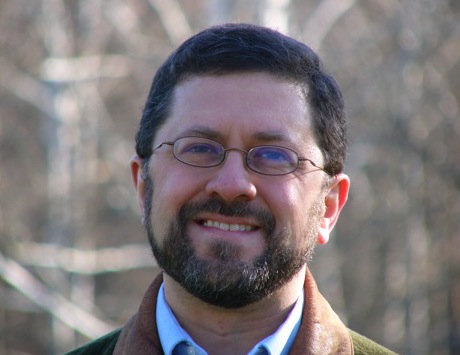 offers us rich insights on the practice of prayer, fasting and almsgiving from the perspective of the early church. He also helps us to see how we can concretely live out all three and further enrich our spiritual lives and help those around us to see Christ more fully in us and the Church. We like Mike! He’s awesome!
Be sure to visit Mike’s Discerning Hearts page for more from Mike.
Tags: mike aquilina, rich insights, the early Church
This entry was posted on Tuesday, March 4th, 2014 at 3:49 pm
You can follow any responses to this entry through the RSS 2.0 feed.
THE WAY OF PERFECTION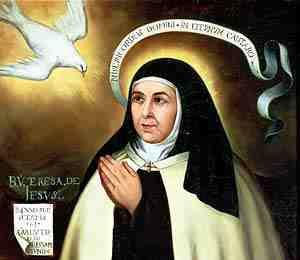
By
St. Teresa of Avila
Chapter 20 & 21
[powerpress]
For the pdf containing the complete text and footnotes click here
Describes how, in one way or another, we never lack consolation on the road of prayer. Counsels the sisters to include this subject continually in their conversation.
Describes the great importance of setting out upon the practice of prayer with firm resolution and of heeding no difficulties put in the way by the devil.
For other audio chapters of
“The Way of Perfection”
THE WAY OF PERFECTION
by
ST. TERESA OF AVILA
Translated & Edited by
E. ALLISON PEERS
from the Critical Editon of
P. SILVERIO DE SANTA TERESA, C.D.
Tags: st. teresa of avila, The Way of Perfection
This entry was posted on Tuesday, March 4th, 2014 at 3:48 pm
You can follow any responses to this entry through the RSS 2.0 feed.
 Episode 14-The Twelvth Rule:
The enemy acts like a woman, in being weak against vigor and strong of will. Because, as it is the way of the woman when she is quarrelling with some man to lose heart, taking flight when the man shows her much courage: and on the contrary, if the man, losing heart, begins to fly, the wrath, revenge, and ferocity of the woman is very great, and so without bounds; in the same manner, it is the way of the enemy to weaken and lose heart, his temptations taking flight, when the person who is exercising himself in spiritual things opposes a bold front against the temptations of the enemy, doing diametrically the opposite. And on the contrary, if the person who is exercising himself commences to have fear and lose heart in suffering the temptations, there is no beast so wild on the face of the earth as the enemy of human nature in following out his damnable intention with so great malice.
[powerpress]
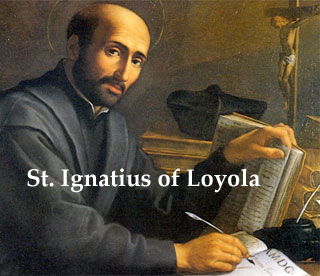 The Discernment of Spirits: Setting the Captives Free – Serves as an introduction to the Spiritual Exercises of St. Ignatius of Loyola
The 14 Rules for Discerning Spirits –
“The Different Movements Which Are Caused In The Soul”
as outlined by St. Ignatius of Loyola can be found here
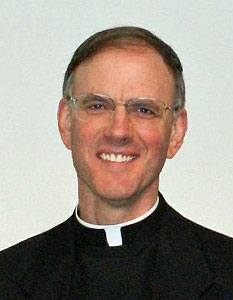
Father Timothy M. Gallagher, O.M.V., was ordained in 1979 as a member of the Oblates of the Virgin Mary, a religious community dedicated to retreats and spiritual formation according to the Spiritual Exercises of St. Ignatius. Fr. Gallagher is featured on the EWTN series “Living the Discerning Life: The Spiritual Teachings of St. Ignatius of Loyola”.
For more information on how to obtain copies of Fr. Gallaghers’s various books and audio which are available for purchase, please visit his website: www.frtimothygallagher.org
For the other episodes in this series visit
Fr. Timothy Gallagher’s “Discerning Hearts†page
Tags: discernment of spirits, Father Timothy M. Gallagher, Timothy Gallagher
This entry was posted on Tuesday, March 4th, 2014 at 12:13 am
You can follow any responses to this entry through the RSS 2.0 feed.
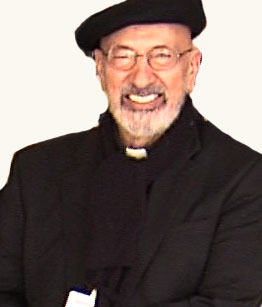 Show 59 ” Building a Kingdom of Love” – Why Do You Worry?
[powerpress]
*Note: This is a special reflection given by Msgr. Esseff on the morning of his departure for his mission to Peru.
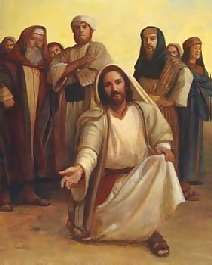
Gospel MT 6:24-34
Jesus said to his disciples:
“No one can serve two masters.
He will either hate one and love the other,
or be devoted to one and despise the other.
You cannot serve God and mammon.“Therefore I tell you, do not worry about your life,
what you will eat or drink,
or about your body, what you will wear.
Is not life more than food and the body more than clothing?
Look at the birds in the sky;
they do not sow or reap, they gather nothing into barns,
yet your heavenly Father feeds them.
Are not you more important than they?
Can any of you by worrying add a single moment to your life-span?
Why are you anxious about clothes?
Learn from the way the wild flowers grow.
They do not work or spin.
But I tell you that not even Solomon in all his splendor
was clothed like one of them.
If God so clothes the grass of the field,
which grows today and is thrown into the oven tomorrow,
will he not much more provide for you, O you of little faith?
So do not worry and say, ‘What are we to eat?’
or ‘What are we to drink?’or ‘What are we to wear?’
All these things the pagans seek.
Your heavenly Father knows that you need them all.
But seek first the kingdom of God and his righteousness,
and all these things will be given you besides.
Do not worry about tomorrow; tomorrow will take care of itself.
Sufficient for a day is its own evil.â€
Lectionary for Mass for Use in the Dioceses of the United States, second typical edition, Copyright © 2001, 1998, 1997, 1986, 1970 Confraternity of Christian Doctrine;
Msgr. John A. Esseff is a Roman Catholic priest in the Diocese of Scranton. He was ordained on May 30th 1953, by the late Bishop William J. Hafey, D.D. at St. Peter’s Cathedral in Scranton, PA. Msgr. Esseff served a retreat director and confessor to Blessed Mother Teresa. He continues to offer direction and retreats for the sisters of the missionaries of charity around the world. Msgr. Esseff encountered St. Padre Pio, who would become a spiritual father to him. He has lived in areas around the world, serving in the Pontifical missions, a Catholic organization established by Bl. Pope John Paul II to bring the Good News to the world especially to the poor. Msgr. Esseff assisted the founders of the Institute for Priestly Formation and continues to serve as a spiritual director for the Institute. He continues to serve as a retreat leader and director to bishops, priests and sisters and seminarians and other religious leaders around the world.
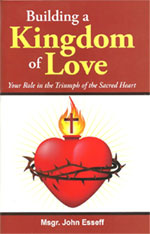
To obtain a copy of Msgr. Esseff’s book by visiting here
Be sure to visit Msgr. Esseff’s website “Building a Kingdom of Love”
Tags: catholic, catholic podcast, catholic prayer
This entry was posted on Monday, March 3rd, 2014 at 11:08 pm
You can follow any responses to this entry through the RSS 2.0 feed.
SP#6 The School of Prayer: Foundations for the New Evangelization
 [powerpress]
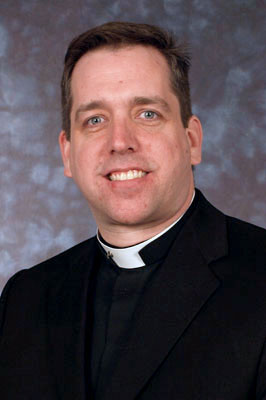
Fr. Scott Traynor talks about how God wants to have an intimate relationship with us. What is the dynamic of this relationship? He longs for us to freely give ourselves to Him. Fr. Scott talks about the gift of our imagination and what is true spiritual reality as opposed to fantasy. How do I tell the difference? What is the nature of the effect? Is it lasting or does it evaporate after the experience? Is Jesus in the center of the reality we are encountering? He describes the use of Lectio Divina, the praying with Sacred Scripture, that helps us to enter into the deeper relationship we are called to by God. Fr. Scott explains the difference between the Ignatian and Carmelite understandings of “contemplation”. Is there an ordinary Catholic “mysticism”? Do we miss it?
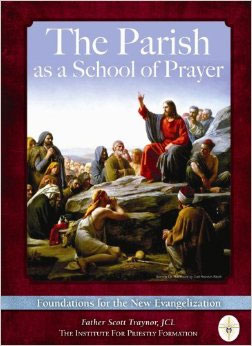
In Father Scott Traynor’s book, Blessed John Paul II’s memorable call to make of the parish a school of prayer takes on flesh and becomes concretely attainable. Those you read these faith-filled pages will find renewed desire to create such parishes and a clear road-map toward this goal.
–Father Timothy Gallagher, OMV
Father Scott Traynor received his STB from the Pontifical Gregorian University and his JCL from Catholic University of America. He has been an instructor and spiritual director for many of the programs at the Institute for Priestly Formation.
Father Traynor is a retreat master and spiritual director who has travelled the country as a speaker at various conferences, diocesan gatherings and national conferences.. He is especially sought after to present on the topics of prayer, discernment and priestly identity and mission.
He serves the Rector of the St. John Vianney Theological Seminary in Denver Colorado.

Tags: catholic, catholic podcast, catholic prayer
This entry was posted on Thursday, February 27th, 2014 at 2:35 pm
You can follow any responses to this entry through the RSS 2.0 feed.
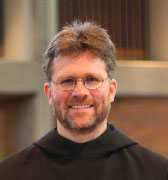 Episode 20- The Holy Rule of St. Benedict: A Spiritual Path for Today’s World with Fr. Mauritius Wilde O.S.B., PhD.
[powerpress]
In this episode, Fr. Maurtius is joined by his fellow Missionary Benedictines, Sr. Fidelis Marie Lanowich  and Sr. Gabriel Mary Oestreich of the Immaculata Monastery, Norfolk, NE and Br. Damian Cayetano of Christ the King Priory, Schuyler, NE. The group discusses what drew them to the Holy Rule of St. Benedict. They share their response to the Holy Rule and it’s guidance for their lives. The subject is obedience and balance is part of the conversation, as well as the importance of community.
Father Mauritius Wilde, OSB, Ph.D., did his philosophical, theological and doctoral studies in Europe. He is the author of several books and directs retreats regularly. He serves as Prior of our monastery in Schuyler.
 For more information about the ministry of the the Missionary Benedictines of Christ the King Priory in Schuyler, Nebraska visit here:
Tags: Gabriel Mary Oestreich, Holy Rule of St. Benedict, Missionary Benedictines
This entry was posted on Wednesday, February 26th, 2014 at 8:18 pm
You can follow any responses to this entry through the RSS 2.0 feed.
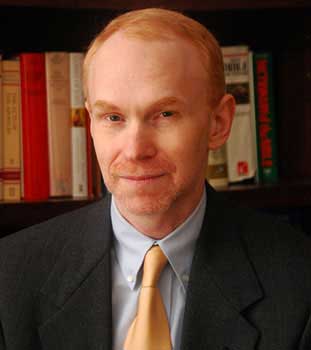
Dr. Matthew Bunson discusses the life, times and teachings of St. Isidore of Seville
 [powerpress]
Born: c. 560 Cartagena, Spain
From Vatican.va, an excerpt from the teachings ofPope Benedict XVI General Audience 2008
To understand Isidore better it is first of all necessary to recall the complexity of the political situations in his time to which I have already referred: during the years of his boyhood he was obliged to experience the bitterness of exile. He was nevertheless pervaded with apostolic enthusiasm. He experienced the rapture of contributing to the formation of a people that was at last rediscovering its unity, both political and religious, with the providential conversion of Hermenegild, the heir to the Visigoth throne, from Arianism to the Catholic faith. Yet we must not underestimate the enormous difficulty of coming to grips with such very serious problems as were the relations with heretics and with the Jews. There was a whole series of problems which appear very concrete to us today too, especially if we consider what is happening in certain regions in which we seem almost to be witnessing the recurrence of situations very similar to those that existed on the Iberian Peninsular in that sixth century. The wealth of cultural knowledge that Isidore had assimilated enabled him to constantly compare the Christian newness with the Greco-Roman cultural heritage, however, rather than the precious gift of synthesis it would seem that he possessed the gift of collatio, that is, of collecting, which he expressed in an extraordinary personal erudition, although it was not always ordered as might have been desired.
In any case, his nagging worry not to overlook anything that human experience had produced in the history of his homeland and of the whole world is admirable. Isidore did not want to lose anything that man had acquired in the epochs of antiquity, regardless of whether they had been pagan, Jewish or Christian. Hence, it should not come as a surprise if, in pursuing this goal, he did not always manage to filter the knowledge he possessed sufficiently in the purifying waters of the Christian faith as he would have wished. The point is, however, that in Isidore’s intentions, the proposals he made were always in tune with the Catholic faith which he staunchly upheld. In the discussion of the various theological problems, he showed that he perceived their complexity and often astutely suggested solutions that summarize and express the complete Christian truth. This has enabled believers through the ages and to our times to profit with gratitude from his definitions. A significant example of this is offered by Isidore’s teaching on the relations between active and contemplative life. He wrote: “Those who seek to attain repose in contemplation must first train in the stadium of active life; and then, free from the dross of sin, they will be able to display that pure heart which alone makes the vision of God possible” (Differentiarum Lib. II, 34, 133: PL 83, col 91A). Nonetheless, the realism of a true pastor convinced him of the risk the faithful run of reducing themselves to one dimension. He therefore added: “The middle way, consisting of both of these forms of life, normally turns out to be more useful in resolving those tensions which are often aggravated by the choice of a single way of life and are instead better tempered by an alternation of the two forms” (op. cit. 134; ibid., col 91B).
Isidore sought in Christ’s example the definitive confirmation of a just orientation of life and said: “The Saviour Jesus offers us the example of active life when during the day he devoted himself to working signs and miracles in the town, but he showed the contemplative life when he withdrew to the mountain and spent the night in prayer” (op. cit. 134: ibid.). In the light of this example of the divine Teacher, Isidore can conclude with this precise moral teaching: “Therefore let the servant of God, imitating Christ, dedicate himself to contemplation without denying himself active life. Behaving otherwise would not be right. Indeed, just as we must love God in contemplation, so we must love our neighbour with action. It is therefore impossible to live without the presence of both the one and the other form of life, nor can we live without experiencing both the one and the other” (op. cit., 135; ibid. col 91C). I consider that this is the synthesis of a life that seeks contemplation of God, dialogue with God in prayer and in the reading of Sacred Scripture, as well as action at the service of the human community and of our neighbour. This synthesis is the lesson that the great Bishop of Seville has bequeathed to us, Christians of today, called to witness to Christ at the beginning of a new millennium.
For more visit Vatican.va
Dr. Matthew Bunson, Senior Fellow of the St. Paul Center for Biblical Theology, is one of the United States’ leading authorities on the papacy and the Church.
His books include: The Encyclopedia of Catholic History; The Encyclopedia of Saints; Papal Wisdom; All Shall Be Well; Encyclopedia of the Roman Empire; and The Angelic Doctor: The Life and World of St. Thomas Aquinas; The Pope Encyclopedia; We Have a Pope! Benedict XVI, the first Catholic biography of the Holy Father in the English language; the Encyclopedia of U.S. Catholic History; Pope Francis. His also the editor of OSV’s “The Catholic Answer” magazine.
Tags: matthew bunson, St. Isidore of Seville
This entry was posted on Wednesday, February 26th, 2014 at 5:51 pm
You can follow any responses to this entry through the RSS 2.0 feed.
Episode 11- The Four Marks of the Church
[powerpress]
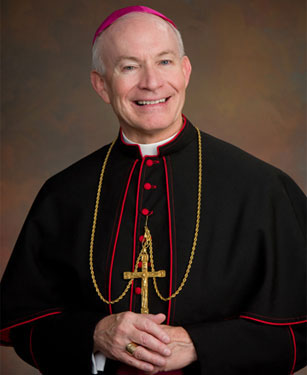
Archbishop Lucas offers insights on the US Catholic Catechism for Adults Chapter 11:
“In the earliest professions of faith, the Catholic Church identified herself as “one, holy, catholic, and apostolic.”  We find these words in the Nicene Creed professed at Sunday Mass.  Traditionally, they refer to what are known as the four marks of the Church, traits that identify the Church before the world.”
The Most Reverend George J. Lucas leads the Archdiocese of Omaha.
For other episodes in the visit our Archbishop George Lucas page
This programs is based on:
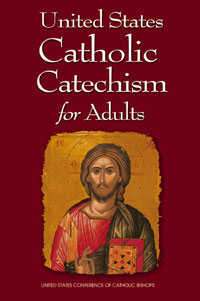
More information can be found here.
We wish to thank the USCCB for the permissions granted for use of relevant material used in this series.
Also we wish to thank Omar Gutierrez and Teresa Monaghen for their vocal talents in this episode.
Tags: Archbishop George Lucas Episode 11, Catholic Catechism, The Four Marks of the Church
This entry was posted on Wednesday, February 26th, 2014 at 4:13 pm
You can follow any responses to this entry through the RSS 2.0 feed.