 Site Type
 Featured
 Fonts
Fonts Skins
Skins
Is Jesus Calling? A Spiritual Guide to Discerning Your Vocational Call with Fr. Paul Hoesing – episode 2: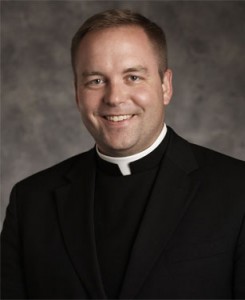 The First Spiritual Lesson: You Must Follow Christ. “Discovering one’s vocation is not a navel-gazing, self-focused, psychological exercise.  It’s not about a man figuring something out. It is not about solving a confusing puzzle.”
Questions: Where have you encountered Christ? Where do you experience his loving presence now for you?  Where do you feel consciously blessed and grateful for what God has done for you?
[powerpress ]
The Second Spiritual Lesson: Learn to desire what God desires for you. “All you need is to desire whatever God may desire for you. Remaining true to this desire opens your heart to receive what God wants for you. Then, God Himself will take care of you.â€
Questions: Do you trust that God always wants what is best for you? Where do you begin to become afraid of giving God permission to lead you? When do you begin to try to manipulate God to want what you think will make you happy? When that happens, simply say over and over again inside of yourself to the Father, ‘Father, I give you permission to lead me!’ Or ‘Father, I desire your goodness to me.’ Or, ‘Father, I trust you’â€
Based on “Is Jesus Calling You To Be A Catholic Priest: A helpful guide”, published by National Conference of Diocesan Vocation Director.
Fr. Paul Hoesing serves as the Vocation Director for the Archdiocese of Omaha, NE. Check out “For Your Vocation.org“
Tags: Paul Hoesing
This entry was posted on Thursday, January 16th, 2014 at 12:14 am
You can follow any responses to this entry through the RSS 2.0 feed.
Episode 1 -The Centrality of the Eucharist -The Way of Mystery: The Eucharist and Moral Living– Placing the 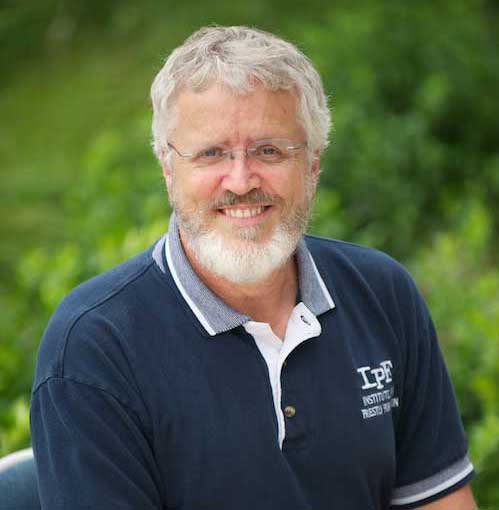 Eucharist as the center of who we are as Catholics part 1
[powerpress]
Deacon James Keating, PhD, the director of Theological Formation for the Institute for Priestly Formation, located at Creighton University, in Omaha, is making available to â€Discerning Hearts†and all who listen, his series of programs entitled “The Way of Mysteryâ€.
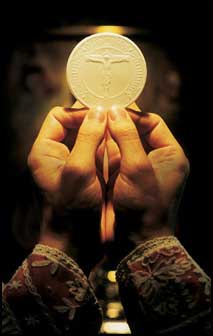 The Vatican II documents remind us that the spiritual journey is not made in a vacuum, that God has chosen to save us, not individually, but as The People of God. The Eucharist must help Christians to make their choices by discerning out of Christ’s paschal mystery. For this process to take place, however, Christians must first understand how the Eucharist puts them in touch with Christ’s passion, death, and resurrection, and what concrete implications being in touch with this mystery has for their daily lives.

For more information on the “Institute of Priestly Formation†and for other material available by Deacon Keating, just click here
Don’t forget to pickup a copy of “Communion with Christ†, it is one of the best audio sets on prayer…ever!
Check out Deacon Keating’s “Discerning Heart†page
Tags: Deacon James Keating, Deacon Keating, institute for priestly formation, the eucharist, theological formation
This entry was posted on Wednesday, January 15th, 2014 at 7:23 am
You can follow any responses to this entry through the RSS 2.0 feed.
USCCA6- Episode 6-Â Man and Woman in the Beginning
[powerpress]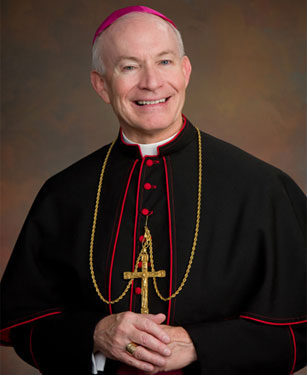
Archbishop Lucas offers insights on the US Catholic Catechism for Adults Chapter 6:
It is Jesus Christ who frees us from Original Sin and our own actual sins.  By Baptism, we share in the redemptive act of Jesus’ death and Resurrection, are freed from Original Sin, and are strengthened against the power of  sin and death.  We are reconciled to God and made members of his holy people, the Church.
The Most Reverend George J. Lucas leads the Archdiocese of Omaha.Â
For other episodes in the visit our Archbishop George Lucas page
This programs is based on:
More information can be found here.
We wish to thank the USCCB for the permissions granted for use of  relevant material used in this series.
Also we wish to thank Omar Gutierrez and Sr. Miriam Rita  for their vocal talents in this episode.
Tags: Catholic Catechism, George Lucas, jesus christ, original sin
This entry was posted on Wednesday, January 15th, 2014 at 7:13 am
You can follow any responses to this entry through the RSS 2.0 feed.
Confession is Good Medicine
[powerpress]
16 – Confession is Good Medicine
A trip to the doctor’s office can be a scary thing, but it’s often necessary to go there to get the healing and treatment that we need.
Likewise, going to the confessional can be intimidating, but it’s often the very thing that we need to get us back on the pathway to the Lord.
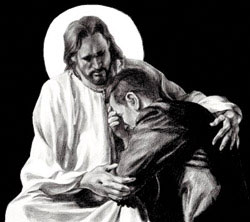 While we should also privately repent of our sins to God, Jesus instituted the sacrament of reconciliation or penance for our own good. Statistics show that Catholic populations have historically had lower rates of suicide and depression than non-Catholics, which many psychologists attribute directly to the healthy practice of vocally confessing one’s sins.
Few things can be as liberating as getting all of the junk from our lives out there on the table. The priest stands as Christ’s representative whose words of absolution, “I forgive you in the name of the Father and the Son and the Holy Spirit,†act as a sweet healing balm upon our souls. Priests are not their to scold you, but to offer healing and a fresh start.
So be not afraid, come unload your burdens before the Lord in confession today.
Tags: Good Medicine
This entry was posted on Wednesday, January 15th, 2014 at 6:35 am
You can follow any responses to this entry through the RSS 2.0 feed.
St. Francis de Sales Novena Day 1
[powerpress]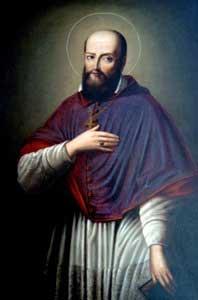
Day 1
There is no clock, no matter how good it may be, that doesn’t need resetting and rewinding twice a day, once in the morning and once in the evening. In addition, at least once a year it must be taken apart to remove the dirt clogging it, straighten out bent parts and repair those worn out. In like manner, every morning and evening a person who really takes care of his heart must rewind it for God’s service by means of certain practices of piety. At least once a year he must take it apart and examine every piece in detail; that is, every affection and passion, in order to repair whatever defects there may be. (INT. Part 5, Ch. 1; O. III, p. 340)
O blessed Francis de Sales, who on earth did excel in a life of virtue, especially in the love of God and neighbor, I earnestly ask you to take me under your compassionate care and protection. Obtain for me conversion of mind and heart. Grant that all people, especially (names of those whom you wish to include) may experience the depth of God’s redeeming and healing love. Teach me to fix my eyes on the things of heaven even as I walk each day with my feet planted firmly on the earth. Help me, through the practice of virtue and the pursuit of devotion, to avoid anything that would otherwise cause me to stumble in my attempt to follow Christ and to be an instrument of the Holy Spirit. Encouraged by your prayers and example, help me to live fully my sacred dignity with the hope of experiencing my sacred destiny: eternal life with God. Receive also this particular need or concern that I now lift up in prayer. (mention your particular need). O God, for the salvation of all, you desired that St. Francis de Sales—preacher, missionary, confessor, bishop and founder—should befriend many long the road to salvation. Mercifully grant that we, infused with the humility and gentleness of his charity, guided by his wisdom and sharing in his spirit may experience eternal life.
We ask this through Christ our Lord. Amen.
St. Francis de Sales, pray for us.
Tags: Francis De Sales, st francis de sales
This entry was posted on Wednesday, January 15th, 2014 at 12:01 am
You can follow any responses to this entry through the RSS 2.0 feed.
Episode 8 -The Sixth Rule: 
Although in desolation we ought not to change our first resolutions, it is very helpful intensely to change ourselves against the same desolation, as by insisting more on prayer, meditation, on much examination, and by giving ourselves more scope in some suitable way of doing penance.
[powerpress]
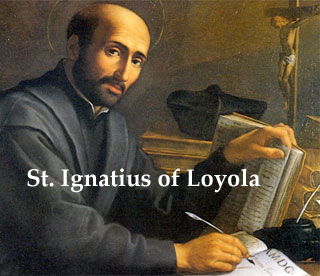 The Discernment of Spirits: Setting the Captives Free – Serves as an introduction to the Spiritual Exercises of St. Ignatius of Loyola
The 14 Rules for Discerning Spirits –
“The Different Movements Which Are Caused In The Soul”
as outlined by St. Ignatius of Loyola
can be found here
Father Timothy M. Gallagher, O.M.V., was ordained in 1979 as a member of the Oblates of the Virgin Mary, a religious community dedicated to retreats and spiritual formation according to the Spiritual Exercises of St. Ignatius. Â Fr. Gallagher is featured on the EWTN series “Living the Discerning Life: Â The Spiritual Teachings of St. Ignatius of Loyola”.Â
For more information on how to obtain copies of Fr. Gallaghers’s various books and audio which are available for purchase, please visit  his  website: www.frtimothygallagher.org
 For the other episodes in this series visit
Fr. Timothy Gallagher’s “Discerning Hearts†page
Tags: discernment of spirits, Father Timothy M. Gallagher, Timothy Gallagher
This entry was posted on Monday, January 13th, 2014 at 2:53 pm
You can follow any responses to this entry through the RSS 2.0 feed.
Episode 8- Seeking Truth with Sharon Doran – The Baptism of Jesus (PART 2)  [powerpress]
Sharon Doran serves as the teaching director of “Seeking Truth.†An experienced Bible Study teacher, Sharon has a passion for scripture that will motivate and challenge you to immerse yourself in God’s Word and apply His message to your every day life.
Episode 8 –
Sharon introduces teachings of several Church Fathers.
Of special interest is the Apostolic Father, St. Ignatius of Antioch and his letter to the Ephesians.
Ignatius teaches about three mysteries that must be kept secret from Satan until after the resurrection: Mary’s virginity, the virgin birth and the crucifixion of Jesus.
Drawing from later writings of Sts. Thomas Aquinas, Augustine, and Gregory, Sharon reveals to us some biblical foundations for Ignatius’ teachings as found in both Old and New Testaments.
The Holy Family’s Persona helps to hide Mary’s virginity and the virgin birth from worldly eyes and namely the “prince of the worldâ€, so these secrets could remain hidden as Jesus grew up in Nazareth.
The hidden years come to an end when John baptizes Jesus in the Jordan River and Jesus voluntarily submits to the Father’s mission for Him.
The Father is well pleased with His beloved, obedient Son.
The scene ends with the Trinitarian theophany and Jesus is led by the Spirit out into the desert to be tempted by Satan himself.
For more in this series visit the Discerning Hearts “Seeking Truth with Sharon Doran” page
 “Seeking Truth†is an in depth Catholic Bible Study, commissioned by the Archdiocese of Omaha in response to John Paul II’s call to the New Evangelization as well as Pope Benedict XVI’s exhortation for all Catholics to study scripture. To learn more go to:www.seekingtruth.net
Tags: baptism of jesus, Sharon Doran, The Baptism of Jesus
This entry was posted on Monday, January 13th, 2014 at 1:28 pm
You can follow any responses to this entry through the RSS 2.0 feed.
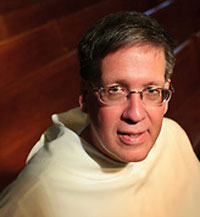 Episode 1 St. Catherine of Siena:  Her Life and Teachings with Fr. Thomas McDermott-
[powerpress]
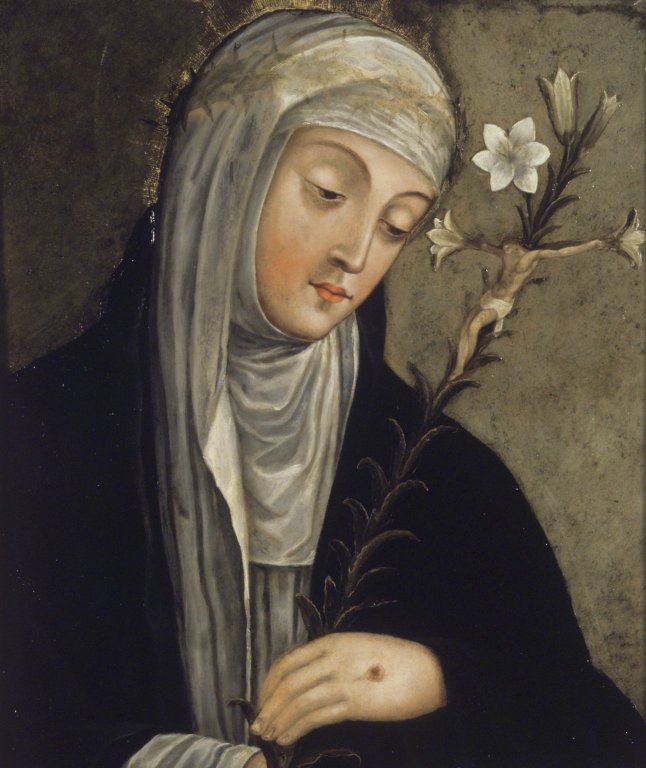 In this introductory episode, Fr. McDermott discusses the person of Blessed Raymond of Capua, O.P., (ca. 1330 – 5 October 1399), who was a leading member of the Dominican Order, served as its Master General from 1380 until his death, and was confessor and biographer of St. Catherine.  Fr. McDermott talks about the importance of having the Dominican perspective when looking at the accounts of St. Catherine’s life.  Her family and early childhood, including her first mystical experience, are then discussed.
Fr. Thomas McDermott, OP is Regent of Studies for the Dominican Province of St. Albert the Great and is the author of “Catherine of Siena: Spiritual Development in Her Life and Teaching” (Paulist, 2008) and  “Filled with all the Fullness of God: An Introduction to Catholic Spirituality”.  He obtained a doctorate in spiritual theology from the Angelicum and taught for several years at Kenrick-Glennon Seminary in St. Louis.  He crrently serves as pastor at St. Vincent Ferrer, in Chicago, IL.
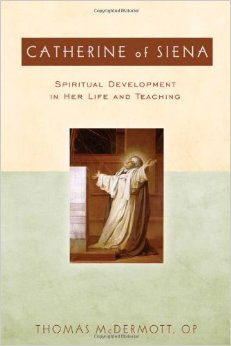
Our series is based on “Catherine of Siena”
by Fr. McDermott
Tags: catherine of siena, st catherine of siena, Thomas McDermott
This entry was posted on Monday, January 13th, 2014 at 11:07 am
You can follow any responses to this entry through the RSS 2.0 feed.
THE WAY OF PERFECTION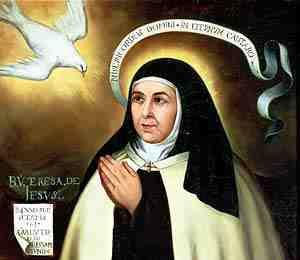
By
St. Teresa of Avila
Chapter 12
[powerpress]
For the pdf containing the complete text and footnotes click here
Teaches that the true lover of God must care little for life and
honour.
For other audio chapters of
“The Way of Perfection”
THE WAY OF PERFECTION
by
ST. TERESA OF AVILA
Translated & Edited by
E. ALLISON PEERS
from the Critical Editon of
P. SILVERIO DE SANTA TERESA, C.D.
Tags: st. teresa of avila, The Way of Perfection
This entry was posted on Monday, January 13th, 2014 at 11:05 am
You can follow any responses to this entry through the RSS 2.0 feed.
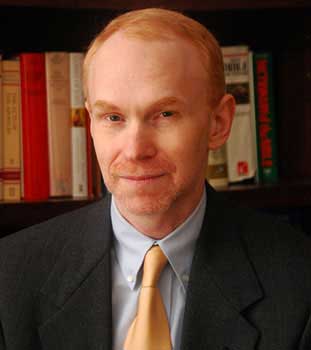
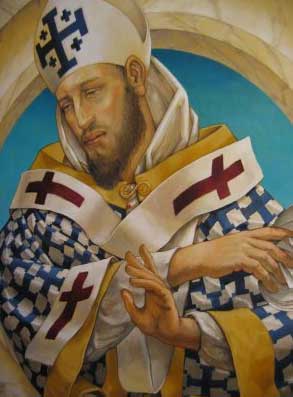
Dr. Matthew Bunson discusses the life, times and teachings of St. Cyril of Alexandria
[powerpress]
-
Born: 378 AD, Alexandria, Egypt
-
Died: June 27, 444 AD, Alexandria, Egypt
Cyril’s writings – truly numerous and already widely disseminated in various Latin and Eastern translations in his own lifetime, attested to by their instant success – are of the utmost importance for the history of Christianity. His commentaries on many of the New and Old Testament Books are important, including those on the entire Pentateuch, Isaiah, the Psalms and the Gospels of John and Luke. Also important are his many doctrinal works, in which the
defence of the Trinitarian faith against the Arian and Nestorian theses recurs. The basis of Cyril’s teaching is the ecclesiastical tradition and in particular, as I mentioned, the writings of Athanasius, his great Predecessor in the See of Alexandria. Among Cyril’s other writings, the books Against Julian deserve mention. They were the last great response to the anti-Christian controversies, probably dictated by the Bishop of Alexandria in the last years of his life to respond to the work Against the Galileans, composed many years earlier in 363 by the Emperor known as the “Apostate” for having abandoned the Christianity in which he was raised.
The Christian faith is first and foremost the encounter with Jesus, “a Person, which gives life a new horizon” (Deus Caritas Est, n. 1). St Cyril of Alexandria was an unflagging, staunch witness of Jesus Christ, the Incarnate Word of God, emphasizing above all his unity, as he repeats in 433 in his first letter (PG 77, 228-237) to Bishop Succensus: “Only one is the Son, only one the Lord Jesus Christ, both before the Incarnation and after the Incarnation. Indeed, the Logos born of God the Father was not one Son and the one born of the Blessed Virgin another; but we believe that the very One who was born before the ages was also born according to the flesh and of a woman”. Over and above its doctrinal meaning, this assertion shows that faith in Jesus the Logos born of the Father is firmly rooted in history because, as St Cyril affirms, this same Jesus came in time with his birth from Mary, the Theotò-kos, and in accordance with his promise will always be with us. And this is important: God is eternal, he is born of a woman, and he stays with us every day. In this trust we live, in this trust we find the way for our life.
For more visit Vatican.va
Dr. Matthew Bunson, Senior Fellow of the St. Paul Center for Biblical Theology, is one of the United States’ leading authorities on the papacy and the Church.
His books include: The Encyclopedia of Catholic History; The Encyclopedia of Saints; Papal Wisdom; All Shall Be Well; Encyclopedia of the Roman Empire; and The Angelic Doctor: The Life and World of St. Thomas Aquinas; The Pope Encyclopedia; We Have a Pope! Benedict XVI, the first Catholic biography of the Holy Father in the English language; the Encyclopedia of U.S. Catholic History; Pope Francis. His also the editor of OSV’s “The Catholic Answer” magazine.
Tags: catholic, catholic podcast, catholic prayer, cathollc spirituality, jesus christ, matthew bunson
This entry was posted on Sunday, January 12th, 2014 at 5:36 pm
You can follow any responses to this entry through the RSS 2.0 feed.
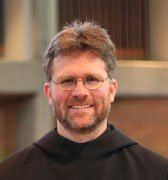 Episode 15 – The Holy Rule of St. Benedict: A Spiritual Path for Today’s World with Fr. Mauritius Wilde O.S.B., PhD.
In place of wanting the latest….sustainability
[powerpress]
From the Holy Rule of St. Benedict:
CHAPTER XXXI
The Kind of Man the Cellarer of the Monastery Ought to Be
Let there be chosen from the brotherhood as Cellarer of the monastery a wise man, of settled habits, temperate and frugal, not conceited, irritable, resentful, sluggish, or wasteful, but fearing God, who may be as a father to the whole brotherhood.
Let him have the charge of everything, let him do nothing without the command of the Abbot, let him do what hath been ordered him and not grieve the brethren. If a brother should perchance request anything of him unreasonably let him not sadden the brother with a cold refusal, but politely and with humility refuse him who asketh amiss. Let him be watchful of his own soul, always mindful of the saying of the Apostle: “For they that have ministered well, shall purchase to themselves a good degree” (1 Tm 3:13). Let him provide for the sick, the children, the guests, and the poor, with all care, knowing that, without doubt, he will have to give an account of all these things on judgment day. Let him regard all the vessels of the monastery and all its substance, as if they were sacred vessels of the altar. Let him neglect nothing and let him not give way to avarice, nor let him be wasteful and a squanderer of the goods of the monastery; but let him do all things in due measure and according to the bidding of his Abbot.
Above all things, let him be humble; and if he hath not the things to give, let him answer with a kind word, because it is written: “A good word is above the best gift” (Sir 18:17). Let him have under his charge everything that the Abbot hath entrusted to him, and not presume to meddle with matters forbidden him. Let him give the brethren their apportioned allowance without a ruffle or delay, that they may not be scandalized, mindful of what the Divine Word declareth that he deserveth who shall scandalize one of these little ones: “It were better for him that a millstone were hanged about his neck and that he were drowned in the depth of the sea” (Mt 18:6).
If the community is large, let assistants be given him, that, with their help, he too may fulfil the office entrusted to him with an even temper. Let the things that are to be given be distributed, and the things that are to be gotten asked for at the proper times, so that nobody may be disturbed or grieved in the house of God.
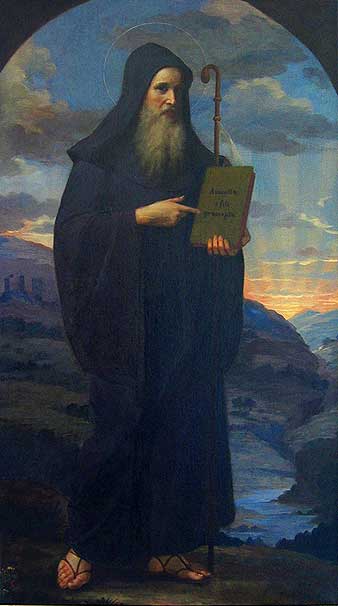
Father Mauritius Wilde, OSB, Ph.D., did his philosophical, theological and doctoral studies in Europe. He is the author of several books and directs retreats regularly. He serves as Prior of our monastery in Schuyler.
 For more information about the ministry of the the Missionary Benedictines of Christ the King Priory in Schuyler, Nebraska visit here:
This entry was posted on Sunday, January 12th, 2014 at 4:22 pm
You can follow any responses to this entry through the RSS 2.0 feed.
Episode 8 -The Sixth Rule: 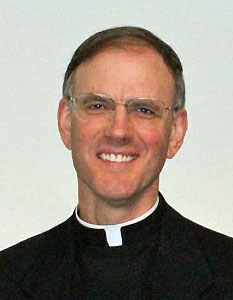
Although in desolation we ought not to change our first resolutions, it is very helpful intensely to change ourselves against the same desolation, as by insisting more on prayer, meditation, on much examination, and by giving ourselves more scope in some suitable way of doing penance.
[powerpress]
The Discernment of Spirits: Setting the Captives Free – Serves as an introduction to the Spiritual Exercises of St. Igantius of Loyola
Father Timothy M. Gallagher, O.M.V., was ordained in 1979 as a member of the Oblates of the Virgin Mary, a religious community dedicated to retreats and spiritual formation according to the Spiritual Exercises of St. Ignatius. Fr. Gallagher is featured on the EWTN series “Living the Discerning Life: The Spiritual Teachings of St. Ignatius of Loyola”.
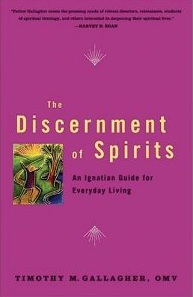 “The Discernment of Spirits: Setting the Captives Free” series is based on Fr. Gallagher’s book “Discernment of Spirits” published by Crossroads Books.
.
For more information on the work of Fr. Timothy Gallagher check out his website
.
For the other episodes in this series check out Fr. Timothy Gallagher’s “Discerning Heart†page
Tags: discernment of spirits, Timothy Gallagher
This entry was posted on Monday, January 6th, 2014 at 12:15 am
You can follow any responses to this entry through the RSS 2.0 feed.
[powerpress]
On this last day of 2013,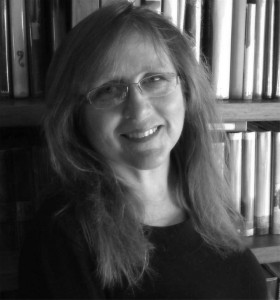 Â I hope you can take just a couple of minutes to listen to the audio above.
 I hope you can take just a couple of minutes to listen to the audio above.
With the addition of our new apps for Iphone, Ipad and Android devices our work has expanded greatly.
Did you know that we average over 175,000 audio downloads a month? And that figure  does not include the video hits, page views, which exceed 5000 a day.  But it’s not really about numbers, it’s about hearts…hearts seeking answers and peace…hearts seeking, ultimately,  The Father, the Son, and the Holy Spirit.  God is so very good!
This brings about new challenges, and honestly, expenses.
First, I ask that you please pray for the work of “Discerning Hearts”…this is the most important thing. Â But then I would also ask those who have been blessed to please consider helping us with a year end donation.
Discerning Hearts is a 501 c 3 non-profit public charity with ALL donations FULLY tax-deductible in the U.S. Â We receive no funding from any Catholic Radio Station or Catholic Diocese. Â We are truly 100% donor supported. Please check out the DONATE page. Â It’s safe and secure and you will be helping us to continue the work that God has called us to.
Thanks for your time and prayerful consideration.
May our patrons, St. Padre Pio, Blessed Mother Teresa, and Blessed John Paul II, pray for us.
May the Immaculate Heart of our Blessed Mother, pray for us.
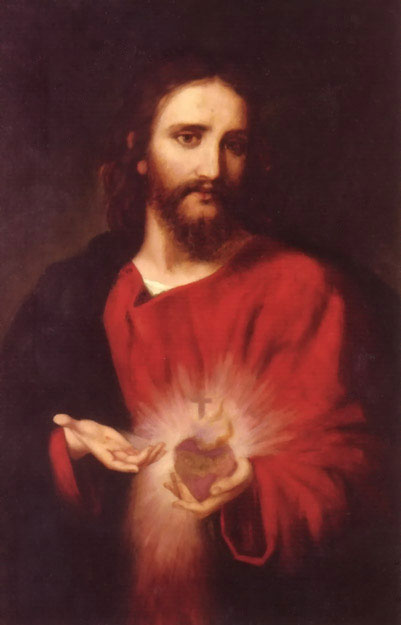
And may the Sacred Heart of Jesus, have mercy on us all.
Amen.
Tags: audio, downloads, hearts, work
This entry was posted on Tuesday, December 31st, 2013 at 11:54 am
You can follow any responses to this entry through the RSS 2.0 feed.
[powerpress]
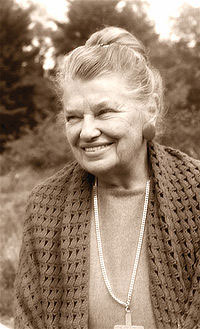
We discovered an incredible audio of a conference talk given in the late 70’s by the Baroness herself, Servant of God Catherine de Hueck Doherty.  She is  co-founder of the Madonna House Apostolate and one of our absolute favorite authors.  We dare you not to be moved by her words!
Reflection on Catherine’s talk by Omar Gutierrez:

Catherine de Hueck Doherty speaks with the kind of prophetic fire that one imagines would have poured from the mouth of Isaiah or out of the minds of the early Church fathers. Her spirit and message are as thoroughly Catholic as any you have ever heard. With the kind of salty swagger of a woman who knew what it was to live with the poorest of the poor, she understood intimately what it meant to live the social teaching of the Church. “Service without prayer,†she says, “is paternalism, social service work, something that the poor do not accept.†“In order to do what we must do, in order to be what we must be we have to pray.â€
As she loudly asks why it is that our cities do not applaud and cry at the manifest love for the poor that should be there but isn’t, and demands that we pray for the souls of the owners of multi-million dollar corporations, and points out the “stupid†behavior of Church governors she can at the same time turn around and insist that we all have the faith of a St. Perpetua in order to renew the ancient Church. She demands that we pray for our priests who are manifestations of God’s love for us. “We don’t need psychiatrists from our priests. We don’t need counselors from our priests. We need priests to take us by the hand and lead us to sanctity.â€
Doherty is a lioness, a spirit that could move mountains. We would all do well to listen to her advice and seek union with Christ in His Church and in obedience to the teachings therein. So, in Catherine’s words, “Get crackingâ€!
Tags: audio, Church, Hueck Doherty, love, Madonna House, obedience, priests
This entry was posted on Tuesday, December 31st, 2013 at 7:28 am
You can follow any responses to this entry through the RSS 2.0 feed.
[powerpress]
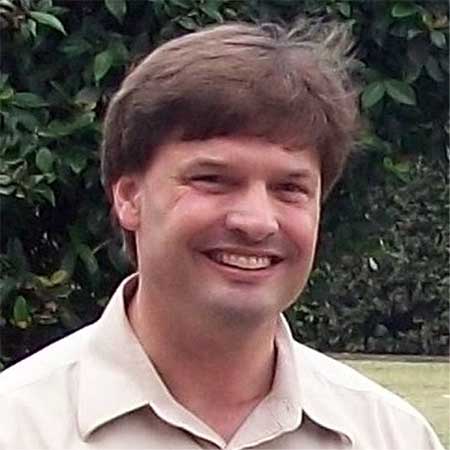
From Dr. Anthony Lilles’ blog “Beginning to Pray”
There are stories about great saints who struggled to pray in the face of great difficulty. Â This can be baffling until we try to enter into the Passion of Christ and consider the movements of His Heart before the merciful love of the Father. Â Until we contemplate the prayer of the Word of the Father, this struggle to pray is often deemed to be merely a stage through which we pass. Â Yet, in the Garden of Gethsemane (see Luke 22:35ff), the bloody sweat of the Son of God reveals this struggle as a supreme moment of Christian contemplation, a terrifying standard against which the truth of all our other prayers can be discerned.The hymn of praise learned with the Suffering Servant on the Mount of Olives is shrouded in a mystery. Â It is against this mystery that therapeutic approaches to prayer should be discerned. Â Psychological or physical tantrums are silenced before the authentic cry of heart offered by the Son of Man. Â His love for his disciples and devotion to the Father challenges any consumerist attitude toward the things of God. Â His sorrow and spiritual poverty helps us feel the appropriate shame we ought to have over any gluttonous expectation for mental relief or euphoric experience. Â Against the dark terror Jesus confronts in prayer, spiritual consumerism can only be seen as limiting the freedom that our conversation with the Lord requires.The Word made flesh baptized every moment of his earthly life in this kind of prayer. Â Every heart beat and every breath was so filled with zeal for the Father and those the Father gave Him, divine love ever exploded in His sacred humanity with resounding silence, astonishing signs, heart-aching wonders and words of wisdom which even after two thousand years still give the world pause. Â Each verse of the Gospels attempts to show us His self-emptying divinity boldly hurling His prayerful humanity with the invincible force of love to the Cross.In Gethsemane we glimpse how the Son of Man availed Himself to these mysterious promptings of the Father’s love, an unfathomable love that is not comfortable to our limited humanity. Â Â Unaided human reason cannot penetrate the divine passion that compelled Him into the solitude hidden mountains and secret gardens. Â His vigil on the Mount of Olives can only be understood as the culmination of the ongoing conversation to which He eagerly made His humanity vulnerable.
If, in this culminating movement of heart, Christ sweat blood, we who have decided to follow in the footsteps of our Crucified Master should not be surprised by moments of great anguish in our own conversation with God. Â In the face of this mystery, we must allow the Risen Lord to give us His courage. Â Â What is revealed on the Mount of Olives helps us see why Christian prayer can mature into a beautiful surrender, a movement of love which gives glory to the Father and extends the redemptive work of the Redeemer in the world. Â Â What Christian contemplation sees with the Son of God can involve very difficult struggle, through the strength that comes from the Savior even the terrifying moments of such prayer can resolve themselves in trustful surrender: “Not my will… Yours be done.”
Dr. Anthony Lilles is the author of “Hidden Mountain, Secret Garden”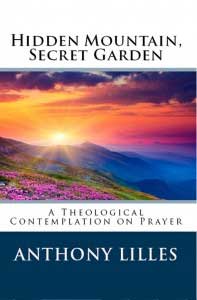
Available at Amazon.com as an ebook (click here), a paperback edition (click here).  You may also order a paperback edition at createspace.com.
This entry was posted on Tuesday, December 31st, 2013 at 7:00 am
You can follow any responses to this entry through the RSS 2.0 feed.