 Site Type
 Featured
 Fonts
Fonts Skins
Skins
THE WAY OF PERFECTION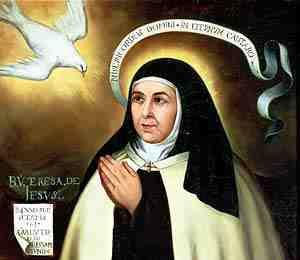
By
St. Teresa of Avila
Chapter 8 & 9
[powerpress]
For the pdf containing the complete text and footnotes click here
Treats of the great benefit of self-detachment, both interior and
exterior, from all things created.Treats of the great blessing that shunning their relatives brings
to those who have left the world and shows how by doing so they
will find truer friends.
For other audio chapters of
“The Way of Perfection”
THE WAY OF PERFECTION
by
ST. TERESA OF AVILA
Translated & Edited by
E. ALLISON PEERS
from the Critical Editon of
P. SILVERIO DE SANTA TERESA, C.D.
Tags: audio, Critical Editon, detachment, st
This entry was posted on Monday, November 11th, 2013 at 1:04 pm
You can follow any responses to this entry through the RSS 2.0 feed.
USCCA7- Episode 7- The Good News: God Has Sent His Son
 [powerpress]
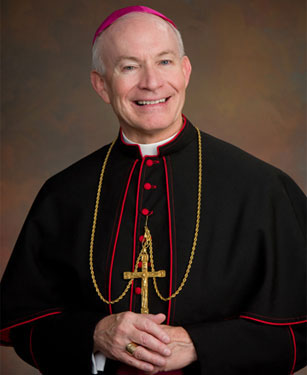
Archbishop Lucas offers insights on the US Catholic Catechism for Adults Chapter 7:
We ponder Christ’s person and his earthly words and deeds in terms of mystery. His earthly life reveals his hidden divine Sonship and plan for our salvation. His parables, miracles, sermons, and wisdom sayings help us “to see our God made visible, and so we are caught up in love of the God we cannot see” (First Preface for Christmas).
The Most Reverend George J. Lucas leads the Archdiocese of Omaha.
For other episodes in the visit our Archbishop George Lucas page
This programs is based on:
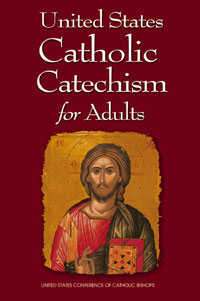
More information can be found here.
We wish to thank the USCCB for the permissions granted for use of relevant material used in this series.
Also we wish to thank Chuck Adams and Miriam Gutierrez for their vocal talents in this episode.
Tags: Archbishop Lucas, love, miracles, USCCB
This entry was posted on Monday, November 11th, 2013 at 11:47 am
You can follow any responses to this entry through the RSS 2.0 feed.
SP#2 The School of Prayer: Foundations for the New Evangelization
 [powerpress]
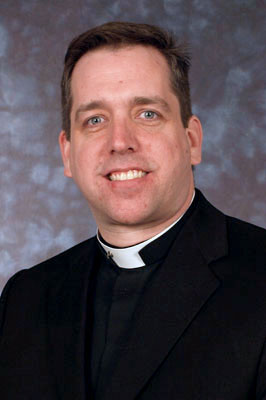
Fr. Scott Traynor talks about how we have to do more than just talk about prayer. He discusses how we must “live” our prayer in the union of love within the heart of the Holy Trinity. That is the goal of Christian prayer. He goes on to describe the very nature of the Holy Trinity….the relationship of love between the Father, the Son, and the Holy Spirit.
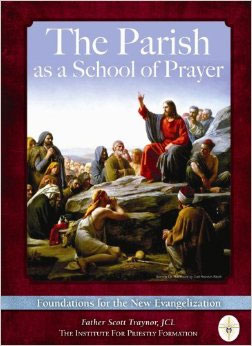
In Father Scott Traynor’s book, Blessed John Paul II’s memorable call to make of the parish a school of prayer takes on flesh and becomes concretely attainable. Those you read these faith-filled pages will find renewed desire to create such parishes and a clear road-map toward this goal.
–Father Timothy Gallagher, OMV
Father Scott Traynor received his STB from the Pontifical Gregorian University and his JCL from Catholic University of America. He has been an instructor and spiritual director for many of the programs at the Institute for Priestly Formation.
Father Traynor is a retreat master and spiritual director who has travelled the country as a speaker at various conferences, diocesan gatherings and national conferences.. He is especially sought after to present on the topics of prayer, discernment and priestly identity and mission.
He serves the Rector of the St. John Vianney Theological Seminary in Denver Colorado.

Tags: holy trinity, love, prayer, Scott Traynor
This entry was posted on Monday, November 11th, 2013 at 7:51 am
You can follow any responses to this entry through the RSS 2.0 feed.
[powerpress]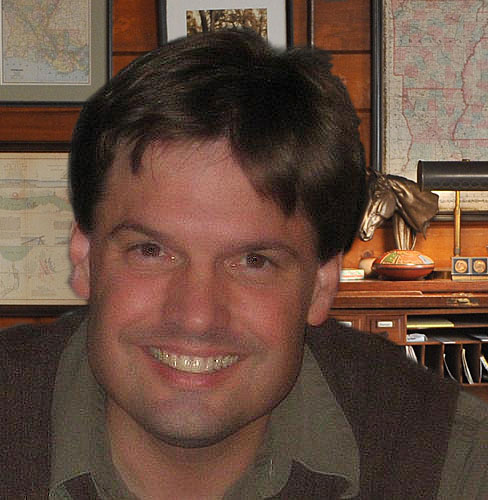
As if Already in Eternity: The Wisdom of Blessed Elisabeth of the Trinity (as found on Anthony’s “Beginning to Pray” blog site)
Blessed Elisabeth of the Trinity is a witness to the primacy of contemplation in the life of the Church and the mystical wisdom contemplation releases into human history. Â This is the wisdom that understands how God is present in both the public square as well as in the intimacy of our hearts. Â Today, when the whole world needs this wisdom renewed, the Church celebrates her feast day and invites us to consider her powerful spiritual doctrine.
She wrote a famous prayer to the Holy Trinity that has helped many contemplatives recover devotion to the Divine Persons in their life of prayer.  This work is cited to support the  Catechism of the Catholic Church’s teaching on the Divine Works and the Trinitarian Missions.  The teaching itself is that God calls every individual to a great and beautiful purpose, to become a dwelling place for His presence in the world:
The ultimate end of the divine economy is the entry of God’s creatures into the perfect unity of the Blessed Trinity. Â But even now we are called to be a dwelling for the Most Holy Trinity, ‘If a man loves me,’ says the Lord, ‘he will keep my word, and my Father will love him, and we will come to him, and make our home with him’ (CCC 260).
This is a rich teaching because it says that our ultimate fulfillment is not simply something waiting for us in a remote future, in a distant afterlife. Â Instead, the Catechism proposes that heaven can begin now in faith. Â This means that our faith offers us a fullness of life. Â We do not have to be content with managing through life’s ambiguities and uncertainties with the hope that someday it might get better. Â Instead, our faith gives us a real foretaste of the fullness that awaits us — so that the excessiveness of God’s love can pour into our lives here and now, if we will believe in Him.
To encourage this decision to believe in the love that God has for us in the here and now of our lives, the Catechism cites the beginning of Blessed Elisabeth’s prayer to the Trinity, “O my God, Trinity whom I adore, help me to forget myself entirely so to establish myself in you, unmovable and peaceful as if my soul were already in eternity.”
Blessed Elisabeth’s prayer helps us consider what it means to have faith, to believe in God and what He calls us to become. Â This kind of faith is a matter of a love that takes us out of ourselves. It is, in this sense, an ecstatic movement of heart, a decision to lay aside everything so that there is space for God to dwell in us. Â Faith helps us see that our own bloated egos need to make way for God. Â To love Christ to the point of welcoming His word in our hearts means He can begin to help us forget our very self. Â He is the One who frees us so that the fullness of life that awaits us in heaven begins here on earth.
Her words suggest that the biggest obstacle to prayer is not anything outside ourselves, but proclivities within. Â The ego has its own specific gravity. Â Its force, if left unchecked, its deadly. Â Anxieties over our own plans and for security, our lust for control and to put others in their place, our need to be right and esteemed, our obsession with being liked or affirmed, our gluttony for comfort and entertainment; all of this fails to provide any firm ground for rectifying our existence. Â Unchecked, these tendencies suffocate the heart, and as long as one’s heart is pulled by these forces, it can find no peace.
Only when we can get out of ourselves are we able to breath the fresh air of friendship with God and true solidarity with one
another. Â At the same time, even after we see how imprisoned we are, left to our own resources, we cannot entirely free ourselves. Â The answer is not to be found in our own cleverness or in some Titanic effort to surmount oneself through techniques. Â Only Christ can help us leave our old way of life behind. Â This is why Blessed Elisabeth’s prayer begins with a cry for help.
Clinging to what Christ has revealed about the Father and about humanity, this is the essential movement of faith. Â This is His word to us – for He is the saving Word that reveals this inexhaustible mystery. Â Those whose hearts are vulnerable to this radiant beauty find true inner freedom.
Souls whom Christ helps to be free of themselves stand firm in love even as everything in life falls apart around them. Â This is only because through Christ they have found the ground of their very being in the excessive love flowing from the Holy Trinity into their nights, their voids, their inadequacies and even their failures. Â In short, come what come may they know they are loved and that love awaits them.
It by standing on this ground that a soul opens itself to God’s presence in ever new and surprising ways. Â On this ground, He dwells in them. Â With the inflow of His truth and love, it is easy to let go and to trust, and anyone who has discovered this freedom wants to be established there in an unmovable way.
Today is the feast of Blessed Elisabeth of the Trinity. Â She lived out this truth to her last anguished heartbeat, bedridden with an incurable disease even as the political powers of her day threatened those she loved the most and the Church was rocked by all kinds of scandal. Â This Carmelite Mystic, the Mystic of Dijon, believed her mission was to help souls enter to a transforming encounter with Christ, one that requires a journey out of ourselves where we are vulnerable enough to be touched by Him. Her words encourage us to call out to the Word, and to let His great Canticle of love resound in our hearts with all its fulness — for to know this saving truth is to live as if already in eternity.
Tags: Anthony Lilles, Blessed Elisabeth, faith, love
This entry was posted on Monday, November 11th, 2013 at 12:13 am
You can follow any responses to this entry through the RSS 2.0 feed.
Liturgy of the Hours
[powerpress]
 For centuries Catholic priests, monks and nuns sanctified their days by praying the Psalms. This practice was inherited from the Jews, who prayed at set times in the temple. The Western Church was largely influenced by the Benedictine monks, who immersed themselves in the Psalms seven times each day, in addition to Mass and private prayer.
The Church today encourages the laity to pray a shorter form of this called the “Liturgy of the Hours.â€Â The two major parts of this are called morning prayer and evening prayer, and there are also readings for each day corresponding to the seasons of the Church’s liturgical calendar.
Praying the Liturgy of the Hours can be a powerful tool. It helps us acquire the discipline of regular prayer and fills our hearts and minds with Scripture as we go about our days. I once heard a priest say every single one of the priests he knew who had left the priesthood had stopped praying their daily office of prayer.
For more info talk to your priest or Catholic bookstore, and cover your household in spiritual protection each day with Mass, rosary, and the Liturgy of the Hours
Tags: divine office, Faith Check, hearts, liturgy of hours, prayer, priests
This entry was posted on Monday, November 11th, 2013 at 12:11 am
You can follow any responses to this entry through the RSS 2.0 feed.
 “Roman Pilgrimage: The Station Churches” is a stunning work.  A must have for those who love beauty, the heritage of the Catholic faith, and the celebration and depth of the Church’s liturgy.  The lives of the saints and martyrs come alive in this work which features the spiritual reflections of theologian George Weigel, the exquisite artistic insights of art historian Elizabeth Lev, and the beautiful photography of Stephen Weigel.  George opens with the history of the practice of visiting the tombs of Christian martyrs  which began in the 4th century.  No one tells a story quite like he does. The pilgrimage would eventually evolve into a journey to churches, basilicas, and cathedrals throughout the city of the Saints.  Through this work, in a very real way,  the gift of Rome comes to meet in your home.  The spiritual contemplations are not only ideal for Lenten devotion, but are excellent for any time of the year.  A gift to give to yourself and to anyone you may care about who is traveling the pilgrimage of faith.
[powerpress]
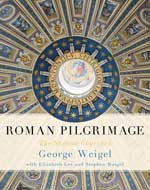 You can find the book here
Fr. Robert Barron, Rector-President, Mundelein Seminary
“An astonishingly good book. George Weigel’s meditations on the liturgical texts of Lent and Easter are intellectually rich, spiritually alert, and rendered in beautifully crafted prose; Elizabeth Lev’s examinations of the station churches themselves are always informative, insightful, and witty. Equally impressive are Stephen Weigel’s artfully composed photographs. Roman Pilgrimage will delight your eye and feed your soul.â€
Timothy Cardinal Dolan, Archbishop of New York
“On cold, damp, late-winter early mornings, hundreds of priests, seminarians, sisters, and devoted lay people walk the Roman cobblestones to one of the Eternal City’s forty most venerable sites, the station church of that Lenten day. It’s a microcosm of the pilgrim Church and of life’s journey, and Easter is never brighter than after faithfully completing this sixteen-century-old pilgrimage tradition.â€
Tags: Mundelein Seminary, New York, Timothy Cardinal Dolan, work
This entry was posted on Friday, November 8th, 2013 at 3:24 pm
You can follow any responses to this entry through the RSS 2.0 feed.
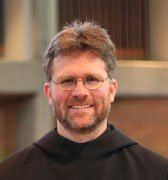 Episode 10 – The Holy Rule of St. Benedict: A Spiritual Path for Today’s World with Fr. Mauritius Wilde O.S.B., PhD.
Instead of leaning on others, standing on one’s own feet
[powerpress]
From the Holy Rule of St. Benedict:
CHAPTER LXIX
That in the Monastery No One Presume to Defend Another
Care must be taken that on no occasion one monk try to defend another in the monastery,
or to take his part, even though they be closely related by ties of blood. Let it not be
attempted by the monks in any way; because such conduct may give rise to very grave
scandal. If anyone overstep this rule, let him be severely punished.
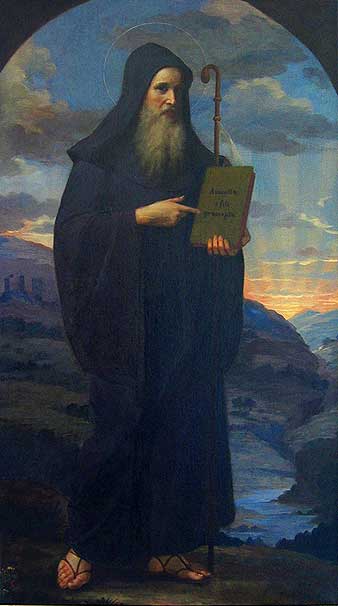
Father Mauritius Wilde, OSB, Ph.D., did his philosophical, theological and doctoral studies in Europe. He is the author of several books and directs retreats regularly. He serves as Prior of our monastery in Schuyler.
 For more information about the ministry of the the Missionary Benedictines of Christ the King Priory in Schuyler, Nebraska visit here:
Tags: Europe, Father Mauritius Wilde, Holy Rule, Let None, monks, osb, work
This entry was posted on Friday, November 8th, 2013 at 2:50 pm
You can follow any responses to this entry through the RSS 2.0 feed.
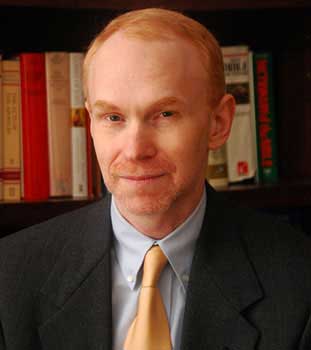
Dr. Matthew Bunson discusses the life, times and teachings of St. Augustine of Hippo (part 1)
[powerpress]
Augustine of Hippo [
-Â Confessions
-Â Letters
-Â City of God
-Â Christian Doctrine
-Â On the Holy Trinity
-Â The Enchiridion
-Â On the Catechising of the Uninstructed
-Â On Faith and the Creed
-Â Concerning Faith of Things Not Seen
-Â On the Profit of Believing
-Â On the Creed: A Sermon to Catechumens
-Â On Continence
-Â On the Good of Marriage
-Â On Holy Virginity
-Â On the Good of Widowhood
-Â On Lying
-Â To Consentius: Against Lying
-Â On the Work of Monks
-Â On Patience
-Â On Care to be Had For the Dead
-Â On the Morals of the Catholic Church
-Â On the Morals of the Manichaeans
-Â On Two Souls, Against the Manichaeans
-Â Acts or Disputation Against Fortunatus the Manichaean
-Â Against the Epistle of Manichaeus Called Fundamental
-Â Reply to Faustus the Manichaean
-Â Concerning the Nature of Good, Against the Manichaeans
-Â On Baptism, Against the Donatists
-Â Answer to Letters of Petilian, Bishop of Cirta
-Â Merits and Remission of Sin, and Infant Baptism
-Â On the Spirit and the Letter
-Â On Nature and Grace
-Â On Man’s Perfection in Righteousness
-Â On the Proceedings of Pelagius
-Â On the Grace of Christ, and on Original Sin
-Â On Marriage and Concupiscence
-Â On the Soul and its Origin
-Â Against Two Letters of the Pelagians
-Â On Grace and Free Will
-Â On Rebuke and Grace
-Â The Predestination of the Saints/Gift of Perseverance
-Â Our Lord’s Sermon on the Mount
-Â The Harmony of the Gospels
-Â Sermons on Selected Lessons of the New Testament
-Â Tractates on the Gospel of John
-Â Homilies on the First Epistle of John
-Â Soliloquies
-Â The Enarrations, or Expositions, on the Psalms
n Milan, Augustine acquired the habit of listening – at first for the purpose of enriching his rhetorical baggage – to the eloquentpreaching of Bishop Ambrose, who had been a representative of the Emperor for Northern Italy. The African rhetorician was fascinated by the words of the great Milanese Prelate; and not only by his rhetoric. It was above all the content that increasingly touched Augustine’s heart. The great difficulty with the Old Testament, because of its lack of rhetorical beauty and lofty philosophy was resolved in St Ambrose’s preaching through his typological interpretation of the Old Testament: Augustine realized that the whole of the Old Testament was a journey toward Jesus Christ. Thus, he found the key to understanding the beauty and even the philosophical depth of the Old Testament and grasped the whole unity of the mystery of Christ in history, as well as the synthesis between philosophy, rationality and faith in the Logos, in Christ, the Eternal Word who was made flesh.
Augustine soon realized that the allegorical interpretation of Scripture and the Neo-Platonic philosophy practised by the Bishop of Milan enabled him to solve the intellectual difficulties which, when he was younger during his first approach to the biblical texts, had seemed insurmountable to him.
Thus, Augustine followed his reading of the philosophers’ writings by reading Scripture anew, especially the Pauline Letters. His conversion to Christianity on 15 August 386 therefore came at the end of a long and tormented inner journey – of which we shall speak in another catechesis -, and the African moved to the countryside, north of Milan by Lake Como – with his mother Monica, his son Adeodatus and a small group of friends – to prepare himself for Baptism. So it was that at the age of 32 Augustine was baptized by Ambrose in the Cathedral of Milan on 24 April 387, during the Easter Vigil.
For more visit Vatican.va
Dr. Matthew Bunson, Senior Fellow of the St. Paul Center for Biblical Theology, is one of the United States’ leading authorities on the papacy and the Church.
His books include: The Encyclopedia of Catholic History; The Encyclopedia of Saints; Papal Wisdom; All Shall Be Well; Encyclopedia of the Roman Empire; and The Angelic Doctor: The Life and World of St. Thomas Aquinas; The Pope Encyclopedia; We Have a Pope! Benedict XVI, the first Catholic biography of the Holy Father in the English language; the Encyclopedia of U.S. Catholic History; Pope Francis. His also the editor of OSV’s “The Catholic Answer” magazine.
Tags: beauty, catholic, catholic podcast, catholic prayer, cathollc spirituality, Church, matthew bunson, old testament, Pauline Letters
This entry was posted on Friday, November 8th, 2013 at 9:05 am
You can follow any responses to this entry through the RSS 2.0 feed.
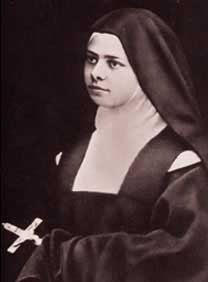
Although she lived on for twenty-six years, Blessed Elizabeth of the Trinity had an extraordinary sense of the three persons of the Trinity dwelling within her.
John Murray PP tells her story:
They were almost contemporaries, both of whom followed the way of Carmel. While Thérese Martin gave the world her ‘little way’, Elizabeth Catez was truly the ‘prophet of the presence of God’. When Pope John Paul beatified her on 25 November 1984, he presented her to the Church as one ‘who led a life hidden with Christ in God’.
A terror or a saint!
However, Blessed Elizabeth of the Trinity, who was born in France in 1880, did not have such auspicious beginnings. ‘You will either be a terror or a saint,’ her mother had said. The stubborn little girl who often demanded her way, had inherited the military spirit of her ancestors. Her father Joseph had enlisted in the French army and had a successful military career, receiving even the Legion of Honour in 1881.
After the early death of her father, Elizabeth’s outbursts of anger increased. However once she experienced for the first time the sacrament of Penance, it brought about what she styled her ‘conversion’. She henceforth began to struggle noticeably against her violent temper.
In the spring of 1891, when she was almost eleven years old, Elizabeth made her First Communion. She was profoundly affected by her first reception of Christ in the sacrament of the Eucharist. Her mother later testified, ‘From that day and afterwards there were no more fits of anger’.
Trinity
Elizabeth asked for help in understanding her interior experience – her need for silence and recollection – and her sense of an inexplicable presence in the depth of her soul. The Dominicanproceeded to deepen her awareness of the truth of the indwelling of the Trinity in the soul of the baptized: that not just Christ, but that all three of the Trinity Father, Son, and Spirit – were present in love in her soul.
As she was waiting to enter her beloved Carmel, Elizabeth lived the life of a typical young, active Catholic laywoman of her time. She sang in two choirs in her parish; she helped prepare children for their First Communions, and she animated a type of ‘day care’ for the children of those who worked in the local factory.
The personality of this energetic young woman had blossomed from her earlier years. It should be noted that Elizabeth was also a very gifted musician who could have made a career with her talent. From the age of seven, she studied music at the Conservatory of Dijon, winning several prizes for her skill at the piano. ‘No one can interpret the great masters like Elizabeth,’ wrote one admirer.Home at last
At last Elizabeth entered the Carmel. There she was home. As a Carmelite she received the name of Sister Elizabeth of the Trinity and made her profession on the Feast of Epiphany, 1902. From reading St. Paul, her great scriptural mentor, Sister Elizabeth discovered her vocation. She would be a ‘Praise of Glory’ or Laudem Gloria praising God dwelling within her offering a ceaseless ‘Sanctus’.‘God dwells within you, do not leave Him so often,’ she advised. To another she wrote, ‘It is wonderful to recall that, except for the vision of seeing God, we possess God as all the Saints in Heaven do. We can surely be with Him always and no one can take us away from Him. He dwells in our souls!’ She often referred to the Blessed Trinity as ‘my Three’.
Secret for peace
As a child, Elizabeth had found the strength to conquer her fiery temper only after having received the body and blood of Christ in the Eucharist for the first time. As a Carmelite, she would read in Paul that it was Christ ‘who made peace through the blood of his Cross’ (Col.1,20), making ‘peace in my little heaven so that it may truly be the repose of the Three’.
Once she wrote to a friend, ‘I am going to give you my “secret”: think about this God who dwells within you, whose temple you are; St. Paul speaks in this way, and we can believe it.’
The call to praise the glory of God also included the call to share in the redemptive sufferings of Christ, to be able to say like St. Paul, ‘In my flesh I am filling up what is lacking in the afflictions of Christ on behalf of his body, which is the Church’ (Col 1,24) – and Sister Elizabeth had to accept suffering.
Addison’s disease
Early in 1906 it was noticed that Sister Elizabeth had become very weak. She made a retreat to prepare for the ‘Eternal Retreat’. The young Carmelite suffered for months from Addison’s Disease, a malady of the kidneys which at that time was incurable. As a result of this illness, Elizabeth suffered great fatigue, an inability to digest food, intense abdominal pains and great thirst.During the last week of her life, Sister Elizabeth’s stomach was very ulcerated, and yet she made frequent and lengthy visits to the Blessed Sacrament. On 31 October, she received the last rites. On 1 November, she made her confession and received Holy Communion for the last time. Elizabeth’s last audible words before her death were, ‘I am going to Light, to Love, to Life’.
Mission in heaven
She died on 9 November 1906, at the age of twenty-six, after having lived in Carmel for only five years. From her sick bed, Elizabeth wrote to a fellow Carmelite, ‘I think that in Heaven, my mission will be to draw souls by helping them go out of themselves to cling to God by a wholly simple and loving movement, and to keep them in this great silence within that will allow God to communicate Himself to them and transform them into Himself.’
This article first appeared in The Messenger (February 2007), a publication of the Irish Jesuits.
“Holy Trinity, Whom I Adore” a prayer of Blessed Elizabeth of the Trinity[powerpress url=”http://discerninghearts.com/Devotionals/Holy-Trinity-Whom-I-Adore.mp3″]Download (right click & choose “Save Link As”)
Holy Trinity, Whom I Adore
O my God, Trinity whom I adore, let me entirely forget myself that I may abide in You, still and peaceful as if my soul were already in eternity; let nothing disturb my peace nor separate me from You, O my unchanging God, but that each moment may take me further into the depths of Your mystery ! Pacify my soul! Make it Your heaven, Your beloved home and place of Your repose; let me never leave You there alone, but may I be ever attentive, ever alert in my faith, ever adoring and all given up to Your creative action.
O my beloved Christ, crucified for love, would that I might be for You a spouse of Your heart! I would anoint You with glory, I would love You – even unto death! Yet I sense my frailty and ask You to adorn me with Yourself; identify my soul with all the movements of Your soul, submerge me, overwhelm me, substitute Yourself in me that my life may become but a reflection of Your life. Come into me as Adorer, Redeemer and Saviour.
O Eternal Word, Word of my God, would that I might spend my life listening to You, would that I might be fully receptive to learn all from You; in all darkness, all loneliness, all weakness, may I ever keep my eyes fixed on You and abide under Your great light; O my Beloved Star, fascinate me so that I may never be able to leave Your radiance.
O Consuming Fire, Spirit of Love, descend into my soul and make all in me as an incarnation of the Word, that I may be to Him a super-added humanity wherein He renews His mystery; and You O Father, bestow Yourself and bend down to Your little creature, seeing in her only Your beloved Son in whom You are well pleased.
O my `Three’, my All, my Beatitude, infinite Solitude, Immensity in whom I lose myself, I give myself to You as a prey to be consumed; enclose Yourself in me that I may be absorbed in You so as to contemplate in Your light the abyss of Your Splendour !
Tags: Beloved Star, Blessed Elizabeth, blessed elizabeth of the trinity, carmelites, darkness, love
This entry was posted on Friday, November 8th, 2013 at 4:55 am
You can follow any responses to this entry through the RSS 2.0 feed.
THE WAY OF PERFECTION
By
St. Teresa of Avila
Chapter 7
[powerpress]
For the pdf containing the complete text and footnotes click here
Treats of the same subject of spiritual love and gives certain counsels for gaining it.
For other audio chapters of
“The Way of Perfection”
THE WAY OF PERFECTION
by
ST. TERESA OF AVILA
Translated & Edited by
E. ALLISON PEERS
from the Critical Editon of
P. SILVERIO DE SANTA TERESA, C.D.
Tags: audio, Critical Editon, love, st, Way of Perfection
This entry was posted on Tuesday, November 5th, 2013 at 1:14 pm
You can follow any responses to this entry through the RSS 2.0 feed.
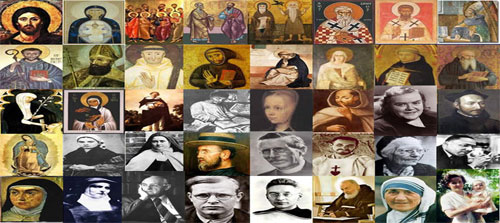
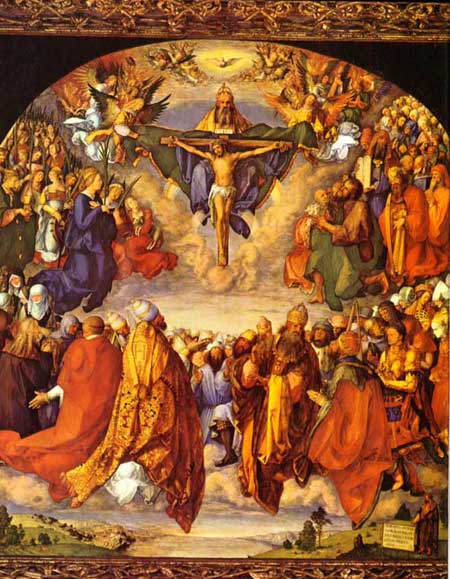
Breathe in me, O Holy Spirit, that my thoughts may all be holy.
Act in me, O Holy Spirit, that my work, too, may be holy.
Draw my heart, O Holy Spirit, that I love only what is holy.
Strengthen me, O Holy Spirit, to defend all that is holy.
Guard me so, O Holy Spirit, that I may always be holy.
Amen.
Tags: all saints, communion of saints, heart, holiness, work
This entry was posted on Friday, November 1st, 2013 at 11:10 am
You can follow any responses to this entry through the RSS 2.0 feed.
What a delight to speak once again to Fr. Joseph Fessio, this time about “The Transforming Power of Faith” by Pope Benedict 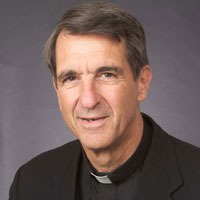 XVI. Ignatius Press has once again brought to us a wonderful compilation of the final sixteen talks given at his weekly audience from October 2012 to the end of his papacy in February 2013. These talks explore how and why faith is relevant in the contemporary world.
In this discussion, Fr. Fessio offers his insights on the pontificate of Pope Francis, a brother in the Jesuit order. He also addresses an issue concerning the work of Fr. Hans Urs von Balthasar as found in his book “Dare We Hope That All May Be Saved”, which has, in some cases recently, been mistakenly understood and represented to others. He breaks open a bit Fr. von Balthasar’s teachings on hell, the mercy of God, and the proper understanding of “hope”. Another engaging conversation with the ever fascinating Fr. Fessio.
[powerpress]
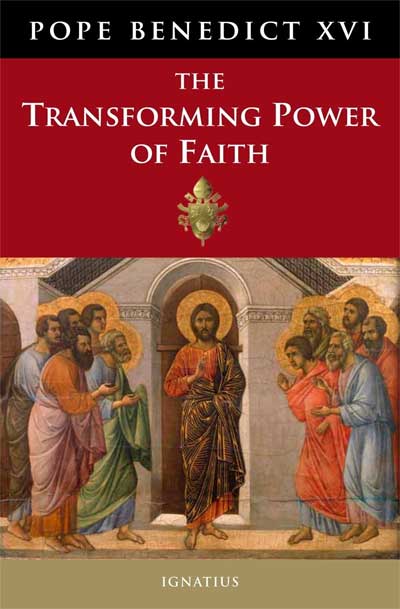 You can find the book here
From the book description:
“Having faith in the Lord is not something that involves solely our intelligence, the area of intellectual knowledge; rather, it is a change that involves our life, our whole self: feelings, heart, intelligence, will, corporeity, emotions, and human relationships. With faith everything truly changes.”
So Pope Benedict XVI introduced his catecheses for the Year of Faith, a series of sixteen talks given at his weekly audience from October 2012 to the end of his papacy in February 2013. These talks explore how and why faith is relevant in the contemporary world. How can we come to certainty about things that cannot be calculated or scientifically confirmed? What does God’s revelation mean for our daily lives? How can the hunger of the human heart be fulfilled? Offering the guidance of biblical exegesis, pastoral exhortation, and brotherly encouragement, Pope Benedict seeks to answer these questions and many others.
Tags: catholic, catholic podcast, catholic prayer
This entry was posted on Thursday, October 31st, 2013 at 4:17 pm
You can follow any responses to this entry through the RSS 2.0 feed.
CW5Â All Hallow’s Eve (Halloween)
The  Great Cloud of Witnesses: Guides for Prayer with Fr. Mark Cyza
[powerpress]
Fr. Mark Cyza discusses the origins of All Hallow’s Eve and it’s development into the secular celebration known as “Halloween”. How should celebrate this time and what should our prayer reflect?
Resources:
Tags: cloud of witnesses, Halloween, Mark Cyza
This entry was posted on Thursday, October 31st, 2013 at 10:44 am
You can follow any responses to this entry through the RSS 2.0 feed.
Canon of Scripture
[powerpress]
On this Faith Check, let’s talk a little about how we got God’s Holy Word.
The early Christians relied on the Greek translation of the Old Testament, which is the version most often quoted in the New Testament and the one Jesus probably heard growing up. This version also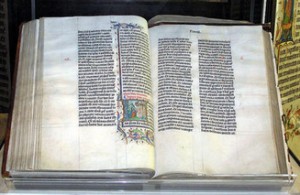 includes the books that Protestants call the “Apocrypha†and typically don’t include in their Bibles.
It took a while for the Catholic Church to compile the New Testament. Some books such as the 4 gospels were accepted by all, and others, such as the spurious gospels one hears about in The DaVinci Code were rejected by all. However, other books were completely orthodox but disputed, including some that weren’t ultimately included such as The Didache and others that were like Hebrews and Revelation.
The “canonâ€, which is the list of books that belong in the Bible, was determined primarily to say which books could and could not be read at the liturgy, and was largely settled by a series of Church councils approved by the Pope and bishops in the late 300s.1
Hence, when you trust in the inspiration of the Bible, you are trusting a Spirit-led decision of the Roman Catholic Church.
1 -Â Council of Rome under Pope St. Damasus I [A.D. 382], Council of Hippo [A.D. 393], Council of Carthage [A.D. 397],
Epistle of Pope St. Innocent I to Bishop Exuperius [A.D. 405]
Tags: canon of scripture, catholic apologetics, catholic church, Faith Check, New Testament, old testament, sacred scripture
This entry was posted on Thursday, October 31st, 2013 at 4:37 am
You can follow any responses to this entry through the RSS 2.0 feed.
THE WAY OF PERFECTION
By
St. Teresa of Avila
Chapter 6
[powerpress]
For the pdf containing the complete text and footnotes click here
Returns to the subject of perfect love, already begun.
For other audio chapters of
“The Way of Perfection”
THE WAY OF PERFECTION
by
ST. TERESA OF AVILA
Translated & Edited by
E. ALLISON PEERS
from the Critical Editon of
P. SILVERIO DE SANTA TERESA, C.D.
Tags: audio, Critical Editon, love, Translated Edited
This entry was posted on Thursday, October 31st, 2013 at 3:11 am
You can follow any responses to this entry through the RSS 2.0 feed.