 Site Type
 Featured
 Fonts
Fonts Skins
Skins
[powerpress]
SP#1 The School of Prayer: Foundations for the New Evangelization
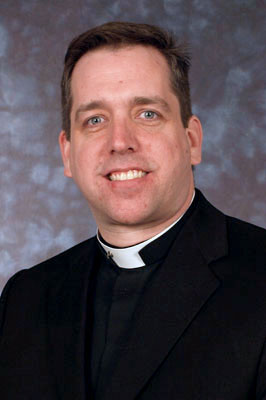 Fr. Scott Traynor begins this series on prayer by describing how Jesus Christ desires a deep personal relationship of the heart with each of us and how this is the true foundation for the New Evangelization. He discusses the adventure of the life of faith and the gifts the Father wishes to shower upon us in union with Jesus Christ and the Holy Spirit. He breaks open the reality of the indwelling Holy Spirit, who is the great teacher of prayer. Fr. Traynor encourages us to grow in union with Trinity through opening our hearts in prayer.
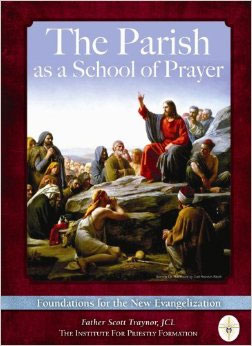
In Father Scott Traynor’s book, Blessed John Paul II’s memorable call to make of the parish a school of prayer takes on flesh and becomes concretely attainable. Those you read these faith-filled pages will find renewed desire to create such parishes and a clear road-map toward this goal.
–Father Timothy Gallagher, OMV
Father Scott Traynor received his STB from the Pontifical Gregorian University and his JCL from Catholic University of America. He has been an instructor and spiritual director for many of the programs at the Institute for Priestly Formation.
Father Traynor is a retreat master and spiritual director who has travelled the country as a speaker at various conferences, diocesan gatherings and national conferences.. He is especially sought after to present on the topics of prayer, discernment and priestly identity and mission.
He serves the Rector of the St. John Vianney Theological Seminary in Denver Colorado.

Tags: jesus christ, new evangelization, prayer, Scott Traynor
This entry was posted on Wednesday, October 30th, 2013 at 4:06 pm
You can follow any responses to this entry through the RSS 2.0 feed.
“What’s a Person to Do? Everyday Decisions That Matter” is an important work for those who seek to navigate through life’s 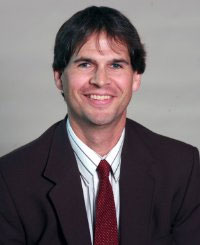 daily choices. Dr. Mark Latkovic, who is a professor of moral and systematic theology at Sacred Heart Major Seminary in Detroit, Michigan, does a fantastic job bringing forward basic principles that should be a part of our discernment process in making decisions.- especially when there is no definitive Catholic teaching on a subject. Applying those principles, he then takes a look at 40 different questions and answers. Whether it’s areas of Facebook and Internet interaction, purchasing lottery tickets or giving to particular “charities”, or how we deal with decisions for children and for elderly parents, Dr. Latkovic challenges us to ask important questions and respond to issues with moral virtue. With an engaging and accessible writing style, Dr. Latkovic provides an important resource for us all.
[powerpress]
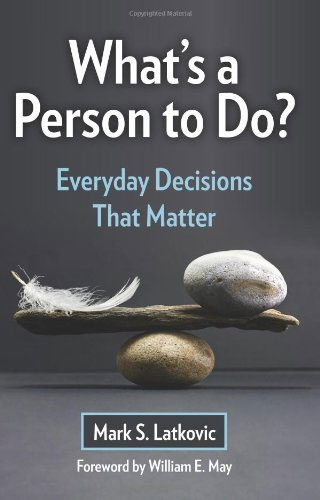
You can find the book here
This wonderful little book is a bracing wake-up call to those of us who often overlook the moral dimensions of the decisions we make in everyday life. Mark Latkovic not only wakes us up, but gently guides us through the ethical minefield of contemporary society. —Mary Ann Glendon, Learned Hand Professor of Law at Harvard Law School
This little gem of a book is not only a reliable guide to resolving some of the ethical questions we face in our everyday lives, it is a guidebook to thinking well about decisions that shape our characters. It provides answers to specific ethical problems, but that is only part of the story. What Professor Latkovic is doing is teaching us by example how to think deeply and well about the moral dimensions of our lives. —Robert P. George, McCormick Professor of Jurisprudence, Princeton University
Tags: choices, Harvard Law School, Mark Latkovic, virtue, work
This entry was posted on Wednesday, October 30th, 2013 at 1:05 pm
You can follow any responses to this entry through the RSS 2.0 feed.
Dr. Matthew Bunson discusses the life, times and teachings of St. Ambrose of Milan (part 2)
[powerpress]
Dear brothers and sisters, I would like further to propose to you a sort of “patristic icon”, which, interpreted in the light of what we have said, effectively represents “the heart” of Ambrosian doctrine. In the sixth book of the Confessions, Augustine tells of his
meeting with Ambrose, an encounter that was indisputably of great importance in the history of the Church. He writes in his text that whenever he went to see the Bishop of Milan, he would regularly find him taken up with catervae of people full of problems for whose needs he did his utmost. There was always a long queue waiting to talk to Ambrose, seeking in him consolation and hope. When Ambrose was not with them, with the people (and this happened for the space of the briefest of moments), he was either restoring his body with the necessary food or nourishing his spirit with reading. Here Augustine marvels because Ambrose read the Scriptures with his mouth shut, only with his eyes (cf. Confessions, 6, 3). Indeed, in the early Christian centuries reading was conceived of strictly for proclamation, and reading aloud also facilitated the reader’s understanding. That Ambrose could scan the pages with his eyes alone suggested to the admiring Augustine a rare ability for reading and familiarity with the Scriptures. Well, in that “reading under one’s breath”, where the heart is committed to achieving knowledge of the Word of God – this is the “icon” to which we are referring -, one can glimpse the method of Ambrosian catechesis; it is Scripture itself, intimately assimilated, which suggests the content to proclaim that will lead to the conversion of hearts.
Thus, with regard to the magisterium of Ambrose and of Augustine, catechesis is inseparable from witness of life. What I wrote on the theologian in the Introduction to Christianity might also be useful to the catechist. An educator in the faith cannot risk appearing like a sort of clown who recites a part “by profession”. Rather – to use an image dear to Origen, a writer who was particularly appreciated by Ambrose -, he must be like the beloved disciple who rested his head against his Master’s heart and there learned the way to think, speak and act. The true disciple is ultimately the one whose proclamation of the Gospel is the most credible and effective.
Like the Apostle John, Bishop Ambrose – who never tired of saying: “Omnia Christus est nobis! To us Christ is all!” – continues to be a genuine witness of the Lord. Let us thus conclude our Catechesis with his same words, full of love for Jesus:Â “Omnia Christus est nobis! If you have a wound to heal, he is the doctor; if you are parched by fever, he is the spring; if you are oppressed by injustice, he is justice; if you are in need of help, he is strength; if you fear death, he is life; if you desire Heaven, he is the way; if you are in the darkness, he is light…. Taste and see how good is the Lord:Â blessed is the man who hopes in him!” (De Virginitate, 16, 99). Let us also hope in Christ. We shall thus be blessed and shall live in peace.
For more visit Vatican.va
Dr. Matthew Bunson, Senior Fellow of the St. Paul Center for Biblical Theology, is one of the United States’ leading authorities on the papacy and the Church.
His books include: The Encyclopedia of Catholic History; The Encyclopedia of Saints; Papal Wisdom; All Shall Be Well; Encyclopedia of the Roman Empire; and The Angelic Doctor: The Life and World of St. Thomas Aquinas; The Pope Encyclopedia; We Have a Pope! Benedict XVI, the first Catholic biography of the Holy Father in the English language; the Encyclopedia of U.S. Catholic History; Pope Francis. His also the editor of OSV’s “The Catholic Answer” magazine.
Tags: Church, heart, hope, matthew bunson
This entry was posted on Wednesday, October 30th, 2013 at 9:55 am
You can follow any responses to this entry through the RSS 2.0 feed.
THE WAY OF PERFECTION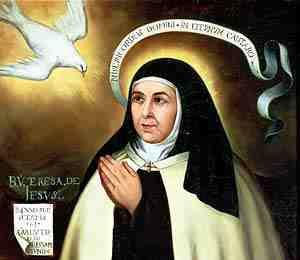
By
St. Teresa of Avila
Chapter 5
[powerpress]
For the pdf containing the complete text and footnotes click here
Continues speaking of confessors. Explains why it is important that they should be learned men.
For other audio chapters of
“The Way of Perfection”
THE WAY OF PERFECTION
by
ST. TERESA OF AVILA
Translated & Edited by
E. ALLISON PEERS
from the Critical Editon of
P. SILVERIO DE SANTA TERESA, C.D.
Tags: audio, Critical Editon, Translated Edited
This entry was posted on Wednesday, October 30th, 2013 at 9:16 am
You can follow any responses to this entry through the RSS 2.0 feed.
 Episode 9- Â The Holy Rule of St. Benedict: A Spiritual Path for Today’s World with Fr. Mauritius Wilde O.S.B., PhD.
In place of idleness, work
[powerpress]
From the Holy Rule of St. Benedict:
CHAPTER XLVIII
Of the Daily Work
Idleness is the enemy of the soul; and therefore the brethren ought to be employed in manual labor at certain times, at others, in devout reading. Hence, we believe that the time for each will be properly ordered by the following arrangement; namely, that from Easter till the calends of October, they go out in the morning from the first till about the fourth hour, to do the necessary work, but that from the fourth till about the sixth hour they devote to reading. After the sixth hour, however, when they have risen from table, let them rest in their beds in complete silence; or if, perhaps, anyone desireth to read for himself, let him so read that he doth not disturb others. Let None be said somewhat earlier, about the middle of the eighth hour; and then let them work again at what is necessary until Vespers.
If, however, the needs of the place, or poverty should require that they do the work of gathering the harvest themselves, let them not be downcast, for then are they monks in truth, if they live by the work of their hands, as did also our forefathers and the Apostles. However, on account of the faint-hearted let all things be done with moderation.
From the calends of October till the beginning of Lent, let them apply themselves to reading until the second hour complete. At the second hour let Tierce be said, and then let all be employed in the work which hath been assigned to them till the ninth hour. When, however, the first signal for the hour of None hath been given, let each one leave off from work and be ready when the second signal shall strike. But after their repast let them devote themselves to reading or the psalms.
During the Lenten season let them be employed in reading from morning until the third hour, and till the tenth hour let them do the work which is imposed on them. During these days of Lent let all received books from the library, and let them read them through in order. These books are to be given out at the beginning of the Lenten season.
Above all, let one or two of the seniors be appointed to go about the monastery during the time that the brethren devote to reading and take notice, lest perhaps a slothful brother be found who giveth himself up to idleness or vain talk, and doth not attend to his reading, and is unprofitable, not only to himself, but disturbeth also others. If such a one be found (which God forbid), let him be punished once and again. If he doth not amend, let him come under the correction of the Rule in such a way that others may fear. And let not brother join brother at undue times.
On Sunday also let all devote themselves to reading, except those who are appointed to the various functions. But if anyone should be so careless and slothful that he will not or cannot meditate or read, let some work be given him to do, that he may not be idle.
Let such work or charge be given to the weak and the sickly brethren, that they are neither idle, nor so wearied with the strain of work that they are driven away. Their weakness must be taken into account by the Abbot.
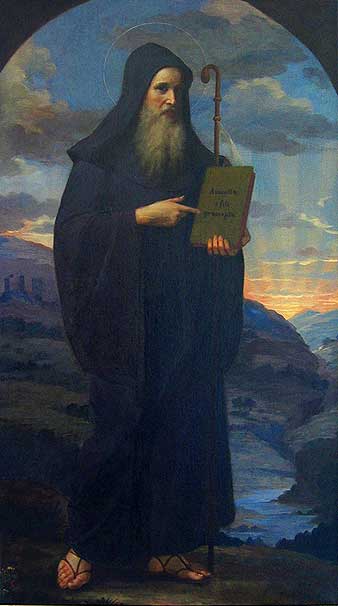
Father Mauritius Wilde, OSB, Ph.D., did his philosophical, theological and doctoral studies in Europe. He is the author of several books and directs retreats regularly. He serves as Prior of our monastery in Schuyler.
 For more information about the ministry of the the Missionary Benedictines of Christ the King Priory in Schuyler, Nebraska visit here:
Tags: Daily Work, silence, truth, work
This entry was posted on Tuesday, October 29th, 2013 at 10:51 am
You can follow any responses to this entry through the RSS 2.0 feed.
Episode 8 – Â The Holy Rule of St. Benedict: A Spiritual Path for Today’s World with Fr. Mauritius Wilde O.S.B., PhD.
Living in Community – the benefits for all of society part 2
[powerpress]
From the Holy Rule of St. Benedict:
CHAPTER I
Of the Kinds or the Life of Monks
It is well known that there are four kinds of monks. The first kind is that of Cenobites, that is, the monastic, who live under a rule and an Abbot.
The second kind is that of Anchorites, or Hermits, that is, of those who, no longer in the first fervor of their conversion, but taught by long monastic practice and the help of many brethren, have already learned to fight against the devil; and going forth from the rank of their brethren well trained for single combat in the desert, they are able, with the help of God, to cope single-handed without the help of others, against the vices of the flesh and evil thoughts.
But a third and most vile class of monks is that of Sarabaites, who have been tried by no rule under the hand of a master, as gold is tried in the fire (cf Prov 27:21); but, soft as lead, and still keeping faith with the world by their works, they are known to belie God by their tonsure. Living in two’s and three’s, or even singly, without a shepherd, enclosed, not in the Lord’s sheepfold, but in their own, the gratification of their desires is law unto them; because what they choose to do they call holy, but what they dislike they hold to be unlawful.
But the fourth class of monks is that called Landlopers, who keep going their whole life long from one province to another, staying three or four days at a time in different cells as guests. Always roving and never settled, they indulge their passions and the cravings of their appetite, and are in every way worse than the Sarabaites. It is better to pass all these over in silence than to speak of their most wretched life.
Therefore, passing these over, let us go on with the help of God to lay down a rule for that most valiant kind of monks, the Cenobites.
Father Mauritius Wilde, OSB, Ph.D., did his philosophical, theological and doctoral studies in Europe. He is the author of several books and directs retreats regularly. He serves as Prior of our monastery in Schuyler.
For more information about the ministry of the the Missionary Benedictines of Christ the King Priory in Schuyler, Nebraska visit here:
Tags: Holy Rule of St. Benedict, Mauritius
This entry was posted on Tuesday, October 29th, 2013 at 10:28 am
You can follow any responses to this entry through the RSS 2.0 feed.
Episode 4- Seeking Truth with Sharon Doran - Preparation for  the Coming of the Messiah (PART 2) 
[powerpress]
Sharon Doran serves as the teaching director of “Seeking Truth.†An experienced Bible Study teacher, Sharon has a passion for scripture that will motivate and challenge you to immerse yourself in God’s Word and apply His message to your every day life.
Episode 4 –
This 2 part lecture is a “must listen to†as Sharon gives us the Biblical basis for the perpetual … (more info)virginity of Mary as well as for her Immaculate Conception. Drawing from both Old and New Testament scripture, Sharon shows us how Mary was filled with grace  from the moment of her conception and remained sinless throughout her entire life.
We also learn that through the power of the Holy Spirit, Mary becomes Theotokos, God-Bearer, and is the Ark of the New Covenant. Like the Ark of the Old Covenant, Mary is not meant to be touched, and she remains perpetually virgin.Â
 But wait! There’s more! Sharon also reveals to us the amazing fulfillment of Old Testament Messianic Prophecies through the birth of John the Baptist.Â
You won’t want to miss this foundational lecture.
 “Seeking Truth†is an in depth Catholic Bible Study, commissioned by the Archdiocese of Omaha in response to John Paul II’s call to the New Evangelization as well as Pope Benedict XVI’s exhortation for all Catholics to study scripture. To learn more go to:www.seekingtruth.net
Tags: holy spirit, New Testament, scripture, Sharon Doran
This entry was posted on Tuesday, October 29th, 2013 at 5:57 am
You can follow any responses to this entry through the RSS 2.0 feed.
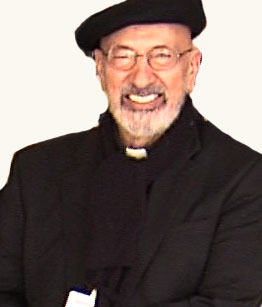 Show 51 ” Building a Kingdom of Love” –   BEWARE:  The Danger of  Self-Righteous Prayer
[powerpress]
Msgr. Esseff reflects on the teaching of the Sacred Scriptures and on how we pray:
Gospel    LK 18:9-14
Jesus addressed this parable
to those who were convinced of their own righteousness
and despised everyone else.
“Two people went up to the temple area to pray;
one was a Pharisee and the other was a tax collector.
The Pharisee took up his position and spoke this prayer to himself,
‘O God, I thank you that I am not like the rest of humanity —
greedy, dishonest, adulterous — or even like this tax collector.
I fast twice a week, and I pay tithes on my whole income.’
But the tax collector stood off at a distance
and would not even raise his eyes to heaven
but beat his breast and prayed,
‘O God, be merciful to me a sinner.’
I tell you, the latter went home justified, not the former;
for whoever exalts himself will be humbled,
and the one who humbles himself will be exalted.”
Msgr. John A. Esseff is a Roman Catholic priest in the Diocese of Scranton. He was ordained on May 30th 1953, by the late Bishop William J. Hafey, D.D. at St. Peter’s Cathedral in Scranton, PA. Msgr. Esseff served a retreat director and confessor to Blessed Mother Teresa.   He continues to offer direction and retreats for the sisters of the missionaries of charity around the world. Msgr. Esseff encountered St.  Padre Pio,  who would become a spiritual father to him. He has lived in areas around the world,  serving  in the Pontifical missions, a Catholic organization established by Bl. Pope John Paul II to bring the Good News to the world especially to the poor. Msgr. Esseff assisted the founders of the Institute for Priestly Formation and continues to serve as a spiritual director for the Institute. He continues to  serve as a retreat leader and director to bishops, priests and sisters and seminarians and other religious leaders around the world. Â
To obtain a copy of Msgr. Esseff’s book byvisiting here
Be sure to visit Msgr. Esseff’s website “Building a Kingdom of  Love”
Tags: Good News, John Esseff, retreat, Roman Catholic
This entry was posted on Tuesday, October 29th, 2013 at 1:28 am
You can follow any responses to this entry through the RSS 2.0 feed.
THE WAY OF PERFECTION
By
St. Teresa of Avila
Chapter 4 & Appendix
[powerpress]
For the pdf containing the complete text and footnotes click here
Exhorts the nuns to keep their Rule and names three things which are important for the spiritual life. Describes the first of these three things, which is love of one’s neighbour, and speaks of the harm which can be done by individual friendships
Appendix
For other audio chapters of
“The Way of Perfection”
THE WAY OF PERFECTION
by
ST. TERESA OF AVILA
Translated & Edited by
E. ALLISON PEERS
from the Critical Editon of
P. SILVERIO DE SANTA TERESA, C.D.
Tags: audio, Critical Editon, love, spiritual life, st, Way of Perfection
This entry was posted on Tuesday, October 29th, 2013 at 1:27 am
You can follow any responses to this entry through the RSS 2.0 feed.
THE WAY OF PERFECTION
By
St. Teresa of Avila
Chapter 3
[powerpress]
For the pdf containing the complete text and footnotes click here
Continues the subject begun in the first chapter and persuades the sisters to busy themselves constantly in beseeching God to help those who work for the Church. Ends with an exclamatory prayer.
For other audio chapters of
“The Way of Perfection”
THE WAY OF PERFECTION
by
ST. TERESA OF AVILA
Translated & Edited by
E. ALLISON PEERS
from the Critical Editon of
P. SILVERIO DE SANTA TERESA, C.D.
Tags: audio, Critical Editon, prayer, st, work
This entry was posted on Friday, October 25th, 2013 at 1:49 pm
You can follow any responses to this entry through the RSS 2.0 feed.
Episode 7 – Â The Holy Rule of St. Benedict: A Spiritual Path for Today’s World with Fr. Mauritius Wilde O.S.B., PhD.
Living in Community – the benefits for all of society
[powerpress] From the Holy Rule of St. Benedict:
CHAPTER I
Of the Kinds or the Life of Monks
It is well known that there are four kinds of monks. The first kind is that of Cenobites, that is, the monastic, who live under a rule and an Abbot.
The second kind is that of Anchorites, or Hermits, that is, of those who, no longer in the first fervor of their conversion, but taught by long monastic practice and the help of many brethren, have already learned to fight against the devil; and going forth from the rank of their brethren well trained for single combat in the desert, they are able, with the help of God, to cope single-handed without the help of others, against the vices of the flesh and evil thoughts.
But a third and most vile class of monks is that of Sarabaites, who have been tried by no rule under the hand of a master, as gold is tried in the fire (cf Prov 27:21); but, soft as lead, and still keeping faith with the world by their works, they are known to belie God by their tonsure. Living in two’s and three’s, or even singly, without a shepherd, enclosed, not in the Lord’s sheepfold, but in their own, the gratification of their desires is law unto them; because what they choose to do they call holy, but what they dislike they hold to be unlawful.
But the fourth class of monks is that called Landlopers, who keep going their whole life long from one province to another, staying three or four days at a time in different cells as guests. Always roving and never settled, they indulge their passions and the cravings of their appetite, and are in every way worse than the Sarabaites. It is better to pass all these over in silence than to speak of their most wretched life.
Therefore, passing these over, let us go on with the help of God to lay down a rule for that most valiant kind of monks, the Cenobites.
Father Mauritius Wilde, OSB, Ph.D., did his philosophical, theological and doctoral studies in Europe. He is the author of several books and directs retreats regularly. He serves as Prior of our monastery in Schuyler.
For more information about the ministry of the the Missionary Benedictines of Christ the King Priory in Schuyler, Nebraska visit here:
Tags: Holy Rule of St. Benedict, Mauritius
This entry was posted on Tuesday, October 22nd, 2013 at 7:02 pm
You can follow any responses to this entry through the RSS 2.0 feed.
USCCA6- Episode 6-Â Man and Woman in the Beginning
[powerpress]
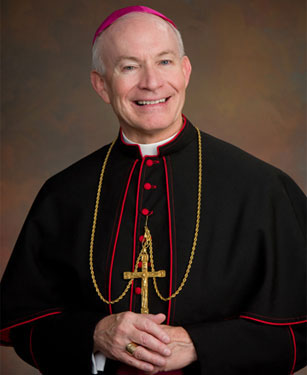
Archbishop Lucas offers insights on the US Catholic Catechism for Adults Chapter 6:
It is Jesus Christ who frees us from Original Sin and our own actual sins.  By Baptism, we share in the redemptive act of Jesus’ death and Resurrection, are freed from Original Sin, and are strengthened against the power of  sin and death.  We are reconciled to God and made members of his holy people, the Church.
The Most Reverend George J. Lucas leads the Archdiocese of Omaha.Â
For other episodes in the visit our Archbishop George Lucas page
This programs is based on:
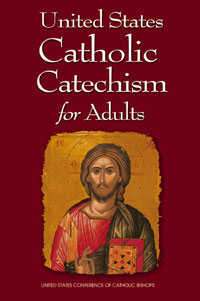
More information can be found here.
We wish to thank the USCCB for the permissions granted for use of  relevant material used in this series.
Also we wish to thank Omar Gutierrez and Sr. Miriam Rita  for their vocal talents in this episode.
Tags: Archbishop George Lucas, death, original sin, USCCB
This entry was posted on Tuesday, October 22nd, 2013 at 6:16 pm
You can follow any responses to this entry through the RSS 2.0 feed.
It’s a rare believer that doesn’t feel  challenged at times in the area of faith.  For those occasions, Fr. R. Scott Hurd provides wise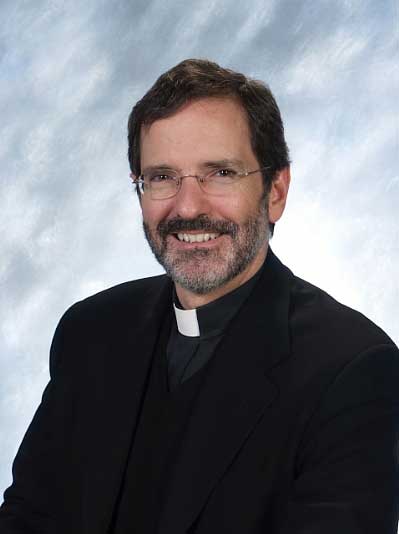 counsel and encouragement in “When Faith Feels Fragile:  Help for the Wary, Weak, and Wandering.” Fr. Scott has an engaging and pastorally sensitive approach to many of the common issues that cause us to stumble on the journey of faith.  A great book even if you feel your faith is strong, and to passed on to those you may know who are struggling.
[powerpress]
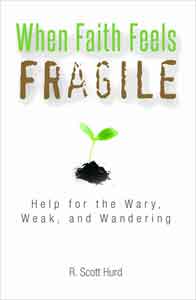
You can find the book here
“At some point in our life, our faith is tested. It can feel like God is hidden and out of reach. We wonder if we can we count on God’s presence. When Faith Feels Fragile teaches us how to recognize the many ways that God touches us in the course of our daily routine. Drawing on the practical wisdom of life’s experience, Father Scott Hurd explores the deeper spiritual meaning by finding parallels in Scripture and Christian spirituality. We learn how to “open ourselves up to the gift of faith and hold it close to our hearts.”
-His Eminence Cardinal Donald Wuerl, Archbishop of Washington
This entry was posted on Tuesday, October 22nd, 2013 at 5:26 pm
You can follow any responses to this entry through the RSS 2.0 feed.
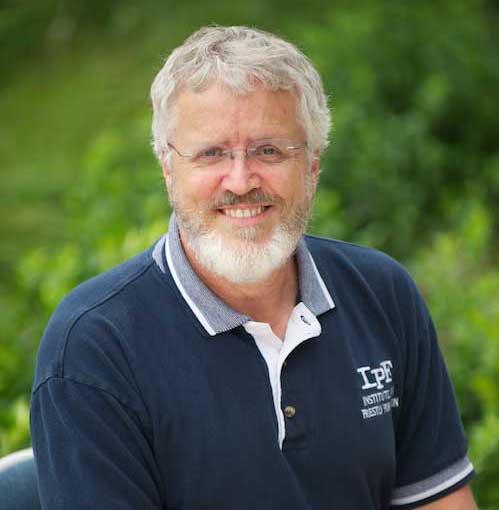 Episode 10-Listening For Truth– Practical ways of living a life of virtue prayer…one way to listen to friends and even enemies to hear the truth God may be wanting to reveal to us.  The wounds that surface in the healing process. The interior healing that can occur and who should help with that process.
[powerpress]
Deacon James Keating, PhD., the director of Theological Formation for the Institute for Priestly Formation, located at Creighton University, in Omaha, is making available to â€Discerning Hearts†and all who listen, his series of programs entitled “Listening For Truthâ€.
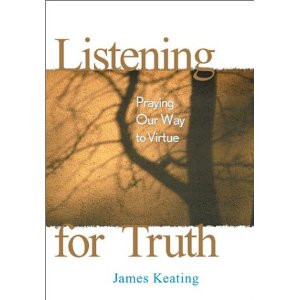 Listening for Truth leads men and women in a search for a fuller experience of God that begins in prayer, grows in the rediscovery of our spiritual being, and grounds itself in the truth of Jesus Christ. A presentation of the Christian life as an engagement of the whole person — body, mind, and soul — in the challenge of daily living.

For more information on the “Institute of Priestly Formation†and for other material available by Deacon Keating, just click here
Don’t forget to pickup a copy of “Communion with Christ†, it is one of the best audio sets on prayer…ever!
Check out Deacon Keating’s “Discerning Heart†page
Tags: creighton university, Deacon James Keating, Deacon Keating, prayer
This entry was posted on Tuesday, October 22nd, 2013 at 4:49 pm
You can follow any responses to this entry through the RSS 2.0 feed.
Reliability of Oral Tradition
[powerpress]
In the modern world, oral means of communication are deemed inherently unreliable as we’ve all heard of the game of telephone where a phrase is whispered around a circle and it comes out nothing like the original.
But scholars have shown that in the ancient world, and to this day in some places, oral traditions were memorized and passed down to multiple generations without alteration.1
When the apostles went out to teach the Faith, they did not whisper it in secret, but proclaimed it publicly to the multitudes. Oral tradition was the normative means of passing on the faith, as St. Paul’s says in 2 Timothy 2:2, “what you have heard from me before many witnesses entrust to faithful men who will be able to teach others also.â€
There is no evidence that a widespread change in belief took place among the early Christians. Quite the opposite, at the end of the second century St. Irenaeus wrote that while the Church had spread over the entire known world, the Faith had been maintained in tact everywhere,2 something only attributable to the Holy Spirit.
1 -Â e.g., . Kenneth Bailey, “Informal, Controlled, Oral Tradition and the Synoptic Gospels” Asia Journal of Theology, 5.1
(1991)
2 -Â Against Heresies 1:10:2 [ca. A.D. 180]
Tags: Against Heresies, apostles, catholic apologetics, faith, Faith Check, oral tradition
This entry was posted on Tuesday, October 22nd, 2013 at 4:23 pm
You can follow any responses to this entry through the RSS 2.0 feed.