 Site Type
 Featured
 Fonts
Fonts Skins
Skins
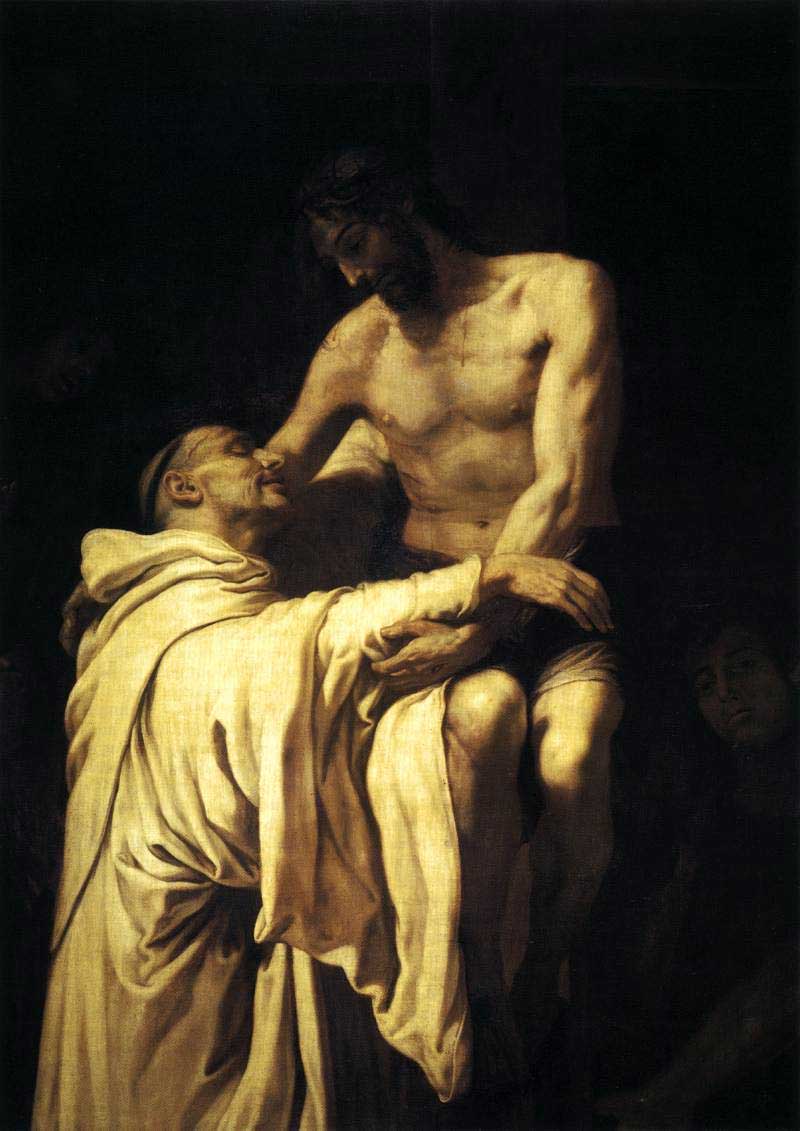
BTP#33 St. Bernard and “On Loving God” Â – The Mystery of Faith in the Wisdom of the Saints. Â In this episode Dr. Lilles continues the discussion on St. Bernard of Clairvaux and his teachings found in “On Loving God”.
[powerpress]
Dr. Lilles offers 4 key points we should keep in mind as we move forward in this series
1. Â Â The Search for God
2. Â Â Listening to God -Â Lectio Divnia
3. Â Â Conversion to God – Conversatio Morum
4. Â Â Living with oneself and letting God fashion one into His image
Dr. Lilles’ continues his discussion on St. Bernard of Clairvaux, “On Loving God”:
[gview file="http://www.old.discerninghearts.com/blog/wp-content/uploads/2011/04/onlovinggod.pdf"]
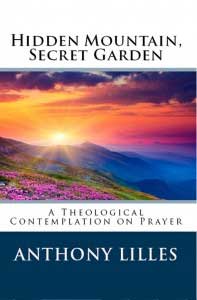
To obtain a copy of Dr. Lilles’ book click here
Dr.Anthony Lilles is a Catholic husband and father of three teaching Spiritual Theology at St. John Vianney Theological Seminary. He  teaches spiritual theology and spiritual direction to transitional deacons, and the spiritual classics to the men who enter the Spirituality Year, a year of prayer in preparation for seminary formation.  He is the author of the “Beginning to Pray”  Catholic blog spot.
For other episodes in the series visit the Discerning Hearts page for Dr. Anthony Lilles
Here is the bibliography that Dr. Lilles spoke of in this episode:
The Mystery of Faith in the Wisdom of the Saints
Saints, other figures, dates and bibliographic information
St. Benedict of Nursia – b. 480 - d. 547.
St. Benedict.  The Rule. Edited by Timothy Fry, O.S.B. New York: Vintage Books, Random House, 1981, 1998. (more…)
Tags: Anthony Lilles, Blessed Sacrament, Child Jesus, Spirituality Year
This entry was posted on Monday, October 21st, 2013 at 1:17 am
You can follow any responses to this entry through the RSS 2.0 feed.
 Show 50 ” Building a Kingdom of Love” –   On Prayer
[powerpress]
Msgr. Esseff reflects on the teaching of the Sacred Scriptures and on how we pray:
Gospel     LK 18:1-8
Jesus told his disciples a parable
about the necessity for them to pray always without becoming weary.
He said, “There was a judge in a certain town
who neither feared God nor respected any human being.
And a widow in that town used to come to him and say,
‘Render a just decision for me against my adversary.’
For a long time the judge was unwilling, but eventually he thought,
‘While it is true that I neither fear God nor respect any human being,
because this widow keeps bothering me
I shall deliver a just decision for her
lest she finally come and strike me.'”
The Lord said, “Pay attention to what the dishonest judge says.
Will not God then secure the rights of his chosen ones
who call out to him day and night?
Will he be slow to answer them?
I tell you, he will see to it that justice is done for them speedily.
But when the Son of Man comes, will he find faith on earth?”
Msgr. John A. Esseff is a Roman Catholic priest in the Diocese of Scranton. He was ordained on May 30th 1953, by the late Bishop William J. Hafey, D.D. at St. Peter’s Cathedral in Scranton, PA. Msgr. Esseff served a retreat director and confessor to Blessed Mother Teresa.   He continues to offer direction and retreats for the sisters of the missionaries of charity around the world. Msgr. Esseff encountered St.  Padre Pio,  who would become a spiritual father to him. He has lived in areas around the world,  serving  in the Pontifical missions, a Catholic organization established by Bl. Pope John Paul II to bring the Good News to the world especially to the poor. Msgr. Esseff assisted the founders of the Institute for Priestly Formation and continues to serve as a spiritual director for the Institute. He continues to  serve as a retreat leader and director to bishops, priests and sisters and seminarians and other religious leaders around the world. Â
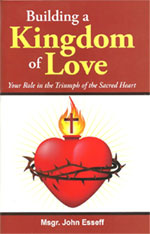
To obtain a copy of Msgr. Esseff’s book byvisiting here
Be sure to visit Msgr. Esseff’s website “Building a Kingdom of  Love”
Tags: Good News, John Esseff, PA, retreat
This entry was posted on Monday, October 21st, 2013 at 12:54 am
You can follow any responses to this entry through the RSS 2.0 feed.
Dr. Matthew Bunson discusses the life, times and teachings of St.  Ambrose of Milan (part  1)
[powerpress]
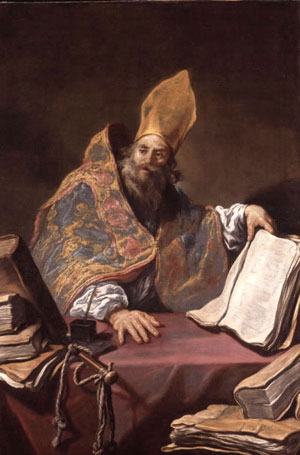
Until that moment, Ambrose had been the most senior magistrate of the Empire in northern Italy. Culturally well-educated but at the same time ignorant of the Scriptures, the new Bishop briskly began to study them. From the works of Origen, the indisputable master of the “Alexandrian School”, he learned to know and to comment on the Bible. Thus, Ambrose transferred to the Latin environment the meditation on the Scriptures which Origen had begun, introducing in the West the practice of lectio divina. The method of lectio served to guide all of Ambrose’s preaching and writings, which stemmed precisely from prayerful listening to the Word of God. The famous introduction of an Ambrosian catechesis shows clearly how the holy Bishop applied the Old Testament to Christian life: “Every day, when we were reading about the lives of the Patriarchs and the maxims of the Proverbs, we addressed morality”, the Bishop of Milan said to his catechumens and neophytes, “so that formed and instructed by them you may become accustomed to taking the path of the Fathers and to following the route of obedience to the divine precepts” (On the Mysteries 1, 1). In other words, the neophytes and catechumens, in accordance with the Bishop’s decision, after having learned the art of a well-ordered life, could henceforth consider themselves prepared for Christ’s great mysteries. Thus, Ambrose’s preaching – which constitutes the structural nucleus of his immense literary opus – starts with the reading of the Sacred Books (“the Patriarchs” or the historical Books and “Proverbs”, or in other words, the Wisdom Books) in order to live in conformity with divine Revelation.
It is obvious that the preacher’s personal testimony and the level of exemplarity of the Christian community condition the effectiveness of the preaching. In this perspective, a passage from St Augustine’s Confessions is relevant. He had come to Milan as a teacher of rhetoric; he was a sceptic and not Christian. He was seeking the Christian truth but was not capable of truly finding it.
What moved the heart of the young African rhetorician, sceptic and downhearted, and what impelled him to definitive conversion was not above all Ambrose’s splendid homilies (although he deeply appreciated them). It was rather the testimony of the Bishop and his Milanese Church that prayed and sang as one intact body. It was a Church that could resist the tyrannical ploys of the Emperor and his mother, who in early 386 again demanded a church building for the Arians’ celebrations. In the building that was to be requisitioned, Augustine relates, “the devout people watched, ready to die with their Bishop”. This testimony of the Confessions is precious because it points out that something was moving in Augustine, who continues: “We too, although spiritually tepid, shared in the excitement of the whole people” (Confessions 9, 7).
For more visit Vatican.va
Dr. Matthew Bunson, Senior Fellow of the St. Paul Center for Biblical Theology, is one of the United States’ leading authorities on the papacy and the Church.
His books include: The Encyclopedia of Catholic History; The Encyclopedia of Saints; Papal Wisdom; All Shall Be Well; Encyclopedia of the Roman Empire; and The Angelic Doctor: The Life and World of St. Thomas Aquinas; The Pope Encyclopedia; We Have a Pope! Benedict XVI, the first Catholic biography of the Holy Father in the English language; the Encyclopedia of U.S. Catholic History; Pope Francis. Â His also the editor of OSV’s “The Catholic Answer” magazine.
Tags: Church, Italy, matthew bunson, Milanese Church, testimony, Wisdom Books
This entry was posted on Sunday, October 20th, 2013 at 8:56 pm
You can follow any responses to this entry through the RSS 2.0 feed.
THE WAY OF PERFECTION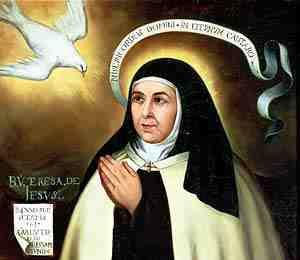
By
St. Teresa of Avila
PROTESTATIONS -Â PROLOGUE – Chapter 1 – Chapter 2
[powerpress]
For the pdf containing the complete text and footnotes click here
Chapter 1 – Of the reason which moved me to found this convent in such strict observance.
Chapter 2 -Â Treats of how the necessities of the body should be disregarded
and of the good that comes from poverty.
THE WAY OF PERFECTION
by
ST. TERESA OF AVILA
Translated & Edited by
E. ALLISON PEERS
from the Critical Editon of
P. SILVERIO DE SANTA TERESA, C.D.
Tags: Critical Editon, st, Translated Edited
This entry was posted on Sunday, October 20th, 2013 at 5:33 pm
You can follow any responses to this entry through the RSS 2.0 feed.
[powerpress]
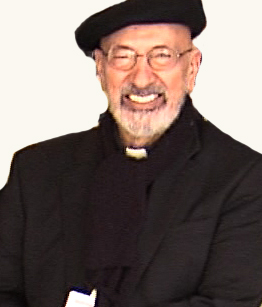
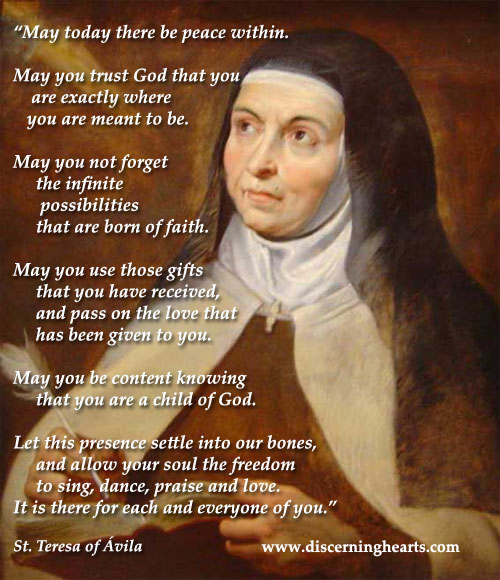
Msgr. Esseff reflects on the life and teachings of St. Teresa of Avila. Â He also reflects on the scriptures and the “Our Father”
Tags: John Esseff
This entry was posted on Tuesday, October 15th, 2013 at 11:18 am
You can follow any responses to this entry through the RSS 2.0 feed.
Episode 9 -Encountering Truth – Listening For Truth– 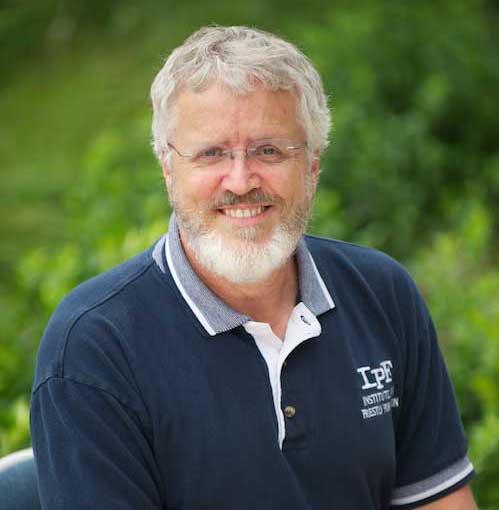    The supernatural virtues provide for us the gifts to walk and respond to moral truths.  We need to practice the virtues to receive the wisdom of God and to be more deliberate in the love of the good.  The theological, contemplative language is foreign to many, unlike the political language in which the culture swims, and that can affect how we respond to moral questions.  What can we do to listen and respond to Truth?
[powerpress]
Deacon James Keating, PhD., the director of Theological Formation for the Institute for Priestly Formation, located at Creighton University, in Omaha, is making available to â€Discerning Hearts†and all who listen, his series of programs entitled “Listening For Truthâ€.
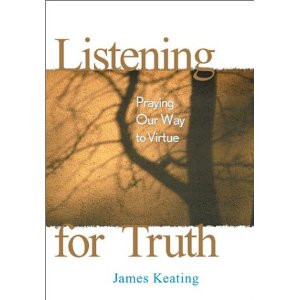 Listening for Truth leads men and women in a search for a fuller experience of God that begins in prayer, grows in the rediscovery of our spiritual being, and grounds itself in the truth of Jesus Christ. A presentation of the Christian life as an engagement of the whole person — body, mind, and soul — in the challenge of daily living.

For more information on the “Institute of Priestly Formation†and for other material available by Deacon Keating, just click here
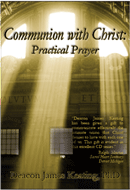
Don’t forget to pickup a copy of “Communion with Christ†, it is one of the best audio sets on prayer…ever!
Check out Deacon Keating’s “Discerning Heart†page
Tags: creighton university, Deacon James Keating, Deacon Keating, virtues
This entry was posted on Tuesday, October 15th, 2013 at 5:36 am
You can follow any responses to this entry through the RSS 2.0 feed.
The Place of the Bible in the Church
[powerpress]
You know, as Catholics we believe that the Bible is God’s Holy and Inspired Word.
However, we don’t hold that our Lord intended the Bible alone to be our sole teacher in the Christian faith.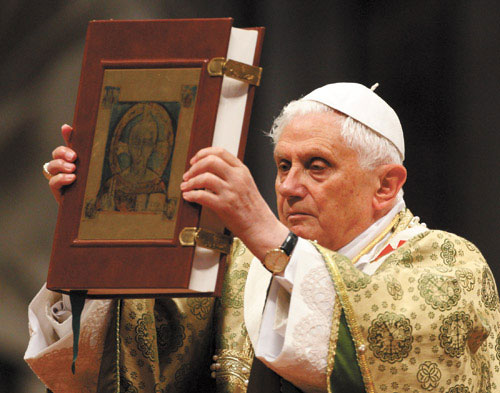
Just think how easily the meaning of our e-mails can be misinterpreted, sometimes causing great strife between people. Then take the Bible, which is infinitely longer, more complex, and written over a millennia ago in a world very different from our own, and we can begin to see why Jesus wouldn’t leave His teaching to just a book.
The Church looks to what it calls Sacred Tradition—which is rooted in things like Church Councils, Creeds, and the early Fathers of the Church—to safeguard our interpretation of God’s Word. All of the Catholic Church’s beliefs can be traced back to the earliest Christians.
Our Lord also chose the twelve apostles to go out and make disciples of all nations1 and promised them the assistance of the Holy Spirit.2 The apostles ordained bishops who have succeeded them down to this present day.3 The Catholic Church is a living voice that rings out for all to hear, proclaiming and interpreting God’s Word to every generation.4
1 -Â Mt. 28:20
2 -Â Jn. 14:26
3 -Â cf. Acts 14:23; 1 Tim. 3:1-8; 2 Tim. 1:6; 2:2; Tit. 1:5; Js. 5:14; 1 Pt. 5:1; Jd. 8ff
4 -Â cf. 1 Tim. 3:15; Mt. 16:18
Tags: bible, catholic apologetics, catholic church, Church, Faith Check, holy spirit
This entry was posted on Tuesday, October 15th, 2013 at 12:35 am
You can follow any responses to this entry through the RSS 2.0 feed.
Show 49 ” Building a Kingdom of Love” –   To Have a Spirit of Gratitude and Faithfulness like Mary
[powerpress]
Msgr. Esseff reflects on the teaching of the Sacred Scriptures and on the Immaculate Heart of Mary:
Reading  12 KGS 5:14-17
Naaman went down and plunged into the Jordan seven times
at the word of Elisha, the man of God.
His flesh became again like the flesh of a little child,
and he was clean of his leprosy.Naaman returned with his whole retinue to the man of God.
On his arrival he stood before Elisha and said,
“Now I know that there is no God in all the earth,
except in Israel.
Please accept a gift from your servant.”Elisha replied, “As the LORD lives whom I serve, I will not take it;”
and despite Naaman’s urging, he still refused.
Naaman said: “If you will not accept,
please let me, your servant, have two mule-loads of earth,
for I will no longer offer holocaust or sacrifice
to any other god except to the LORD.”Gospel  LK 17:11-19
As Jesus continued his journey to Jerusalem,
he traveled through Samaria and Galilee.
As he was entering a village, ten lepers met him.
They stood at a distance from him and raised their voices, saying,
“Jesus, Master! Have pity on us!”
And when he saw them, he said,
“Go show yourselves to the priests.”
As they were going they were cleansed.
And one of them, realizing he had been healed,
returned, glorifying God in a loud voice;
and he fell at the feet of Jesus and thanked him.
He was a Samaritan.
Jesus said in reply,
“Ten were cleansed, were they not?
Where are the other nine?
Has none but this foreigner returned to give thanks to God?”
Then he said to him, “Stand up and go;
your faith has saved you.”
Msgr. John A. Esseff is a Roman Catholic priest in the Diocese of Scranton. He was ordained on May 30th 1953, by the late Bishop William J. Hafey, D.D. at St. Peter’s Cathedral in Scranton, PA. Msgr. Esseff served a retreat director and confessor to Blessed Mother Teresa.   He continues to offer direction and retreats for the sisters of the missionaries of charity around the world. Msgr. Esseff encountered St.  Padre Pio,  who would become a spiritual father to him. He has lived in areas around the world,  serving  in the Pontifical missions, a Catholic organization established by Bl. Pope John Paul II to bring the Good News to the world especially to the poor. Msgr. Esseff assisted the founders of the Institute for Priestly Formation and continues to serve as a spiritual director for the Institute. He continues to  serve as a retreat leader and director to bishops, priests and sisters and seminarians and other religious leaders around the world. Â
To obtain a copy of Msgr. Esseff’s book byvisiting here
Be sure to visit Msgr. Esseff’s website “Building a Kingdom of  Love”
Tags: John Esseff, KGS, priests, retreat
This entry was posted on Sunday, October 13th, 2013 at 12:08 am
You can follow any responses to this entry through the RSS 2.0 feed.
CW4 Our Lady of the Rosary – Praying with the Blessed Virgin Mary – The  Great Cloud of Witnesses: Guides for Prayer with Fr. Mark Cyza
[powerpress]
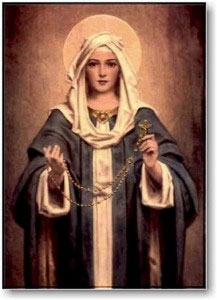
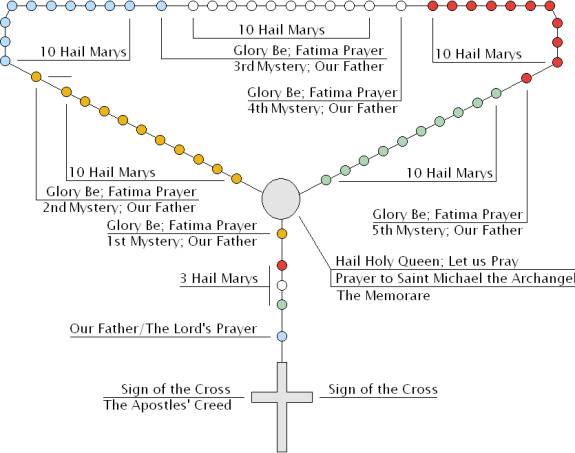
Fr. Mark Cyza discusses praying with Our Lady of the Holy Rosary. Â He speaks of the history of the devotion., as well as, Â the importance of spending time in contemplation of the saving mysteries of our salvation. Â Fr. Cyza explains why should welcome the opportunity to pray with Blessed Virgin Mary and how she walks with us in her great garden of prayer.
Resources:
 Visit the
Discerning Hearts
Holy Rosary Page
here
Tags: blessed virgin mary, contemplation, Mark Cyza, mysteries, prayer
This entry was posted on Saturday, October 12th, 2013 at 3:05 pm
You can follow any responses to this entry through the RSS 2.0 feed.
FG#11 – Interior Freedom episode 11 – Fountains of Grace: reflections on contemporary spiritual classics with Donna Garrett
[powerpress]
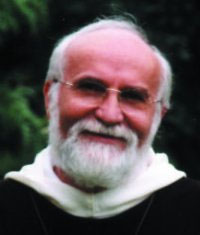
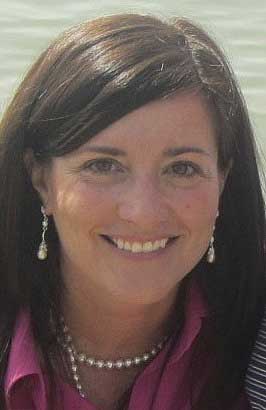 Join host Donna Garrett  as she has a special conversation with Fr. Jacques Philippe about his spiritual classic “Interior Freedom”.  Fr.  Philippe  is a priest of  Communaute des Beatitudes, an international association of the faithful of Pontifical Right founded in France in 1973.  The members of the Community, which has a contemplative vocation based on Carmelite spirituality, are actively engaged in the service of the poor and the proclamation of the Gospel.
For other episodes in the this series click here “Fountains of Grace w/Donna Garrett“
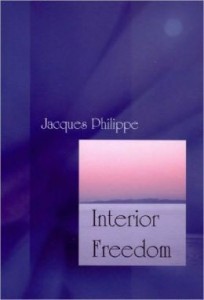
You can find “Interior Freedom” here
Tags: Donna Garrett, Jacques Philippe, Pontifical Right, reflections
This entry was posted on Saturday, October 12th, 2013 at 2:44 pm
You can follow any responses to this entry through the RSS 2.0 feed.
BTP#32 St. Bernard and the 12 Steps to Humility and Pride  – The Mystery of Faith in the Wisdom of the Saints.  In this episode Dr. Lilles continues the discussion on St. Bernard of Clairvaux and his teachings found in “The 12 Steps to Humility and Pride” and “On Loving God”.
[powerpress]
Dr. Lilles offers 4 key points we should keep in mind as we move forward in this series
1. Â Â The Search for God
2. Â Â Listening to God -Â Lectio Divnia
3. Â Â Conversion to God – Conversatio Morum
4. Â Â Living with oneself and letting God fashion one into His image
Dr. Lilles’ continues his discussion on St. Bernard of Clairvaux, “The 12 Steps of Humility and Pride” and “On Loving God”:
[gview file="http://www.old.discerninghearts.com/blog/wp-content/uploads/2011/04/onlovinggod.pdf"]
To obtain a copy of Dr. Lilles’ book click here
Dr.Anthony Lilles is a Catholic husband and father of three teaching Spiritual Theology at St. John Vianney Theological Seminary. He  teaches spiritual theology and spiritual direction to transitional deacons, and the spiritual classics to the men who enter the Spirituality Year, a year of prayer in preparation for seminary formation.  He is the author of the “Beginning to Pray”  Catholic blog spot.
For other episodes in the series visit the Discerning Hearts page for Dr. Anthony Lilles
Here is the bibliography that Dr. Lilles spoke of in this episode:
The Mystery of Faith in the Wisdom of the Saints
Saints, other figures, dates and bibliographic information
St. Benedict of Nursia – b. 480 - d. 547.
St. Benedict.  The Rule. Edited by Timothy Fry, O.S.B. New York: Vintage Books, Random House, 1981, 1998. (more…)
Tags: Anthony Lilles, Blessed Sacrament, Child Jesus, Discerning Hearts, Spirituality Year
This entry was posted on Friday, October 11th, 2013 at 3:01 pm
You can follow any responses to this entry through the RSS 2.0 feed.
Dr. Matthew Bunson discusses the life, times and teachings of St. Gregory of Nazianzus
[powerpress]
It was because of these orations that Gregory acquired the nickname: “The Theologian”.
This is what he is called in the Orthodox Church: the “Theologian”. And this is because to his way of thinking theology was not merely human reflection or even less, only a fruit of complicated speculation, but rather sprang from a life of prayer and holiness, from a persevering dialogue with God. And in this very way he causes the reality of God, the mystery of the Trinity, to appear to our reason.
In the silence of contemplation, interspersed with wonder at the marvels of the mystery revealed, his soul was
engrossed in beauty and divine glory.
While Gregory was taking part in the Second Ecumenical Council in 381, he was elected Bishop of Constantinople and presided over the Council; but he was challenged straightaway by strong opposition, to the point that the situation became untenable. These hostilities must have been unbearable to such a sensitive soul.
What Gregory had previously lamented with heartfelt words was repeated: “We have divided Christ, we who so loved God and Christ! We have lied to one another because of the Truth, we have harboured sentiments of hatred because of Love, we are separated from one another” (Orationes 6: 3; SC 405: 128).
Thus, in a tense atmosphere, the time came for him to resign.
In the packed cathedral, Gregory delivered a farewell discourse of great effectiveness and dignity (cf. Orationes 42; SC 384: 48-114). He ended his heartrending speech with these words: “Farewell, great city, beloved by Christ…. My children, I beg you, jealously guard the deposit [of faith] that has been entrusted to you (cf. I Tm 6: 20), remember my suffering (cf. Col 4: 18). May the grace of Our Lord Jesus Christ be with you all” (cf. Orationes 42: 27; SC 384: 112-114).
Gregory returned to Nazianzus and for about two years devoted himself to the pastoral care of this Christian community. He then withdrew definitively to solitude in nearby Arianzo, his birthplace, and dedicated himself to studies and the ascetic life.
It was in this period that he wrote the majority of his poetic works and especially his autobiography: the De Vita Sua, a reinterpretation in verse of his own human and spiritual journey, an exemplary journey of a suffering Christian, of a man of profound interiority in a world full of conflicts.
He is a man who makes us aware of God’s primacy, hence, also speaks to us, to this world of ours: without God, man loses his grandeur; without God, there is no true humanism.
Consequently, let us too listen to this voice and seek to know God’s Face.
In one of his poems he wrote, addressing himself to God: “May you be benevolent, You, the hereafter of all things” (Carmina [dogmatica]Â 1: 1, 29;Â PGÂ 37: 508).
And in 390, God welcomed into his arms this faithful servant who had defended him in his writings with keen intelligence and had praised him in his poetry with such great love.
For more visit Vatican.va
Dr. Matthew Bunson, Senior Fellow of the St. Paul Center for Biblical Theology, is one of the United States’ leading authorities on the papacy and the Church.
His books include: The Encyclopedia of Catholic History; The Encyclopedia of Saints; Papal Wisdom; All Shall Be Well; Encyclopedia of the Roman Empire; and The Angelic Doctor: The Life and World of St. Thomas Aquinas; The Pope Encyclopedia; We Have a Pope! Benedict XVI, the first Catholic biography of the Holy Father in the English language; the Encyclopedia of U.S. Catholic History; Pope Francis. Â His also the editor of OSV’s “The Catholic Answer” magazine.
Tags: Church, Gregory Nazianzen, matthew bunson, SC
This entry was posted on Friday, October 11th, 2013 at 8:30 am
You can follow any responses to this entry through the RSS 2.0 feed.
Episode 3 – Seeking Truth with Sharon Doran - Preparation for  the Coming of the Messiah (PART 1) 
[powerpress]
Sharon Doran serves as the teaching director of “Seeking Truth.†An experienced Bible Study teacher, Sharon has a passion for scripture that will motivate and challenge you to immerse yourself in God’s Word and apply His message to your every day life.
Episode 3 –
This 2 part lecture is a “must listen to†as Sharon gives us the Biblical basis for the perpetual … (more info)virginity of Mary as well as for her Immaculate Conception. Drawing from both Old and New Testament scripture, Sharon shows us how Mary was filled with grace from the moment of her conception and remained sinless throughout her entire life.
We also learn that through the power of the Holy Spirit, Mary becomes Theotokos, God-Bearer, and is the Ark of the New Covenant. Like the Ark of the Old Covenant, Mary is not meant to be touched, and she remains perpetually virgin.Â
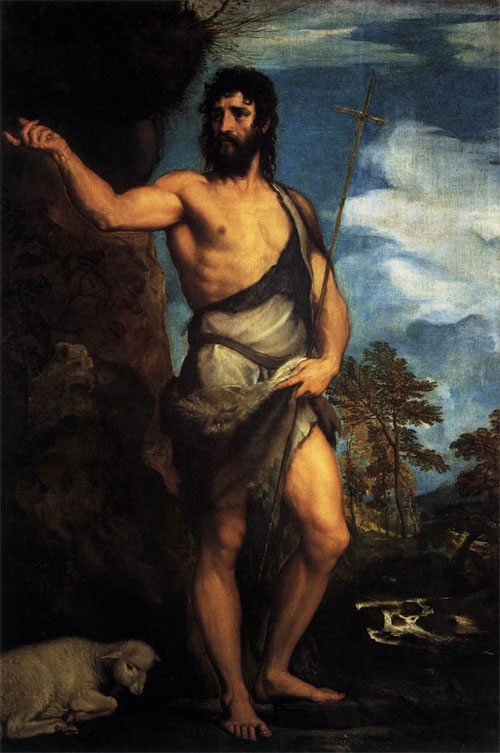
 But wait! There’s more! Sharon also reveals to us the amazing fulfillment of Old Testament Messianic Prophecies through the birth of John the Baptist.Â
You won’t want to miss this foundational lecture.
 “Seeking Truth†is an in depth Catholic Bible Study, commissioned by the Archdiocese of Omaha in response to John Paul II’s call to the New Evangelization as well as Pope Benedict XVI’s exhortation for all Catholics to study scripture. To learn more go to:www.seekingtruth.net
Tags: Bible Study, holy spirit, Jesus, jesus christ, Luke Chapter, New Testament, scripture, Sharon Doran
This entry was posted on Friday, October 11th, 2013 at 6:14 am
You can follow any responses to this entry through the RSS 2.0 feed.
 Episode 6- Â The Holy Rule of St. Benedict: A Spiritual Path for Today’s World with Fr. Mauritius Wilde O.S.B., PhD.
In place of provincialism, respect and tolerance
[powerpress]
From the Holy Rule of St. Benedict:
CHAPTER II
What Kind of Man the Abbot Ought to Be“…..Let him make no distinction of persons in the monastery. Let him not love one more than another, unless it be one whom he findeth more exemplary in good works and obedience. Let not a free-born be preferred to a freedman, unless there be some other reasonable cause. But if from a just reason the Abbot deemeth it proper to make such a distinction, he may do so in regard to the rank of anyone whomsoever; otherwise let everyone keep his own place; for whether bond or free, we are all one in Christ (cf Gal 3:28; Eph 6:8), and we all bear an equal burden of servitude under one Lord, “for there is no respect of persons with God” (Rom 2:11). We are distinguished with Him in this respect alone, if we are found to excel others in good works and in humility. Therefore, let him have equal charity for all, and impose a uniform discipline for all according to merit.”
Â
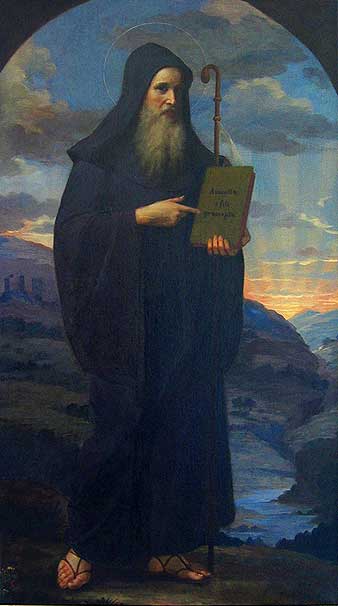
Father Mauritius Wilde, OSB, Ph.D., did his philosophical, theological and doctoral studies in Europe. He is the author of several books and directs retreats regularly. He serves as Prior of our monastery in Schuyler.
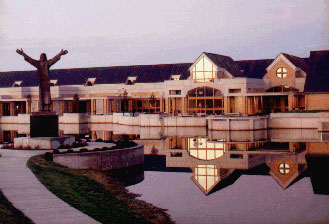 For more information about the ministry of the the Missionary Benedictines of Christ the King Priory in Schuyler, Nebraska visit here:
Tags: Holy Rule of St. Benedict, Mauritius
This entry was posted on Wednesday, October 9th, 2013 at 11:47 am
You can follow any responses to this entry through the RSS 2.0 feed.
“Good Pope, Bad Pope: Their Lives, Our Lesson” is another terrific book by the prolific Mike Aquilina.  This is a much needed 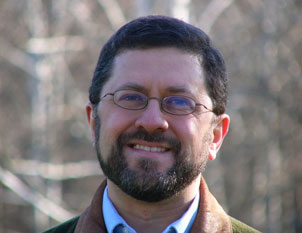 resource for all Catholics.  Those of us who love and appreciate the gift of the Papacy in the life of the Church, if we are honest with ourselves, cringe a bit inside when the facts of history uncover those Popes who were…well…bad.  Leave it to Mike Aquilina to guide us through those notorious lives and times, while helping  us to see the lesson we can learn from those particular experiences.  Mike also lifts up those outstanding men who were more than just “good” Popes (which the overwhelming majority were), but reminds of  popes like Bl. John Paul II,  who could be called “great”.  Be not afraid of history, especially when its in the hands of Mike Aquilina.
[powerpress]
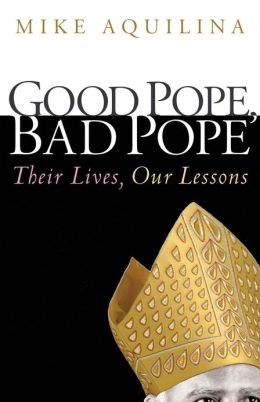 You can find the book here
From the description:
Every pope is by definition a remarkable man. But the popes whose stories you’ll read here were chosen because they reveal how the papacy developed. They show us how Christ kept his promise to his bride, the Church, not only in her health but also in her sickness. The great popes advanced our understanding of Christian doctrine. But even more remarkable, the worst popes could do nothing to damage the teaching of the Church.
That’s why, even in its darkest moments, the story of the papacy is a story of triumph. And that’s why it’s worth knowing these twelve popes.
Tags: catholic, catholic podcast, catholic prayer
This entry was posted on Wednesday, October 9th, 2013 at 9:26 am
You can follow any responses to this entry through the RSS 2.0 feed.