 Site Type
 Featured
 Fonts
Fonts Skins
Skins
BTP#30 St. Benedict, Listening and Discernment  – The Mystery of Faith in the Wisdom of the Saints.  In this episode Dr. Lilles offers a general introduction to this series, the mystical key to discernment, and a teaching  of St. Benedict.
[powerpress]
Dr. Lilles offers 4 key points we should keep in mind as we move forward in this series
1. Â Â The Search for God
2. Â Â Listening to God -Â Lectio Divnia
3. Â Â Conversion to God – Conversatio Morum
4. Â Â Living with oneself and letting God fashion one into His image
All four points can be found in the “Holy Rule of St. Benedict” Â paragraph #58:
CHAPTER LVIII
Of the Manner of Admitting BrethrenLet easy admission not be given to one who newly cometh to change his life; but, as the Apostle saith, “Try the spirits, whether they be of God” (1 Jn 4:1). If, therefore, the newcomer keepeth on knocking, and after four or five days it is seen that he patiently beareth the harsh treatment offered him and the difficulty of admission, and that he persevereth in his request, let admission be granted him, and let him live for a few days in the apartment of the guests.
But afterward let him live in the apartment of novices, and there let him meditate, eat, and sleep. Let a senior also be
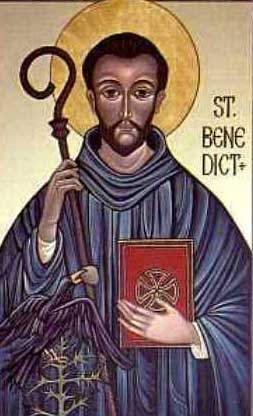
St. Benedict of Nursia – b. 480 – d. 547.
appointed for him, who is qualified to win souls, who will observe him with great care and see whether he really seeketh God, whether he is eager for the Work of God, obedience and humiliations. Let him be shown all the hard and rugged things through which we pass on to God.
If he promiseth to remain steadfast, let this Rule be read to him in order after the lapse of two months, and let it be said to him: Behold the law under which thou desirest to combat. If thou canst keep it, enter; if, however, thou canst not, depart freely. If he still persevereth, then let him be taken back to the aforesaid apartment of the novices, and let him be tried again in all patience. And after the lapse of six months let the Rule be read over to him, that he may know for what purpose he entereth. And if he still remaineth firm, let the same Rule be read to him again after four months. And if, after having weighed the matter with himself he promiseth to keep everything, and to do everything that is commanded him, then let him be received into the community, knowing that he is now placed under the law of the Rule, and that from that day forward it is no longer permitted to him to wrest his neck from under the yoke of the Rule, which after so long a deliberation he was at liberty either to refuse or to accept.
Let him who is received promise in the oratory, in the presence of all, before God and His saints, stability, the conversion of morals, and obedience, in order that, if he should ever do otherwise, he may know that he will be condemned by God “Whom he mocketh.” Let him make a written statement of his promise in the name of the saints whose relics are there, and of the Abbot there present. Let him write this document with his own hand; or at least, if he doth not know how to write, let another write it at his request, and let the novice make his mark, and with his own hand place it on the altar. When he hath placed it there, let the novice next begin the verse: “Uphold me, O Lord, according to Thy word and I shall live; and let me not be confounded in my expectations” (Ps 118[119]:116). Then let all the brotherhood repeat this verse three times, adding the Gloria Patri.
The let that novice brother cast himself down at the feet of all, that they may pray for him; and from that day let him be counted in the brotherhood. If he hath any property, let him first either dispose of it to the poor or bestow it on the monastery by a formal donation, reserving nothing for himself as indeed he should know that from that day onward he will no longer have power even over his own body.
Let him, therefore, be divested at once in the oratory of the garments with which he is clothed, and be vested in the garb of the monastery. But let the clothes of which he was divested by laid by in the wardrobe to be preserved, that, if on the devil’s suasion he should ever consent to leave the monastery (which God forbid) he be then stripped of his monastic habit and cast out. But let him not receive the document of his profession which the Abbot took from the altar, but let it be preserved in the monastery.
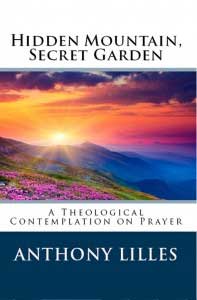
To obtain a copy of Dr. Lilles’ book click here
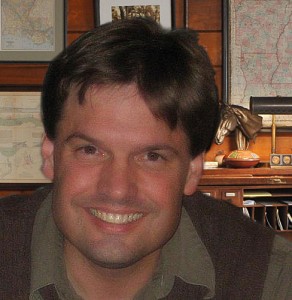
Dr.Anthony Lilles is a Catholic husband and father of three teaching Spiritual Theology at St. John Vianney Theological Seminary. He  teaches spiritual theology and spiritual direction to transitional deacons, and the spiritual classics to the men who enter the Spirituality Year, a year of prayer in preparation for seminary formation.  He is the author of the “Beginning to Pray”  Catholic blog spot.
For other episodes in the series visit the Discerning Hearts page for Dr. Anthony Lilles
Here is the bibliography that Dr. Lilles spoke of in this episode:
The Mystery of Faith in the Wisdom of the Saints
Saints, other figures, dates and bibliographic information
St. Benedict of Nursia – b. 480 - d. 547.
St. Benedict.  The Rule. Edited by Timothy Fry, O.S.B. New York: Vintage Books, Random House, 1981, 1998. (more…)
Tags: Anthony Lilles, blessed john paul, Blessed Sacrament, Child Jesus, Discerning Hearts, spiritual direction, Spirituality Year
This entry was posted on Monday, September 30th, 2013 at 8:00 am
You can follow any responses to this entry through the RSS 2.0 feed.
Episode 1 – Seeking Truth with Sharon Doran – The Synoptic Gospels: An Overview Part 1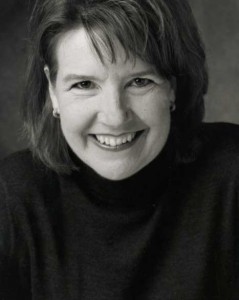
[powerpress]
Sharon Doran serves as the teaching director of “Seeking Truth.†An experienced Bible Study teacher, Sharon has a passion for scripture that will motivate and challenge you to immerse yourself in God’s Word and apply His message to your every day life.
Episode 1 –
From the beginning of time, God planned to send his son, Jesus, to be the savior of the world. The story of Jesus is the story of the Synoptic Gospels: Matthew, Mark and Luke.
 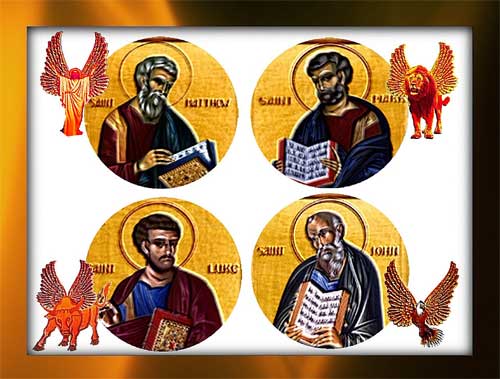 In this 2 part overview lecture, Sharon gives a dynamic teaching that outlines God’s plan of salvation, beginning with the fall in the Garden of Eden and culminating with the life, death and resurrection of Jesus Christ.
  But just hearing the story is not enough.
 As Sharon tells us, the Church exists to evangelize and we are called to spread the Gospel message to a culture in desperate need of a savior.Â
 “Seeking Truth†is an in depth Catholic Bible Study, commissioned by the Archdiocese of Omaha in response to John Paul II’s call to the New Evangelization as well as Pope Benedict XVI’s exhortation for all Catholics to study scripture. To learn more go to:www.seekingtruth.net
Tags: Church, death, Jesus, jesus christ, Sharon Doran
This entry was posted on Monday, September 30th, 2013 at 7:43 am
You can follow any responses to this entry through the RSS 2.0 feed.
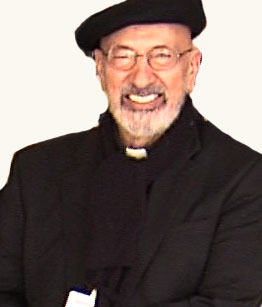 Show 47 ” Building a Kingdom of Love” –  “On what side of the gulf will you be found?â€
[powerpress]
Msgr. Esseff reflects on the teaching of Jesus:
Gospel
 LK 16:19-31
Jesus said to the Pharisees:
“There was a rich man who dressed in purple garments and fine linen
and dined sumptuously each day.
And lying at his door was a poor man named Lazarus, covered with sores,
who would gladly have eaten his fill of the scraps
that fell from the rich man’s table.
Dogs even used to come and lick his sores.
When the poor man died,
he was carried away by angels to the bosom of Abraham.
The rich man also died and was buried,
and from the netherworld, where he was in torment,
he raised his eyes and saw Abraham far off
and Lazarus at his side.
And he cried out, ‘Father Abraham, have pity on me.
Send Lazarus to dip the tip of his finger in water and cool my tongue,
for I am suffering torment in these flames.’
Abraham replied,
‘My child, remember that you received
what was good during your lifetime
while Lazarus likewise received what was bad;
but now he is comforted here, whereas you are tormented.
Moreover, between us and you a great chasm is established
to prevent anyone from crossing who might wish to go
from our side to yours or from your side to ours.’
He said, ‘Then I beg you, father,
send him to my father’s house, for I have five brothers,
so that he may warn them,
lest they too come to this place of torment.’
But Abraham replied, ‘They have Moses and the prophets.
Let them listen to them.’
He said, ‘Oh no, father Abraham,
but if someone from the dead goes to them, they will repent.’
Then Abraham said, ‘If they will not listen to Moses and the prophets,
neither will they be persuaded if someone should rise from the dead.'”
Msgr. John A. Esseff is a Roman Catholic priest in the Diocese of Scranton. He was ordained on May 30th 1953, by the late Bishop William J. Hafey, D.D. at St. Peter’s Cathedral in Scranton, PA. Msgr. Esseff served a retreat director and confessor to Blessed Mother Teresa.   He continues to offer direction and retreats for the sisters of the missionaries of charity around the world. Msgr. Esseff encountered St.  Padre Pio,  who would become a spiritual father to him. He has lived in areas around the world,  serving  in the Pontifical missions, a Catholic organization established by Bl. Pope John Paul II to bring the Good News to the world especially to the poor. Msgr. Esseff assisted the founders of the Institute for Priestly Formation and continues to serve as a spiritual director for the Institute. He continues to  serve as a retreat leader and director to bishops, priests and sisters and seminarians and other religious leaders around the world. Â
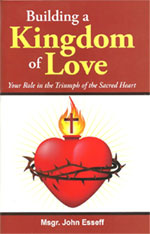
To obtain a copy of Msgr. Esseff’s book byvisiting here
Be sure to visit Msgr. Esseff’s website “Building a Kingdom of  Love”
Tags: confessor, father, PA, retreat
This entry was posted on Monday, September 30th, 2013 at 6:44 am
You can follow any responses to this entry through the RSS 2.0 feed.
Dr. Matthew Bunson discusses the life, times and teachings of  St. Cyril of Jerusalem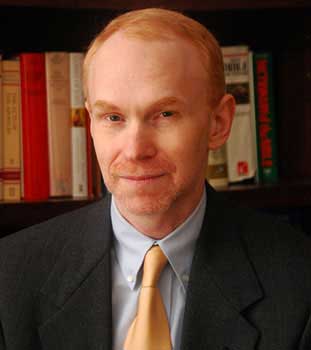
[powerpress]
For more on St. Cyril and his teachings
Taken as a whole, Cyril’s homilies form a systematic catechesis on the Christian’s rebirth through Baptism.
He tells the catechumen: “You have been caught in the nets of the Church (cf. Mt 13: 47). Be taken alive, therefore; do not escape for it is Jesus who is fishing for you, not in order to kill you but to resurrect you after death. Indeed, you must die and rise again (cf. Rom 6: 11, 14)…. Die to your sins and live to righteousness from this very day” (Procatechesis, 5).
From the doctrinal viewpoint, Cyril commented on the Jerusalem Creed with recourse to the typology of
the Scriptures in a “symphonic” relationship between the two Testaments, arriving at Christ, the centre of the universe.
The typology was to be described decisively by Augustine of Hippo: “In the Old Testament there is a veiling of the New, and in the New Testament there is a revealing of the Old” (De catechizandis rudibus 4, 8).
As for the moral catechesis, it is anchored in deep unity to the doctrinal catechesis: the dogma progressively descends in souls who are thus urged to transform their pagan behaviour on the basis of new life in Christ, a gift of Baptism.
The “mystagogical” catechesis, lastly, marked the summit of the instruction that Cyril imparted, no longer to catechumens but to the newly baptized or neophytes during Easter week. He led them to discover the mysteries still hidden in the baptismal rites of the Easter Vigil.
Enlightened by the light of a deeper faith by virtue of Baptism, the neophytes were at last able to understand these mysteries better, having celebrated their rites.
For more visit Vatican.va
Dr. Matthew Bunson, Senior Fellow of the St. Paul Center for Biblical Theology, is one of the United States’ leading authorities on the papacy and the Church.
His books include: The Encyclopedia of Catholic History; The Encyclopedia of Saints; Papal Wisdom; All Shall Be Well; Encyclopedia of the Roman Empire; and The Angelic Doctor: The Life and World of St. Thomas Aquinas; The Pope Encyclopedia; We Have a Pope! Benedict XVI, the first Catholic biography of the Holy Father in the English language; the Encyclopedia of U.S. Catholic History; Pope Francis. Â His also the editor of OSV’s “The Catholic Answer” magazine.
Tags: AD, Church, Israel, matthew bunson, mysteries
This entry was posted on Saturday, September 28th, 2013 at 7:54 am
You can follow any responses to this entry through the RSS 2.0 feed.
[powerpress]
Msgr. Esseff reflects on the life and teachings of St. Padre Pio. Â He shares personal stories from his relationship with St. 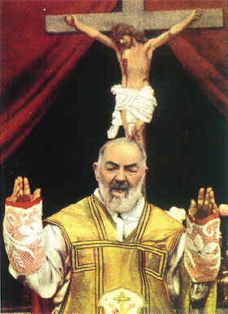 Pio.
Pio.
Gospel    LK 8:16-18
“No one who lights a lamp conceals it with a vessel
or sets it under a bed;
rather, he places it on a lampstand
so that those who enter may see the light.
For there is nothing hidden that will not become visible,
and nothing secret that will not be known and come to light.
Take care, then, how you hear.
To anyone who has, more will be given,
and from the one who has not,
even what he seems to have will be taken away.â€
Tags: Jesus, padre pio, reflection, relationship
This entry was posted on Monday, September 23rd, 2013 at 11:33 am
You can follow any responses to this entry through the RSS 2.0 feed.
Dr. Matthew Bunson discusses the life, times and work of  St. Ephrem of Syria
[powerpress]
For more on St. Ephrem and his teachings
- Nisibene Hymns  - Miscellaneous Hymns —
On the Nativity of Christ in the Flesh,
For the Feast of the Epiphany, and
On the Faith (“The Pearl”)Â Â -Â Homilies —
On Our Lord, On Admonition and Repentance,
and On the Sinful Woman
The figure of Ephrem is still absolutely timely for the life of the various Christian Churches. We discover him in the first place as a theologian who reflects poetically, on the basis of Holy Scripture, on the mystery of man’s redemption brought about by Christ, the Word of God incarnate. His is a theological reflection
expressed in images and symbols taken from nature, daily life and the Bible. Ephrem gives his poetry and liturgical hymns a didactic and catechetical character: they are theological hymns yet at the same time suitable for recitation or liturgical song. On the occasion of liturgical feasts, Ephrem made use of these hymns to spread Church doctrine. Time has proven them to be an extremely effective catechetical instrument for the Christian community.
Ephrem’s reflection on the theme of God the Creator is important: nothing in creation is isolated and the world, next to Sacred Scripture, is a Bible of God. By using his freedom wrongly, man upsets the cosmic order. The role of women was important to Ephrem. The way he spoke of them was always inspired with sensitivity and respect: the dwelling place of Jesus in Mary’s womb greatly increased women’s dignity. Ephrem held that just as there is no Redemption without Jesus, there is no Incarnation without Mary. The divine and human dimensions of the mystery of our redemption can already be found in Ephrem’s texts; poetically and with fundamentally scriptural images, he anticipated the theological background and in some way the very language of the great Christological definitions of the fifth-century Councils.
Ephrem, honoured by Christian tradition with the title “Harp of the Holy Spirit”, remained a deacon of the Church throughout his life. It was a crucial and emblematic decision: he was a deacon, a servant, in his liturgical ministry, and more radically, in his love for Christ, whose praises he sang in an unparalleled way, and also in his love for his brethren, whom he introduced with rare skill to the knowledge of divine Revelation.
For more visit Vatican.va
Dr. Matthew Bunson, Senior Fellow of the St. Paul Center for Biblical Theology, is one of the United States’ leading authorities on the papacy and the Church.
His books include: The Encyclopedia of Catholic History; The Encyclopedia of Saints; Papal Wisdom; All Shall Be Well; Encyclopedia of the Roman Empire; and The Angelic Doctor: The Life and World of St. Thomas Aquinas; The Pope Encyclopedia; We Have a Pope! Benedict XVI, the first Catholic biography of the Holy Father in the English language; the Encyclopedia of U.S. Catholic History; Pope Francis. Â His also the editor of OSV’s “The Catholic Answer” magazine.
Tags: Church, matthew bunson, Syria, work
This entry was posted on Monday, September 23rd, 2013 at 11:25 am
You can follow any responses to this entry through the RSS 2.0 feed.
What a delight to talk once again to the incredible Vinny Flynn, this time about his book “The 7 Secrets of Confession”. 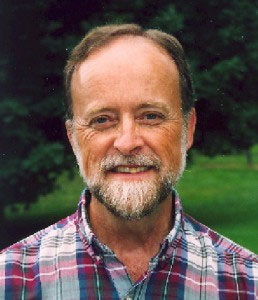 Vinny has such a passion for the Catholic faith, and in particular for the Sacraments of the Church, that it’s difficult not to be inspired by his joy.  This is perfect for anyone who struggles with this rich gift of grace and mercy, the sacrament  “Confession”.  But even more than that, it is like a “booster shot” for anyone who frequents the confessional, but may be taking it for granted.  A definite “must have” for every Catholic home library.  This would also be a great gift for those in the RCIA or in sacramental preparation in RE classes.
[powerpress]
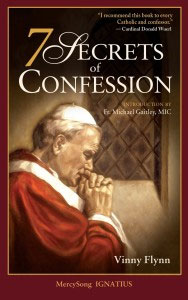
You can find the book here
Vinny Flynn s 7 Secrets are like seven explosions that blow away the obstacles keeping us from the Sacrament of Mercy. If you ve ever dragged your feet on the way to confession, gotten discouraged about confessing the same sins over and over, or wondered how your confessions could be more fruitful, then you ll love this book. It turns what many see as a tiresome obligation into a precious, longed-for encounter with the Lord.
—Fr. Michael Gaitley, MIC Author, 33 Days to Morning Glory
This entry was posted on Monday, September 23rd, 2013 at 11:06 am
You can follow any responses to this entry through the RSS 2.0 feed.
Show 46 ” Building a Kingdom of Love” –  “You cannot serve both God and mammon.â€
[powerpress]
Msgr. Esseff reflects on the teaching of Jesus:
Gospel
LK 16:1-13
Jesus said to his disciples,
“A rich man had a steward
who was reported to him for squandering his property.
He summoned him and said,
‘What is this I hear about you?
Prepare a full account of your stewardship,
because you can no longer be my steward.’
The steward said to himself, ‘What shall I do,
now that my master is taking the position of steward away from me?
I am not strong enough to dig and I am ashamed to beg.
I know what I shall do so that,
when I am removed from the stewardship,
they may welcome me into their homes.’
He called in his master’s debtors one by one.
To the first he said,
‘How much do you owe my master?’
He replied, ‘One hundred measures of olive oil.’
He said to him, ‘Here is your promissory note.
Sit down and quickly write one for fifty.’
Then to another the steward said, ‘And you, how much do you owe?’
He replied, ‘One hundred kors of wheat.’
The steward said to him, ‘Here is your promissory note;
write one for eighty.’
And the master commended that dishonest steward for acting prudently.
“For the children of this world
are more prudent in dealing with their own generation
than are the children of light.
I tell you, make friends for yourselves with dishonest wealth,
so that when it fails, you will be welcomed into eternal dwellings.
The person who is trustworthy in very small matters
is also trustworthy in great ones;
and the person who is dishonest in very small matters
is also dishonest in great ones.
If, therefore, you are not trustworthy with dishonest wealth,
who will trust you with true wealth?
If you are not trustworthy with what belongs to another,
who will give you what is yours?
No servant can serve two masters.
He will either hate one and love the other,
or be devoted to one and despise the other.
You cannot serve both God and mammon.â€
Msgr. John A. Esseff is a Roman Catholic priest in the Diocese of Scranton. He was ordained on May 30th 1953, by the late Bishop William J. Hafey, D.D. at St. Peter’s Cathedral in Scranton, PA. Msgr. Esseff served a retreat director and confessor to Blessed Mother Teresa.   He continues to offer direction and retreats for the sisters of the missionaries of charity around the world. Msgr. Esseff encountered St.  Padre Pio,  who would become a spiritual father to him. He has lived in areas around the world,  serving  in the Pontifical missions, a Catholic organization established by Bl. Pope John Paul II to bring the Good News to the world especially to the poor. Msgr. Esseff assisted the founders of the Institute for Priestly Formation and continues to serve as a spiritual director for the Institute. He continues to  serve as a retreat leader and director to bishops, priests and sisters and seminarians and other religious leaders around the world. Â
To obtain a copy of Msgr. Esseff’s book byvisiting here
Be sure to visit Msgr. Esseff’s website “Building a Kingdom of  Love”
Tags: Good News, LK, PA, retreat
This entry was posted on Sunday, September 22nd, 2013 at 6:20 pm
You can follow any responses to this entry through the RSS 2.0 feed.
There’s no doubt that Gary Michuta has a great love  for the Blessed Virgin Mary. In “Making Sense of Mary“, he offers   rich insight and research in regards to the teachings on Our Lady.  Steeped in Sacred Scripture and the teachings of the Fathers of the Church, Gary shines a beautiful light on the multi-facet diamond which is Mary, the Mother of God. Wonderful.
rich insight and research in regards to the teachings on Our Lady. Â Steeped in Sacred Scripture and the teachings of the Fathers of the Church, Gary shines a beautiful light on the multi-facet diamond which is Mary, the Mother of God. Wonderful.
[powerpress]
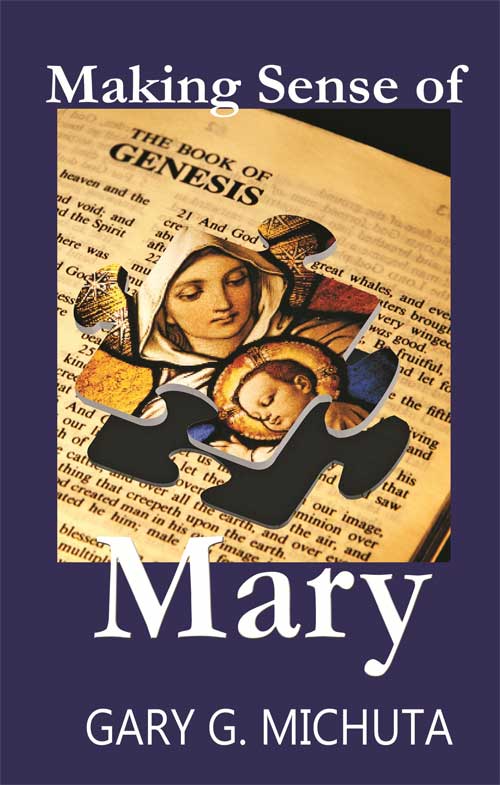
You can find the book here
“The world is full of nonsense when it comes to the Blessed Virgin Mary from simple confusion and ignorance to disrespect and blasphemy. Michuta has done us a great service by blowing away the fog and shining the light of clarity on a matter so important to the story of God’s salvation. Drawing from Scripture, Sacred Tradition, Councils and the Fathers of the Church, Gary helps scholars and beginners alike to understand the ABC’s of the person and role of Mary.”
Stephen K. Ray, Author of Crossing The Tiber and Host of The Footprints of God video Series “
Tags: fathers of the church, gary michuta, the Blessed Virgin Mary
This entry was posted on Thursday, September 19th, 2013 at 7:40 pm
You can follow any responses to this entry through the RSS 2.0 feed.
Episode 3 – Regnum Novum: Bringing forth the New Evangelization through Catholic Social Teaching with Omar Guiterrez - Value # 3 – Look , Judge, Act
[powerpress]
From episode 3 Â Â Â Look , Judge, Act
Blessed Pope John XXIII gave us this practical suggestion in his letter Mater et magistra. The Social Doctrine provides us with principles for reflection, criteria for judgment, and directives for action. Social justice is supposed to be lived out in our every day. That’s the point, and so this Holy Father gave us the paradigm.
Look at the world around you, that which is most immediate to you. Start with your family. Proceed to your culture. Witness the social and economic realities/policies near you. Know the political landscape of your city, county, state, and nation. See your neighbors close at hand and around the world. Use the principles of the Social Teaching as you look so that you know what to look for.
Judge what is best for the family, for the culture, for the society and the economy, for the state, for the world. Use the criteria provided by the Social Doctrine. What is missing? Why is it missing? What can be done?
Act on it. You’re a lay person with as real an obligation to evangelization as any priest. Do something in the world so as to make it’s semblance more like that which the Lord desires. Volunteer. Participate. Pray. Do not let some tell you that prayer is not action. Pray. You can pray and raise good children.
We live at a very special time. The confluence of many things has brought forth the clear need to be able to articulate the Social Teaching of the Catholic Church in a way that is accessible and applicable. This is not to be an effort where high-minded theories are to be bandied about. Rather, this is a time of opportunity wherein we can apply the Social Doctrine to the concrete so as to bring about a New Kingdom, a Revolution. – Omar G.Â
Discerning Hearts is blessed to present Omar F. A. Guiterrez, M.A. , Special Assistant  to Archbishop George Lucas of the Archdiocese of Omaha, in a groundbreaking series which breaks open the heart of Catholic Social Doctrine.
Tags: family, lay person, New Kingdom, social doctrine, Social Teaching, social work, special time, work
This entry was posted on Tuesday, September 17th, 2013 at 9:26 am
You can follow any responses to this entry through the RSS 2.0 feed.
Episode 21 Beginning to Pray: Â St. Hildegard von Bingen and “The Iron Mountain”
[powerpress]
From Dr. Lilles’ “Beginning to Pray” blog site:
September 17 is the feast of St. Hiildegard of Bingen. She lived from 1098-1179. A Benedictine Nun, at the age of 42, she was given visions and commanded rise up and cry out what she saw. She obeyed and produced a set of writings known today as Scivias.
Her first vision is of a hidden mountain, the mountain of God’s throne, an iron mountain of immutable justice hidden in divine glory. A purifying Fear of the Lord contemplates this splendor. Not the kind of fear that pulls away to protect itself. Rather the kind of fear that is vigilant and sees the truth. Eyes which gaze with this holy fear can never be satisfied with the merely mediocre. They guard against every form of compromise. The glory they behold demands absolute allegiance, complete surrender, and total humility.
In this description, is St. Hildegard suggesting a way by which we might enjoy the same vision she has shared in? This is no exercise in esoteric navel gazing. Her vision demands a journey beyond our own self-pre-occupation and into real friendship with God, a friendship protected by the strength of divine justice. She sees the truth in a way that demands an ongoing conversion of life.
She is well-formed in St. Benedict’s conversatio morum. The mountain she sees is not a truth we scrutinize so much as the truth that scrutinizes us: a scrutinizing of all our thoughts and actions in light of the Gospel. The truth she beholds demands repentance from the lack of justice we allow ourselves to slip into. The iron mountain she contemplates renders futile every effort to conform the Gospel to our own ways and invites us to be transformed by its just demands.
Today, where all kinds of cruelty are so easily excused and any form of self-indulgence so readily lifted up to the level of a fundamental human right, we need to rediscover the shadow of the iron mountain from which St. Hildegard cries out to us. Only under the glory of this mountain can we find the peace that the Lord has come to give. Only in the blinding light into which Holy Fear gazes can we find the humility to love one another the way Christ has loved us.
Dr. Anthony Lilles is a Catholic husband and father of three teaching Spiritual Theology at St. John Vianney Theological Seminary. He  teaches spiritual theology and spiritual direction to transitional deacons, and the spiritual classics to the men who enter the Spirituality Year, a year of prayer in preparation for seminary formation.  He is the author of the “Beginning to Pray”  catholic blog spot.
For other episodes in the series visit the Discerning Hearts page for Dr. Anthony Lilles
The music that is used comes from 
This the text we use  for our readings comes from:
Tags: Anthony Lilles, catholic, catholic podcast, catholic prayer, cathollc spirituality, father, mystic, mystic of the Church, spiritual direction, Spirituality Year, st hildegard of bingen
This entry was posted on Tuesday, September 17th, 2013 at 4:16 am
You can follow any responses to this entry through the RSS 2.0 feed.
Episode 6 -Listening For Truth–   The difficult stage in moral conversion, not only leaving the sin behind, but also leaving the community of people who desire to hold on to that sin.  It might mean separating from family members, friends, etc, but the hope is that that may possibly follow if we hang in there in that witness of Truth.  Also, life doesn’t stop in our suffering. Many will come who are attracted to the change. How we love those in need will indicate growth even in the crucifixion.  The negative…we reject something, the positive…we embrace something.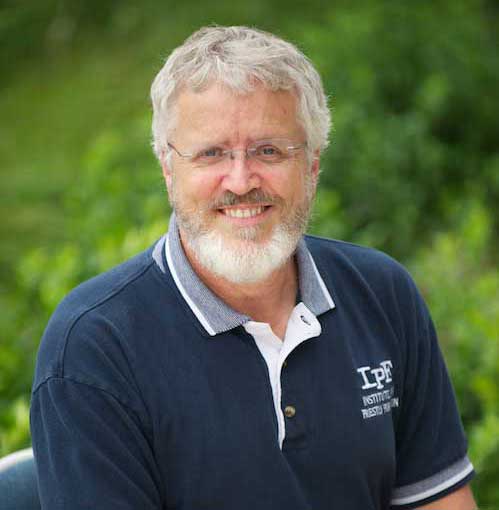
[powerpress]
Deacon James Keating, PhD., the director of Theological Formation for the Institute for Priestly Formation, located at Creighton University, in Omaha, is making available to â€Discerning Hearts†and all who listen, his series of programs entitled “Listening For Truthâ€.
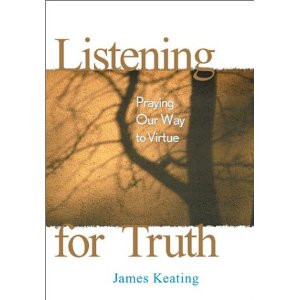 Listening for Truth leads men and women in a search for a fuller experience of God that begins in prayer, grows in the rediscovery of our spiritual being, and grounds itself in the truth of Jesus Christ. A presentation of the Christian life as an engagement of the whole person — body, mind, and soul — in the challenge of daily living.

For more information on the “Institute of Priestly Formation†and for other material available by Deacon Keating, just click here
Don’t forget to pickup a copy of “Communion with Christ†, it is one of the best audio sets on prayer…ever!
Check out Deacon Keating’s “Discerning Heart†page
Tags: creighton university, Deacon James Keating, Deacon Keating, prayer, sin
This entry was posted on Monday, September 16th, 2013 at 10:04 am
You can follow any responses to this entry through the RSS 2.0 feed.
USCCA2- Episode 2-Â God Comes to Meet Us
[powerpress]
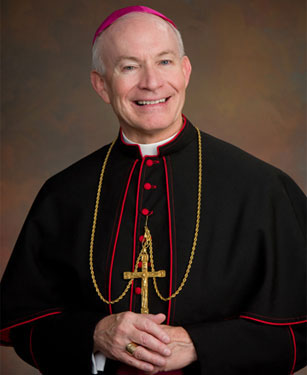
Archbishop Lucas offers insights on the US Catholic Catechism for Adults Chapter 2:
Through the use of reason, we can learn much about God from both creation and conscience, but Revelation enables us to learn about God’s inner life and his loving plan to save us from sin and share in his divine life.  No amount of unaided thinking could penetrate such a mystery.  God freely chose to share this hidden mystery with us . God’s sharing was an act of friendship  for us, revealing himself as one reveals his or her heart to a friend.  Love does such things.
The Most Reverend George J. Lucas leads the Archdiocese of Omaha.Â
For other episodes in the visit our Archbishop George Lucas page
This programs is based on:
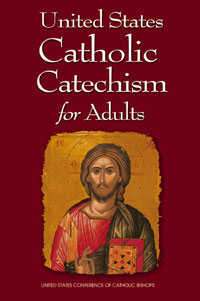
More information can be found here.
We wish to thank the USCCB for the permissions granted for use of  relevant material used in this series.
Also we wish to thank Teresa Monaghen and Deacon Chuck Adams for their vocal talents in this episode.
Tags: Archbishop George Lucas, Archbishop Lucas, creation, USCCB
This entry was posted on Monday, September 16th, 2013 at 9:52 am
You can follow any responses to this entry through the RSS 2.0 feed.
Sacred Tradition
[powerpress]
On this Faith Check we’re talking about Tradition!
For many Christians, Tradition can be a sort of dirty word. This is probably because of Jesus’ harsh words for the tradition of the Pharisees,1 who added unnecessary rituals and ignored the weightier matters of God’s Law.
But some traditions can be good and helpful in our spiritual journey. Things like putting up a Nativity scene, praying the rosary, or fasting. These are not doctrines, but customs that we do as Catholics to help draw us closer to God.
Catholics also speak of Sacred Tradition with a “capital T,†which is the very message of Christ that has been faithfully handed down to us from the apostles.2 For example, St. Paul writes in 2 Thessalonians 2:15 to “stand firm and hold to the traditions you were taught by us, either by word of mouth or by letter.†Here Scripture itself teaches that the Word of God can come to us both through written Scripture and oral Tradition—either way, we are to receive it equally as God’s Word.
For a synopsis of the Sacred Tradition today, pick up a copy of the Catechism of the Catholic Church.
1 – Mk. 7:6-23, etc.
2 – cf. 1 Cor. 11:2, etc.
Tags: customs, Faith Check, fasting, Sacred Tradition
This entry was posted on Monday, September 16th, 2013 at 7:29 am
You can follow any responses to this entry through the RSS 2.0 feed.
[powerpress]
Born: 310 AD,
Died: May 2, 367 AD
For more on St. Hilary of Poitiers and his teachings
Hilary of Poitiers
-Â On the Councils, or the Faith of the Easterns
-Â On the Trinity
-Â Homilies on the Psalms
To sum up the essentials of his doctrine, I would like to say that Hilary found the starting point for his theological reflection in baptismal faith. In De Trinitate, Hilary writes: Jesus
“has commanded us to baptize in the name of the Father and of the Son and of the Holy Spirit (cf. Mt 28: 19), that is, in the confession of the Author, of the Only-Begotten One and of the Gift. The Author of all things is one alone, for one alone is God the Father, from whom all things proceed. And one alone is Our Lord Jesus Christ, through whom all things exist (cf. I Cor 8: 6), and one alone is the Spirit (cf. Eph 4: 4), a gift in all…. In nothing can be found to be lacking so great a fullness, in which the immensity in the Eternal One, the revelation in the Image, joy in the Gift, converge in the Father, in the Son and in the Holy Spirit” (De Trinitate 2, 1). God the Father, being wholly love, is able to communicate his divinity to his Son in its fullness. I find particularly beautiful the following formula of St Hilary: “God knows not how to be anything other than love, he knows not how to be anyone other than the Father. Those who love are not envious and the one who is the Father is so in his totality. This name admits no compromise, as if God were father in some aspects and not in others” (ibid., 9, 61).
For this reason the Son is fully God without any gaps or diminishment. “The One who comes from the perfect is perfect because he has all, he has given all” (ibid., 2, 8). Humanity finds salvation in Christ alone, Son of God and Son of man. In assuming our human nature, he has united himself with every man, “he has become the flesh of us all” (Tractatus super Psalmos 54, 9); “he took on himself the nature of all flesh and through it became true life, he has in himself the root of every vine shoot” (ibid., 51, 16). For this very reason the way to Christ is open to all – because he has drawn all into his being as a man -, even if personal conversion is always required: “Through the relationship with his flesh, access to Christ is open to all, on condition that they divest themselves of their former self (cf. Eph 4: 22), nailing it to the Cross (cf. Col 2: 14); provided we give up our former way of life and convert in order to be buried with him in his baptism, in view of life (cf. Col1: 12; Rom 6: 4)” (ibid., 91, 9).
Fidelity to God is a gift of his grace. Therefore, St Hilary asks, at the end of his Treatise on the Trinity, to be able to remain ever faithful to the baptismal faith. It is a feature of this book: reflection is transformed into prayer and prayer returns to reflection. The whole book is a dialogue with God.
I would like to end today’s Catechesis with one of these prayers, which thus becomes our prayer:
“Obtain, O Lord”, St Hilary recites with inspiration, “that I may keep ever faithful to what I have professed in the symbol of my regeneration, when I was baptized in the Father, in the Son and in the Holy Spirit. That I may worship you, our Father, and with you, your Son; that I may deserve your Holy Spirit, who proceeds from you through your Only Begotten Son… Amen” (De Trinitate 12, 57).
For more visit Vatican.va
Dr. Matthew Bunson, Senior Fellow of the St. Paul Center for Biblical Theology, is one of the United States’ leading authorities on the papacy and the Church.
His books include: The Encyclopedia of Catholic History; The Encyclopedia of Saints; Papal Wisdom; All Shall Be Well; Encyclopedia of the Roman Empire; and The Angelic Doctor: The Life and World of St. Thomas Aquinas; The Pope Encyclopedia; We Have a Pope! Benedict XVI, the first Catholic biography of the Holy Father in the English language; the Encyclopedia of U.S. Catholic History; Pope Francis. Â His also the editor of OSV’s “The Catholic Answer” magazine.
Tags: alone, Church, matthew bunson, work
This entry was posted on Friday, September 13th, 2013 at 9:36 am
You can follow any responses to this entry through the RSS 2.0 feed.