 Site Type
 Featured
 Fonts
Fonts Skins
Skins
[powerpress]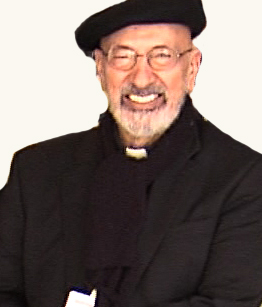
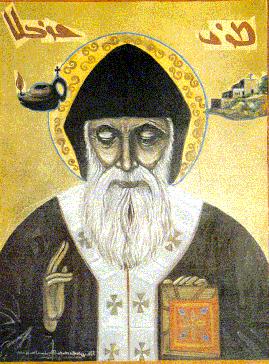
Msgr. Esseff shares stories of his time in Lebanon and his experience surrounding the great St. Charbel Makhlouf. Â He also reflects on today’s reading and the importance of depending on God.
Reading 1 EX 16:1-5, 9-15
The children of Israel set out from Elim,
and came into the desert of Sin,
which is between Elim and Sinai,
on the fifteenth day of the second month
after their departure from the land of Egypt.
Here in the desert the whole assembly of the children of Israel
grumbled against Moses and Aaron.
The children of Israel said to them,
“Would that we had died at the LORD’s hand in the land of Egypt,
as we sat by our fleshpots and ate our fill of bread!
But you had to lead us into this desert
to make the whole community die of famine!â€
Then the LORD said to Moses,
“I will now rain down bread from heaven for you.
Each day the people are to go out and gather their daily portion;
thus will I test them,
to see whether they follow my instructions or not.
On the sixth day, however, when they prepare what they bring in,
let it be twice as much as they gather on the other days.â€
Then Moses said to Aaron, “Tell the whole congregation
of the children of Israel:
Present yourselves before the LORD,
for he has heard your grumbling.â€
When Aaron announced this to the whole assembly of the children of Israel,
they turned toward the desert, and lo,
the glory of the LORD appeared in the cloud!
The LORD spoke to Moses and said,
“I have heard the grumbling of the children of Israel.
Tell them: In the evening twilight you shall eat flesh,
and in the morning you shall have your fill of bread,
so that you may know that I, the LORD, am your God.â€
In the evening quail came up and covered the camp.
In the morning a dew lay all about the camp,
and when the dew evaporated, there on the surface of the desert
were fine flakes like hoarfrost on the ground.
On seeing it, the children of Israel asked one another, “What is this?â€
for they did not know what it was.
But Moses told them,
“This is the bread which the LORD has given you to eat.â€
Tags: Charbel Makhlouf, children, Israel, John Esseff
This entry was posted on Wednesday, July 24th, 2013 at 9:05 am
You can follow any responses to this entry through the RSS 2.0 feed.
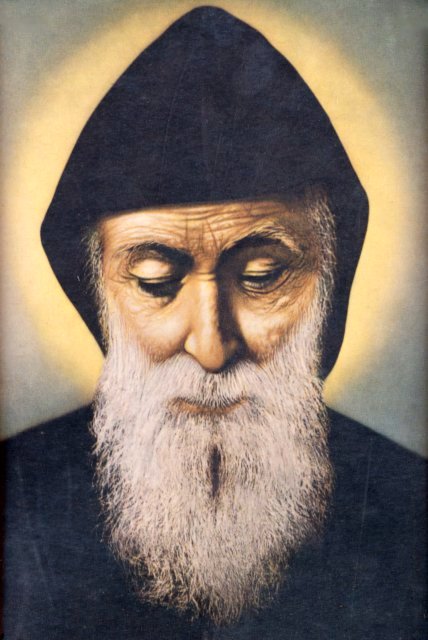
The Chaplet of St. Charbel – for text click here
[powerpress]
Countless…countless…miracles are attributed to this rmarkable saint of the Middle East…St. Charbel. I didn’t know of him until a wonderful member of the Fransican Friars of the Renewal, Br. Martin Ervin introduced us to this extraordinary man.
“In the 19th century Father Charbel Makhlouf-along with a few other saintly men-had tried to live again the austere life of the desert fathers of the early church. He belonged to the Christian body known as Maronites, a group which traces its name back to Saint Maro, a friend of Saint John Chrysostom. This group of Christians, most of whom still live in Lebanon, have been united to the Western Church since the 12th century, thus bringing into Western Christendom traditions of great value that might readily have been forgotten. These traditions are ones of enormous self- discipline, and few have exemplified them better than Charbel Makhlouf.
After 23 years of this ascetic life, Charbel had a paralyzing stroke just before the consecration while celebrating the Eucharist in his chapel, and died eight days later on Christmas Eve. After his death many favors and miracles were claimed through his intercession in heaven. Today his tomb is visited by large numbers of people, not only Lebanese Maronites and not only Christians” – Mansour Mouasher
In 1950, Father George Webby, a Maronite priest from Scranton, visited Lebanon, took a photo of monks outside the wall of the 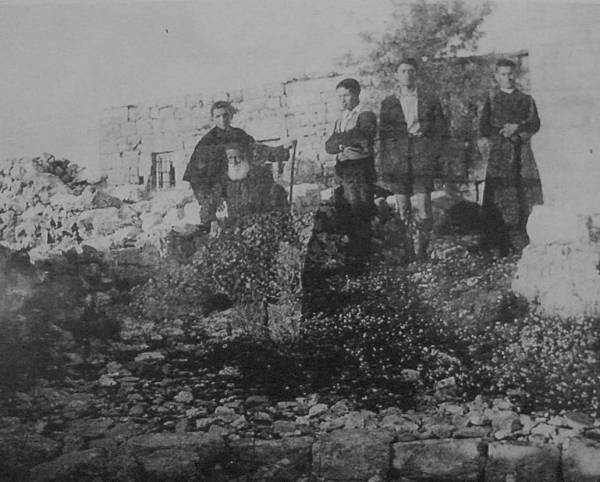 monastery in which St. Charbel had lived and upon development of the picture saw that St. Charbel miraculously appeared with the monks, according to information provided by St. Anthony’s Church.
Art work for holy pictures of this saint is now taken from this photo. Can you see him? (Hint: smack dab in the middle) click on the picture and then zoom in….
St. Charbel is listed among The Incorruptibles, saints whose bodies were found intact years after burial. His body kept pouring oil and blood until the year before his canonization in 1977.
Here is a neat video entitled “The Saint Charble Song” …it’s special…
Tags: catholic, catholic podcast, catholic prayer, cathollc spirituality, Charbel Makhlouf, desert fathers, intercession, Lebanon, maronites, miracles, miraculous healings, Saint Maro, St. Charbel, st. sharbel
This entry was posted on Wednesday, July 24th, 2013 at 4:19 am
You can follow any responses to this entry through the RSS 2.0 feed.
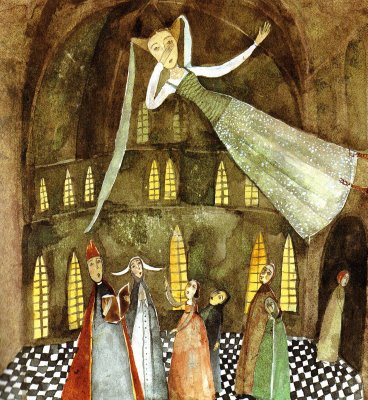
Image from “Lucy’s Eyes and Margaret’s Dragon: The Lives of the Virgin Saints”
Giselle Potter
A Prayer to St. Christina
[powerpress]
Today is the feast day of St. Christina the Astonishing. Why is she astonishing…well, if everyone thought you were dead and during the course of your funeral you shot up and proceeded to levitate to the rafters of the church, they’d probably call you astonishing too. Now I’ve been known to fly into a panic and fly into a rage, and I even fly to Costco for a good deal…but fly in church? Nope, not me. But all things are possible, with God. This is just one of the stories I read about her a long time ago in an old version of Bulter’s Lives of the Saints.  What else do we know:
After her death experience, she related that she had witnessed heaven, hell, and purgatory. It is written that she said “As soon as my soul was separated from my body it was received by angels who conducted it to a very gloomy place, entirely filled with souls” where the torments there that they endured “appeared so excessive” that it was “impossible to give an idea of their rigor.”
She continued,”I saw among them many of my acquaintances” and touched deeply by their sad condition asked if this was Hell, but was told that it was Purgatory. Her angel guides brought her to Hell where again she recognized those she had formerly known. Next she was transported to Heaven, “even to the Throne of Divine Majesty” where she was “regarded with a favorable eye” and she experienced extreme joy and these words were spoken to her, ” Assuredly, My dear daughter, you will one day be with Me. Now, however, I allow you to choose, either to remain with Me henceforth from this time, or to return again to earth to accomplish a mission of charity and suffering. In order to deliver from the flames of Purgatory those souls which have inspired you with so much compassion, you shall suffer for them upon earth: you shall endure great torments, without however dying from their effects. And not only will you relieve the departed, but the example which you will give to the living, and your continual suffering, will lead sinners to be converted and to expiate their crimes. After having ended this new life, you shall return here laden with merits.”
Christina, at hearing this and “seeing the great advantages for souls” without hesitation she agreed to return to life and arose that same moment. She told those around her that for the sole purpose of relief of the departed and conversion of sinners did she return and that none should be astonished at the penances that she would practice, nor the life that she would lead hence forth, she is quoted as saying, “It will be so extraordinary that nothing like it has ever been seen.” Making penances for the souls of Purgatory and Hell would henceforth become a major theme in her life.
As chronicled by her contemporaries, she threw herself into burning furnaces and there suffered great tortures for extended time uttering frightful cries, yet coming forth with no sign of burning upon her. In winter she would plunge into the frozen Meuse River for hours and days and weeks at a time all the while praying to God and imploring His Mercy. She allowed herself to be carried by the currents down river to the mill where the wheel “whirled her round in a manner frightful to behold” yet she had no dislocations or broken bones. She was chased by dogs that bit and tore her flesh. She ran from them into thickets of thorns, and though covered in blood she would return with no wound or scar.
Christina died in 1224 of natural causes, aged 74. – Wikipedia
After reading this, maybe you might want to, at least, pray with St. Christina the Astonishing, for the Poor Souls in Puragatory…click on this link to join in
Tags: angels, conversion, death experience, feast day, hell and purgatory, His Mercy, Meuse River, mission, saints, suffering, women of the middle ages
This entry was posted on Wednesday, July 24th, 2013 at 12:02 am
You can follow any responses to this entry through the RSS 2.0 feed.
Here is part 2 of our discussion:
With a pastor’s heart and eagle-eye accuracy, the gifted Al Kresta addresses “Dangers to the Faith: Recognizing Catholicism’s 21st Century 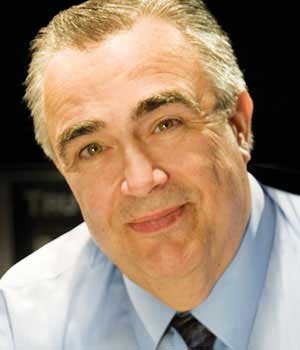 Opponents” in his newest book published by Our Sunday Visitor.    The secular world has presented many twisted versions of the “Truth” over the years: from New Age thought to Isalm, Scientism to Consumerism, Oprah and Shirley to Bart Erhman and Carl Sagan. Al Kresta challenges the “opponents” of faith with Christ-like love and wisdom. In the process, he teaches us all how to evangelize as a true disciple of Christ. A must have work for all those who may have a seeking heart and a desire to grow in their faith and to share it with family, friends and all they may encounter. One of the best books offered in this Year of Faith….a modern classic that should be in every Catholic home!
Here is part 2 of our discussion:
[powerpress]
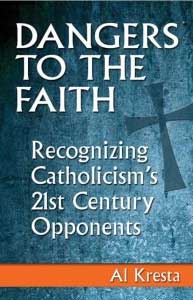 You can find the book here
Be sure to listen to “Kresta in the Afternoon” on the Ave Maria Radio Network
From the description:
Dangers to the Faith: Recognizing Catholicism’s 21st Century Opponents is the perfect springboard for discussing the new world in which the Catholic Church exists today. Learn how to better carry out the missionary mandate of the Church. The question isn’t whether you will be a witness to Christ, but whether you will be a faithful witness.
Tags: al kresta, Bart Erhman, Carl Sagan.� Al Kresta
This entry was posted on Tuesday, July 23rd, 2013 at 8:44 am
You can follow any responses to this entry through the RSS 2.0 feed.
Episode 1 -Listening For Truth– Introduction. Making moral judgments. What are the boundaries? Giving God time to reach us. Knowing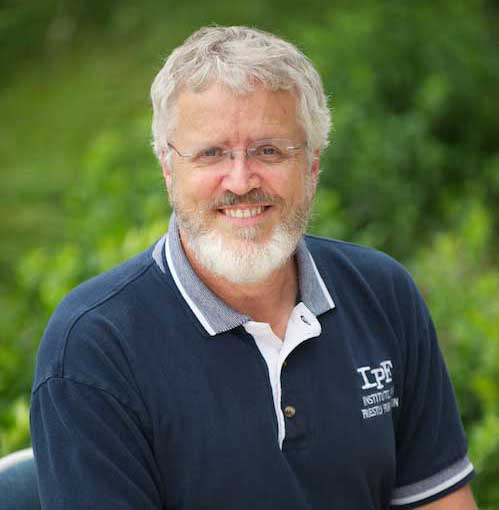 how we are being guided properly.
[powerpress]
Deacon James Keating, PhD, the director of Theological Formation for the Institute for Priestly Formation, located at Creighton University, in Omaha, is making available to â€Discerning Hearts†and all who listen, his series of programs entitled “Listening For Truthâ€.
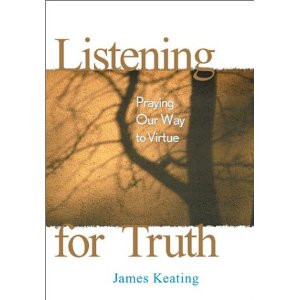 Listening for Truth leads men and women in a search for a fuller experience of God that begins in prayer, grows in the rediscovery of our spiritual being, and grounds itself in the truth of Jesus Christ. A presentation of the Christian life as an engagement of the whole person — body, mind, and soul — in the challenge of daily living.

For more information on the “Institute of Priestly Formation†and for other material available by Deacon Keating, just click here
Don’t forget to pickup a copy of “Communion with Christ†, it is one of the best audio sets on prayer…ever!
Check out Deacon Keating’s “Discerning Heart†page
Tags: creighton university, Deacon James Keating, Giving God, prayer
This entry was posted on Monday, July 22nd, 2013 at 10:43 am
You can follow any responses to this entry through the RSS 2.0 feed.
[powerpress]
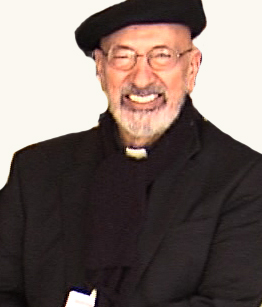
Msgr. Esseff reflects on the need to be aware of Christ’s “presence”.
GospelLK 10:38-42
where a woman whose name was Martha welcomed him.
She had a sister named Mary
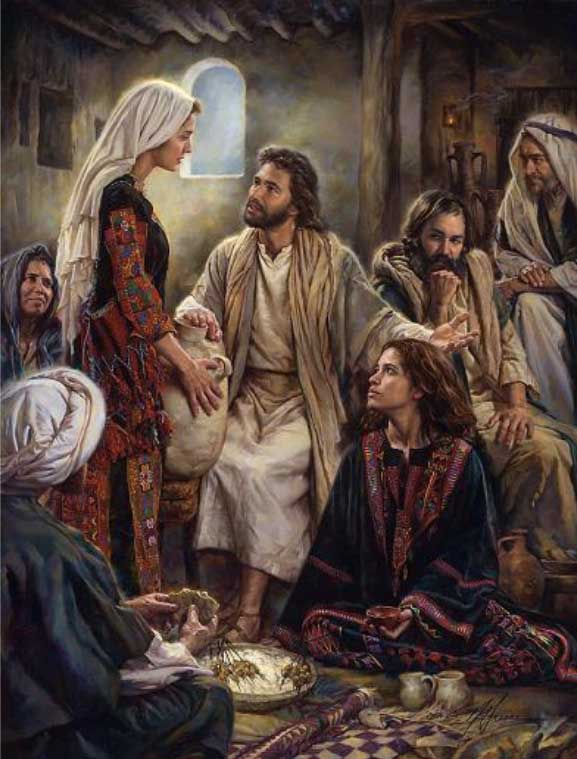 who sat beside the Lord at his feet listening to him speak.
Martha, burdened with much serving, came to him and said,
“Lord, do you not care
that my sister has left me by myself to do the serving?
Tell her to help me.â€
The Lord said to her in reply,
“Martha, Martha, you are anxious and worried about many things.
There is need of only one thing.
Mary has chosen the better part
and it will not be taken from her.â€
Msgr. John A. Esseff is a Roman Catholic priest in the Diocese of Scranton. He was ordained on May 30th 1953, by the late Bishop William J. Hafey, D.D. at St. Peter’s Cathedral in Scranton, PA. Msgr. Esseff served a retreat director and confessor to Blessed Mother Teresa.   He continues to offer direction and retreats for the sisters of the missionaries of charity around the world. Msgr. Esseff encountered St.  Padre Pio,  who would become a spiritual father to him. He has lived in areas around the world,  serving  in the Pontifical missions, a Catholic organization established by Bl. Pope John Paul II to bring the Good News to the world especially to the poor. Msgr. Esseff assisted the founders of the Institute for Priestly Formation and continues to serve as a spiritual director for the Institute. He continues to  serve as a retreat leader and director to bishops, priests and sisters and seminarians and other religious leaders around the world.  Â
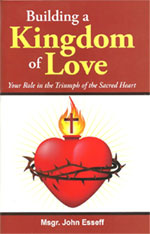
To obtain a copy of Msgr. Esseff’s book by visiting here
Be sure to visit Msgr. Esseff’s website “Building a Kingdom of  Love”
Tags: Good News, John Esseff, retreat, Roman Catholic
This entry was posted on Sunday, July 21st, 2013 at 6:50 pm
You can follow any responses to this entry through the RSS 2.0 feed.
[powerpress]
Glorious Saint Benedict,
sublime model of virtue,
pure vessel of God’s grace!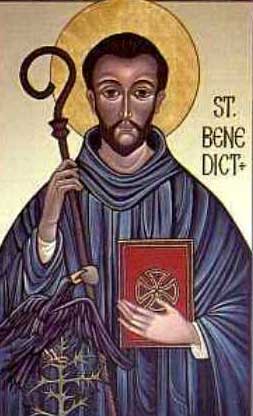
Behold me humbly kneeling at your feet.
I implore you in your loving kindness
to pray for me before the throne of God.
To you I have recourse in the dangers
that daily surround me.
Shield me against my selfishness
and my indifference to God and to my neighbor.
Inspire me to imitate you in all things.
May your blessing be with me always,
so that I may see
and serve Christ in others
and work for His kingdom.
Graciously obtain for me from God
those favors and graces
which I need so much in the trials,
miseries and afflictions of life.
Your heart was always full of love,
compassion and mercy toward those who were afflicted
or troubled in any way.
You never dismissed without consolation
and assistance anyone who had recourse to you.
I therefore invoke your powerful intercession,
confident in the hope that you will hear my prayers
and obtain for me the special grace and favor I earnestly implore.
(State your intention here…)
Help me, great Saint Benedict,
to live and die as a faithful child of God,
to run in the sweetness of His loving will,
and to attain the eternal happiness of heaven.
Amen.
Tags: benedictines, happiness, mercy, virtue, work
This entry was posted on Thursday, July 11th, 2013 at 5:27 am
You can follow any responses to this entry through the RSS 2.0 feed.
Episode 25 Beginning to Pray Special: Â “The Face of the Bridegroom: Source of Mystical Prayer”
[powerpress]
Dr. Lilles’ continues his  Day of Recollection offered in April 2013.
The renewal of mental prayer in 16th Century Spain is characterized by a rediscovery of the face of Christ in contemplation. Â Using passages from her life, we will consider how St. Teresa’s contemplation of the face of Christ developed during her conversion. Â We will compare this with the way St. John of the Cross pondered the face of Christ in the Spiritual Canticle. Â These saints help us see the mysterious Face of Christ, hidden in suffering and reflected in the secret of our faith, as the threshold and source for mystical prayer.
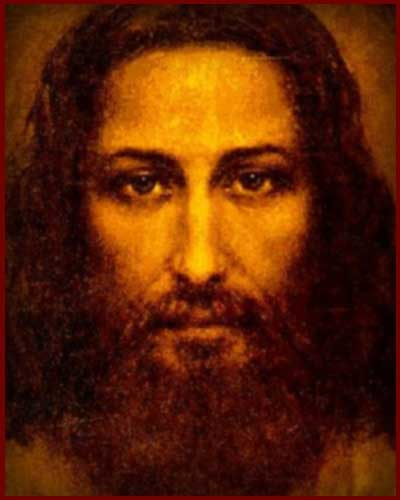
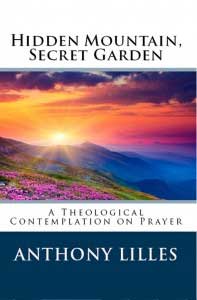
To obtain a copy of Dr. Lilles’ book click here
Dr.Anthony Lilles is a Catholic husband and father of three teaching Spiritual Theology at St. John Vianney Theological Seminary. He  teaches spiritual theology and spiritual direction to transitional deacons, and the spiritual classics to the men who enter the Spirituality Year, a year of prayer in preparation for seminary formation.  He is the author of the “Beginning to Pray”  catholic blog spot.
For other episodes in the series visit the Discerning Hearts page for Dr. Anthony Lilles
Tags: Anthony Lilles, contemplation, faith, prayer
This entry was posted on Tuesday, July 2nd, 2013 at 9:45 pm
You can follow any responses to this entry through the RSS 2.0 feed.
[powerpress]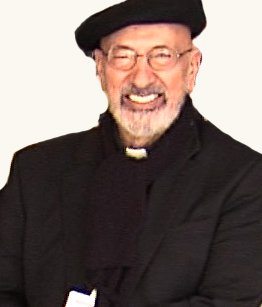
Msgr. Esseff discusses HALT and how it is the response to False Generosity. Â False Generosity can be destructive…we don’t even realize we are doing it.
When you find yourself:
H – Hungry, Â A- Angry,
L – Lonely, T – Tired
We must take care of ourselves! Â Msgr. Esseff first gives a checklist to attend to our physical needs and then he addresses our prayer lives. Â When you become the source of others feeding off you, you will become drained! Â You cannot give to your brothers and sisters what you do not receive from Him. Discernment is key! Â When you get exhausted, frustrated, overwhelmed, or run down it is your body saying you are doing things that are none of your business. God is not asking you to do what is not in your ability. Â Serving God  may involve suffering, fatique, and even moments of great physical or emotional pain, but none of this pull you away from your deepest self or from God. Â Those who want to be helpful to their community must ask themselves, Â “What do I need to be present to and what is it that I need to refrain from?
From the NAB St. Matthew Chap 11
28* “Come to me, all you who labor and are burdened,* and I will give you rest.29* p Take my yoke upon you and learn from me, for I am meek and humble of heart; and you will find rest for your selves.30For my yoke is easy, and my burden light.â€
Tags: False Generosity, HALT, John Esseff, Matthew Chap
This entry was posted on Tuesday, July 2nd, 2013 at 3:05 pm
You can follow any responses to this entry through the RSS 2.0 feed.
Episode 24 Beginning to Pray Special: Â “Gazing on the Face of Christ with the Saints”
[powerpress]
Dr. Lilles’ continues his  Day of Recollection offered in April 2013.
Here is the continuation of the first presentation which focuses on the Mystical Saints who can help us to gaze on the Face of Christ:
Anthony will introduce the saints who will guide us through our reflections: Â St. Teresa of Avila, St. John of the Cross, St. Therese of Lisieux, Blessed Elisabeth of the Trinity and Blessed John Paul II. Â He also answers questions about methods of prayers, teaching others to pray, and how can one help restore the sense of the sacred to the mass and Eucharistic adoration.
St. Teresa of Avila
St. John o the Cross
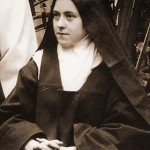
St. Therese of Lisieux
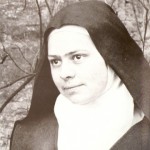
Blessed Elizabeth of the Trinity
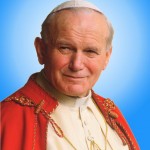
St. John Paul II
To obtain a copy of Dr. Lilles’ book click here
Dr.Anthony Lilles is a Catholic husband and father of three teaching Spiritual Theology at St. John Vianney Theological Seminary. He  teaches spiritual theology and spiritual direction to transitional deacons, and the spiritual classics to the men who enter the Spirituality Year, a year of prayer in preparation for seminary formation.  He is the author of the “Beginning to Pray”  catholic blog spot.
For other episodes in the series visit the Discerning Hearts page for Dr. Anthony Lilles
Tags: Anthony Lilles, catholic, catholic podcast, catholic prayer, cathollc spirituality, Discerning Hearts, father, prayer, spiritual direction, Spirituality Year
This entry was posted on Tuesday, June 25th, 2013 at 8:45 am
You can follow any responses to this entry through the RSS 2.0 feed.
Episode 13 - Bram Stoker and “Dracula”  on Great Works in Western Literature with Joseph Pearce 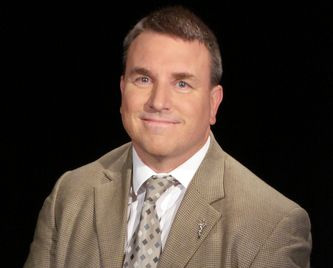
[powerpress]
When solicitor’s clerk Jonathan Harker travels to Transylvania on business to meet a mysterious Romanian count named Dracula, he little expects the horrors this strange meeting will unleash. Thus Bram Stoker’s 1897 novel of blood and passion begins, rapidly accelerating from Harker’s nightmarish experiences in Castle Dracula to a full-fledged vampiric assault on late-Victorian London itself. The story, narrated through a collection of 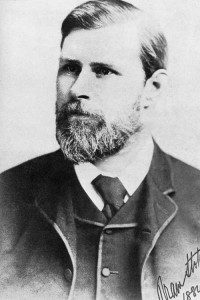 documents-primarily journal entries and letters-chronicles the desperate efforts of a band of gentlemen to protect the virtue of their ladies and lay to rest the ancient threat once and for all.
Often vacillating wildly between the terrible and the comic, Dracula at the same time brings to life a host of compelling themes: tensions between antiquity and modernity; the powers and limitations of technology; the critical importance of feminine virtue; the difference between superstition and religion; the nature of evil; and, perhaps most compellingly, the complex relationship between ancient faith and scientific enlightenment. More vivid than any of its varied film adaptations, and over a century after its first publication, Dracula still retains its sharp bite.
Based on the Ignatius Critical Edition, this series examines, from the Judeo-Christian perspective, the life,the times, and influence of authors of great works in literature .
Joseph Pearce  is currently the Writer-in-Residence and Visiting Fellow at Thomas More College of Liberal Arts in Merrimack, New 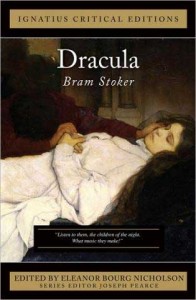 Hampshire. He is also Visiting Scholar at Mount Royal Academy in Sunapee, New Hampshire. He is also Visiting Scholar at Mount Royal Academy in Sunapee, New Hampshire. , as well as co-editor of the Saint Austin Review (or StAR), an international review of Christian culture, literature, and ideas published in England (Family Publications) and the United States (Sapientia Press). He is also the author of many books, including literary biographies of Solzhenitsyn, J. R. R. Tolkien, C. S. Lewis, G. K. Chesterton, and Oscar Wilde.
To learn more about the authors and titles available in the Ignatius Critical Editions
Tags: bram stoker, dracula, faith, ignatius critical editions, ignatius press, joseph pearce, religion, virtue
This entry was posted on Tuesday, June 25th, 2013 at 6:34 am
You can follow any responses to this entry through the RSS 2.0 feed.
(Vatican Radio)
Listen: [powerpress]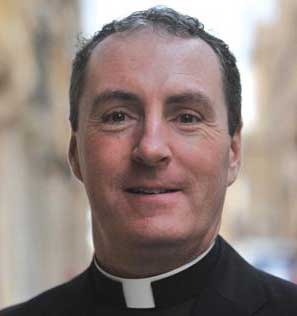
How does God measure success? What is a good measure of success? How do we know what tasks God wants us to fulfill? Is it wrong to be rich?
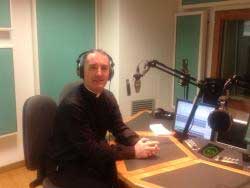
These are just some of the questions sent in by listeners that our very own official from the Vatican’s Congregation for the Doctrine of the Faith, Msgr. John Kennedy , answers in this week’s episode of Questions of Faith, as he helps us to navigate the modern world and rediscover what we believe and why we believe.Â
Tags: vatican radio
This entry was posted on Tuesday, June 25th, 2013 at 5:55 am
You can follow any responses to this entry through the RSS 2.0 feed.
Episode 35- Regnum Novum: Bringing forth the New Evangelization through Catholic Social Teaching with Omar Gutierrez –  We continue the study of the “Compendium of the Social Doctrine of the Church” Â Chapter 8 – part 2 The Political Community. Â What influences the “political community”? Â What is “religious freedom”
[powerpress]
CHAPTER EIGHT
THE POLITICAL COMMUNITY
IV. THE DEMOCRATIC SYSTEM
a. Values and democracy
b. Institutions and democracy
c. Moral components of political representation
d. Instruments for political participation
e. Information and democracy
V. THE POLITICAL COMMUNITY AT THE SERVICE OF CIVIL SOCIETY
a. Value of civil society
b. Priority of civil society
c. Application of the principle of subsidiarity
VI. THE STATE AND RELIGIOUS COMMUNITIES
A. Religious freedom, a fundamental human right
B. The Catholic Church and the political community
a. Autonomy and independence
b. Cooperation
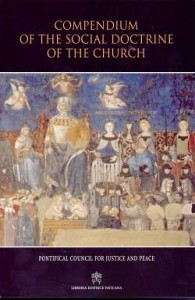
We live at a very special time. The confluence of many things has brought forth the clear need to be able to articulate the Social Teaching of the Catholic Church in a way that is accessible and applicable. This is not to be an effort where high-minded theories are to be bandied about. Rather, this is a time of opportunity wherein we can apply the Social Doctrine to the concrete so as to bring about a New Kingdom, a Revolution. – Omar G.
Also visit Omar’s “Discerning Hearts” page Catholic Social Teaching 101
Tags: catholic social teaching, Omar Gutierrez, regnum novum
This entry was posted on Tuesday, June 25th, 2013 at 5:24 am
You can follow any responses to this entry through the RSS 2.0 feed.
USCCA37 Â Chapter 29 part 3 – The Death Penalty and War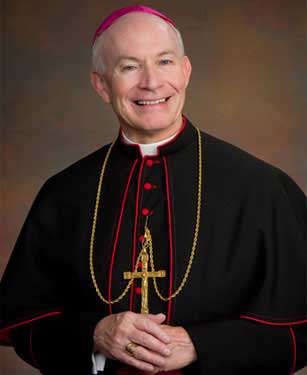
[powerpress]
Archbishop Lucas offers insights on the US Catholic Catechism for Adults Chapter 29:
The Death Penalty
Following the lead of Pope John Paul II’s The Gospel of Life, the Catechism teaches that governmental authority has the right and duty to assure the safety of society, and to punish criminals by means of suitable penalties. This includes imposition of the death penalty if there is no other way to protect society (cf. CCC, no. 2267). But this principle has a very restrictive application:
If, however, non-lethal means are sufficient to defend and protect people’s safety from the aggressor, authority will limit itself to such means, as these are more in keeping with the concrete conditions of the common good and more in conformity with the dignity of the human person. Today, in fact, as a consequence of the possibilities which the state has for effectively preventing crime, by rendering one who has committed an offense incapable of doing harm—without definitively taking away from him the possibility of redeeming himself—the cases in which the execution of the offender is an absolute necessity “are very rare, if not practically non-existent.†(CCC, no. 2267, citing EV, no. 56)
When dwelling on legal and moral arguments concerning the death penalty, we should do so not with vengeance and anger in our hearts, but with the compassion and mercy of our Lord in mind. It is also important to remember that penalties imposed on criminals always need to allow for the possibility of the criminal to show regret for the evil committed and to change his or her life for the better.
The imposition of the death penalty does not always allow for one or both of the purposes of criminal punishment to be achieved. “Our nation’s increasing reliance on the death penalty cannot be justified. We do not teach that killing is wrong by killing those who kill others. Pope John Paul II has said the penalty of death is ‘both cruel and unnecessary’ (Homily in St. Louis, January 27, 1999). The antidote to violence is not more violence†(USCCB, Faithful Citizenship [Washington, DC: USCCB, 2003], 19). (more…)
Tags: common good, death, evil, USCCB
This entry was posted on Monday, June 24th, 2013 at 9:27 am
You can follow any responses to this entry through the RSS 2.0 feed.
“Conscience and It’s Enemies: Confronting the Dogmas of Liberal Secularism” is one of the best articulations of today’s battle over religious liberty and 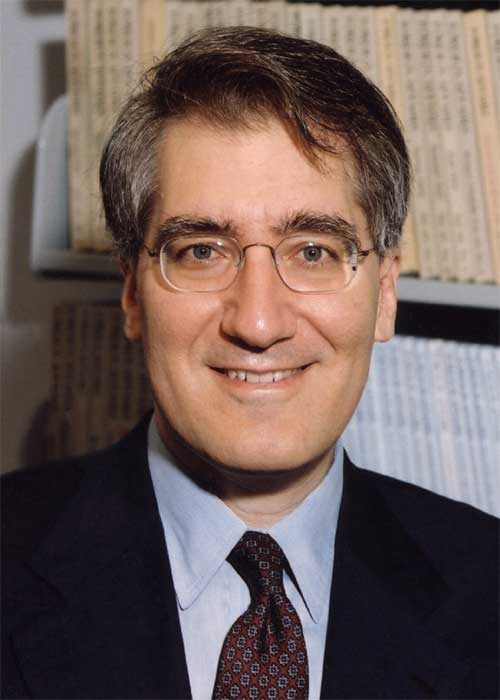 traditional morality.  Dr. Robert George’s clarity and insight is indispensable for  understanding where we have been, where we are going, and what paths we could be traveling down if we fail to action on the leading morality challenges facing as individuals and citizens.  Pass by this book and it’s message at your own risk.
As the book description states: “In defending what James Madison called the “sacred rights of conscienceâ€â€”rights for which government shows frightening contempt—George grapples with today’s most controversial issues: abortion and infanticide, same-sex marriage, genetic manipulation, euthanasia and assisted suicide, religion in politics, judicial activism, and more. His brilliantly argued essays rely not on theological claims or religious authority but on established scientific facts and a philosophical tradition that extends back to Plato and Aristotle.”
[powerpress]
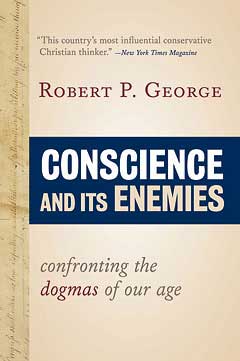 You can find it here
“One of the most incisive legal and moral thinkers working today.†—First Things
“One of contemporary conservatism’s intellectual pinups.†—George F. Will
“Professor George has helped strengthen our nation’s system of ordered liberty by exploring enduring questions of American constitutional law and Western political theory.†—President George W. Bush, in awarding the Presidential Citizens Medal
Tags: catholic, catholic podcast, catholic prayer
This entry was posted on Monday, June 24th, 2013 at 7:38 am
You can follow any responses to this entry through the RSS 2.0 feed.