 Site Type
 Featured
 Fonts
Fonts Skins
Skins
“For the hand of the Lord was with him”
[powerpress]
an excerpt from today’s reflection by Don Schwager:
John the Baptist’s life was fueled by one burning passion – to point others to Jesus Christ and to the coming of God’s kingdom. 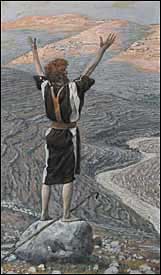 Scripture tells us that John was filled with the Holy Spirit even from his mother’s womb (Luke 1:15, 41) by Christ himself, whom Mary had just conceived by the Holy Spirit. When Mary visited her cousin Elizabeth, John lept in the womb of Elizabeth as they were filled with the Holy Spirit (Luke 1:41). The fire of the Spirit dwelt in John and made him the forerunner of the coming Messiah. John was led by the Spirit into the wilderness prior to his ministry where he was tested and grew in the word of God. John’s clothing was reminiscent of the prophet Elijah (see Kings 1:8). John broke the prophetic silence of the previous centuries when he began to speak the word of God to the people of Israel. His message was similar to the message of the Old Testament prophets who chided the people of God for their unfaithfulness and who tried to awaken true repentance in them. Among a people unconcerned with the things of God, it was his work to awaken their interest, unsettle them from their complacency, and arouse in them enough good will to recognize and receive Christ when he came.
What is the significance of John the Baptist and his message for our lives? When God acts to save us he graciously fills us with his Holy Spirit and makes our faith come “alive” to his promises. Each and every day the Lord is ready to renew us in faith, hope, and love. Like John the Baptist, the Lord invites each of us to make our life a free-will offering to God. God wants to fill us with his glory all the days of our lives, from birth through death. Renew the offering of your life to God and give him thanks for his mercy and favor towards you.
“Lord Jesus, you bring hope and salvation to a world lost in sin, despair, and suffering. Let your grace refresh and restore your people today in the hope and joy of your great victory over sin and death.”
for the full reflection visit : Daily Reading and Meditation
Tags: death, don schwager, gospel of luke, hope, joy, sin, st john the baptist
This entry was posted on Monday, June 24th, 2013 at 12:58 am
You can follow any responses to this entry through the RSS 2.0 feed.
[powerpress]
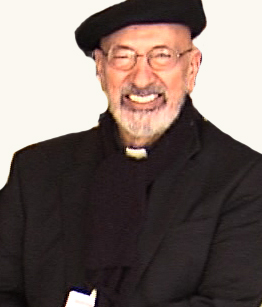
Msgr. Esseff reflects on the readings for the day and in particular the question asked by Jesus, “Who do you say that I am?” Do we witness to this Truth? Â What are the blocks in our hearts to authentically proclaiming Jesus to the world around us?
Gospel   LK 9:18-24
and the disciples were with him,
he asked them, “Who do the crowds say that I am?â€
They said in reply, “John the Baptist;
others, Elijah;
still others, ‘One of the ancient prophets has arisen.’â€
Then he said to them, “But who do you say that I am?â€
Peter said in reply, “The Christ of God.â€
He rebuked them
and directed them not to tell this to anyone.He said, “The Son of Man must suffer greatly
and be rejected by the elders, the chief priests, and the scribes,
and be killed and on the third day be raised.â€
Then he said to all,
“If anyone wishes to come after me, he must deny himself
and take up his cross daily and follow me.
For whoever wishes to save his life will lose it,
but whoever loses his life for my sake will save it.â€
Msgr. John A. Esseff is a Roman Catholic priest in the Diocese of Scranton. He was ordained on May 30th 1953, by the late Bishop William J. Hafey, D.D. at St. Peter’s Cathedral in Scranton, PA. Msgr. Esseff served a retreat director and confessor to Blessed Mother Teresa.   He continues to offer direction and retreats for the sisters of the missionaries of charity around the world. Msgr. Esseff encountered St.  Padre Pio,  who would become a spiritual father to him. He has lived in areas around the world,  serving  in the Pontifical missions, a Catholic organization established by Bl. Pope John Paul II to bring the Good News to the world especially to the poor. Msgr. Esseff assisted the founders of the Institute for Priestly Formation and continues to serve as a spiritual director for the Institute. He continues to  serve as a retreat leader and director to bishops, priests and sisters and seminarians and other religious leaders around the world.  Â
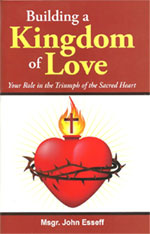
To obtain a copy of Msgr. Esseff’s book by visiting here
Be sure to visit Msgr. Esseff’s website “Building a Kingdom of  Love”
Tags: disciples, Good News, Jesus, John Esseff, priests, retreat
This entry was posted on Monday, June 24th, 2013 at 12:03 am
You can follow any responses to this entry through the RSS 2.0 feed.
I leave it to Omar F. A. Gutierrez to write so well on the life,  times, and death of this great saint.
You may perhaps remember a scene from Braveheart with Robert the Bruce and his father the leper.
When his son first brings him news about the rebellion led by William Wallace, a commoner, the father instantly devises a plan by which the Bruce clan can gain favor with the Scots and with the English. You get the feeling that Robert is a bit taken aback by the so easy and cold calculation of his rotted father.
He says,
This Wallace. He doesn’t even have a knighthood. But he fights with passion, and he is clever. He inspires men.
His father replies:
You admire him. Uncompromising men are easy to admire. He has courage. So does a dog. But you must understand this: Edward Longshanks is the most ruthless king ever to sit on the throne of England, and none of us, and nothing of Scotland, will survive unless we are as ruthless, more ruthless, than he.
“Uncompromising men are easy to admire.†There is in this world, and it seems more so today, a habit of admiring the compromising fellow. With the ubiquitous dictatorship of relativism that oppresses so many minds, it only makes sense that the general public would take offense at anyone who dares stand up for something with uncompromising stolidity.
The holder of objective truth claims is – so the sages of Manhattan and Melrose Place tell us – no different than the Nazi who insists on the claim to racial purity or the Islamic bomber who literally does cling to his religion and guns.
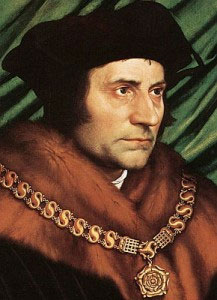
For this reason, the figure of St. Thomas More, whose feast it is today, can be such a 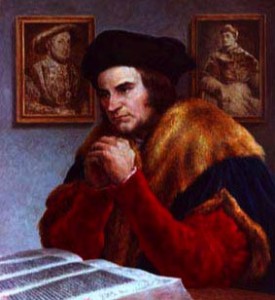 perplexing figure for the modern mind. And even the Catholic who consumes their breakfast whilst pouring over the latest moto proprio can miss this astonishingly great man. I have to admit having skipped over him in my studies, chalking him up with all the other saints and blesseds who gain God’s favor by losing their heads. But St. Thomas More is more than just a martyr.
He’s an example of such exquisite lack of compromise that he can teach us a great deal about the Catholic Social Doctrine we long to understand and live out. (more…)
Tags: children, england, english reformation, love, martyr, martyrdom, protestant reformation, tudors
This entry was posted on Saturday, June 22nd, 2013 at 6:32 am
You can follow any responses to this entry through the RSS 2.0 feed.
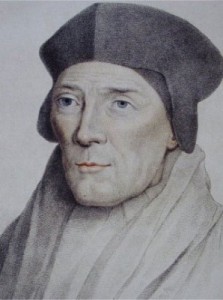
St. John Fisher, 1460-1535
from the Catholic Information Network on St. John Fisher
John Fisher, born at Beverley, Yorkshire, was the son of a prosperous mercer who died in 1477. About 1482 the boy’s mother sent him to Cambridge University where he distinguished himself as a scholar. He was ordained in 1491 on the title of his Fellowship of Michaelhouse (now incorporated in Trinity College). After studying theology for ten years, he took his D.D. in 1501, and was later recognized as one of the leading theologians of Europe.
His university soon discovered his gifts as an administrator; he held in turn the offices of proctor, vice-chancellor and chancellor, and in 1514 he received the unique distinction of being elected chancellor for life. It was in the course of his university duties that, in 1494, he first met the Lady Margaret Beaufort, mother of Henry VII. He became her confessor and advised her on the charitable uses of her great wealth. It was at his suggestion that a preachership was endowed at Cambridge and Readerships in Divinity in both universities. He was largely responsible for her decision to refound and endow Godshouse as Christ’s College, and, after her death in 1509, he carried out her wishes in founding St. John’s College, to which he transferred lands given to him by the Lady Margaret.
He was made bishop of Rochester in 1504, and he ruled that poorest of sees for thirty years; he was a truly pastoral bishop, encouraging his priests by his manner of life and by his interest in their welfare. He was a noted and assiduous preacher, and he did all he could to provide well-instructed priests who could preach to the people.
It was due to his influence that Erasmus was brought to Cambridge as lecturer in Greek. He and Sir Thomas More became close friends of John Fisher, and there is a record of the three being together at Rochester in 1516. Sir Thomas More became High Steward of Cambridge University in 1525. He and John Fisher had been drawn closer together at this period by the call to combat the Lutheran heresy. The bishop wrote his Confutatio (1523) in Latin, a book for theologians by a theologian, which had a wide circulation on
the continent; the layman wrote his Dialogue Concerning Heresies (1528) in English for the common reader. It may be noted that in his sermons and writings against heretics, John Fisher never used the abusive language of contemporary controversy; he relied on reason and persuasion to bring back the prodigals.
The year 1527 was fateful to England, for it was then that Henry VIII took the first steps towards seeking the annulment of his marriage with Catherine of Aragon. She had married his elder brother Arthur in 1501; he died six months later. Catherine always maintained that the marriage had not been consummated. A papal dispensation allowed Henry VIII to marry his brother’s widow in 1509. The lack of a male heir turned his thoughts to the dissolution of his marriage; he argued that the papal dispensation had no validity. Cardinal Wosley was instructed to seek the opinion of John Fisher, whose prestige as a man of holy life and of great learning gave exceptional weight to his views. After studying the problem thoroughly he came to the conclusion that the papal dispensation was valid, and therefore that Henry and Catherine were man and wife in the eyes of the church. From that position he never moved in spite of the pressure brought to bear on him by king and cardinal. He was not content with passive opposition, but in the legatine court set up to try the issue, and from the pulpit, he defended the queen, although he knew that Henry regarded opposition to his will as a form of treason.
An attempt to implicate John Fisher in the fate of the Nun of Kent failed; she had prophesied against the king. A more certain weapon was provided by the Act of Succession of 1534. This declared the king’s marriage to Catherine void, and his subsequent marriage to Anne Boleyn to be lawful; the succession was settled on her children. All had to take an oath accepting the whole Act. When the oath was tendered to
John Fisher he refused to take it; so did Sir Thomas More. Both were prepared to accept the succession as determined by Parliament, but not that part of the Act which implied a denial of the pope’s authority, inasmuch as it declared the papal dispensation invalid.
On April 17th, 1534 Bishop John Fisher and Sir Thomas More were committed to the Tower. They were kept apart.
John Fisher was sixty-five years of age when he was imprisoned; he was suffering from a wasting sickness and was clearly nearing his end. Nothing shows the king’s vindictiveness more than his relentless persecution of this aged man stricken by a fatal illness. On May 20th, 1535, the pope created John Fisher Cardinal-priest of the title of St. Vitalis. This so infuriated the king that he hurried forward the proceedings against the new cardinal. (more…)
Tags: bishop, english reformation, John Fisher, martyr, martyrdom, martyrs of england, priests, protestant reformation
This entry was posted on Saturday, June 22nd, 2013 at 6:00 am
You can follow any responses to this entry through the RSS 2.0 feed.
Episode 34- Regnum Novum: Bringing forth the New Evangelization through Catholic Social Teaching with Omar Gutierrez –  We continue the study of the “Compendium of the Social Doctrine of the Church” Â Chapter 8 – part 1 The Political Community. Â What is the biblical basis for this social teaching? Â What is the purpose of the political community? Â What is the basis for morally legitimate authority?
[powerpress]
CHAPTER EIGHT
THE POLITICAL COMMUNITY
I. BIBLICAL ASPECTS
a. God’s dominion
b. Jesus and political authority
c. The early Christian communities
II. FOUNDATION AND PURPOSE OF THE POLITICAL COMMUNITY
a. Political community, the human person and a people
b. Defending and promoting human rights
c. Social life based on civil friendship
III. POLITICAL AUTHORITY
a. The foundation of political authority
b. Authority as moral force
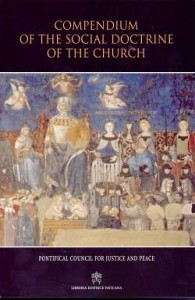
We live at a very special time. The confluence of many things has brought forth the clear need to be able to articulate the Social Teaching of the Catholic Church in a way that is accessible and applicable. This is not to be an effort where high-minded theories are to be bandied about. Rather, this is a time of opportunity wherein we can apply the Social Doctrine to the concrete so as to bring about a New Kingdom, a Revolution. – Omar G.
Also visit Omar’s “Discerning Hearts” page Catholic Social Teaching 101
Tags: catholic social teaching, New Kingdom, social doctrine, special time
This entry was posted on Tuesday, June 18th, 2013 at 8:17 am
You can follow any responses to this entry through the RSS 2.0 feed.
Episode 23 Beginning to Pray Special: Â “Let Your Face shine on us and we shall be saved”
[powerpress]
Dr. Lilles’ offered a Day of Recollection in April 2013. Â We are blessed to have the presentations he gave that day in audio form. Â They are OUTSTANDING!
Here is Presentation 1:
Mental prayer, that is prayer that searches the face of Christ, is a source of conversion. Â Beautiful truths about the incarnation and the paschal mystery come together in the face of Risen Lord who gazes on us with love. Â In the shadow of this love, we discover the freedom to turn ourselves to the Lord ever more completely. Â Our day begins with a meditation on the psalms 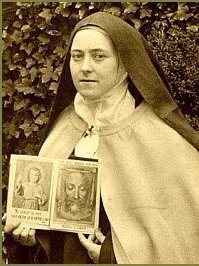 which point the way to this prayer. Â We will introduce the saints who will guide us through our reflections: Â St. Teresa of Avila, St. John of the Cross, St. Therese of Lisieux, Blessed Elisabeth of the Trinity and Blessed John Paul II.
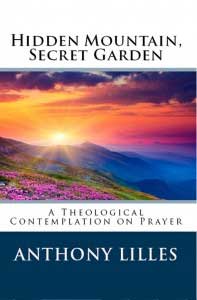
To obtain a copy of Dr. Lilles’ book click here
Dr. Anthony Lilles is a Catholic husband and father of three teaching Spiritual Theology at St. John Vianney Theological Seminary. He  teaches spiritual theology and spiritual direction to transitional deacons, and the spiritual classics to the men who enter the Spirituality Year, a year of prayer in preparation for seminary formation.  He is the author of the “Beginning to Pray”  catholic blog spot.
For other episodes in the series visit the Discerning Hearts page for Dr. Anthony Lilles
Tags: Anthony Lilles, Discerning Hearts, father, prayer
This entry was posted on Monday, June 17th, 2013 at 5:48 pm
You can follow any responses to this entry through the RSS 2.0 feed.
FG#7- Interior Freedom episode 7 – Fountains of Grace: reflections on contemporary spiritual classics with Donna Garrett
Join host Donna Garrett, with Fr. Daniel Brandenburg, LC, as they discuss the spiritual classic “Interior Freedom” by Fr.  Jacques Philippe  a priest of  Communaute des Beatitudes, an international association of the faithful of Pontifical Right founded in France in 1973.  The members of the Community, which has a contemplative vocation based on Carmelite spirituality, are actively engaged in the service of the poor and the proclamation of the Gospel.
[powerpress]
Discussed in this episode, among other topics, Â from “Interior Freedom” page 102
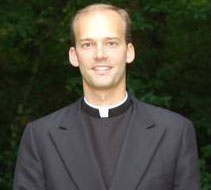
Donna Garrett is joined in this particular series by Fr. Daniel Brandenburg, LC
“Three aspects of the spiritual life the joyful, sorrowful and glorious outpourings of the Holy Sprit recall the image of the fire and the log used by St John of the Cross. ‘ When fire approaches the log it first lights it up and warms it. That corresponds to a joyful mystery. We are warmed by the love of God revealed to us . When the fire comes closer, the wood begins to blacken, smoke, smell bad, and give out tar and other unpleasant substances. This is the sorrowful outpouring; the soul has the painful experience of its own wretchedness. This phase lasts until the purifying fire has completed its work and the soul is totally transformed into a fire of love. Here is the glorious outpouring, in which the soul is strengthened in charity, the fire Jesus came to kindle on earth.â€
For other episodes in the this series click here “Fountains of Grace w/Donna Garrett”

You can find “Interior Freedom” here
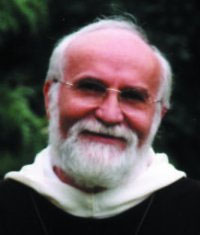
Fr. Jacques Philippe
Tags: Donna Garrett, Interior Freedom, love, reflections
This entry was posted on Monday, June 17th, 2013 at 4:41 pm
You can follow any responses to this entry through the RSS 2.0 feed.
USCCA36 Â Chapter 29 part 2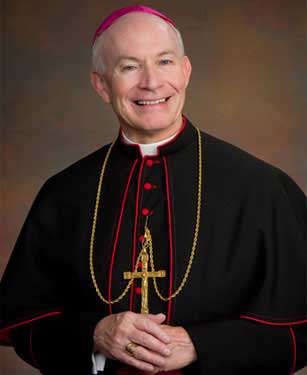
[powerpress]
Archbishop Lucas offers insights on the US Catholic Catechism for Adults Chapter 29:
Intentional euthanasia, sometimes called mercy killing, is murder. Regardless of the motives or means, euthanasia consists of putting to death those who are sick, are disabled, or are dying. It is morally unacceptable. The emergence of physician-assisted suicide, popularized by the right-to-die movement, seeks to legalize what is an immoral act. Its advocates plan to achieve this on a state-by-state basis.
Suicide is gravely sinful whether committed alone or aided by a doctor. Serious psychological disturbances, anxiety, fear of suffering, or torture can diminish the responsibility of the one committing suicide. The question is often asked whether persons who have committed suicide receive eternal salvation. Although suicide is always objectively sinful, one “should not despair of the eternal salvation of persons who have taken their own lives. By ways known to him alone, God can provide the opportunity for salutary repentance. The Church prays for persons who have taken their own lives†(CCC, no. 2283). The pastoral care of family and friends of those who have taken their own lives is an important focus for the Church’s healing and compassionate ministry.
Catholic moral tradition has always taught that we can discontinue medical procedures that are burdensome, extraordinary, and disproportionate to the outcome. However, respect for every human being demands the ordinary treatment of the dying by the provision of food, water, warmth, and hygiene. Ordinary treatment is always a moral requirement.
There is also extraordinary treatment. The Church recognizes that some medical treatment may not provide benefits commensurate with the risks of certain medical procedures. Extraordinary medical treatment may not be morally required and can even cease in certain cases, depending on the benefits to the sick person and the burdens it will or may impose. For example, in instances when a person has been declared brain-dead, the patient can be disconnected from mechanical devices that sustain breathing and the heart since there is little hope of the person’s recovery.
United States Conference of Catholic Bishops (USCCB) (2012-04-02). United States Catholic Catechism for Adults (Kindle Locations 5696-5710). United States Conference of Catholic Bishops (USCCB). Kindle Edition.
The Most Reverend George J. Lucas leads the Archdiocese of Omaha.Â
For other episodes in the visit our Archbishop George Lucas page
This programs is based on:
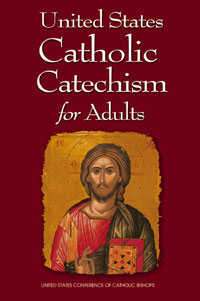
More information can be found here.
We wish to thank the USCCB for the permissions granted for use of  relevant material used in this series.
[ezcc]
Tags: alone, Church, family, USCCB
This entry was posted on Monday, June 17th, 2013 at 3:44 pm
You can follow any responses to this entry through the RSS 2.0 feed.
This book is a delightful surprise.  Keith Merritt shares the beautiful life he had with Gayle, his wife of 27 years, who  would one day be diagnosed with Pancreatic cancer.   He shares how Gayle came to be revered by so many for the depth of her courage against impossible odds, and her joy at saying to God, “I belong to you”.  Gayle Merritt’s suffering, and victory in Christ  is  documented in emails sent to local parishioners to provide updates on her condition throughout her final months. A poignant work filled with hope, courage, joy and love.
[powerpress]
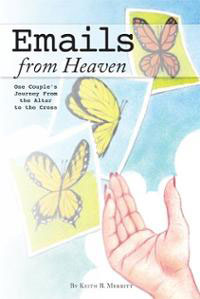
You can find the book here
Tags: Gayle Merritt, joy, Keith Merritt, work
This entry was posted on Monday, June 17th, 2013 at 3:19 pm
You can follow any responses to this entry through the RSS 2.0 feed.
[powerpress]
Msgr. Esseff reflects on the readings for the day and in particular the teachings of the St. Paul, “I live, no longer I, but Christ lives in me”. Â Are we aware of the power we have, through grace, to live in, with, and through the life of Christ?
GAL 2:16, 19-21
Brothers and sisters:
We who know that a person is not justified by works of the law
but through faith in Jesus Christ,
even we have believed in Christ Jesus
that we may be justified by faith in Christ
and not by works of the law,
because by works of the law no one will be justified.
For through the law I died to the law,
that I might live for God.
I have been crucified with Christ;
yet I live, no longer I, but Christ lives in me;
insofar as I now live in the flesh,
I live by faith in the Son of God
who has loved me and given himself up for me.
I do not nullify the grace of God;
for if justification comes through the law,
then Christ died for nothing.
Msgr. John A. Esseff is a Roman Catholic priest in the Diocese of Scranton. He was ordained on May 30th 1953, by the late Bishop William J. Hafey, D.D. at St. Peter’s Cathedral in Scranton, PA. Msgr. Esseff served a retreat director and confessor to Blessed Mother Teresa.   He continues to offer direction and retreats for the sisters of the missionaries of charity around the world. Msgr. Esseff encountered St.  Padre Pio,  who would become a spiritual father to him. He has lived in areas around the world,  serving  in the Pontifical missions, a Catholic organization established by Bl. Pope John Paul II to bring the Good News to the world especially to the poor. Msgr. Esseff assisted the founders of the Institute for Priestly Formation and continues to serve as a spiritual director for the Institute. He continues to  serve as a retreat leader and director to bishops, priests and sisters and seminarians and other religious leaders around the world.  Â
To obtain a copy of Msgr. Esseff’s book by visiting here
Be sure to visit Msgr. Esseff’s website “Building a Kingdom of  Love”
Tags: GAL, John Esseff, PA, retreat
This entry was posted on Monday, June 17th, 2013 at 9:11 am
You can follow any responses to this entry through the RSS 2.0 feed.
Another outstanding addition to the Joseph Pearce canon!  “Shakespeare on Love: Seeing the Catholic Presence in Romeo and  Juliet” is a terrific read.  Once again Jospeh Pearce helps us to see that the story we thought we knew is something very different when viewed with the Catholic Shakepeares len’s.  Is Romeo a hero or a self indulgent cad?  Is Juliet a  free thinking woman or a relationship starved 13 year old victimized by an adult male predator?  And how about those adults?  Just look at what happens when Eros runs a muck, and virtue is replaced blindly in favor of vice!  Let us not forget  to mention the tragedy which occurs from bad parenting.  Sexual desire and the gift of reason are explored in this compelling work by the prolific Pearce.  Who would have thought a book about a  500 year old play would contain such important lessons for our lives today.
[powerpress]
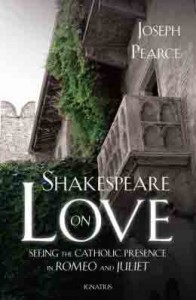 You can find the book here
“Joseph Pearce’s book on Romeo and Juliet stands like a lighthouse in the murk of modern literary criticism. His approach challenges the assumptions that govern popular ‘scholarly’ work on Shakespeare in our time. It is massively researched, convincing, intelligent, and (happily) interesting. I commend it highly to all possible readers.” —-Thomas Howard, Author, Chance or the Dance?
Tags: Catholic Shakepeares, joseph pearce, Jospeh Pearce, work
This entry was posted on Tuesday, June 11th, 2013 at 7:15 am
You can follow any responses to this entry through the RSS 2.0 feed.
USCCA35 Â Chapter 29Â
[powerpress]
Archbishop Lucas offers insights on the US Catholic Catechism for Adults Chapter 29:
Modern technology has enabled us to appreciate how quickly the growing child in the womb takes on human features. This has made many more people aware of the fact that human life begins at conception, the moment that the egg is fertilized. Many common forms of artificial birth control cause abortions by not allowing the newly conceived human child to implant in the mother’s womb. The pro-life commitment of the Church is reflected in her compassion for those who so often regret having had an abortion, her understanding for those who are facing difficult decisions, and her assistance for all who choose life. People who have been involved with an abortion are encouraged to get in touch with the Project Rachel ministry and other ministries that enable them to seek the mercy of God in the Sacrament of Penance and Reconciliation and to obtain the necessary counseling. Pro-life ministries work with expectant mothers who are considering abortion by encouraging them to choose life for their children. They also provide alternatives to abortion through prenatal care, assistance in raising children, and adoption placement services.
United States Conference of Catholic Bishops (USCCB) (2012-04-02). United States Catholic Catechism for Adults (Kindle Locations 5666-5674). United States Conference of Catholic Bishops (USCCB). Kindle Edition.
The Most Reverend George J. Lucas leads the Archdiocese of Omaha.Â
For other episodes in the visit our Archbishop George Lucas page
This programs is based on:
More information can be found here.
We wish to thank the USCCB for the permissions granted for use of  relevant material used in this series.
[ezcc]
Tags: abortion, children, USCCB, work
This entry was posted on Tuesday, June 11th, 2013 at 6:32 am
You can follow any responses to this entry through the RSS 2.0 feed.
[powerpress]
Msgr. Esseff reflects on the Resurrection and how we look at death.
The NAB John Chap 20:
4Thomas, called Didymus, one of the Twelve, was not with them when Jesus came.25So the other disciples said to him, “We have seen the Lord.†But he said to them, “Unless I see the mark of the nails in his hands and put my finger into the nailmarks and put my hand into his side, I will not believe.â€o26Now a week later his disciples were again inside and Thomas was with them. Jesus came, although the doors were locked, and s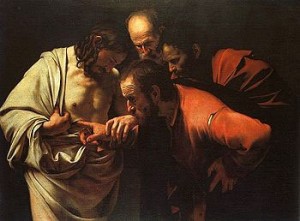 tood in their midst and said, “Peace be with you.â€p27Then he said to Thomas, “Put your finger here and see my hands, and bring your hand and put it into my side, and do not be unbelieving, but believe.â€28* q Thomas answered and said to him, “My Lord and my God!â€29* Jesus said to him, “Have you come to believe because you have seen me?rBlessed are those who have not seen and have believed.â€
Msgr. John A. Esseff is a Roman Catholic priest in the Diocese of Scranton. He was ordained on May 30th 1953, by the late Bishop William J. Hafey, D.D. at St. Peter’s Cathedral in Scranton, PA. Msgr. Esseff served a retreat director and confessor to Blessed Mother Teresa.   He continues to offer direction and retreats for the sisters of the missionaries of charity around the world. Msgr. Esseff encountered St.  Padre Pio,  who would become a spiritual father to him. He has lived in areas around the world,  serving  in the Pontifical missions, a Catholic organization established by Bl. Pope John Paul II to bring the Good News to the world especially to the poor. Msgr. Esseff assisted the founders of the Institute for Priestly Formation and continues to serve as a spiritual director for the Institute. He continues to  serve as a retreat leader and director to bishops, priests and sisters and seminarians and other religious leaders around the world.  Â
To obtain a copy of Msgr. Esseff’s book by visiting here
Be sure to visit Msgr. Esseff’s website “Building a Kingdom of  Love”
Tags: death, John Esseff, retreat, Roman Catholic
This entry was posted on Monday, June 10th, 2013 at 1:20 pm
You can follow any responses to this entry through the RSS 2.0 feed.
Fr. James Martin joined us to share the compelling story of St. Charles Lwanga and the Martyrs of Uganda.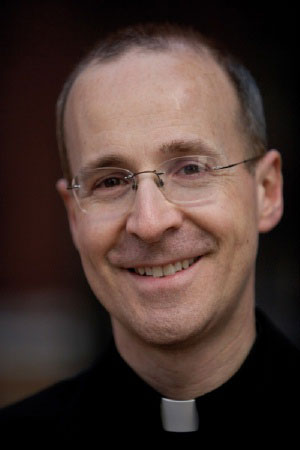
[powerpress]
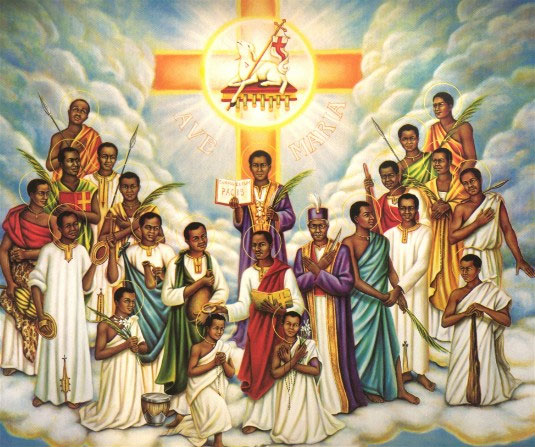 Owing to religious hatred, many faithful Christians were killed in Uganda by King Mwanga during the years 1885-87. some of them had enjoyed the good graces of the king at his court, and some were even related to him. Among them, Charles Lwanga and his twenty one companions, adhering steadfastly to the Catholic faith, were put to death, some by sword, others by burning, because they would not accede to the king’s unreasonable demands.
Father, You have made the blood of the martyrs the seed of Christians. May the witness pf Saint Charles and his companions and their loyalty to the Christ in the face of torture inspire countless men and women to live the Christian faith. We ask this through our Lord Jesus Christ, Your Son, who lives and reigns with You and the Holy Spirit, one God, for ever and ever. Amen.
(Source:Â Liturgy of the Hours)
Tags: africa, america, american magazine, Charles Lwanga, holy spirit, jesuits, Lord Jesus Christ, martyrs, Saint Charles, ugandan martyrs
This entry was posted on Monday, June 3rd, 2013 at 2:35 am
You can follow any responses to this entry through the RSS 2.0 feed.
[powerpress]
Msgr. Esseff reflects on the teaching of Jesus found in John Chapter 6 for the great feast of Corpus Christi. Â He discusses the true presence of Jesus in the Eucharist. Â The tragedy becomes when we look upon the Blessed Sacrament has a “something” instead of a “Someone”.
From the NAB Â John Chapter 6
The Bread of Life Discourse.22* The next day, the crowd that remained across the sea saw that there had been only one boat there, and that Jesus had not gone along with his disciples in the boat, but only his disciples had left.23* Other boats came from Tiberias near the place where they had eaten the bread when the Lord gave thanks.24When the crowd saw that neither Jesus nor his disciples were there, they themselves got into boats and came to Capernaum looking for Jesus.25And when they found him across the sea they said to him, “Rabbi, when did you get here?â€26Jesus answered them and said, “Amen, amen, I say to you, you are looking for me not because you saw signs but because you ate the loaves and were filled.27Do not work for food that perishes but for the food that endures for eternal life,*which the Son of Man will give you. For on him the Father, God, has set his seal.â€l28So they said to him, “What can we do to accomplish the works of God?â€29Jesus answered and said to them, “This is the work of God, that you believe in the one he sent.â€30So they said to him, “What sign can you do, that we may see and believe in you? What can you do?m31* Our ancestors ate manna in the desert, as it is written:n
‘He gave them bread from heaven to eat.’†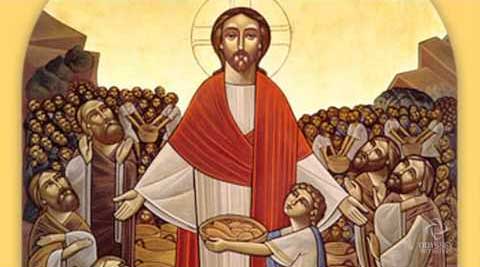
32So Jesus said to them, “Amen, amen, I say to you, it was not Moses who gave the bread from heaven; my Father gives you the true bread from heaven.o33For the bread of God is that which comes down from heaven and gives life to the world.â€
34p So they said to him, “Sir, give us this bread always.â€35* Jesus said to them, “I am the bread of life; whoever comes to me will never hunger, and whoever believes in me will never thirst.q36But I told you that although you have seen [me], you do not believe.r37Everything that the Father gives me will come to me, and I will not reject anyone who comes to me,38because I came down from heaven not to do my own will but the will of the one who sent me.s39And this is the will of the one who sent me, that I should not lose anything of what he gave me, but that I should raise it [on] the last day.t40For this is the will of my Father, that everyone who sees the Son and believes in him may have eternal life, and I shall raise him [on] the last day.â€u
41The Jews murmured about him because he said, “I am the bread that came down from heaven,â€42and they said, “Is this not Jesus, the son of Joseph? Do we not know his father and mother? Then how can he say, ‘I have come down from heaven’?â€v43Jesus answered and said to them, “Stop murmuring* among yourselves.w44No one can come to me unless the Father who sent me draw him, and I will raise him on the last day.45It is written in the prophets:
‘They shall all be taught by God.’
Everyone who listens to my Father and learns from him comes to me.x46Not that anyone has seen the Father except the one who is from God; he has seen the Father.y47Amen, amen, I say to you, whoever believes has eternal life.48I am the bread of life.49Your ancestors ate the manna in the desert, but they died;z50this is the bread that comes down from heaven so that one may eat it and not die.51I am the living bread that came down from heaven; whoever eats this bread will live forever; and the bread that I will give is my flesh for the life of the world.â€a
52The Jews quarreled among themselves, saying, “How can this man give us [his] flesh to eat?â€53Jesus said to them, “Amen, amen, I say to you, unless you eat the flesh of the Son of Man and drink his blood, you do not have life within you.54Whoever eats* my flesh and drinks my blood has eternal life, and I will raise him on the last day.55For my flesh is true food, and my blood is true drink.56Whoever eats my flesh and drinks my blood remains in me and I in him.57Just as the living Father sent me and I have life because of the Father, so also the one who feeds on me will have life because of me.b58This is the bread that came down from heaven. Unlike your ancestors who ate and still died, whoever eats this bread will live forever.â€59These things he said while teaching in the synagogue in Capernaum.
Msgr. John A. Esseff is a Roman Catholic priest in the Diocese of Scranton. He was ordained on May 30th 1953, by the late Bishop William J. Hafey, D.D. at St. Peter’s Cathedral in Scranton, PA. Msgr. Esseff served a retreat director and confessor to Blessed Mother Teresa.   He continues to offer direction and retreats for the sisters of the missionaries of charity around the world. Msgr. Esseff encountered St.  Padre Pio,  who would become a spiritual father to him. He has lived in areas around the world,  serving  in the Pontifical missions, a Catholic organization established by Bl. Pope John Paul II to bring the Good News to the world especially to the poor. Msgr. Esseff assisted the founders of the Institute for Priestly Formation and continues to serve as a spiritual director for the Institute. He continues to  serve as a retreat leader and director to bishops, priests and sisters and seminarians and other religious leaders around the world.  Â
To obtain a copy of Msgr. Esseff’s book by visiting here
Be sure to visit Msgr. Esseff’s website “Building a Kingdom of  Love”
Tags: Blessed Sacrament, corpus christi, Jesus, John Esseff
This entry was posted on Sunday, June 2nd, 2013 at 8:54 am
You can follow any responses to this entry through the RSS 2.0 feed.