 Site Type
 Featured
 Fonts
Fonts Skins
Skins
Episode 25 Beginning to Pray Special: Â “The Face of the Bridegroom: Source of Mystical Prayer”
[powerpress]
Dr. Lilles’ continues his  Day of Recollection offered in April 2013.
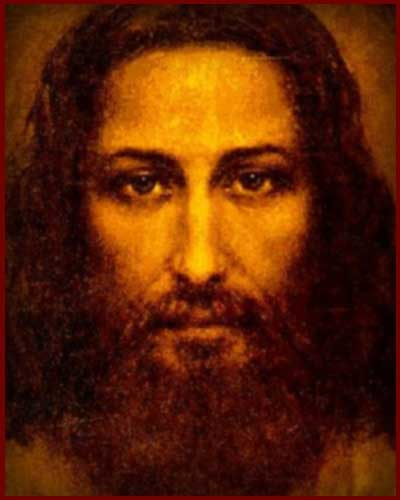
The renewal of mental prayer in 16th Century Spain is characterized by a rediscovery of the face of Christ in contemplation. Â Using passages from her life, we will consider how St. Teresa’s contemplation of the face of Christ developed during her conversion. Â We will compare this with the way St. John of the Cross pondered the face of Christ in the Spiritual Canticle. Â These saints help us see the mysterious Face of Christ, hidden in suffering and reflected in the secret of our faith, as the threshold and source for mystical prayer.
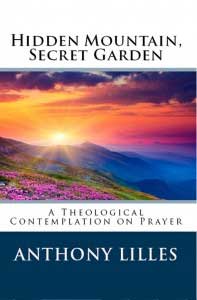
To obtain a copy of Dr. Lilles’ book click here
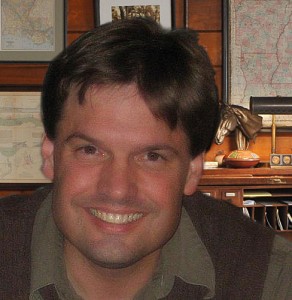
Dr.Anthony Lilles is a Catholic husband and father of three teaching Spiritual Theology at St. John Vianney Theological Seminary. He  teaches spiritual theology and spiritual direction to transitional deacons, and the spiritual classics to the men who enter the Spirituality Year, a year of prayer in preparation for seminary formation.  He is the author of the “Beginning to Pray”  catholic blog spot.
For other episodes in the series visit the Discerning Hearts page for Dr. Anthony Lilles
Tags: Anthony Lilles, contemplation, faith, prayer
This entry was posted on Tuesday, July 2nd, 2013 at 9:45 pm
You can follow any responses to this entry through the RSS 2.0 feed.
Episode 13 - Bram Stoker and “Dracula”  on Great Works in Western Literature with Joseph Pearce 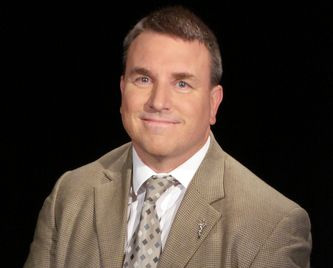
[powerpress]
When solicitor’s clerk Jonathan Harker travels to Transylvania on business to meet a mysterious Romanian count named Dracula, he little expects the horrors this strange meeting will unleash. Thus Bram Stoker’s 1897 novel of blood and passion begins, rapidly accelerating from Harker’s nightmarish experiences in Castle Dracula to a full-fledged vampiric assault on late-Victorian London itself. The story, narrated through a collection of 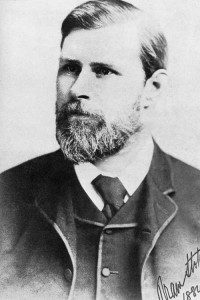 documents-primarily journal entries and letters-chronicles the desperate efforts of a band of gentlemen to protect the virtue of their ladies and lay to rest the ancient threat once and for all.
Often vacillating wildly between the terrible and the comic, Dracula at the same time brings to life a host of compelling themes: tensions between antiquity and modernity; the powers and limitations of technology; the critical importance of feminine virtue; the difference between superstition and religion; the nature of evil; and, perhaps most compellingly, the complex relationship between ancient faith and scientific enlightenment. More vivid than any of its varied film adaptations, and over a century after its first publication, Dracula still retains its sharp bite.
Based on the Ignatius Critical Edition, this series examines, from the Judeo-Christian perspective, the life,the times, and influence of authors of great works in literature .
Joseph Pearce  is currently the Writer-in-Residence and Visiting Fellow at Thomas More College of Liberal Arts in Merrimack, New 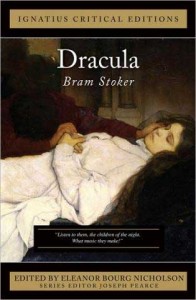 Hampshire. He is also Visiting Scholar at Mount Royal Academy in Sunapee, New Hampshire. He is also Visiting Scholar at Mount Royal Academy in Sunapee, New Hampshire. , as well as co-editor of the Saint Austin Review (or StAR), an international review of Christian culture, literature, and ideas published in England (Family Publications) and the United States (Sapientia Press). He is also the author of many books, including literary biographies of Solzhenitsyn, J. R. R. Tolkien, C. S. Lewis, G. K. Chesterton, and Oscar Wilde.
To learn more about the authors and titles available in the Ignatius Critical Editions
Tags: bram stoker, dracula, faith, ignatius critical editions, ignatius press, joseph pearce, religion, virtue
This entry was posted on Tuesday, June 25th, 2013 at 6:34 am
You can follow any responses to this entry through the RSS 2.0 feed.
(Vatican Radio)
Listen: [powerpress]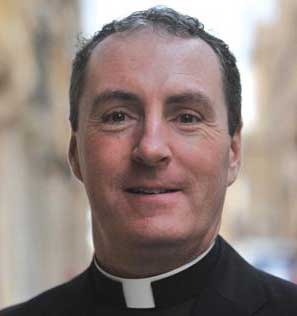
How does God measure success? What is a good measure of success? How do we know what tasks God wants us to fulfill? Is it wrong to be rich?
These are just some of the questions sent in by listeners that our very own official from the Vatican’s Congregation for the Doctrine of the Faith, Msgr. John Kennedy , answers in this week’s episode of Questions of Faith, as he helps us to navigate the modern world and rediscover what we believe and why we believe.Â
Tags: vatican radio
This entry was posted on Tuesday, June 25th, 2013 at 5:55 am
You can follow any responses to this entry through the RSS 2.0 feed.
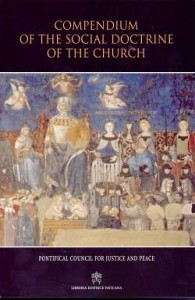
Episode 35- Regnum Novum: Bringing forth the New Evangelization through Catholic Social Teaching with Omar Gutierrez –  We continue the study of the “Compendium of the Social Doctrine of the Church” Â Chapter 8 – part 2 The Political Community. Â What influences the “political community”? Â What is “religious freedom”
[powerpress]
CHAPTER EIGHT
THE POLITICAL COMMUNITY
IV. THE DEMOCRATIC SYSTEM
a. Values and democracy
b. Institutions and democracy
c. Moral components of political representation
d. Instruments for political participation
e. Information and democracy
V. THE POLITICAL COMMUNITY AT THE SERVICE OF CIVIL SOCIETY
a. Value of civil society
b. Priority of civil society
c. Application of the principle of subsidiarity
VI. THE STATE AND RELIGIOUS COMMUNITIES
A. Religious freedom, a fundamental human right
B. The Catholic Church and the political community
a. Autonomy and independence
b. Cooperation
We live at a very special time. The confluence of many things has brought forth the clear need to be able to articulate the Social Teaching of the Catholic Church in a way that is accessible and applicable. This is not to be an effort where high-minded theories are to be bandied about. Rather, this is a time of opportunity wherein we can apply the Social Doctrine to the concrete so as to bring about a New Kingdom, a Revolution. – Omar G.
Also visit Omar’s “Discerning Hearts” page Catholic Social Teaching 101
Tags: catholic social teaching, Omar Gutierrez, regnum novum
This entry was posted on Tuesday, June 25th, 2013 at 5:24 am
You can follow any responses to this entry through the RSS 2.0 feed.
USCCA37 Â Chapter 29 part 3 – The Death Penalty and War
[powerpress]
Archbishop Lucas offers insights on the US Catholic Catechism for Adults Chapter 29:
The Death Penalty
Following the lead of Pope John Paul II’s The Gospel of Life, the Catechism teaches that governmental authority has the right and duty to assure the safety of society, and to punish criminals by means of suitable penalties. This includes imposition of the death penalty if there is no other way to protect society (cf. CCC, no. 2267). But this principle has a very restrictive application:
If, however, non-lethal means are sufficient to defend and protect people’s safety from the aggressor, authority will limit itself to such means, as these are more in keeping with the concrete conditions of the common good and more in conformity with the dignity of the human person. Today, in fact, as a consequence of the possibilities which the state has for effectively preventing crime, by rendering one who has committed an offense incapable of doing harm—without definitively taking away from him the possibility of redeeming himself—the cases in which the execution of the offender is an absolute necessity “are very rare, if not practically non-existent.†(CCC, no. 2267, citing EV, no. 56)
When dwelling on legal and moral arguments concerning the death penalty, we should do so not with vengeance and anger in our hearts, but with the compassion and mercy of our Lord in mind. It is also important to remember that penalties imposed on criminals always need to allow for the possibility of the criminal to show regret for the evil committed and to change his or her life for the better.
The imposition of the death penalty does not always allow for one or both of the purposes of criminal punishment to be achieved. “Our nation’s increasing reliance on the death penalty cannot be justified. We do not teach that killing is wrong by killing those who kill others. Pope John Paul II has said the penalty of death is ‘both cruel and unnecessary’ (Homily in St. Louis, January 27, 1999). The antidote to violence is not more violence†(USCCB, Faithful Citizenship [Washington, DC: USCCB, 2003], 19). (more…)
Tags: common good, death, evil, USCCB
This entry was posted on Monday, June 24th, 2013 at 9:27 am
You can follow any responses to this entry through the RSS 2.0 feed.
[powerpress]
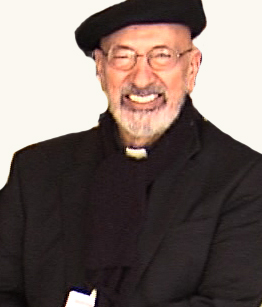
Msgr. Esseff reflects on the readings for the day and in particular the question asked by Jesus, “Who do you say that I am?” Do we witness to this Truth? Â What are the blocks in our hearts to authentically proclaiming Jesus to the world around us?
Gospel   LK 9:18-24
and the disciples were with him,
he asked them, “Who do the crowds say that I am?â€
They said in reply, “John the Baptist;
others, Elijah;
still others, ‘One of the ancient prophets has arisen.’â€
Then he said to them, “But who do you say that I am?â€
Peter said in reply, “The Christ of God.â€
He rebuked them
and directed them not to tell this to anyone.He said, “The Son of Man must suffer greatly
and be rejected by the elders, the chief priests, and the scribes,
and be killed and on the third day be raised.â€
Then he said to all,
“If anyone wishes to come after me, he must deny himself
and take up his cross daily and follow me.
For whoever wishes to save his life will lose it,
but whoever loses his life for my sake will save it.â€
Msgr. John A. Esseff is a Roman Catholic priest in the Diocese of Scranton. He was ordained on May 30th 1953, by the late Bishop William J. Hafey, D.D. at St. Peter’s Cathedral in Scranton, PA. Msgr. Esseff served a retreat director and confessor to Blessed Mother Teresa.   He continues to offer direction and retreats for the sisters of the missionaries of charity around the world. Msgr. Esseff encountered St.  Padre Pio,  who would become a spiritual father to him. He has lived in areas around the world,  serving  in the Pontifical missions, a Catholic organization established by Bl. Pope John Paul II to bring the Good News to the world especially to the poor. Msgr. Esseff assisted the founders of the Institute for Priestly Formation and continues to serve as a spiritual director for the Institute. He continues to  serve as a retreat leader and director to bishops, priests and sisters and seminarians and other religious leaders around the world.  Â
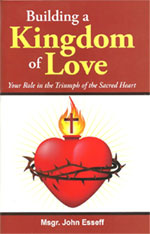
To obtain a copy of Msgr. Esseff’s book by visiting here
Be sure to visit Msgr. Esseff’s website “Building a Kingdom of  Love”
Tags: disciples, Good News, Jesus, John Esseff, priests, retreat
This entry was posted on Monday, June 24th, 2013 at 12:03 am
You can follow any responses to this entry through the RSS 2.0 feed.
Episode 34- Regnum Novum: Bringing forth the New Evangelization through Catholic Social Teaching with Omar Gutierrez – We continue the study of the “Compendium of the Social Doctrine of the Church” Â Chapter 8 – part 1 The Political Community. Â What is the biblical basis for this social teaching? Â What is the purpose of the political community? Â What is the basis for morally legitimate authority?
[powerpress]
CHAPTER EIGHT
THE POLITICAL COMMUNITY
I. BIBLICAL ASPECTS
a. God’s dominion
b. Jesus and political authority
c. The early Christian communities
II. FOUNDATION AND PURPOSE OF THE POLITICAL COMMUNITY
a. Political community, the human person and a people
b. Defending and promoting human rights
c. Social life based on civil friendship
III. POLITICAL AUTHORITY
a. The foundation of political authority
b. Authority as moral force
We live at a very special time. The confluence of many things has brought forth the clear need to be able to articulate the Social Teaching of the Catholic Church in a way that is accessible and applicable. This is not to be an effort where high-minded theories are to be bandied about. Rather, this is a time of opportunity wherein we can apply the Social Doctrine to the concrete so as to bring about a New Kingdom, a Revolution. – Omar G.
Also visit Omar’s “Discerning Hearts” page Catholic Social Teaching 101
Tags: catholic social teaching, New Kingdom, social doctrine, special time
This entry was posted on Tuesday, June 18th, 2013 at 8:17 am
You can follow any responses to this entry through the RSS 2.0 feed.
Episode 23 Beginning to Pray Special: Â “Let Your Face shine on us and we shall be saved”
[powerpress]
Dr. Lilles’ offered a Day of Recollection in April 2013. Â We are blessed to have the presentations he gave that day in audio form. Â They are OUTSTANDING!
Here is Presentation 1:
Mental prayer, that is prayer that searches the face of Christ, is a source of conversion. Â Beautiful truths about the incarnation and the paschal mystery come together in the face of Risen Lord who gazes on us with love. Â In the shadow of this love, we discover the freedom to turn ourselves to the Lord ever more completely. Â Our day begins with a meditation on the psalms 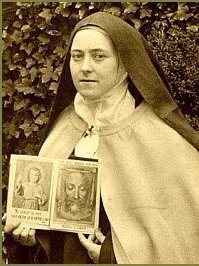 which point the way to this prayer. Â We will introduce the saints who will guide us through our reflections: Â St. Teresa of Avila, St. John of the Cross, St. Therese of Lisieux, Blessed Elisabeth of the Trinity and Blessed John Paul II.
To obtain a copy of Dr. Lilles’ book click here
Dr. Anthony Lilles is a Catholic husband and father of three teaching Spiritual Theology at St. John Vianney Theological Seminary. He  teaches spiritual theology and spiritual direction to transitional deacons, and the spiritual classics to the men who enter the Spirituality Year, a year of prayer in preparation for seminary formation.  He is the author of the “Beginning to Pray”  catholic blog spot.
For other episodes in the series visit the Discerning Hearts page for Dr. Anthony Lilles
Tags: Anthony Lilles, Discerning Hearts, father, prayer
This entry was posted on Monday, June 17th, 2013 at 5:48 pm
You can follow any responses to this entry through the RSS 2.0 feed.
FG#7- Interior Freedom episode 7 – Fountains of Grace: reflections on contemporary spiritual classics with Donna Garrett
Join host Donna Garrett, with Fr. Daniel Brandenburg, LC, as they discuss the spiritual classic “Interior Freedom” by Fr.  Jacques Philippe  a priest of  Communaute des Beatitudes, an international association of the faithful of Pontifical Right founded in France in 1973.  The members of the Community, which has a contemplative vocation based on Carmelite spirituality, are actively engaged in the service of the poor and the proclamation of the Gospel.
[powerpress]
Discussed in this episode, among other topics, Â from “Interior Freedom” page 102
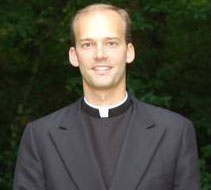
Donna Garrett is joined in this particular series by Fr. Daniel Brandenburg, LC
“Three aspects of the spiritual life the joyful, sorrowful and glorious outpourings of the Holy Sprit recall the image of the fire and the log used by St John of the Cross. ‘ When fire approaches the log it first lights it up and warms it. That corresponds to a joyful mystery. We are warmed by the love of God revealed to us . When the fire comes closer, the wood begins to blacken, smoke, smell bad, and give out tar and other unpleasant substances. This is the sorrowful outpouring; the soul has the painful experience of its own wretchedness. This phase lasts until the purifying fire has completed its work and the soul is totally transformed into a fire of love. Here is the glorious outpouring, in which the soul is strengthened in charity, the fire Jesus came to kindle on earth.â€
For other episodes in the this series click here “Fountains of Grace w/Donna Garrett”

You can find “Interior Freedom” here
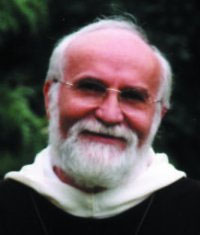
Fr. Jacques Philippe
Tags: Donna Garrett, Interior Freedom, love, reflections
This entry was posted on Monday, June 17th, 2013 at 4:41 pm
You can follow any responses to this entry through the RSS 2.0 feed.
USCCA36 Â Chapter 29 part 2
[powerpress]
Archbishop Lucas offers insights on the US Catholic Catechism for Adults Chapter 29:
Intentional euthanasia, sometimes called mercy killing, is murder. Regardless of the motives or means, euthanasia consists of putting to death those who are sick, are disabled, or are dying. It is morally unacceptable. The emergence of physician-assisted suicide, popularized by the right-to-die movement, seeks to legalize what is an immoral act. Its advocates plan to achieve this on a state-by-state basis.
Suicide is gravely sinful whether committed alone or aided by a doctor. Serious psychological disturbances, anxiety, fear of suffering, or torture can diminish the responsibility of the one committing suicide. The question is often asked whether persons who have committed suicide receive eternal salvation. Although suicide is always objectively sinful, one “should not despair of the eternal salvation of persons who have taken their own lives. By ways known to him alone, God can provide the opportunity for salutary repentance. The Church prays for persons who have taken their own lives†(CCC, no. 2283). The pastoral care of family and friends of those who have taken their own lives is an important focus for the Church’s healing and compassionate ministry.
Catholic moral tradition has always taught that we can discontinue medical procedures that are burdensome, extraordinary, and disproportionate to the outcome. However, respect for every human being demands the ordinary treatment of the dying by the provision of food, water, warmth, and hygiene. Ordinary treatment is always a moral requirement.
There is also extraordinary treatment. The Church recognizes that some medical treatment may not provide benefits commensurate with the risks of certain medical procedures. Extraordinary medical treatment may not be morally required and can even cease in certain cases, depending on the benefits to the sick person and the burdens it will or may impose. For example, in instances when a person has been declared brain-dead, the patient can be disconnected from mechanical devices that sustain breathing and the heart since there is little hope of the person’s recovery.
United States Conference of Catholic Bishops (USCCB) (2012-04-02). United States Catholic Catechism for Adults (Kindle Locations 5696-5710). United States Conference of Catholic Bishops (USCCB). Kindle Edition.
The Most Reverend George J. Lucas leads the Archdiocese of Omaha.Â
For other episodes in the visit our Archbishop George Lucas page
This programs is based on:
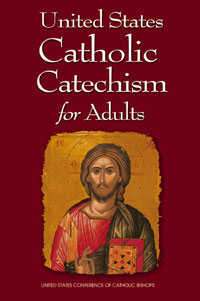
More information can be found here.
We wish to thank the USCCB for the permissions granted for use of  relevant material used in this series.
[ezcc]
Tags: alone, Church, family, USCCB
This entry was posted on Monday, June 17th, 2013 at 3:44 pm
You can follow any responses to this entry through the RSS 2.0 feed.
[powerpress]
Msgr. Esseff reflects on the readings for the day and in particular the teachings of the St. Paul, “I live, no longer I, but Christ lives in me”. Â Are we aware of the power we have, through grace, to live in, with, and through the life of Christ?
GAL 2:16, 19-21
Brothers and sisters:
We who know that a person is not justified by works of the law
but through faith in Jesus Christ,
even we have believed in Christ Jesus
that we may be justified by faith in Christ
and not by works of the law,
because by works of the law no one will be justified.
For through the law I died to the law,
that I might live for God.
I have been crucified with Christ;
yet I live, no longer I, but Christ lives in me;
insofar as I now live in the flesh,
I live by faith in the Son of God
who has loved me and given himself up for me.
I do not nullify the grace of God;
for if justification comes through the law,
then Christ died for nothing.
Msgr. John A. Esseff is a Roman Catholic priest in the Diocese of Scranton. He was ordained on May 30th 1953, by the late Bishop William J. Hafey, D.D. at St. Peter’s Cathedral in Scranton, PA. Msgr. Esseff served a retreat director and confessor to Blessed Mother Teresa.   He continues to offer direction and retreats for the sisters of the missionaries of charity around the world. Msgr. Esseff encountered St.  Padre Pio,  who would become a spiritual father to him. He has lived in areas around the world,  serving  in the Pontifical missions, a Catholic organization established by Bl. Pope John Paul II to bring the Good News to the world especially to the poor. Msgr. Esseff assisted the founders of the Institute for Priestly Formation and continues to serve as a spiritual director for the Institute. He continues to  serve as a retreat leader and director to bishops, priests and sisters and seminarians and other religious leaders around the world.  Â
To obtain a copy of Msgr. Esseff’s book by visiting here
Be sure to visit Msgr. Esseff’s website “Building a Kingdom of  Love”
Tags: GAL, John Esseff, PA, retreat
This entry was posted on Monday, June 17th, 2013 at 9:11 am
You can follow any responses to this entry through the RSS 2.0 feed.
Another outstanding addition to the Joseph Pearce canon!  “Shakespeare on Love: Seeing the Catholic Presence in Romeo and  Juliet” is a terrific read.  Once again Jospeh Pearce helps us to see that the story we thought we knew is something very different when viewed with the Catholic Shakepeares len’s.  Is Romeo a hero or a self indulgent cad?  Is Juliet a  free thinking woman or a relationship starved 13 year old victimized by an adult male predator?  And how about those adults?  Just look at what happens when Eros runs a muck, and virtue is replaced blindly in favor of vice!  Let us not forget  to mention the tragedy which occurs from bad parenting.  Sexual desire and the gift of reason are explored in this compelling work by the prolific Pearce.  Who would have thought a book about a  500 year old play would contain such important lessons for our lives today.
[powerpress]
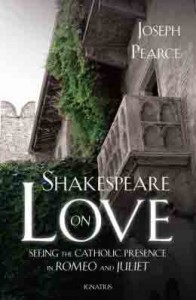 You can find the book here
“Joseph Pearce’s book on Romeo and Juliet stands like a lighthouse in the murk of modern literary criticism. His approach challenges the assumptions that govern popular ‘scholarly’ work on Shakespeare in our time. It is massively researched, convincing, intelligent, and (happily) interesting. I commend it highly to all possible readers.” —-Thomas Howard, Author, Chance or the Dance?
Tags: Catholic Shakepeares, joseph pearce, Jospeh Pearce, work
This entry was posted on Tuesday, June 11th, 2013 at 7:15 am
You can follow any responses to this entry through the RSS 2.0 feed.
USCCA35 Â Chapter 29Â
[powerpress]
Archbishop Lucas offers insights on the US Catholic Catechism for Adults Chapter 29:
Modern technology has enabled us to appreciate how quickly the growing child in the womb takes on human features. This has made many more people aware of the fact that human life begins at conception, the moment that the egg is fertilized. Many common forms of artificial birth control cause abortions by not allowing the newly conceived human child to implant in the mother’s womb. The pro-life commitment of the Church is reflected in her compassion for those who so often regret having had an abortion, her understanding for those who are facing difficult decisions, and her assistance for all who choose life. People who have been involved with an abortion are encouraged to get in touch with the Project Rachel ministry and other ministries that enable them to seek the mercy of God in the Sacrament of Penance and Reconciliation and to obtain the necessary counseling. Pro-life ministries work with expectant mothers who are considering abortion by encouraging them to choose life for their children. They also provide alternatives to abortion through prenatal care, assistance in raising children, and adoption placement services.
United States Conference of Catholic Bishops (USCCB) (2012-04-02). United States Catholic Catechism for Adults (Kindle Locations 5666-5674). United States Conference of Catholic Bishops (USCCB). Kindle Edition.
The Most Reverend George J. Lucas leads the Archdiocese of Omaha.Â
For other episodes in the visit our Archbishop George Lucas page
This programs is based on:
More information can be found here.
We wish to thank the USCCB for the permissions granted for use of  relevant material used in this series.
[ezcc]
Tags: abortion, children, USCCB, work
This entry was posted on Tuesday, June 11th, 2013 at 6:32 am
You can follow any responses to this entry through the RSS 2.0 feed.
[powerpress]
Msgr. Esseff reflects on the Resurrection and how we look at death.
The NAB John Chap 20:
4Thomas, called Didymus, one of the Twelve, was not with them when Jesus came.25So the other disciples said to him, “We have seen the Lord.†But he said to them, “Unless I see the mark of the nails in his hands and put my finger into the nailmarks and put my hand into his side, I will not believe.â€o26Now a week later his disciples were again inside and Thomas was with them. Jesus came, although the doors were locked, and s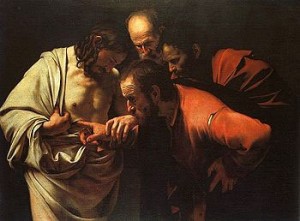 tood in their midst and said, “Peace be with you.â€p27Then he said to Thomas, “Put your finger here and see my hands, and bring your hand and put it into my side, and do not be unbelieving, but believe.â€28* q Thomas answered and said to him, “My Lord and my God!â€29* Jesus said to him, “Have you come to believe because you have seen me?rBlessed are those who have not seen and have believed.â€
Msgr. John A. Esseff is a Roman Catholic priest in the Diocese of Scranton. He was ordained on May 30th 1953, by the late Bishop William J. Hafey, D.D. at St. Peter’s Cathedral in Scranton, PA. Msgr. Esseff served a retreat director and confessor to Blessed Mother Teresa.   He continues to offer direction and retreats for the sisters of the missionaries of charity around the world. Msgr. Esseff encountered St.  Padre Pio,  who would become a spiritual father to him. He has lived in areas around the world,  serving  in the Pontifical missions, a Catholic organization established by Bl. Pope John Paul II to bring the Good News to the world especially to the poor. Msgr. Esseff assisted the founders of the Institute for Priestly Formation and continues to serve as a spiritual director for the Institute. He continues to  serve as a retreat leader and director to bishops, priests and sisters and seminarians and other religious leaders around the world.  Â
To obtain a copy of Msgr. Esseff’s book by visiting here
Be sure to visit Msgr. Esseff’s website “Building a Kingdom of  Love”
Tags: death, John Esseff, retreat, Roman Catholic
This entry was posted on Monday, June 10th, 2013 at 1:20 pm
You can follow any responses to this entry through the RSS 2.0 feed.
Fr. James Martin joined us to share the compelling story of St. Charles Lwanga and the Martyrs of Uganda.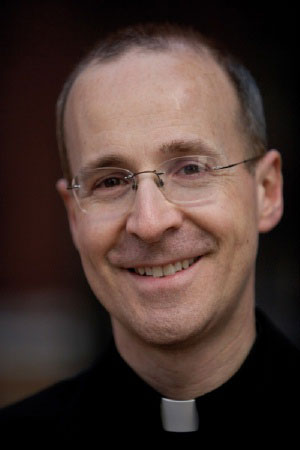
[powerpress]
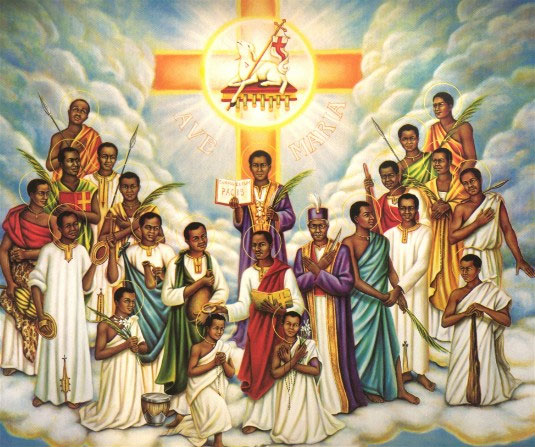 Owing to religious hatred, many faithful Christians were killed in Uganda by King Mwanga during the years 1885-87. some of them had enjoyed the good graces of the king at his court, and some were even related to him. Among them, Charles Lwanga and his twenty one companions, adhering steadfastly to the Catholic faith, were put to death, some by sword, others by burning, because they would not accede to the king’s unreasonable demands.
Father, You have made the blood of the martyrs the seed of Christians. May the witness pf Saint Charles and his companions and their loyalty to the Christ in the face of torture inspire countless men and women to live the Christian faith. We ask this through our Lord Jesus Christ, Your Son, who lives and reigns with You and the Holy Spirit, one God, for ever and ever. Amen.
(Source:Â Liturgy of the Hours)
Tags: africa, america, american magazine, Charles Lwanga, holy spirit, jesuits, Lord Jesus Christ, martyrs, Saint Charles, ugandan martyrs
This entry was posted on Monday, June 3rd, 2013 at 2:35 am
You can follow any responses to this entry through the RSS 2.0 feed.