 Site Type
 Featured
 Fonts
Fonts Skins
Skins
Episode 11 “What am I to do?†The Discernment of God’s Will in Everyday Decisions w/Fr. Timothy 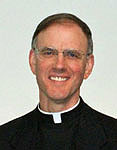 Gallagher.
In this episode with Fr. Gallagher,  there is a brief summary of the First and Second Mode.  Then Fr. Gallagher breaks open the Third Mode, a Ponderousness of Reasons, also know as the 4 columns.
 [powerpress]
For other episodes in the series visit The Discerning Hearts “Discerning the Will of God†page
Father Timothy M. Gallagher, O.M.V., was ordained in 1979 as a member of the Oblates of the Virgin Mary, a religious community dedicated to retreats and spiritual formation according to the Spiritual Exercises of St. Ignatius. Â Fr. Gallagher is featured on the EWTN series “Living the Discerning Life: Â The Spiritual Teachings of St. Ignatius of Loyola”.
For more information on how to obtain copies of Fr. Gallaghers’s various books and audio which are available for purchase, please visit  his  website:   frtimothygallagher.org
For the other episodes in this series check out Fr. Timothy Gallagher’s “Discerning Hearts†page
Tags: catholic, catholic podcast, catholic prayer, cathollc spirituality, Father Timothy M. Gallagher, Gallagher, Timothy Gallagher
This entry was posted on Thursday, February 14th, 2013 at 3:13 pm
You can follow any responses to this entry through the RSS 2.0 feed.
Special 4 – Ash Wednesday and Lent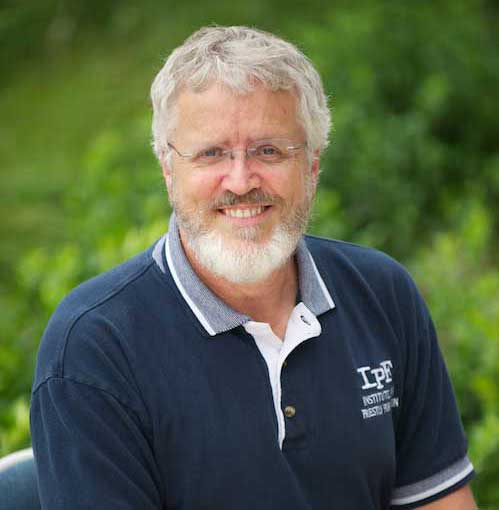
[powerpress]
From the archives of Spirit Mornings we bring you Deacon James Keating discussing Ash Wednesday and our Lenten practice. Deacon Keating is the Director of Theological Formation for the Institute for Priestly Formation at Creighton University.
 Click here for more Deacon Keating
Tags: almsgiving, ash wednesday, creighton university, Deacon James Keating, Deacon Keating, fasting, institute for priestly formation, james keating, lent, prayer, theological formation
This entry was posted on Wednesday, February 13th, 2013 at 12:58 am
You can follow any responses to this entry through the RSS 2.0 feed.
USCCA33 Â Chapter 27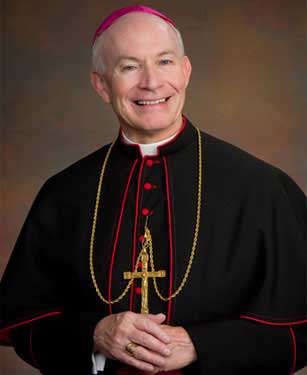
[powerpress]
Archbishop Lucas offers insights on the US Catholic Catechism for Adults Chapter 27:
The Catechism starts its reflection on the Third Commandment with the scriptural meaning of the Sabbath. Exodus 20:8-11 states that the Sabbath was the seventh day on which the Lord rested after the work of the previous six days. Deuteronomy 5:12 adds that the Sabbath is a day of our renewing the covenant with God. The Sabbath is connected to creation and covenant.
God’s “rest†on the seventh day was his contemplative gaze enjoying the good of creation, especially its crown in man and woman. It was not a matter of divine inactivity, but rather the deeper “work†of contemplation and the restful act of loving us (cf. CCC, nos. 2184-2185). This is true also of ourselves. If we never stop working, when would we ever have time to contemplate and worship God and nourish a love relationship with him or with anyone else? Every human person, having been created by God, owes him worship and thanksgiving for what the Lord has done and continues to do.
United States Conference of Catholic Bishops (USCCB)
The Most Reverend George J. Lucas leads the Archdiocese of Omaha.Â
For other episodes in the visit our Archbishop George Lucas page
This programs is based on:
More information can be found here.
We wish to thank the USCCB for the permissions granted for use of  relevant material used in this series.
Also we wish to thank Bruce McGregor  for his vocal talents in this episode.
[ezcc]
Tags: creation, Third Commandment, USCCB, work
This entry was posted on Monday, February 11th, 2013 at 3:01 pm
You can follow any responses to this entry through the RSS 2.0 feed.
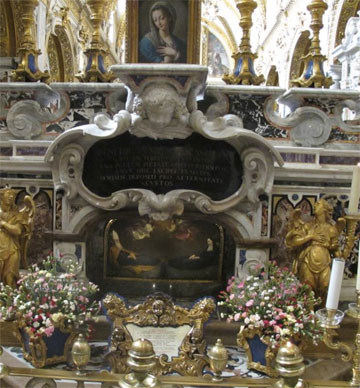
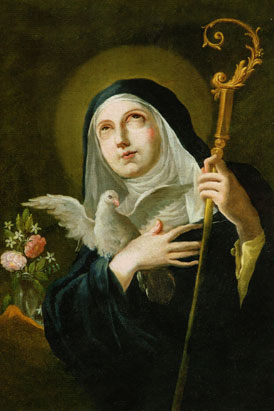
Join us with Teresa Monaghen, of Pro Sanctity, as we discuss the life of St. Scholastica
[powerpress]
From Gregory the Great (c. 540-604), Dialogues, Book II (Life and Miracles of St. Benedict). Courtesy of the Saint Pachomius Library.
CHAPTER THIRTY-THREE: Of a Miracle Wrought by his Sister, Scholastica.
GREGORY: Who is there, Peter, in this world, that is in greater favor with God than St. Paul? Three times he petitioned our Lord
to be delivered from the thorn of the flesh, and yet he did not obtain his petition. Speaking of that, I must tell you how there was one thing which the venerable father Benedict would have liked to do, but he could not.
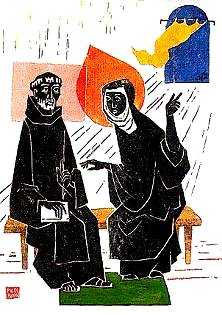
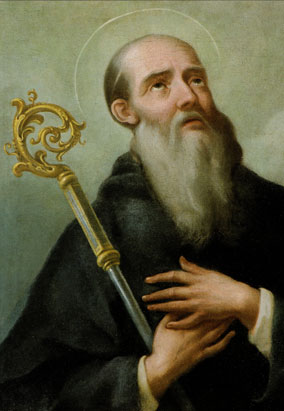
His sister, named Scholastica, was dedicated from her infancy to our Lord. Once a year she came to visit her brother. The man of God went to her not far from the gate of his monastery, at a place that belonged to the Abbey. It was there he would entertain her. Once upon a time she came to visit according to her custom, and her venerable brother with his monks went there to meet her.
They spent the whole day in the praises of God and spiritual talk, and when it was almost night, they dined together. As they were yet sitting at the table, talking of devout matters, it began to get dark. The holy Nun, his sister, entreated him to stay there all night that they might spend it in discoursing of the joys of heaven. By no persuasion, however, would he agree to that, saying that he might not by any means stay all night outside of his Abbey.
At that time, the sky was so clear that no cloud was to be seen. The
Nun, hearing this denial of her brother, joined her hands together, laid them on the table, bowed her head on her hands, and prayed to almighty God.
Lifting her head from the table, there fell suddenly such a tempest of lightning and thundering, and such abundance of rain, that neither venerable Benedict, nor his monks that were with him, could put their heads out of doors. The holy Nun, having rested her head on her hands, poured forth such a flood of tears on the table, that she transformed the clear air to a watery sky.
After the end of her devotions, that storm of rain followed; her prayer and the rain so met together, that as she lifted up her head from the table, the thunder began. So it was that in one and the very same instant that she lifted up her head, she brought down the rain.
The man of God, seeing that he could not, in the midst of such thunder and lightning and great abundance of rain return to his Abbey, began to be heavy and to complain to his sister, saying: “God forgive you, what have you done?” She answered him, “I desired you to stay, and you would not hear me; I have desired it of our good Lord, and he has granted my petition. Therefore if you can now depart, in God’s name return to your monastery, and leave me here alone.”
Departure Delayed
But the good father, not being able to leave, tarried there against his will where before he would not have stayed willingly. By that means, they watched all night and with spiritual and heavenly talk
mutually comforted one another.
Therefore, by this we see, as I said before, that he would have had one thing, but he could not effect it. For if we know the venerable man’s mind, there is no question but that he would have had the same fair weather to have continued as it was when he left his monastery. He found, however, that a miracle prevented his desire. A miracle that, by the power of almighty God, a woman’s prayers had wrought.
Is it not a thing to be marveled at, that a woman, who for a long time had not seen her brother, might do more in that instance than he could? She realized, according to the saying of St. John, “God is charity” [1 John 4:8]. Therefore, as is right, she who loved more, did more.
PETER: I confess that I am wonderfully pleased with that which you tell me.
CHAPTER THIRTY-FOUR: How Benedict Saw the Soul of his Sister Ascend into Heavenly Glory.
GREGORY: The next day the venerable woman returned to her nunnery, and the man of God to his abbey. Three days later, standing in his cell, and lifting up his eyes to heaven, he beheld the soul of his sister (which was departed from her body) ascend into heaven in the likeness of a dove.
Rejoicing much to see her great glory, with hymns and praise he gave thanks to almighty God, and imparted the news of her death to his monks. He sent them presently to bring her corpse to his Abbey, to have it buried in that grave which he had provided for himself. By this means it fell out that, as their souls were always one in God while they lived, so their bodies continued together after their death.
— Collect
Prayer: O God, to show us where innocence leads, you made the soul of your virgin Saint Scholastica soar to heaven like a dove in flight. Grant through her merits and her prayers that we may so live in innocence as to attain to joys everlasting. This we ask through our Lord.
Tags: heaven, prayers, Saint Scholastica, teresa monaghen
This entry was posted on Sunday, February 10th, 2013 at 12:50 pm
You can follow any responses to this entry through the RSS 2.0 feed.
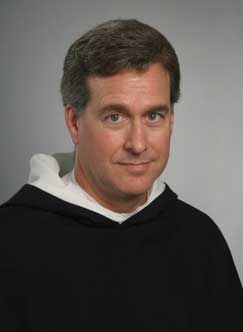
From Dominican Friars of the St. Joseph Province
Watch the video below of Father Peter John Cameron, O.P., editor-in-chief of “Magnificat†magazine, delivering the keynote address at a Catholic Convocation in the Diocese of Raleigh. Using humor and anecdotes, Fr. Cameron spoke about the Year of Faith and New Evangelization. “To put it simply, it [the New Evangelization] is an attraction,â€Â he said. Fr. Cameron added that the New Evangelization is about awareness of the need to rediscover our faith, attentiveness to a lived experience (realizing the needs of people today) and an honest appeal to what really moves people. He spoke of three essentials that Blessed Pope John Paul II said must be present in the New Evangelization: ardor, methods and expression. He provided an example of each, noting that ardor must reflect a love for all that is human.
Tags: faith, humor, Joseph Province, new evangelization
This entry was posted on Friday, February 8th, 2013 at 4:21 pm
You can follow any responses to this entry through the RSS 2.0 feed.
One of my very favorite storytellers is Sr. Joan Mueller…give yourself the gift of hearing her share the story of St. 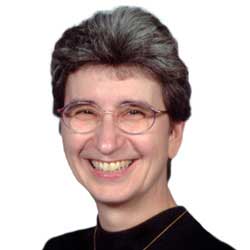 Bakhita in this podcast…
[powerpress]
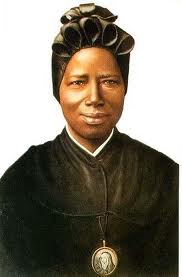
JOSEPHINE BAKHITA (1869-1947)
Mother Josephine Bakhita was born in Sudan in 1869 and died in Schio (Vicenza)Â in 1947.
This African flower, who knew the anguish of kidnapping and slavery, bloomed marvelously in Italy, in response to God’s grace, with the Daughters of Charity.
Mother “Morettaâ€
In Schio (Vicenza), where she spent many years of her life, everyone still calls her “our Black Motherâ€. The process for the cause of Canonization began 12 years after her death and on December 1st, 1978 the Church proclaimed the Decree of the heroic practice of all virtues.
Divine Providence which “cares for the flowers of the fields and the birds of the airâ€, guided the Sudanese slave through innumerable and unspeakable sufferings to human freedom and to the freedom of faith and finally to the consecration of her whole life to God for the coming of his Kingdom.In Slavery
Bakhita was not the name she received from her parents at birth. The fright and the terrible experiences she went through made her forget the name she was given by her parents. Bakhita, which means “fortunateâ€, was the name given to her by her kidnappers.
Sold and resold in the markets of El Obeid and of Khartoum, she experienced the humiliations and sufferings of slavery, both physical and moral.Towards freedom
In the Capital of Sudan, Bakhita was bought by an Italian Consul, Callisto Legnani . For the first time since the day she was kidnappe
d, she realized with pleasant surprise, that no one used the lash when giving her orders; instead, she was treated in a loving and cordial way. In the Consul’s residence, Bakhita experienced peace, warmth and moments of joy, even though veiled by nostalgia for her own family, whom, perhaps, she had lost forever.
Political situations forced the Consul to leave for Italy. Bakhita asked and obtained permission to go with him and with a friend of his, a certain Mr. Augusto Michieli.In Italy
On arrival in Genoa, Mr. Legnani, pressured by the request of Mr. Michieli’s wife, consented to leave Bakhita with them. She followed the new “familyâ€, which settled in Zianigo (near Mirano Veneto). When their daughter Mimmina was born, Bakhita became her babysitter and friend.
The acquisition and management of a big hotel in Suakin, on the Red Sea, forced Mrs. Michieli to move to Suakin to help her husband. Meanwhile, on the advice of their administrator, Illuminato Checchini, Mimmina and Bakhita were entrusted to the Canossian Sisters of the Institute of the Catechumens in Venice. It was there that Bakhita came to know about God whom “she had experienced in her heart without knowing who He was†ever since she was a child. “Seeing the sun, the moon and the stars, I said to myself: Who could be the Master of these beautiful things? And I felt a great desire to see him, to know Him and to pay Him homage…â€Daughter of God
After several months in the catechumenate, Bakhita received the sacraments of Christian initiation and was given the new name, Josephine. It was January 9, 1890. She did not know how to express her joy that day. Her big and expressive eyes sparkled, revealing deep emotions. From then on, she was often seen kissing the baptismal font and saying: “Here, I became a daughter of God!â€
With each new day, she became more aware of who this God was, whom she now knew and loved, who had led her to Him through mysterious ways, holding her by the hand.When Mrs. Michieli returned from Africa to take back her daughter and Bakhita, the latter, with unusual firmness and courage, expressed her desire to remain with the Canossian Sisters and to serve that God who had shown her so many proofs of His love.
The young African, who by then had come of age, enjoyed the freedom of choice which the Italian law ensured.
Daughter of St. Magdalene
Bakhita remained in the catechumenate where she experienced the call to be a religious, and to give herself to the Lord in the Institute of St. Magdalene of Canossa.
On December 8, 1896 Josephine Bakhita was consecrated forever to God whom she called with the sweet expression “the Master!â€
For another 50 years, this humble Daughter of Charity, a true witness of the love of God, lived in the community in Schio, engaged in various services: cooking, sewing, embroidery and attending to the door.
When she was on duty at the door, she would gently lay her hands on the heads of the children who daily attended the Canossian schools and caress them. Her amiable voice, which had the inflection and rhythm of the music of her country, was pleasing to the little ones, comforting to the poor and suffering and encouraging for those who knocked at the door of the Institute.Witness of love
Her humility, her simplicity and her constant smile won the hearts of all the citizens. Her sisters in the community esteemed her for her inalterable sweet nature, her exquisite goodness and her deep desire to make the Lord known.
“Be good, love the Lord, pray for those who do not know Him. What a great grace it is to know God!â€As she grew older she experienced long, painful years of sickness.
Mother Bakhita continued to witness to faith, goodness and Christian hope. To those who visited her and asked how she was, she would respond with a smile: “As the Master desires.â€Final test
During her agony, she re-lived the terrible days of her slavery and more then once she begged the nurse who assisted her: “Please, loosen the chains… they are heavy!â€
It was Mary Most Holy who freed her from all pain. Her last words were: “Our Lady! Our Lady!â€, and her final smile testifiedto her encounter with the Mother of the Lord.
Mother Bakhita breathed her last on February 8, 1947 at the Canossian Convent, Schio, surrounded by the Sisters. A crowd quickly gathered at the Convent to have a last look at their «Mother Moretta» and to ask for her protection from heaven. The fame of her sanctity has spread to all the continents and many are those who receive graces through her intercession.
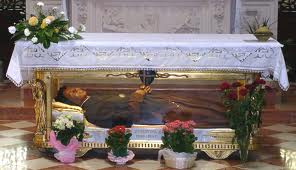
Every line of the Collect for Saint Bakhita merits attention; every phrase needs to be repeated in meditation.
O God, who led Saint Josephine Bakhita
from abject slavery
to the dignity of being your daughter and the bride of Christ,
give us, we beseech you, by her example,
to follow after Jesus the Crucified Lord with unremitting love
and, in charity, to persevere in a ready mercy.
Tags: daughters of charity, Jesus, joan mueller, josephine bakhita, love, Mother Bakhita, sr. joan mueller, st. bahkita, st. josephine
This entry was posted on Friday, February 8th, 2013 at 7:21 am
You can follow any responses to this entry through the RSS 2.0 feed.
Episode 32- Regnum Novum: Bringing forth the New Evangelization through Catholic Social Teaching with Omar Gutierrez – We continue the study of the “Compendium of the Social Doctrine of the Church” Â Chapter 6 –  on how the Right to Work can be seen as a pro-life issue. Â We also discuss the issue of immigration.
[powerpress]
CHAPTER SIX
HUMAN WORK
V. THE RIGHT TO WORK
a. Work is necessary
b. The role of the State and civil society in promoting the right to work
c. The family and the right to work
d. Women and the right to work
e. Child labour
f. Immigration and work
g. The world of agriculture and the right to work
We live at a very special time. The confluence of many things has brought forth the clear need to be able to articulate the Social Teaching of the Catholic Church in a way that is accessible and applicable. This is not to be an effort where high-minded theories are to be bandied about. Rather, this is a time of opportunity wherein we can apply the Social Doctrine to the concrete so as to bring about a New Kingdom, a Revolution. – Omar G.
Also visit Omar’s “Discerning Hearts” page Catholic Social Teaching 101
Tags: catholic social teaching, New Kingdom, social doctrine, special time
This entry was posted on Tuesday, February 5th, 2013 at 7:11 am
You can follow any responses to this entry through the RSS 2.0 feed.
USCCA32 Â Chapter 26
[powerpress]
Archbishop Lucas offers insights on the US Catholic Catechism for Adults Chapter 26:
The Second Commandment forbids the wrong use or misuse of God’s name. There are a number of ways in which this happens. Blasphemy uses the name of God and of Jesus Christ as well as those of the Blessed Mother and the saints in an offensive manner. The Catechism teaches that blasphemy consists “in uttering against God—inwardly or outwardly—words of hatred, reproach, or defiance†(CCC, no. 2148). This is gravely sinful. Habitual disrespect for God, displayed in cursing and even in the use of vulgar language, can create an attitude that erodes our relationship with the Lord.
At the same time, we recognize diminished culpability when the name of God is used because of an outburst of undisciplined speech due to passion or unexpected incitement to anger. We need to cultivate a persistent reverence for sacred names; if we do not, we can end up giving bad example and also fall into the sin of blasphemy. It should also be noted that in Scripture, the sometimes passionate language of the Prophets, in which they lament the troubles of their times and utter loud complaints to God, is not blasphemy or the taking of God’s name in vain. It is actually prayer addressed to God.
United States Conference of Catholic Bishops (USCCB)
The Most Reverend George J. Lucas leads the Archdiocese of Omaha.Â
For other episodes in the visit our Archbishop George Lucas page
This programs is based on:
More information can be found here.
We wish to thank the USCCB for the permissions granted for use of  relevant material used in this series.
Also we wish to thank Jim Carroll and Bruce McGregor  for his vocal talents in this episode.
[ezcc]
Tags: Archbishop Lucas, relationship, sin, USCCB
This entry was posted on Tuesday, February 5th, 2013 at 7:02 am
You can follow any responses to this entry through the RSS 2.0 feed.
Episode 17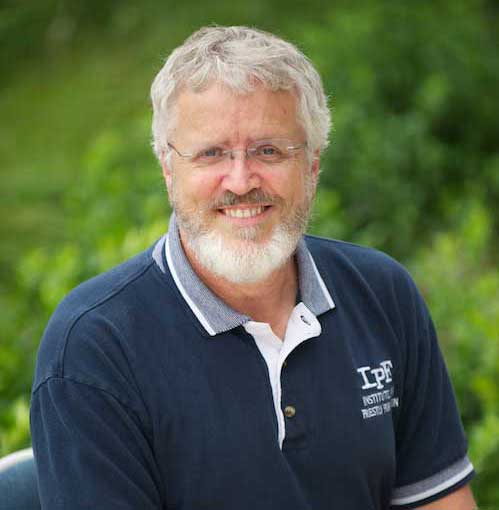 -The Way of Mystery: The Eucharist and Moral Living– Mystical experiences and consoling prayer. Prayer is earnestly desired, and prayer because something we delight in. Also the prayer that will spontaneously occur. Another type of experience is the aspect of the sacramental encounter.
[powerpress]
Deacon James Keating, PhD, the director of Theological Formation for the Institute for Priestly Formation, located at Creighton University, in Omaha, is making available to â€Discerning Hearts†and all who listen, his series of programs entitled “The Way of Mysteryâ€.
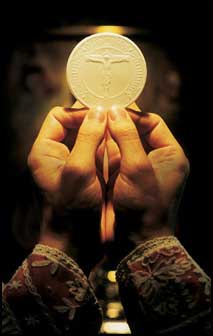 The Vatican II documents remind us that the spiritual journey is not made in a vacuum, that God has chosen to save us, not individually, but as The People of God. The Eucharist must help Christians to make their choices by discerning out of Christ’s paschal mystery. For this process to take place, however, Christians must first understand how the Eucharist puts them in touch with Christ’s passion, death, and resurrection, and what concrete implications being in touch with this mystery has for their daily lives.

For more information on the “Institute of Priestly Formation†and for other material available by Deacon Keating, just click here
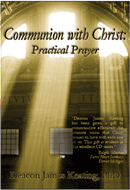
Don’t forget to pickup a copy of “Communion with Christ†, it is one of the best audio sets on prayer…ever!
Check out Deacon Keating’s “Discerning Heart†page
Tags: choices, creighton university, Deacon James Keating, prayer
This entry was posted on Tuesday, February 5th, 2013 at 6:47 am
You can follow any responses to this entry through the RSS 2.0 feed.
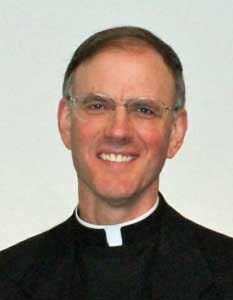 Episode 10 “What am I to do?†The Discernment of God’s Will in Everyday Decisions w/Fr. Timothy Gallagher.
In this episode with Fr. Gallagher,  we can continue our conservation on  “The Second Mode” of discernment.  In particular, we discuss the role of the spiritual director.  We then begin discussing “The Third Mode”.
[powerpress]
For other episodes in the series visit The Discerning Hearts “Discerning the Will of God†page
Father Timothy M. Gallagher, O.M.V., was ordained in 1979 as a member of the Oblates of the Virgin Mary, a religious community dedicated to retreats and spiritual formation according to the Spiritual Exercises of St. Ignatius. Â Fr. Gallagher is featured on the EWTN series “Living the Discerning Life: Â The Spiritual Teachings of St. Ignatius of Loyola”.
For more information on how to obtain copies of Fr. Gallaghers’s various books and audio which are available for purchase, please visit  his  website:   frtimothygallagher.org
For the other episodes in this series check out Fr. Timothy Gallagher’s “Discerning Hearts†page
Tags: Father Timothy M. Gallagher, Gallagher, Timothy Gallagher
This entry was posted on Monday, February 4th, 2013 at 1:54 pm
You can follow any responses to this entry through the RSS 2.0 feed.
[powerpress]
Msgr. Esseff reflects on the meaning of the “Baptism” and how it transforms us all.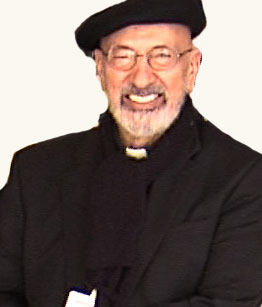
Gospel   LK 3:15-16, 21-22
The people were filled with expectation,
and all were asking in their hearts
whether John might be the Christ.
John answered them all, saying,
“I am baptizing you with water,
but one mightier than I is coming.
I am not worthy to loosen the thongs of his sandals.
He will baptize you with the Holy Spirit and fire.â€
After all the people had been baptized
and Jesus also had been baptized and was praying,
heaven was opened and the Holy Spirit descended upon him
in bodily form like a dove.
And a voice came from heaven,
“You are my beloved Son;
with you I am well pleased.â€
Msgr. John A. Esseff is a Roman Catholic priest in the Diocese of Scranton. He was ordained on May 30th 1953, by the late Bishop William J. Hafey, D.D. at St. Peter’s Cathedral in Scranton, PA. Msgr. Esseff served a retreat director and confessor to Blessed Mother Teresa.   He continues to offer direction and retreats for the sisters of the missionaries of charity around the world. Msgr. Esseff encountered St.  Padre Pio,  who would become a spiritual father to him. He has lived in areas around the world,  serving  in the Pontifical missions, a Catholic organization established by Bl. Pope John Paul II to bring the Good News to the world especially to the poor. Msgr. Esseff assisted the founders of the Institute for Priestly Formation and continues to serve as a spiritual director for the Institute. He continues to  serve as a retreat leader and director to bishops, priests and sisters and seminarians and other religious leaders around the world.  Â
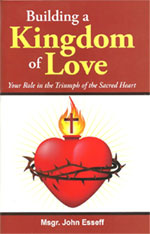
To obtain a copy of Msgr. Esseff’s book by visiting here
Be sure to visit Msgr. Esseff’s website “Building a Kingdom of  Love”
Tags: Good News, John Esseff, PA, retreat
This entry was posted on Wednesday, January 16th, 2013 at 12:49 am
You can follow any responses to this entry through the RSS 2.0 feed.
Episode 29- Regnum Novum: Bringing forth the New Evangelization through Catholic Social Teaching with Omar Gutierrez – We continue the study of the “Compendium of the Social Doctrine of the Church” Â Chapter 5 – What is marriage?
[powerpress]
CHAPTER FIVE
THE FAMILY, THE VITAL CELL OF SOCIETY
II. MARRIAGE, THE FOUNDATION OF THE FAMILY
a. The value of marriage
b. The sacrament of marriage
III. THE SOCIAL SUBJECTIVITY OF THE FAMILY
a. Love and the formation of a community of persons
b. The family is the sanctuary of life
c. The task of educating
d. The dignity and rights of children
IV. THE FAMILY AS ACTIVE PARTICIPANT IN SOCIAL LIFEÂ
a. Solidarity in the family
b. The family, economic life and work
V. SOCIETY AT THE SERVICE OF THE FAMILY
We live at a very special time. The confluence of many things has brought forth the clear need to be able to articulate the Social Teaching of the Catholic Church in a way that is accessible and applicable. This is not to be an effort where high-minded theories are to be bandied about. Rather, this is a time of opportunity wherein we can apply the Social Doctrine to the concrete so as to bring about a New Kingdom, a Revolution. – Omar G.
Also visit Omar’s “Discerning Hearts” page Catholic Social Teaching 101
Tags: catholic social teaching, marriage, social doctrine, Social Teaching, special time
This entry was posted on Tuesday, January 15th, 2013 at 2:39 pm
You can follow any responses to this entry through the RSS 2.0 feed.
Mark breaks open The TEN COMMANDMENTS–
The Fifth Commandment:
YOU SHALL LOVE YOUR NEIGHBOR AS YOURSELF.

[powerpress]
Mark Hart is an author, speaker, director and teacher, Mark’s work both written and spoken, is known across the country and world. While he serves as the Vice President of LIFE TEEN, he is known to tens of thousands simply as the “Bible Geek ®†Mark passionately echoes the gospel to all he encounters. He is as deep as he is funny, and his love for his wife and daughters is second only to his immense love for Jesus Christ.
Visit Mark at www.lifeteen.com


Tags: jesus christ, lifeteen, love, mark hart, Vice President
This entry was posted on Tuesday, January 8th, 2013 at 2:43 pm
You can follow any responses to this entry through the RSS 2.0 feed.
[powerpress]
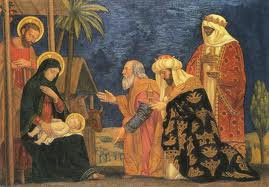
Msgr. Esseff reflects on the meaning of the “Epiphany” and how we can manifest the light of Christ to the world.
From the USCCB readings fo the day:
 Reading 1 Is 60:1-6
the glory of the Lord shines upon you.
See, darkness covers the earth,
and thick clouds cover the peoples;
but upon you the LORD shines,
and over you appears his glory.
Nations shall walk by your light,
and kings by your shining radiance.
Raise your eyes and look about;
they all gather and come to you:
your sons come from afar,
and your daughters in the arms of their nurses.
your heart shall throb and overflow,
for the riches of the sea shall be emptied out before you,
the wealth of nations shall be brought to you.
Caravans of camels shall fill you,
dromedaries from Midian and Ephah;
all from Sheba shall come
bearing gold and frankincense,
and proclaiming the praises of the LORD.
Msgr. John A. Esseff is a Roman Catholic priest in the Diocese of Scranton. He was ordained on May 30th 1953, by the late Bishop William J. Hafey, D.D. at St. Peter’s Cathedral in Scranton, PA. Msgr. Esseff served a retreat director and confessor to Blessed Mother Teresa.   He continues to offer direction and retreats for the sisters of the missionaries of charity around the world. Msgr. Esseff encountered St.  Padre Pio,  who would become a spiritual father to him. He has lived in areas around the world,  serving  in the Pontifical missions, a Catholic organization established by Bl. Pope John Paul II to bring the Good News to the world especially to the poor. Msgr. Esseff assisted the founders of the Institute for Priestly Formation and continues to serve as a spiritual director for the Institute. He continues to  serve as a retreat leader and director to bishops, priests and sisters and seminarians and other religious leaders around the world.  Â
To obtain a copy of Msgr. Esseff’s book by visiting here
Be sure to visit Msgr. Esseff’s website “Building a Kingdom of  Love”
Tags: John Esseff, retreat, Roman Catholic, USCCB
This entry was posted on Sunday, January 6th, 2013 at 2:05 pm
You can follow any responses to this entry through the RSS 2.0 feed.
Bruce and I had the great blessing in 2005 of having a conversation with the late Cardinal Avery 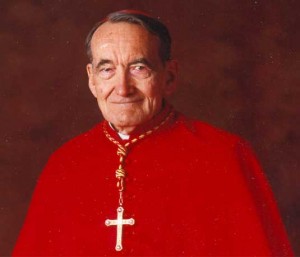 Dulles, one of the foremost American Catholic theologians of the post-Vatican II era about “A History of Apologetics”.
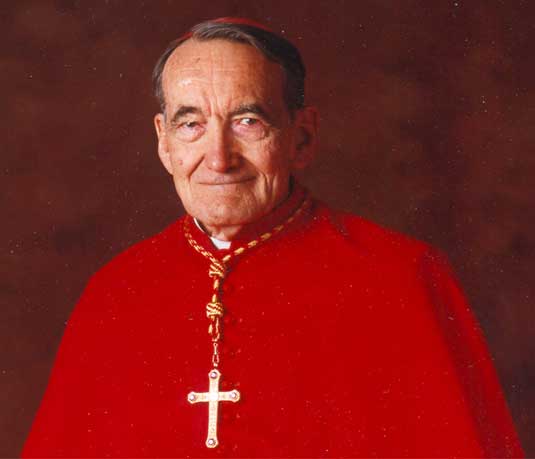
It seemed appropriate, especially during the Year of Faith, to listen once again to his words of wisdom about the importance of our individual Christian testimony over the winning of a “faith debate”. Â We also discuss the legacy of Bl. John Newman and Bl. John Paul II, and so much more. Â Cardinal Dulles died December, 27, 2008.
[powerpress]
You can find the book here
From the description:“Written by one of American Catholicism’s leading theologians, A History of Apologetics also examines apologetics in the 20th and early 21st centuries including its decline among Catholics following Vatican II and its recent revival, as well as the contributions of contemporary Evangelical Protestant apologists. Dulles also considers the growing Catholic-Protestant convergence in apologetics. No student of apologetics and contemporary theology should be without this superb and masterful work”.
Tags: apologetics, Cardinal Avery Dulles, christian apologetics, Evangelical Protestant, theology
This entry was posted on Wednesday, January 2nd, 2013 at 6:54 am
You can follow any responses to this entry through the RSS 2.0 feed.