 Site Type
 Featured
 Fonts
Fonts Skins
Skins
Are you being called to be a “martyr”?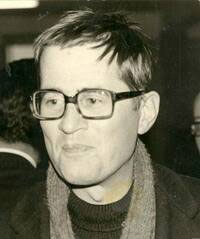
[powerpress]
Msgr. Esseff, on the feast of St. Stephen the Martyr, shares the story of his friend Fr. Nicolas Kluiters S.J., who served the Church in Lebanon. Â He discusses what it means to be a martyr in the past and what it looks like today.
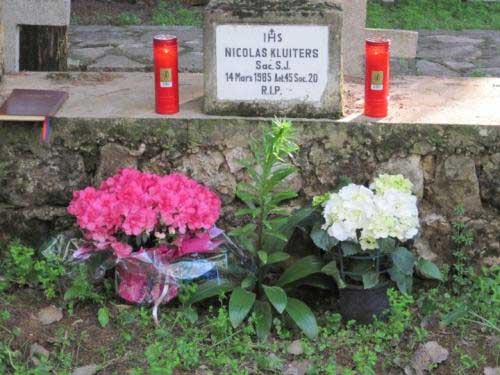
From JESUIT MARTYRS, In the Service of the Arab Orient (1975-1989)
By Father Camille Hechaïmé, Dar el-Machreq
After studying business then plastic arts, Father Nicolas Kluiters painted until he felt the call of religion. He joined the Society of Jesus in his country, Holland, when he was 25. He soon asked to be sent to Lebanon and his wish was granted in 1966. He completed his novitiate and studied Arabic (1966-1968) and social sciences (1968-1969) in Beirut, then he studied philosophy and theology in Lebanon and France . He was ordained a priest in Amsterdam in 1973.
Soon after his return to Lebanon in 1974 and his nomination in the Taanayel monastery in the Bekaa valley to serve the poor Maronite isolated villages in an area that is non Christian in its majority, the war started and soon took a sectarian characteristic. However, these bloody events did not discourage the young zealous priest. With the approval of his superiors, he would leave his monastery in Taanayel, go to villages near Dayr al-Ahmar village and return to the monastery once a week. One of these villages was Bechwat, in which lies the Church of our Miraculous Lady where Nicolas made his last solemn vows in 1977 to express his belonging to this poor land and to serve the underprivileged. He made the village Barqa the second base of his journeys and increased his activities there for it to become a model village.
After gaining the villagers’ trust, he cooperated with them to renovate the church and build a house for the priest, a school, a monastery where a group of nuns from the Sacred Hearts settled at the end of 1984, as well as a dispensary soon after. He would receive from his native country, Holland, financial aids that enabled him to improve the land and develop agriculture. His main worry was to boost the morale of these good but poor, marginalized and isolated people, to consolidate their faith and, despite the dangers, to implant them in their land, the land of common living for all communities. Perhaps Nicolas’ successful mission aroused the disapproval of ill wishers and people bothered by the vitality he gave back to the villages they wanted to keep submissive.
On the night of March 13, 1985, after celebrating mass with the nuns of the hospital in Hermel, he returned to Barqa where the villagers were waiting for him the following morning. However, he never reached the village and there was no news about him. His fellow priests in Taanayel, the nuns, and the security forces looked for him in the area. One of the shepherds noticed a suspicious horde of crows over a deep ditch and notified the people in charge. After many efforts, they were able to reach the bottom and removed the body that had been missing for 17 days. Nicolas was dreadfully killed; he was shot twice, hanged and impaled, which indicated his murderers’ strong hatred. Afterward, it appeared that he courageously resisted his kidnappers because he was strong and was trained in self-defense with the paratroops in the military service in Holland. His car was found after a few days with the following inscription, “The forces of revengeâ€.
He was buried in the Taanayel monastery on Wednesday April 3, during the Holy Week, in a very emotional and devotional atmosphere. The bells did not ring for sadness, but for joy because all those who knew Nicolas understood that they were biding farewell to a martyr who gave his life for his faith; until this day, they are still convinced of that.
He had increased his prayers during his last days and had trustingly put his life in the hands of God, prepared to accept all difficulties, even martyrdom. Two weeks prior to his kidnapping, he wrote, “He (Christ) brought me back to Barqa… as if He were telling me: the fruit will soon ripen… Don’t worry about extraordinary and difficult events that could happen, such as a kidnapping or anything similar. He who follows Me has a special blessing so that he can suffer for me and with me. I shall be with himâ€
Tags: John Esseff, Lebanon, Nicolas Kluiters, witness
This entry was posted on Wednesday, December 26th, 2012 at 11:30 am
You can follow any responses to this entry through the RSS 2.0 feed.
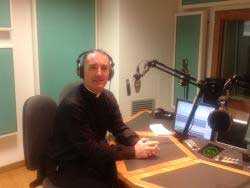
In part three of our series answering listener’s questions of faith, Monsignor John Kennedy, an official at the Congregation for the Doctrine of the Faith, answers a question from a listener in Korea who has asked how often we should go to Confession. In this weeks episode, Monsignor Kennedy brings us on a journey of rediscovery of the Sacrament of Reconciliation.
Listen: [powerpress]
Tags: faith, Korea, Monsignor John Kennedy, Monsignor Kennedy, vatican radio
This entry was posted on Wednesday, December 19th, 2012 at 5:50 am
You can follow any responses to this entry through the RSS 2.0 feed.
Episode 28- Regnum Novum: Bringing forth the New Evangelization through Catholic Social Teaching with Omar Gutierrez – We continue the study of the “Compendium of the Social Doctrine of the Church” Â Chapter 5
[powerpress]
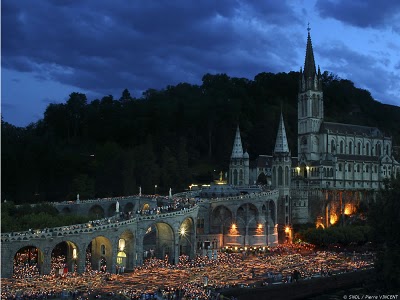
CHAPTER FIVE
THE FAMILY, THE VITAL CELL OF SOCIETY
I. THE FAMILY, THE FIRST NATURAL SOCIETY
a. Importance of the family for the person
b. Importance of the family for society
II. MARRIAGE, THE FOUNDATION OF THE FAMILY
a. The value of marriage
b. The sacrament of marriage
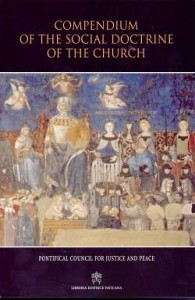
We live at a very special time. The confluence of many things has brought forth the clear need to be able to articulate the Social Teaching of the Catholic Church in a way that is accessible and applicable. This is not to be an effort where high-minded theories are to be bandied about. Rather, this is a time of opportunity wherein we can apply the Social Doctrine to the concrete so as to bring about a New Kingdom, a Revolution. – Omar G.
Also visit Omar’s “Discerning Hearts” page Catholic Social Teaching 101
Tags: catholic social teaching, marriage, social doctrine, special time, Subsidiarity
This entry was posted on Tuesday, December 18th, 2012 at 1:09 pm
You can follow any responses to this entry through the RSS 2.0 feed.
Episode 12 -The Way of Mystery: The Eucharist and Moral Living– The Liturgy of the Eucharist part 4 : the Communion Rite…The moment of radical surrender…can we do it? We when come forward to communion, what are doing…what are we saying? Will we allow ourselves to be transformed? The moment of silence…will we allow ourselves to be transformed within so we can go out to transform the culture for Christ?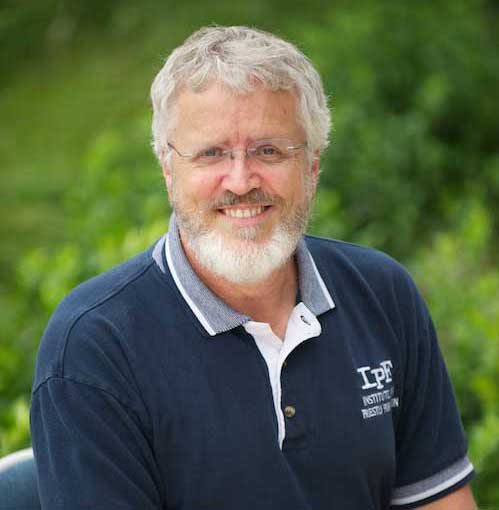
[powerpress]
Deacon James Keating, PhD, the director of Theological Formation for the Institute for Priestly Formation, located at Creighton University, in Omaha, is making available to â€Discerning Hearts†and all who listen, his series of programs entitled “The Way of Mysteryâ€.
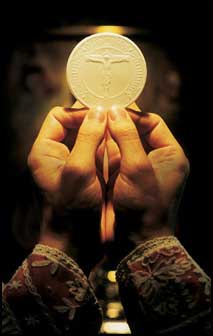 The Vatican II documents remind us that the spiritual journey is not made in a vacuum, that God has chosen to save us, not individually, but as The People of God. The Eucharist must help Christians to make their choices by discerning out of Christ’s paschal mystery. For this process to take place, however, Christians must first understand how the Eucharist puts them in touch with Christ’s passion, death, and resurrection, and what concrete implications being in touch with this mystery has for their daily lives.

For more information on the “Institute of Priestly Formation†and for other material available by Deacon Keating, just click here
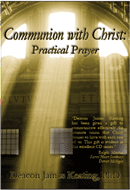
Don’t forget to pickup a copy of “Communion with Christ†, it is one of the best audio sets on prayer…ever!
Check out Deacon Keating’s “Discerning Heart†page
Tags: choices, communion rite, Deacon James Keating, surrender
This entry was posted on Monday, December 17th, 2012 at 5:49 am
You can follow any responses to this entry through the RSS 2.0 feed.
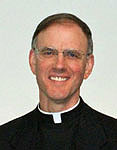 Episode 6 “What am I to do?†The Discernment of God’s Will in Everyday Decisions w/Fr. Timothy Gallagher
This episode offers Fr. Gallagher discusses the call to the marriage vocation and the call to the religious life. Â What are the differences found in each and how do we begin to discern our call.
 [powerpress]
For other episodes in the series visit The Discerning Hearts “Discerning the Will of God†page
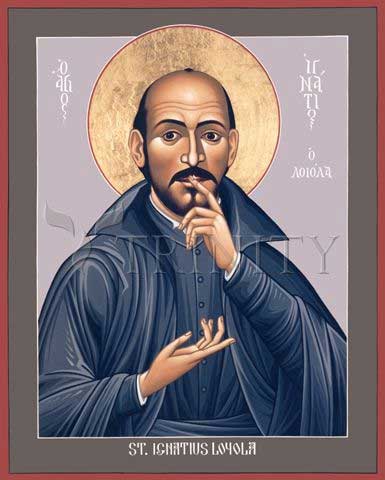
Father Timothy M. Gallagher, O.M.V., was ordained in 1979 as a member of the Oblates of the Virgin Mary, a religious community dedicated to retreats and spiritual formation according to the Spiritual Exercises of St. Ignatius. Â Fr. Gallagher is featured on the EWTN series “Living the Discerning Life: Â The Spiritual Teachings of St. Ignatius of Loyola”.
For more information on how to obtain copies of Fr. Gallaghers’s various books and audio which are available for purchase, please visit  his  website:   frtimothygallagher.org
For the other episodes in this series check out Fr. Timothy Gallagher’s “Discerning Hearts†page
Tags: Father Timothy M. Gallagher, Gallagher, Timothy Gallagher
This entry was posted on Thursday, December 13th, 2012 at 7:27 am
You can follow any responses to this entry through the RSS 2.0 feed.
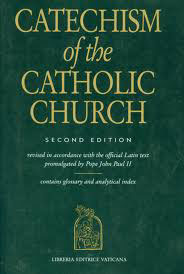
In part two of our series answering listeners questions of faith, Monsignor John Kennedy, an official at the Congregation for the Doctrine of the Faith, answers a question from the USA on the pace we should apply to reading the Catechism of the Catholic Church; from the UK on why we are baptised as infants and not later on in life; and reveals a little known fact regarding who can minister the Sacrament of Baptism
Listen: [powerpress]
Tags: baptism, Monsignor John Kennedy, UK, vatican radio
This entry was posted on Thursday, December 13th, 2012 at 7:17 am
You can follow any responses to this entry through the RSS 2.0 feed.
Episode 27- Regnum Novum: Bringing forth the New Evangelization through Catholic Social Teaching with Omar Gutierrez – We continue the study of the “Compendium of the Social Doctrine of the Church” Â Chapter 4 Section 4 -6
[powerpress]
CHAPTER FOUR
PRINCIPLES OF THE CHURCH’S SOCIAL DOCTRINE
IV. THE PRINCIPLE OF SUBSIDIARITY
a. Origin and meaning
b. Concrete indications
V. PARTICIPATION
a. Meaning and value
b. Participation and democracy
VI. THE PRINCIPLE OF SOLIDARITY
a. Meaning and value
b. Solidarity as a social principle and a moral virtue
c. Solidarity and the common growth of mankind
d. Solidarity in the life and message of Jesus Christ
We live at a very special time. The confluence of many things has brought forth the clear need to be able to articulate the Social Teaching of the Catholic Church in a way that is accessible and applicable. This is not to be an effort where high-minded theories are to be bandied about. Rather, this is a time of opportunity wherein we can apply the Social Doctrine to the concrete so as to bring about a New Kingdom, a Revolution. – Omar G.
Also visit Omar’s “Discerning Hearts” page Catholic Social Teaching 101
Tags: catholic social teaching, New Kingdom, PARTICIPATION, social doctrine, Subsidiarity
This entry was posted on Wednesday, December 12th, 2012 at 6:00 am
You can follow any responses to this entry through the RSS 2.0 feed.
[powerpress]
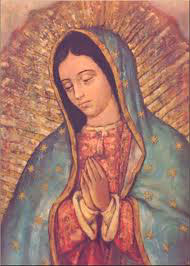
“Do you not know I am your Mother?” Â Msgr. Esseff reflects on the Great Mother of God, Mary Most Holy…Our Lady of Guadalupe. Â First,  he discusses the image itself that was left for all of us. Â Then he talks about our relationship with her today!
Ps 1:1Rv 11:19a; 12:1-6a, 10ab
and the ark of his covenant could be seen in the temple.A great sign appeared in the sky, a woman clothed with the sun,
with the moon under her feet,
and on her head a crown of twelve stars.
She was with child and wailed aloud in pain as she labored to give birth.
Then another sign appeared in the sky;
it was a huge red dragon, with seven heads and ten horns,
and on its heads were seven diadems.
Its tail swept away a third of the stars in the sky
and hurled them down to the earth.
Then the dragon stood before the woman about to give birth,
to devour her child when she gave birth.
She gave birth to a son, a male child,
destined to rule all the nations with an iron rod.
Her child was caught up to God and his throne.
The woman herself fled into the desert
where she had a place prepared by God.Then I heard a loud voice in heaven say:
“Now have salvation and power come,
and the Kingdom of our God
and the authority of his Anointed.”
Tags: heaven, John Esseff, our lady of guadalupe, reflection, relationship
This entry was posted on Wednesday, December 12th, 2012 at 5:42 am
You can follow any responses to this entry through the RSS 2.0 feed.
Episode 11 -The Way of Mystery: The Eucharist and Moral Living– The Liturgy of the Eucharist part 3 : The Eucharistic Prayer…God teaching us to pray. What are we doing in our participation and are we truly ready to receive the Body of Christ? Should we, in integrity, receive the Truth of Christ in Communion…do we really believe?
[powerpress]
Deacon James Keating, PhD, the director of Theological Formation for the Institute for Priestly Formation, located at Creighton University, in Omaha, is making available to â€Discerning Hearts†and all who listen, his series of programs entitled “The Way of Mysteryâ€.
The Vatican II documents remind us that the spiritual journey is not made in a vacuum, that God has chosen to save us, not individually, but as The People of God. The Eucharist must help Christians to make their choices by discerning out of Christ’s paschal mystery. For this process to take place, however, Christians must first understand how the Eucharist puts them in touch with Christ’s passion, death, and resurrection, and what concrete implications being in touch with this mystery has for their daily lives.
For more information on the “Institute of Priestly Formation†and for other material available by Deacon Keating, just click here
Don’t forget to pickup a copy of “Communion with Christ†, it is one of the best audio sets on prayer…ever!
Check out Deacon Keating’s “Discerning Heart†page
Tags: choices, creighton university, Deacon James Keating, Deacon Keating, institute for priestly formation
This entry was posted on Monday, December 10th, 2012 at 7:48 am
You can follow any responses to this entry through the RSS 2.0 feed.
USCCA29 Â Chapter 23 Â Life In Jesus part 4
[powerpress]
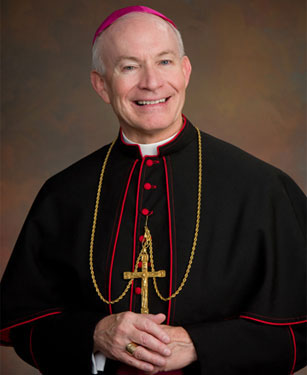
Archbishop Lucas offers insights on the US Catholic Catechism for Adults Chapter 23:
Conscience represents both the more general ability we have as human beings to know what is good and right and the concrete judgments we make in particular situations concerning what we should do or about what we have already done. Moral choices confront us with the decision to follow or depart from reason and the divine law. A good conscience makes judgments that conform to reason and the good that is willed by the Wisdom of God. A good conscience requires lifelong formation. Each baptized follower of Christ is obliged to form his or her conscience according to objective moral standards. The Word of God is a principal tool in the formation of conscience when it is assimilated by study, prayer, and practice. The prudent advice and good example of others support and enlighten our conscience. The authoritative teaching of the Church is an essential element in our conscience formation. Finally, the gifts of the Holy Spirit, combined with regular examination of our conscience, will help us develop a morally sensitive conscience.
United States Conference of Catholic Bishops (USCCB)
The Most Reverend George J. Lucas leads the Archdiocese of Omaha.Â
For other episodes in the visit our Archbishop George Lucas page
This programs is based on:
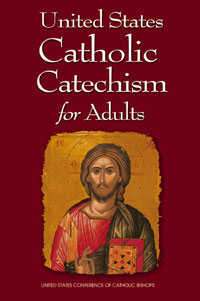
More information can be found here.
We wish to thank the USCCB for the permissions granted for use of  relevant material used in this series.
Also we wish to thank Matt Wilkom  for his vocal talents in this episode.
[ezcc]
Tags: Archbishop Lucas, conscience, Jesus, united states catholic catechism for adults, USCCB
This entry was posted on Monday, December 10th, 2012 at 7:42 am
You can follow any responses to this entry through the RSS 2.0 feed.
“Remember always…a tranquil conscience and an assured innocence produce a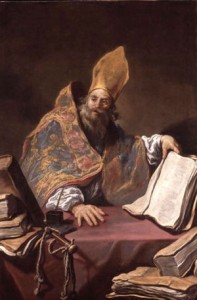 blessed life”
Saint Ambrose (c. between 337 and 340 – 4 April 397), was a bishop of Milan who became one of the most influential Church figures of the 4th century. Mariologist, heresy buster, emperor tamer, lover of hymns, an answer to a mother’s prayer (ask St. Monica), you name it, St. Ambrose fills the bill…
Did you know that St. Ambrose was one of the first recorded instances of someone reading silently? Interesting…
 Did you know that he received, essentially, the sacramental Grand Slam all at once? Wonder what that is?
…well let’s ask Mike Aquilina. Take a listen [powerpress]
For a fuller a rendering of his life, visit New Advent
So, so much from St. Ambrose! First, better to hear from the man himself (sort of…)
On Holy Mary
Next on Holy Repentance
A prayer of St. Ambrose
Lord Jesus Christ, I approach your banquet table in fear and trembling, for I am a sinner, and dare not rely on my own worth but only on your goodness and mercy. I am defiled by many sins in body and soul, and by my unguarded thoughts and words.
Gracious God of majesty and awe, I seek your protection, I look for your healing. Poor troubled sinner that I am, I appeal to You, the fountain of all mercy. I cannot bear your judgment, but I trust in your salvation. Lord, I show my wounds to You and uncover my shame before You. I know my sins are many and great, and they will fill me with fear, but I hope in Your Mercies, for they cannot be numbered.
Lord Jesus Christ, eternal king, God and man, crucified for mankind, look upon me with mercy and hear my prayer, for I trust in You. Have mercy on me, full of sorrow and sin, for the depth of your compassion never ends.
Praise to You, saving sacrifice, offered on the wood of the cross for me and for all mankind. Praise to the noble and precious blood, flowing from the wounds of my crucified Lord Jesus Christ and washing away the sins of the whole world. Remember, Lord, your creature, whom You have redeemed with Your Blood. I repent my sins, and I long to put right what I have done. Merciful Father, take away all my offenses and sins; purify me in body and soul, and make me worthy to taste the holy of holies.
May Your Body and Blood, which I intend to receive, although I am unworthy, be for me the remission of my sins, the washing away of my guilt, the end of my evil thoughts, and the rebirth of my better instincts. May it incite meto do the works pleasing to You and profitable to my health in body andsoul, and be a firm defense against the wiles of my enemies.
Tags: Church, conscience, doctors of the church, father of the church, fathers mike, mercy, mike aquilina, Saint Ambrose, st ambrose, st. paul center for biblical theology
This entry was posted on Friday, December 7th, 2012 at 12:21 am
You can follow any responses to this entry through the RSS 2.0 feed.
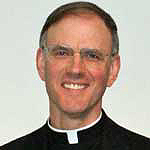 Episode 5 “What am I to do?†The Discernment of God’s Will in Everyday Decisions w/Fr. Timothy Gallagher
This episode offers a continuing look at the importance of the disposition of heart and the means which help us to be open to God’s will.  Then Fr. Gallagher begins the opening conversation on the vocation God may be calling us to.
[powerpress]
For other episodes in the series visit The Discerning Hearts “Discerning the Will of God†page
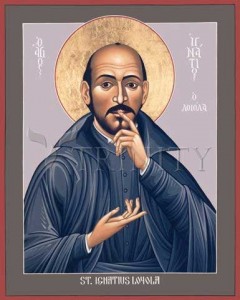
Father Timothy M. Gallagher, O.M.V., was ordained in 1979 as a member of the Oblates of the Virgin Mary, a religious community dedicated to retreats and spiritual formation according to the Spiritual Exercises of St. Ignatius. Â Fr. Gallagher is featured on the EWTN series “Living the Discerning Life: Â The Spiritual Teachings of St. Ignatius of Loyola”.
For more information on how to obtain copies of Fr. Gallaghers’s various books and audio which are available for purchase, please visit  his  website:   frtimothygallagher.org
For the other episodes in this series check out Fr. Timothy Gallagher’s “Discerning Hearts†page
Tags: Father Timothy M. Gallagher, Gallagher, Timothy Gallagher
This entry was posted on Thursday, December 6th, 2012 at 6:57 am
You can follow any responses to this entry through the RSS 2.0 feed.
We all fail, we all collapse under the weight of sin.  Who is our “Rock”?  How do we come to see the areas where we are separated from the Rock who is Jesus Christ.  Msgr. Esseff talks about the dangers of self-reliance.  He discusses many of the major roots of sin which suck us into self-absorption, and what is the only solution that can save us.  The Father in heaven loves us each so much specifically.  We need to turn to that love and rely completely on Him.
[powerpress]Â
From the USCCB website:
Gospel Mt 7:21, 24-27
“Not everyone who says to me, ‘Lord, Lord,’
will enter the Kingdom of heaven,
but only the one who does the will of my Father in heaven.”Everyone who listens to these words of mine and acts on them
will be like a wise man who built his house on rock.
The rain fell, the floods came,
and the winds blew and buffeted the house.
But it did not collapse; it had been set solidly on rock.
And everyone who listens to these words of mine
but does not act on them
will be like a fool who built his house on sand.
The rain fell, the floods came,
and the winds blew and buffeted the house.
And it collapsed and was completely ruined.”
Tags: heaven, John Esseff, love, sin, USCCB
This entry was posted on Thursday, December 6th, 2012 at 5:43 am
You can follow any responses to this entry through the RSS 2.0 feed.
Episode 26- Regnum Novum: Bringing forth the New Evangelization through Catholic Social Teaching with Omar Gutierrez – We continue the study of the “Compendium of the Social Doctrine of the Church” Â Chapter 4 Section 1
[powerpress]
CHAPTER FOUR
PRINCIPLES OF THE CHURCH’S SOCIAL DOCTRINE
II. THE PRINCIPLE OF THE COMMON GOOD
a. Meaning and primary implications
b. Responsibility of everyone for the common good
c. Tasks of the political community
III. THE UNIVERSAL DESTINATION OF GOODS
a. Origin and meaning
b. The universal destination of goods and private property
c. The universal destination of goods and the preferential option for the poor
We live at a very special time. The confluence of many things has brought forth the clear need to be able to articulate the Social Teaching of the Catholic Church in a way that is accessible and applicable. This is not to be an effort where high-minded theories are to be bandied about. Rather, this is a time of opportunity wherein we can apply the Social Doctrine to the concrete so as to bring about a New Kingdom, a Revolution. – Omar G.
Also visit Omar’s “Discerning Hearts” page Catholic Social Teaching 101
Tags: catholic social teaching, common good, compendium of the social doctrine of the church, New Kingdom, social doctrine, special time
This entry was posted on Tuesday, December 4th, 2012 at 7:53 am
You can follow any responses to this entry through the RSS 2.0 feed.
USCCA28 Â Chapter 23 Â Life In Jesus part 3
[powerpress]
Archbishop Lucas offers insights on the US Catholic Catechism for Adults Chapter23:
Conscience represents both the more general ability we have as human beings to know what is good and right and the concrete judgments we make in particular situations concerning what we should do or about what we have already done. Moral choices confront us with the decision to follow or depart from reason and the divine law. A good conscience makes judgments that conform to reason and the good that is willed by the Wisdom of God. A good conscience requires lifelong formation. Each baptized follower of Christ is obliged to form his or her conscience according to objective moral standards. The Word of God is a principal tool in the formation of conscience when it is assimilated by study, prayer, and practice. The prudent advice and good example of others support and enlighten our conscience. The authoritative teaching of the Church is an essential element in our conscience formation. Finally, the gifts of the Holy Spirit, combined with regular examination of our conscience, will help us develop a morally sensitive conscience.
United States Conference of Catholic Bishops (USCCB)
The Most Reverend George J. Lucas leads the Archdiocese of Omaha.Â
For other episodes in the visit our Archbishop George Lucas page
This programs is based on:
More information can be found here.
We wish to thank the USCCB for the permissions granted for use of  relevant material used in this series.
Also we wish to thank Matt Wilkom  for his vocal talents in this episode.
[ezcc]
Tags: Archbishop Lucas, conscience, Jesus, united states catholic catechism for adults, USCCB
This entry was posted on Monday, December 3rd, 2012 at 3:04 pm
You can follow any responses to this entry through the RSS 2.0 feed.