 Site Type
 Featured
 Fonts
Fonts Skins
Skins
Episode 20 Beginning to Pray:  “Heaven in Faith”  Day 10 Prayer 2 – “In the heaven of our soul let us be praises of glory of the Holy Trinity, praises of love of our Immaculate Mother.”
[powerpress]
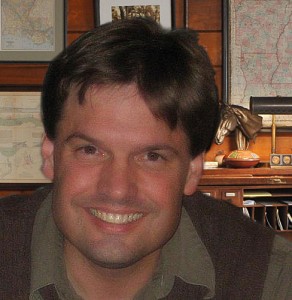
Dr. Anthony Lilles is a Catholic husband and father of three teaching Spiritual Theology at St. John Vianney Theological Seminary. He  teaches spiritual theology and spiritual direction to transitional deacons, and the spiritual classics to the men who enter the Spirituality Year, a year of prayer in preparation for seminary formation.  He is the author of the “Beginning to Pray”  catholic blog spot.
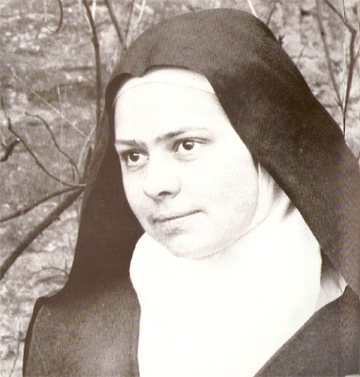 From “Heaven in Faith: Day 10 Prayer 2” found in The Complete Works vol 1:
44. …In the heaven of our soul let us be praises of glory of the Holy Trinity, praises of love of our Immaculate Mother.  One day the veil will fall, we will be introduced into the eternal courts, and there will we will sing in the bosom of infinite Love.  And God will give us “the new name promised to the Victor.”” What will it be?  LAUDEM GLORIAE”
For other episodes in the series visit the Discerning Hearts page for Dr. Anthony Lilles
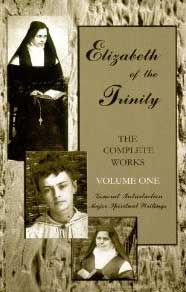
We would like to offer heartfelt thanks to
Miriam Gutierrez for providing for us “the voice” of Blessed Elizabeth for this series
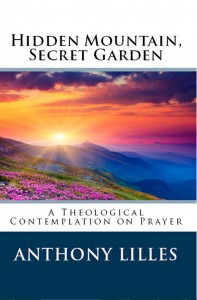
Dr. Lilles’ book, which can be found as a Quality Paperback and e-book edition
Tags: Anthony Lilles, blessed elizabeth of the trinity, carmelites, heaven, heaven in faith, Immaculate Mother, love
This entry was posted on Saturday, December 1st, 2012 at 2:38 pm
You can follow any responses to this entry through the RSS 2.0 feed.
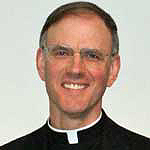 Episode 4 “What am I to do?†The Discernment of God’s Will in Everyday Decisions w/Fr. Timothy Gallagher
This episode offers a look at the importance of the disposition of heart, which like the Blessed Virgin Mary,  seeks the will of God in whatever He wants.  How do we gain that disposition and what are the means of obtaining that grace is what discussed in the next several episodes.  In this conversation the importance of the retreat and even more importantly the role of sacraments is discussed.
[powerpress]
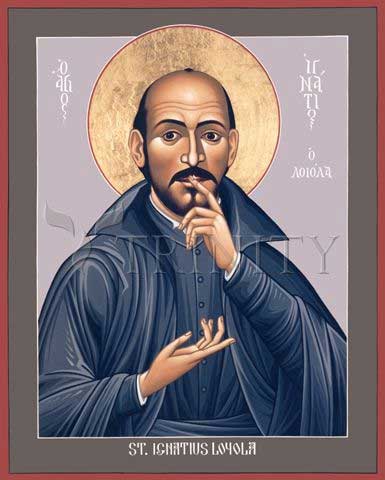
For other episodes in the series visit The Discerning Hearts “Discerning the Will of God†page
Father Timothy M. Gallagher, O.M.V., was ordained in 1979 as a member of the Oblates of the Virgin Mary, a religious community dedicated to retreats and spiritual formation according to the Spiritual Exercises of St. Ignatius. Â Fr. Gallagher is featured on the EWTN series “Living the Discerning Life: Â The Spiritual Teachings of St. Ignatius of Loyola”.
For more information on how to obtain copies of Fr. Gallaghers’s various books and audio which are available for purchase, please visit  his  website:   frtimothygallagher.org
For the other episodes in this series check out Fr. Timothy Gallagher’s “Discerning Hearts†page
Tags: Father Timothy M. Gallagher, Timothy Gallagher
This entry was posted on Thursday, November 29th, 2012 at 7:38 am
You can follow any responses to this entry through the RSS 2.0 feed.
[powerpress] Msgr. Esseff reflects on the readings given by the Church at this time of the year which brings us the teachings on the end 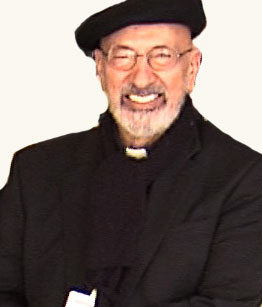 times. Â How are we to understand these readings? Â What did it mean to the people of the Church 2000 years ago? Â What does it mean for us today? Â The Gospel and the words of the Jesus having meaning for the entire world today. Â For those persecuted today, this message is for you!
Rv 18:1-2, 21-23; 19:1-3, 9a
I, John, saw another angel coming down from heaven,
having great authority,
and the earth became illumined by his splendor.
He cried out in a mighty voice:”Fallen, fallen is Babylon the great.
She has become a haunt for demons.
She is a cage for every unclean spirit,
a cage for every unclean bird,
a cage for every unclean and disgusting beast.”A mighty angel picked up a stone like a huge millstone
and threw it into the sea and said:”With such force will Babylon the great city be thrown down,
and will never be found again.
No melodies of harpists and musicians,
flutists and trumpeters,
will ever be heard in you again.
No craftsmen in any trade
will ever be found in you again.
No sound of the millstone
will ever be heard in you again.
No light from a lamp
will ever be seen in you again.
No voices of bride and groom
will ever be heard in you again.
Because your merchants were the great ones of the world,
all nations were led astray by your magic potion.”After this I heard what sounded like
the loud voice of a great multitude in heaven, saying:“Alleluia!
Salvation, glory, and might belong to our God,
for true and just are his judgments.
He has condemned the great harlot
who corrupted the earth with her harlotry.
He has avenged on her the blood of his servants.”They said a second time:
“Alleluia! Smoke will rise from her forever and ever.”
Then the angel said to me, “Write this:
Blessed are those who have been called
to the wedding feast of the Lamb.”
Jesus said to his disciples:
“When you see Jerusalem surrounded by armies,
know that its desolation is at hand.
Then those in Judea must flee to the mountains.
Let those within the city escape from it,
and let those in the countryside not enter the city,
for these days are the time of punishment
when all the Scriptures are fulfilled.
Woe to pregnant women and nursing mothers in those days,
for a terrible calamity will come upon the earth
and a wrathful judgment upon this people.
They will fall by the edge of the sword
and be taken as captives to all the Gentiles;
and Jerusalem will be trampled underfoot by the Gentiles
until the times of the Gentiles are fulfilled.”There will be signs in the sun, the moon, and the stars,
and on earth nations will be in dismay,
perplexed by the roaring of the sea and the waves.
People will die of fright
in anticipation of what is coming upon the world,
for the powers of the heavens will be shaken.
And then they will see the Son of Man
coming in a cloud with power and great glory.
But when these signs begin to happen,
stand erect and raise your heads
because your redemption is at hand.”
Tags: Church, Jesus, John Esseff, reflection
This entry was posted on Thursday, November 29th, 2012 at 12:43 am
You can follow any responses to this entry through the RSS 2.0 feed.
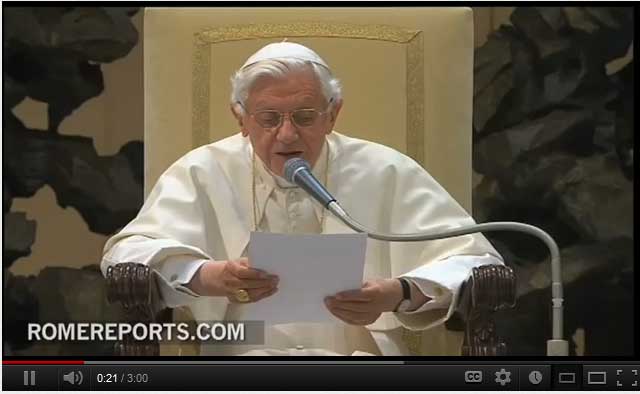
“How do we speak to God in our times? How can we communicate the Gospel to open the way to its salvific truth?” The Holy Father offered an answer to these questions in his catechesis during today’s general audience, held in the Vatican’s Paul VI Hall.
“In Jesus of Nazareth”, the Pope said, “we encounter the face of God, descended from Heaven to immerse Himself in the world of mankind and to teach ‘the art of living’, the road to happiness; to free us from sin and to make us true children of God”.
He continued, “speaking about God means, first and foremost, being clear about what we must bring to the men and women of our time. God has spoken to us, … not an abstract or hypothetical God, but a real God, a God Who exists, Who entered history and remains present in history: the God of Jesus Christ … as a response to the fundamental question of why and how to live. Therefore, speaking about God requires a continual growth in faith, familiarity with Jesus and His Gospel, a profound knowledge of God and strong passion for His plan for salvation, without giving in to the temptations of success. … We must not fear the humility of taking small steps, trusting in the leaven that makes the dough rise slowly and mysteriously. In speaking about God, in the work of evangelisation under the guidance of the Holy Spirit, we must return to the simplicity and essential nature of proclamation: the concrete Good News of God Who cares about us, the love of God which Jesus Christ brought close to us, even unto the Cross, and which in the Resurrection opens us to life without end, to eternal life”.
The Pope explained that for St. Paul, communicating the faith did not mean “showing himself, but rather saying openly and publicly what he had seen and heard in his encounter with Christ, and how much his life had been transformed by that encounter. … The Apostle was not satisfied with merely proclaiming the words, but committed his entire existence to the great work of faith. … To speak about God, we must make space for Him, confident that He acts upon our weakness. We must make space for Him without fear, with simplicity and joy, in the profound conviction that the more we place Him – and not ourselves – at the centre of our lives, the more fruitful our communication will be. … This also holds true for Christian communities. They are called to communicate the transforming action of God’s grace, overcoming individualism, closure, selfishness and indifference, bringing the love of God to daily relationships. We must must act to ensure … we always announce Christ, not ourselves”.
“At this point”, the Holy Father continued, we must ask ourselves “how Jesus Christ Himself communicated. Jesus … spoke about His Father (Whom He called ‘Abba’) and about the Kingdom of God, looking with compassion on the discomforts and difficulties of human existence. … From the Gospel we see how Jesus was interested in every human situation He encountered, He immersed Himself in the lives of the men and women of His time, with complete trust in the help of the Father. … In Him, proclamation and life were entwined: Jesus acted and taught, always taking as a starting point His intimate relationship with God the Father. This approach gives fundamental indications to Christians: living in faith and charity is a way of speaking about God in our times, because it demonstrates the credibility of what we say in words through a life lived in Christ. We must take care to grasp the signs of our times, and thereby to identify the potential, the desires and the obstacles we encounter in contemporary culture, in particular the desire for authenticity, the yearning for transcendence, the sensibility for protecting creation. And we must communicate without fear the answer offered by faith in God”.“Speaking about God, therefore, means enabling others to understand through words and acts that God is not a competitor in our existence but rather its true guarantor, the guarantor of the greatness of the human person. Thus we return to the beginning: speaking about God means communicating, with power and simplicity, through words and the life we lead, that which is essential: the God of Jesus Christ, the God Who showed us a love so great that He took on human flesh, died and rose again for us; the God Who asks us to follow Him and to allow ourselves to be transformed by His immense love in order to renew our lives and our relationships; the God Who gave us the Church, to allow us to journey together and, through the Word and the Sacraments, to renew the entire City of Man so that it might become the City of God”, concluded the Pope.
Tags: children, God Who, jesus christ, love
This entry was posted on Wednesday, November 28th, 2012 at 9:05 am
You can follow any responses to this entry through the RSS 2.0 feed.
Episode 25- Regnum Novum: Bringing forth the New Evangelization through Catholic Social Teaching with Omar Gutierrez – We continue the study of the “Compendium of the Social Doctrine of the Church” Â Chapter 3 Section 3 & 4
[powerpress]
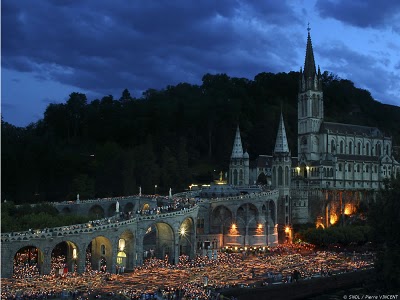
CHAPTER THREE
THE HUMAN PERSON AND HUMAN RIGHTS
III. THE MANY ASPECTS OF THE HUMAN PERSON
A. The unity of the person
B. Openness to transcendence and uniqueness of the person
a. Open to transcendence
b. Unique and unrepeatable
c. Respect for human dignity
C. The freedom of the human person
a. The value and limits of freedom
b. The bond uniting freedom with truth and the natural law
D. The equal dignity of all people
E. The social nature of human beings
IV. HUMAN RIGHTS
a. The value of human rights
b. The specification of rights
c. Rights and duties
d. Rights of peoples and nations
e. Filling in the gap between the letter and the spirit
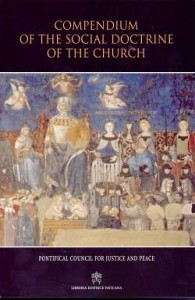
We live at a very special time. The confluence of many things has brought forth the clear need to be able to articulate the Social Teaching of the Catholic Church in a way that is accessible and applicable. This is not to be an effort where high-minded theories are to be bandied about. Rather, this is a time of opportunity wherein we can apply the Social Doctrine to the concrete so as to bring about a New Kingdom, a Revolution. – Omar G.
Also visit Omar’s “Discerning Hearts” page Catholic Social Teaching 101
Tags: catholic social teaching, New Kingdom, social doctrine, Social Teaching, special time
This entry was posted on Wednesday, November 28th, 2012 at 7:24 am
You can follow any responses to this entry through the RSS 2.0 feed.
Episode 9 -The Way of Mystery: The Eucharist and Moral Living–  The Liturgy of the Eucharist part 1 : The offertory and the priesthood…what is the role of the priest in the sacrifice of the Mass and what are some of the challenges faced by the priest today.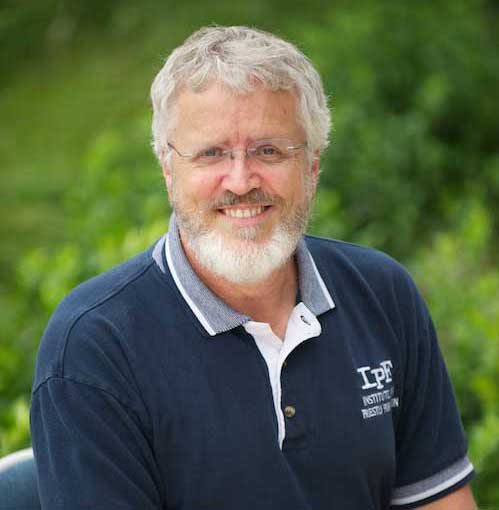
[powerpress]
Deacon James Keating, PhD, the director of Theological Formation for the Institute for Priestly Formation, located at Creighton University, in Omaha, is making available to â€Discerning Hearts†and all who listen, his series of programs entitled “The Way of Mysteryâ€.
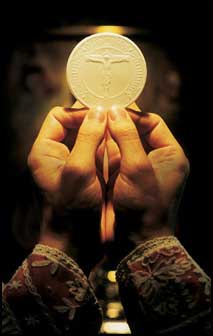 The Vatican II documents remind us that the spiritual journey is not made in a vacuum, that God has chosen to save us, not individually, but as The People of God. The Eucharist must help Christians to make their choices by discerning out of Christ’s paschal mystery. For this process to take place, however, Christians must first understand how the Eucharist puts them in touch with Christ’s passion, death, and resurrection, and what concrete implications being in touch with this mystery has for their daily lives.

For more information on the “Institute of Priestly Formation†and for other material available by Deacon Keating, just click here
Don’t forget to pickup a copy of “Communion with Christ†, it is one of the best audio sets on prayer…ever!
Check out Deacon Keating’s “Discerning Heart†page
Tags: choices, creighton university, Deacon James Keating, institute for priestly formation, paschal mystery, priesthood
This entry was posted on Monday, November 26th, 2012 at 8:33 am
You can follow any responses to this entry through the RSS 2.0 feed.
USCCA27 Â Chapter 23 Â Life In Jesus part 2
[powerpress]
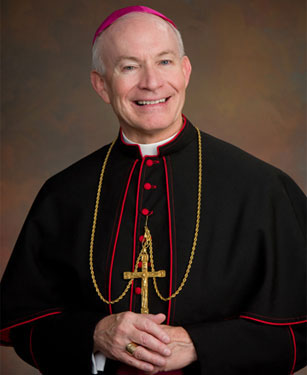
Archbishop Lucas offers insights on the US Catholic Catechism for Adults Chapter23:
The Understanding of Moral Acts
Another important foundation of Christian morality is the understanding of moral acts. Every moral act consists of three elements: the objective act (what we do), the subjective goal or intention (why we do the act), and the concrete situation or circumstances in which we perform the act (where, when, how, with whom, the consequences, etc.). For an individual act to be morally good, the object, or what we are doing, must be objectively good. Some acts, apart from the intention or reason for doing them, are always wrong because they go against a fundamental or basic human good that ought never to be compromised. Direct killing of the innocent, torture, and rape are examples of acts that are always wrong. Such acts are referred to as intrinsically evil acts, meaning that they are wrong in themselves, apart from the reason they are done or the circumstances surrounding them. The goal, end, or intention is the part of the moral act that lies within the person. For this reason, we say that the intention is the subjective element of the moral act. For an act to be morally good, one’s intention must be good. If we are motivated to do something by a bad intention—even something that is objectively good—our action is morally evil. It must also be recognized that a good intention cannot make a bad action (something intrinsically evil) good. We can never do something wrong or evil in order to bring about a good. This is the meaning of the saying, “the end does not justify the means†(cf. CCC, nos. 1749-1761).
United States Conference of Catholic Bishops (USCCB)
The Most Reverend George J. Lucas leads the Archdiocese of Omaha.Â
For other episodes in the visit our Archbishop George Lucas page
This programs is based on:
More information can be found here.
We wish to thank the USCCB for the permissions granted for use of  relevant material used in this series.
Also we wish to thank Matt Wilkom  for his vocal talents in this episode.
[ezcc]
Tags: acts, evil, Jesus, moral decision making, moral theology, morality, united states catholic catechism for adults, USCCB
This entry was posted on Monday, November 26th, 2012 at 7:45 am
You can follow any responses to this entry through the RSS 2.0 feed.
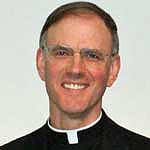 Episode 3  “What am I to do?†The Discernment of God’s Will in Everyday Decisions w/Fr. Timothy Gallagher.
This episode offers a look at the importance of the “foundation” of our discernment.
[powerpress]
Father Timothy M. Gallagher, O.M.V., was ordained in 1979 as a member of the Oblates of the Virgin Mary, a religious community dedicated to retreats and spiritual formation according to the Spiritual Exercises of St. Ignatius. Â Fr. Gallagher is featured on the EWTN series “Living the Discerning Life: Â The Spiritual Teachings of St. Ignatius of Loyola”.
For more information on how to obtain copies of Fr. Gallaghers’s various books and audio which are available for purchase, please visit  his  website:   frtimothygallagher.org
For the other episodes in this series check out Fr. Timothy Gallagher’s “Discerning Hearts†page
Tags: discernment, Father Timothy M. Gallagher, Timothy Gallagher
This entry was posted on Saturday, November 24th, 2012 at 12:38 pm
You can follow any responses to this entry through the RSS 2.0 feed.
Episode 19 Beginning to Pray: Â “Heaven in Faith” Â Day 10 Prayer 1- “In what peace, in what recollection Mary lent herself to everything she did!”
[powerpress]
Dr. Anthony Lilles is a Catholic husband and father of three teaching Spiritual Theology at St. John Vianney Theological Seminary. He  teaches spiritual theology and spiritual direction to transitional deacons, and the spiritual classics to the men who enter the Spirituality Year, a year of prayer in preparation for seminary formation.  He is the author of the “Beginning to Pray”  catholic blog spot.
From “Heaven in Faith: Day 10 Prayer 1” found in The Complete Works vol 1:
40.  “It seems to me that the attitude of the Virgin during the months that elapsed between the Annunciation and the Nativity is the model for interior souls, those whom God has chosen to live within, in the depths of the bottomless abyss.  In what peace, in what recollection Mary lent herself to everything she did!  How even the most trivial things were divinized by her!  For through it all the Virgin remained the adorer of the gift of God!  This did not prevent her from spending herself outwardly when it was a matter of charity”
For other episodes in the series visit the Discerning Hearts page for Dr. Anthony Lilles
We would like to offer heartfelt thanks to
Miriam Gutierrez for providing for us “the voice” of Blessed Elizabeth for this series
Tags: blessed elizabeth of the trinity, carmelites, heaven and faith
This entry was posted on Saturday, November 24th, 2012 at 8:04 am
You can follow any responses to this entry through the RSS 2.0 feed.
Episode 24- Regnum Novum: Bringing forth the New Evangelization through Catholic Social Teaching with Omar Gutierrez – We continue the study of the “Compendium of the Social Doctrine of the Church” Â Chapter 3 Section 3
[powerpress]
CHAPTER THREE
THE HUMAN PERSON AND HUMAN RIGHTS
III. THE MANY ASPECTS OF THE HUMAN PERSON
A. The unity of the person
B. Openness to transcendence and uniqueness of the person
a. Open to transcendence
b. Unique and unrepeatable
c. Respect for human dignity
C. The freedom of the human person
a. The value and limits of freedom
b. The bond uniting freedom with truth and the natural law
D. The equal dignity of all people
E. The social nature of human beings
We live at a very special time. The confluence of many things has brought forth the clear need to be able to articulate the Social Teaching of the Catholic Church in a way that is accessible and applicable. This is not to be an effort where high-minded theories are to be bandied about. Rather, this is a time of opportunity wherein we can apply the Social Doctrine to the concrete so as to bring about a New Kingdom, a Revolution. – Omar G.
Also visit Omar’s “Discerning Hearts” page Catholic Social Teaching 101
Tags: catholic social justice, catholic social teaching, compendium of the social doctrine of the church, social doctrine, Social Teaching, special time
This entry was posted on Saturday, November 24th, 2012 at 4:06 am
You can follow any responses to this entry through the RSS 2.0 feed.
USCCA26 Â Chapter 23 Â Life In Jesus part 1
[powerpress]
Archbishop Lucas offers insights on the US Catholic Catechism for Adults Chapter23:
Made in the Image of God
The most basic principle of the Christian moral life is the awareness that every person bears the dignity of being made in the image of God. He has given us an immortal soul and through the gifts of intelligence and reason enables us to understand the order of things established in his creation. God has also given us a free will to seek and love what is true, good, and beautiful. Sadly, because of the Fall, we also suffer the impact of Original Sin, which darkens our minds, weakens our wills, and inclines us to sin. Baptism delivers us from Original Sin but not from its effects—especially the inclination to sin, concupiscence. Within us, then, is both the powerful surge toward the good because we are made in the image of God, and the darker impulses toward evil because of the effects of Original Sin. But we should always remember that Christ’s dying and rising offers us new life in the Spirit, whose saving grace delivers us from sin and heals sin’s damage within us. Thus we speak of the value, dignity, and goal of human life, even with its imperfections and struggles. Human life, as a profound unity of physical and spiritual dimensions, is sacred. It is distinct from all other forms of life, since it alone is imprinted with the very image of its Creator.
United States Conference of Catholic Bishops (USCCB).
The Most Reverend George J. Lucas leads the Archdiocese of Omaha.Â
For other episodes in the visit our Archbishop George Lucas page
This programs is based on:
More information can be found here.
We wish to thank the USCCB for the permissions granted for use of  relevant material used in this series.
Also we wish to thank Denise Wharton  for her vocal talents in this episode.
[ezcc]
Tags: catholic social teaching, conscience, Jesus, morality, original sin, sin, united states catechism for adults, USCCB
This entry was posted on Monday, November 19th, 2012 at 12:25 pm
You can follow any responses to this entry through the RSS 2.0 feed.
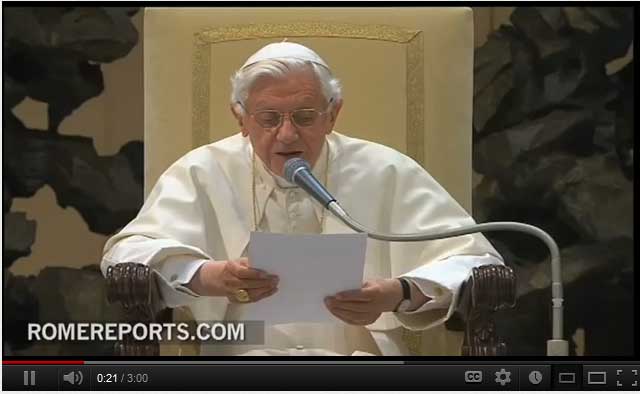
Below a Vatican Radio translation of the Holy Father’s general audience catechesis
Dear Brothers and Sisters,
Last Wednesday we reflected on the desire for God that the human being carries deeply within himself. Today I would like to continue and deepen this aspect meditating briefly on some paths to knowing God, remembering, however, that God’s initiative always precedes any action of man, and even in the journey towards Him, it is He who first enlightens us, guides us and leads us, always respecting our freedom. And it is always He who allows us enter into his intimacy, revealing and gifting Himself us the grace to be able to welcome this revelation in faith. Let us never forget the experience of St. Augustine: it is not we who seek or possess the Truth, but the Truth that seeks us out and posses us.
However, there are paths that can open the human heart to knowledge of God’, there are signs that lead to Him. Of course, often we are in danger of being dazzled by the glitter of worldliness, which make us less able to travel these paths or to read those signs. However, God does not tire to look for us, He is faithful to the humanity He created and redeemed, He remains close to our lives, because He loves us. And ‘this a certainty that must accompany us each and every day, even if certain widespread mentalities make it increasingly difficult for the Church and the Christian to communicate the joy of the Gospel to all creatures and all lead to an encounter with Jesus, the one Saviour of the world. This, however, is our mission, the mission of the Church and every believer must live it joyfully, feeling it to be his or her own, through a life truly animated by faith, marked by charity, service to God and to others, and capable of radiating hope. This mission shines above all in the holiness to which all are called.
Today difficulties and trials are not lacking for the faith, often poorly understood, challenged, rejected. St. Peter said to his Christians: “Always be ready to respond, but with gentleness and respect, to anyone who asks you for the hope that is in your hearts” (1 Pt 3:15). In the past, in the West, in a society that is considered Christian, faith was the environment in which we moved; the reference and adhesion to God were, for most people, part of everyday life. Rather, it was those who do not believe that had to justify their disbelief. In our world, the situation has changed and, increasingly, the believer must be able to account for the reasons of his faith. Blessed John Paul II, in the Encyclical Fides et Ratio, emphasized how faith is put to the test in these times, crossed by subtle and insidious forms of theoretical and practical atheism (cf. nn. 46-47). From the Enlightenment onwards, the criticism of religion has intensified, history has also been marked by the presence of atheistic systems, in which God was considered a mere projection of the human mind, an illusion, and the product of a society already distorted by alienation. The last century has seen a strong and growing secularism, in the name of the absolute autonomy of man, considered as a measure and artifice of reality, but depleted of his being created “in the image and likeness of God.” In our time there is a particularly dangerous phenomenon for the faith: there is in fact a form of atheism that we define, as ‘practical’, which does not deny the truths of faith or religious rituals, but simply considers them irrelevant to everyday existence, detached from life, useless. Often, then, people believe in God in a superficial way, but live “as if God did not exist” (etsi Deus non daretur). In the end, however, this way of life is even more destructive, because it leads to indifference towards faith and the question of God
Tags: beauty, faith, freedom, truth
This entry was posted on Wednesday, November 14th, 2012 at 12:22 pm
You can follow any responses to this entry through the RSS 2.0 feed.
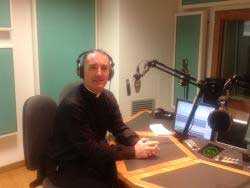
In Vatican Radio’s new series “Questions of Faithâ€, accompanying Pope Benedict XVI’s catechesis on the Year of Faith, Monsignor John Kennedy an Official at the Congregation for the Doctrine of Faith will be on hand to answer listener’s questions on everything from why we are baptised as infants to why priests don’t get married.
This week the focus is on formation, starting with the Catechism of the Catholic Church. “Good Catechesis is essential for the New Evangelization†reads proposal 29 of the recent Synod of Bishops on the New Evangelisation. In their list submitted to Pope Benedict XVI, the bishops from across the globe all concurred that attention must be drawn to “the indispensable service that catechists provide†and renewed emphasis on the “Catechism of the Catholic Church†and its Compendium as a resource for teaching the faith and supporting adults in the Church in their evangelizing and catechizing mission.
Mons. Kennedy starts at the very beginning: what is the Catechism? Where does it come from? How do we use it?
Listen: [powerpress]
In next week’s episode, we will be answering questions from Vatican Radio listeners from Korea, the USA and the United Kingdom, from why we pray to Saints to how often we should go to Confession.
So if you have any questions, big or small, why not ask the official? You can do this by submitting them to Vatican Radio’s – English Section Facebook page as a post or private message and tuning in each Tuesday to find out the answers to your Questions of Faith.
Tags: catechism of the catholic church, faith
This entry was posted on Wednesday, November 14th, 2012 at 12:13 pm
You can follow any responses to this entry through the RSS 2.0 feed.
Episode 23- Regnum Novum: Bringing forth the New Evangelization through Catholic Social Teaching with Omar Gutierrez – We continue the study of the “Compendium of the Social Doctrine of the Church” Â Chapter 3 Section 1 & 2
[powerpress]
CHAPTER THREE
THE HUMAN PERSON AND HUMAN RIGHTS
I. SOCIAL DOCTRINE AND THE PERSONALIST PRINCIPLE
II. THE HUMAN PERSON AS THE “IMAGO DEIâ€
a. Creatures in the image of God
b. The tragedy of sin
c. The universality of sin and the universality of salvation
We live at a very special time. The confluence of many things has brought forth the clear need to be able to articulate the Social Teaching of the Catholic Church in a way that is accessible and applicable. This is not to be an effort where high-minded theories are to be bandied about. Rather, this is a time of opportunity wherein we can apply the Social Doctrine to the concrete so as to bring about a New Kingdom, a Revolution. – Omar G.
Also visit Omar’s “Discerning Hearts” page Catholic Social Teaching 101
Tags: catholic social teaching, New Kingdom, social doctrine, special time
This entry was posted on Tuesday, November 13th, 2012 at 2:53 pm
You can follow any responses to this entry through the RSS 2.0 feed.
Episode 7 -The Way of Mystery: The Eucharist and Moral Living– The Liturgy of the Word part 1 Christ entering us through language. The difference in our attitude of being an “audience” and being in an attitude of prayer. How the Word sets us free.
[powerpress]
Deacon James Keating, PhD, the director of Theological Formation for the Institute for Priestly Formation, located at Creighton University, in Omaha, is making available to â€Discerning Hearts†and all who listen, his series of programs entitled “The Way of Mysteryâ€.
The Vatican II documents remind us that the spiritual journey is not made in a vacuum, that God has chosen to save us, not individually, but as The People of God. The Eucharist must help Christians to make their choices by discerning out of Christ’s paschal mystery. For this process to take place, however, Christians must first understand how the Eucharist puts them in touch with Christ’s passion, death, and resurrection, and what concrete implications being in touch with this mystery has for their daily lives.
For more information on the “Institute of Priestly Formation†and for other material available by Deacon Keating, just click here
Don’t forget to pickup a copy of “Communion with Christ†, it is one of the best audio sets on prayer…ever!
Check out Deacon Keating’s “Discerning Heart†page
Tags: choices, creighton university, Deacon James Keating, prayer
This entry was posted on Tuesday, November 13th, 2012 at 2:41 pm
You can follow any responses to this entry through the RSS 2.0 feed.