 Site Type
 Featured
 Fonts
Fonts Skins
Skins
USCCA25 Chapter 22 Sacramentals and Popular Devotions
[powerpress]
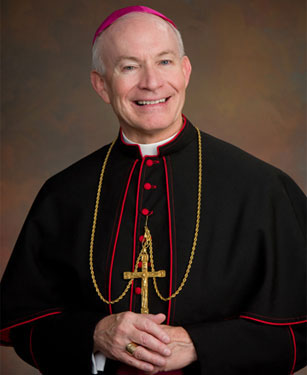
Archbishop Lucas offers insights on the US Catholic Catechism for Adults Chapter22:
Sacramentals dispose believers to receive the chief effects of the Sacraments. They are sacred signs that resemble the Sacraments in the sense that they signify spiritual effects that are obtained through the intercession of the Church. Sacramentals include blessings, actions such as processions, prayers such as the Rosary, and objects such as holy water, palms, ashes, candles, and medals.
The Church instituted sacramentals to sanctify certain ministries, states of life, and the variety of situations in which Christians are involved. Their use has been guided by bishops’ pastoral decisions in responding to specific needs that are particular to a given period of history or locality. They include a prayer, usually with a gesture such as the Sign of the Cross or the sprinkling of holy water.
The Most Reverend George J. Lucas leads the Archdiocese of Omaha.Â
For other episodes in the visit our Archbishop George Lucas page
This programs is based on:
More information can be found here.
We wish to thank the USCCB for the permissions granted for use of  relevant material used in this series.
Also we wish to thank Denise Wharton  for her vocal talents in this episode.
[ezcc]
Tags: popular devotions, sacramentals, united states catholic catechism for adults
This entry was posted on Tuesday, November 13th, 2012 at 2:36 pm
You can follow any responses to this entry through the RSS 2.0 feed.
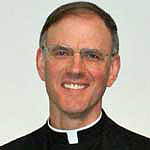 Episode 2  “What am I to do?†The Discernment of God’s Will in Everyday Decisions w/Fr. Timothy Gallagher.
This episode offers a instruction on how important it is to allow God to guide us not only in the big discernments of life, but also the decisions we make everyday.
[powerpress]
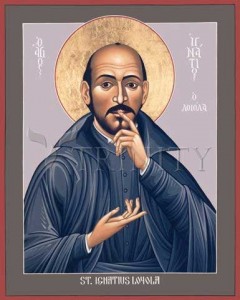
Father Timothy M. Gallagher, O.M.V., was ordained in 1979 as a member of the Oblates of the Virgin Mary, a religious community dedicated to retreats and spiritual formation according to the Spiritual Exercises of St. Ignatius. Â Fr. Gallagher is featured on the EWTN series “Living the Discerning Life: Â The Spiritual Teachings of St. Ignatius of Loyola”.
For more information on how to obtain copies of Fr. Gallaghers’s various books and audio which are available for purchase, please visit  his  website:   frtimothygallagher.org
For the other episodes in this series check out Fr. Timothy Gallagher’s “Discerning Hearts†page
Tags: discernment, Father Timothy M. Gallagher, Timothy Gallagher
This entry was posted on Thursday, November 8th, 2012 at 2:49 pm
You can follow any responses to this entry through the RSS 2.0 feed.
(Vati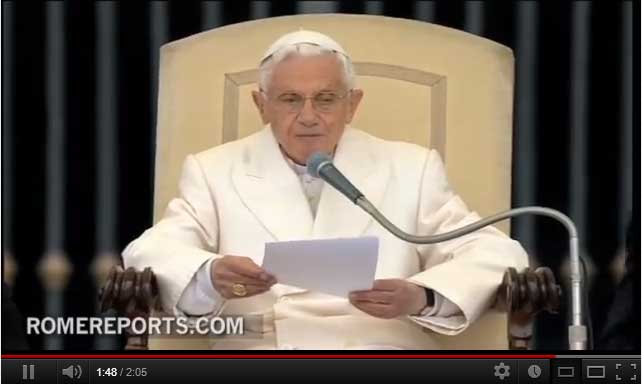 can Radio) What really satisfies man’s deepest desire? Is the desire for God absurd, irrational in today’s secularised world? How do we reach out to people who have lost their faith? To people who do not believe in God? How do we accompany them on their search for true good? These were the questions Pope Benedict XVI posed to 30 thousand people in St Peter’s Square for the Wednesday general audience, the third in his series for the Year of Faith.
Listen:[powerpress]
The answer, Pope Benedict XVI said, lies in rediscovering the real meaning of human desire, ecstasy and love. In rediscovering our taste for the joys of life.
“We must believe that even in our era, seemingly reluctant to the transcendent dimension, that it is possible to open a path toward an authentic religious meaning of life, showing how the gift of faith is not absurd, it is not irrationalâ€
Below please find a Vatican Radio translation of Pope Benedict XVI’s general Audience catechesis, the third in his series on the Year of Faith:
Dear brothers and sisters,
The journey of reflection that we are making together this Year of Faith leads us to meditate today on a fascinating aspect of the Human and Christian experience: man carries within himself a mysterious desire for God. In a very significant way, the Catechism of the Catholic Church opens with the following consideration: “The desire for God is written in the human heart, because man is created by God and for God; and God never ceases to draw man to himself. Only in God will he find the truth and happiness he never stops searching for”(No. 27).
Such a statement, which even today in many cultural contexts seems quite acceptable, almost obvious, might instead appear as a provocation in the sphere of secularized Western culture. Many of our contemporaries could, in fact, argue that they do not feel such a desire for God at all. For large sectors of society He is no longer desired, expected, but rather a reality that leaves some indifferent and not even worth wasting one’s breath over. Actually, what we have defined as “desire for God†has not completely disappeared and still today, in many ways, appears in the heart of man. Human desire always tends towards certain tangible assets, which are often far from spiritual, and yet it is still faced with the question of what “the†good really is and as a result confront itself with something other than itself, something that man cannot create, but is called upon to recognize. What can really satisfy man’s desire?In my first encyclical, Deus caritas est, I tried to analyze how such dynamism is experienced in human love, an experience which in our era is more easily perceived as a moment of ecstasy, of going beyond oneself, as a place where man senses that he is being filled with a desire that is beyond him. Through love, men and women experience in a new way, thanks to one another, the grandeur and beauty of life and of reality. If what I experience is not a mere illusion, if I really want the good of the other as a path towards my own good, then I must be willing to de-centralize myself, to put myself at the service of the other to the point of surrendering myself. The answer to the question about the meaning of the experience of love thus passes through the cleansing and healing of the will, which is required by the very good we want for the other. We have to practise, train and even correct ourselves so that that good may be truly wanted. (more…)
Tags: pope benedict xvi, year of faith
This entry was posted on Wednesday, November 7th, 2012 at 2:17 pm
You can follow any responses to this entry through the RSS 2.0 feed.
From Vatican Radio:
It’s been 500 years since Michelangelo completed work on the celebrated frescos that adorn the ceiling of the Sistine Chapel. On the Eve of the feast of All Saints, the reigning pontiff, Pope Julius II, solemnly dedicated the monumental work.
Earlier this week, Pope Benedict XVI, following in the footsteps of his predecessor, celebrated Vespers in the Chapel to commemorate the occasion.
Vatican Radio’s Christopher Wells spoke with art historian and tour guide Dr. Elizabeth Lev about the significance of Michelangelo’s work. “In a world where people are always looking forward to the next new thing, and the next hot thing, and the next novelty, that there is still a place where people look backwards and they look in awe at a tradition and a manifestation of what is clearly faith and art, is really quite an amazing thing.â€
Dr. Lev speaks about the central focus of the ceiling, and its relevance for people today. “Michelangelo . . . reduced the story to the human figure. And you see God as an actor, God moving, God interested in that which He creates. He’s physically engaged in the act of creation. I think to begin with, to see a God that wants to be involved is already unbelievably hopeful to people.â€
The Sistine Chapel, she says, speaks to all people: “And then we see the centrality of the creation of man, and how important man is, and that, no matter who you are or where you come from, you can see yourself reflected in that ceiling . . . An innumerable number of people can look in that ceiling and see themselves reflected, and see themselves reflected as beautiful, as heroic, as extraordinary – which is what human beings are. And that makes the Sistine Chapel universal. But of course ‘universal,’ I believe, is the definition of Catholic . . .â€
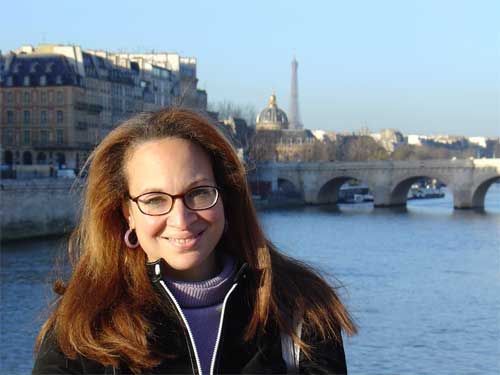
Listen to the complete interview of Dr. Elizabeth Lev with Christopher Wells: [powerpress]
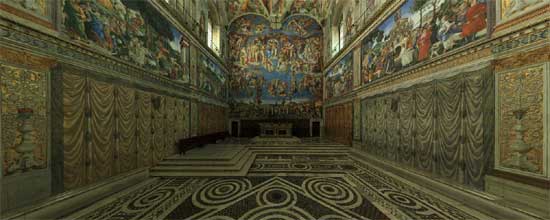
Enter into this very personal experience of the Sistine Chapel
Tags: art, beauty, sistine chapel
This entry was posted on Tuesday, November 6th, 2012 at 4:21 am
You can follow any responses to this entry through the RSS 2.0 feed.
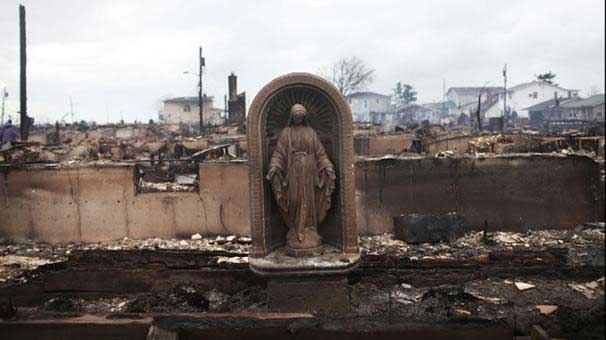
[powerpress]Msgr. Esseff recounts some of his experiences as he directed retreats for the  Missionaries of Charity Sisters in Italy and Spain. He speaks of his time in Rome during the Synod for the New Evangelization and the Canonization of the Saints on October 21. Be he also shares his experience of hearing about Hurricane Sandy for the first time at the airport on the way home and the subsequent tragedy that has followed in its wake. Msgr. Esseff offers his insights on this moment and the hope that is found in the teachings of Christ. He guides us through a meditation that helps us to see deeply into the heart of the person next to us.
Tags: Hurricane Sandy, John Esseff, reflection, rome
This entry was posted on Monday, November 5th, 2012 at 6:25 pm
You can follow any responses to this entry through the RSS 2.0 feed.
Episode 6 -The Way of Mystery: The Eucharist and Moral Living– The Penitential Rite part 2 Are we afraid of silence, being alone with God, posture, and The domestic church.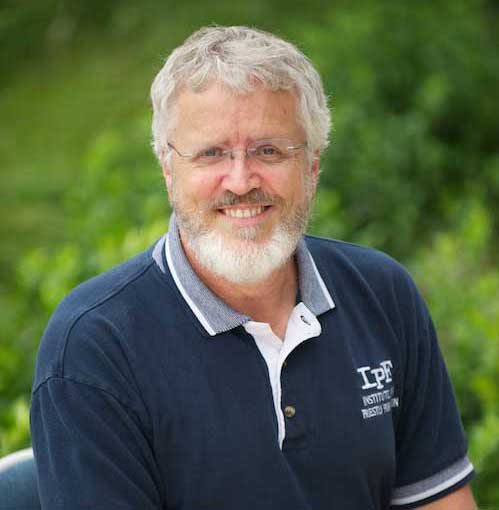
[powerpress]
Deacon James Keating, PhD, the director of Theological Formation for the Institute for Priestly Formation, located at Creighton University, in Omaha, is making available to â€Discerning Hearts†and all who listen, his series of programs entitled “The Way of Mysteryâ€.
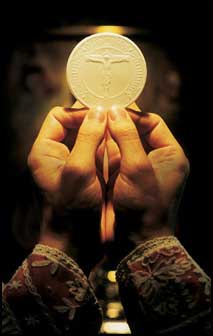 The Vatican II documents remind us that the spiritual journey is not made in a vacuum, that God has chosen to save us, not individually, but as The People of God. The Eucharist must help Christians to make their choices by discerning out of Christ’s paschal mystery. For this process to take place, however, Christians must first understand how the Eucharist puts them in touch with Christ’s passion, death, and resurrection, and what concrete implications being in touch with this mystery has for their daily lives.

For more information on the “Institute of Priestly Formation†and for other material available by Deacon Keating, just click here
Don’t forget to pickup a copy of “Communion with Christ†, it is one of the best audio sets on prayer…ever!
Check out Deacon Keating’s “Discerning Heart†page
Tags: choices, creighton university, Deacon James Keating, silence
This entry was posted on Monday, November 5th, 2012 at 1:32 pm
You can follow any responses to this entry through the RSS 2.0 feed.
USCCA24 Chapter 21 Â The Sacrament of Marriage Part 2
[powerpress]
Archbishop Lucas offers insights on the US Catholic Catechism for Adults Chapter21:
The couple needs to remember they have entered a relationship between persons. They come to one another with two loves, the one commanded by Jesus and the one caused by their attraction to each other. They are challenged to unite their personal love with Christ’s love. Their human love will survive more effectively the cultural challenges they face, as well as the psychological and economic ones, when it is merged with the powerful love of Christ, who wants them to succeed and whose divine grace is ever at their service.
United States Conference of Catholic Bishops (USCCB)
The Most Reverend George J. Lucas leads the Archdiocese of Omaha.Â
For other episodes in the visit our Archbishop George Lucas page
This programs is based on:
More information can be found here.
We wish to thank the USCCB for the permissions granted for use of  relevant material used in this series.
Also we wish to thank Matt Willkomb for his vocal talents in this episode.
[ezcc]
Tags: annulment, same sex marriage, united states catholic catechism for adults
This entry was posted on Monday, November 5th, 2012 at 1:26 pm
You can follow any responses to this entry through the RSS 2.0 feed.
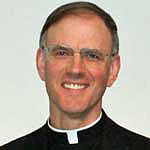 Episode 1  “What am I to do?†The Discernment of God’s Will in Everyday Decisions w/Fr. Timothy Gallagher.
This episode offers an overall introduction of the series by offering examples, both big and small, and the overall tools that will be used to come to the discernment of God’s will in various situations. Â In particular, what do we do when deciding between “a morally good option and another apparently good option”?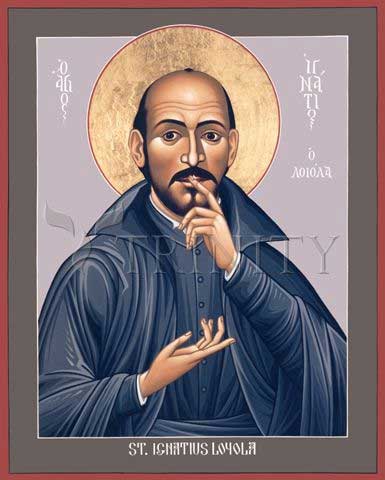
[powerpress]
For other episodes in the series visit The Discerning Hearts “Discerning the Will of God†page
Father Timothy M. Gallagher, O.M.V., was ordained in 1979 as a member of the Oblates of the Virgin Mary, a religious community dedicated to retreats and spiritual formation according to the Spiritual Exercises of St. Ignatius. Â Fr. Gallagher is featured on the EWTN series “Living the Discerning Life: Â The Spiritual Teachings of St. Ignatius of Loyola”.
For more information on how to obtain copies of Fr. Gallaghers’s various books and audio which are available for purchase, please visit  his  website:   frtimothygallagher.org
For the other episodes in this series check out Fr. Timothy Gallagher’s “Discerning Hearts†page
Tags: discernment, Father Timothy M. Gallagher, Timothy Gallagher
This entry was posted on Thursday, November 1st, 2012 at 6:58 am
You can follow any responses to this entry through the RSS 2.0 feed.
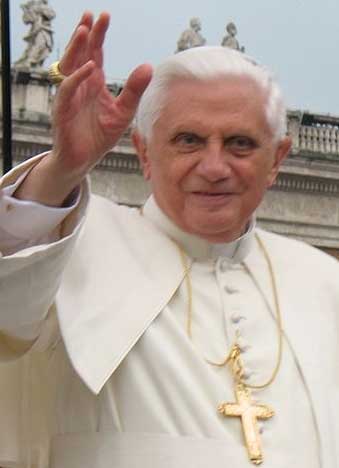
(Vatican Radio) On Wednesday Pope Benedict XVI began the second installment in his general audience catechesis on faith, by putting a series of questions to the thousands of pilgrims and visitors to St Peter’s Square. He asked them: What is faith? Does faith still make sense in a world where science and technology have opened new horizons that were, until recently, unthinkable? What does it mean to believe today? Emer McCarthy reports
[powerpress]
These “unrelenting†questions, he told them, are typical of the world today of “a certain kind of culture, has educated us to move only within the horizon of things, of the feasible, to believe only what we can see and touch with our hands. On the other hand, the number of people who feel disoriented is growing and, in seeking to go beyond a purely horizontal reality, they are willing to believe anything and its direct oppositeâ€.
But, added the Pope, these questions also reveal that despite the “greatness†of our human discoveries, we need and want more than the simply tangible. We need and are looking for “love, meaning and hope, a sure foundation, a solid ground to help us live with an authentic sense even moments of crisis, darkness, difficulties and daily problems. Faith gives us just that: it is a confident trust in a “You”, that is Godâ€.
Below a Vatican Radio translation of the Holy Father’s general audience catechesis:
Dear Brothers and Sisters,
last Wednesday with the start of the Year of Faith, I began a new series of catechesis on faith. Today I would like to reflect with you on an elementary question: What is faith? Does faith still make sense in a world where science and technology have opened new horizons that were, until recently, unthinkable? What does it mean to believe today? In fact, in our time what we need is a renewed faith education, which includes a certain awareness of its truth and the events of salvation, but that mainly arises from a real encounter with God in Jesus Christ, from loving Him, trusting him, so that our entire life is involved.Today, along with many signs of good, a sort of spiritual desert is growing around us. Sometimes, the events we hear about in the news every day, give us the feeling that the world is not projected toward building a more fraternal and peaceful community; the very ideas of progress and well-being show their darker shadows. Despite the greatness of the discoveries of science and the breakthroughs of technology, today man does not seem to have truly become freer, more humane; there are still many forms of exploitation, manipulation, violence, oppression, injustice … Moreover a certain kind of culture, has educated us to move only within the horizon of things, of the feasible, to believe only what we can see and touch with our hands. On the other hand, the number of people who feel disoriented is growing and, in seeking to go beyond a purely horizontal reality, they are willing to believe anything and its direct opposite. In this context, some fundamental questions emerge, which are much more concrete than they appear at first sight: What is the meaning of life? Is there a future for the man, for us and for future generations? Where should we direct the choices of our freedom for a successful and happy life? What awaits us beyond the threshold of death? (more…)
Tags: pope benedict xvi, year of faith
This entry was posted on Wednesday, October 24th, 2012 at 9:40 am
You can follow any responses to this entry through the RSS 2.0 feed.
USCCA5- Episode 5-Â I Believe in God
[powerpress]
Archbishop Lucas offers 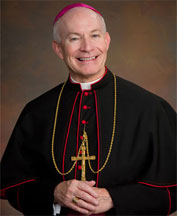 insights on the US Catholic Catechism for Adults Chapter 5:
Revelation tells us that he living and personal, and profoundly close to us in creating and sustaining us. Though he is totally other, hidden, glorious, and wondrous, he communicates to us through creation us and reveals himself to us through the prophets and above in Jesus Christ, whom we meet in the Church, especially in Scripture and the Sacraments.  In many ways,  God speaks to our hearts where we may welcome his loving presence.
The Most Reverend George J. Lucas leads the Archdiocese of Omaha.Â
For other episodes in the visit our Archbishop George Lucas page
This programs is based on:
More information can be found here.
We wish to thank the USCCB for the permissions granted for use of  relevant material used in this series.
Also we wish to thank Omar Gutierrez and Denise Wharton  for their vocal talents in this episode.
Tags: Archbishop Lucas, Church, creation, USCCB
This entry was posted on Monday, October 15th, 2012 at 12:03 pm
You can follow any responses to this entry through the RSS 2.0 feed.
Episode 2 – Roots of the Faith: The Mass: the Universal Sign 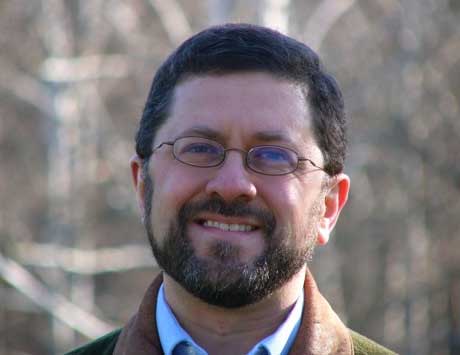
[powerpress]
Roots of the Faith – From the Church Fathers to You with Mike Aquilina, makes clear that just as an acorn grows into a tree and yet remains the same plant, so the Catholic Church is a living organism that has grown from the faith of the earliest Christians into the body of Christ we know today. Hosted by Kris McGregor
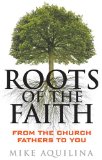
Also visit Mike’s “Discerning Hearts” page for more audio downloads and information!
Tags: prayer, st. paul center for biblical theology
This entry was posted on Thursday, October 4th, 2012 at 6:19 am
You can follow any responses to this entry through the RSS 2.0 feed.
[powerpress]
Below a Vatican Radio translation of the Holy Father’s catechesis from original text in Italian.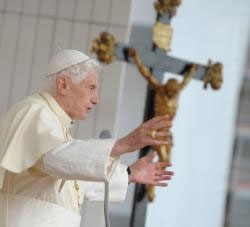
Dear Brothers and Sisters,
In the last catechesis I began speaking about one of the privileged sources of Christian prayer: the sacred liturgy, which – as the Catechism of the Catholic Church affirms – is “participation in Christ’s own prayer addressed to the Father in the Holy Spirit†(Catechism of the Catholic Church, 1073). In the liturgy, all Christian prayer finds its source and goal.”(n. 1073). Today I would like us to ask ourselves: in my life, do I reserve enough space for prayer and, above all, what place does liturgical prayer have in my relationship with God, especially the Mass, as participation in the common prayer of the Body of Christ which is the Church ?In answering this question we must first remember that prayer is the living relationship of the children of God with their Father who is good beyond measure, with his Son Jesus Christ, and the Holy Spirit (cf. ibid., 2565). Therefore, the life of prayer lies in habitually being in the presence of God and being conscious of it, in living our relationship with God just as we live the usual relationships of our lives, those with close family members, and with real friends; indeed our relationship with the Lord gives light to all of our other relationships. This communion of life with God, One and Triune, is possible because, through Baptism we have been inserted into Christ, we have begun to be one with Him (cf. Rom 6:5).
In fact, only in Christ we can talk to God the Father as children, otherwise it is not possible, but in communion with the Son, we too can say, as he said “Abba”, because only in communion with Christ, can we know God as our true Father (cf. Mt 11:27). For this Christian prayer lies in constantly looking, in an ever new way, at Christ, talking with Him, being in silence with Him, listening to Him, acting and suffering with Him. The Christian rediscovers his true identity in Christ, “the firstborn of every creature », in whom all things were created (cf. Col 1:15 ff). By identifying with Him, being one with Him, I discover my personal identity, that of the true child who sees God as a Father full of love.
But do not forget: we discover Christ, we know him as a living Person, in the Church. It is “his Body.” This embodiment can be understood from the biblical words on man and woman: the two shall become one flesh (cf. Gen 2:24, Ephesians 5.30 ff. 1 Cor 6.16 s). The unbreakable bond between Christ and the Church, through the unifying power of love, does not negate the ‘you’ or ‘I’, but raises them to their most profound unity. Finding one’s true identity in Christ means achieving communion with him, that does not cancel me out, but raises me to the highest dignity, that of a child of God in Christ, “the love-story between God and man consists in the very fact that this communion of will increases in a communion of thought and sentiment, and thus our will and God’s will increasingly coincide “(Encyclical Deus Caritas Est, 17). To pray means to rising towards the heights of God through a necessary gradual transformation of our being.
Thus, participating in the liturgy, we make ours the language of the Mother Church, we learn to speak it and for it. Of course, as I have already said, this takes place in a gradual manner, little by little. I have to progressively immerge myself in the words of the Church, with my prayer, my life, my suffering, my joy, my thoughts. It is a journey that transforms us.
This entry was posted on Thursday, October 4th, 2012 at 6:11 am
You can follow any responses to this entry through the RSS 2.0 feed.
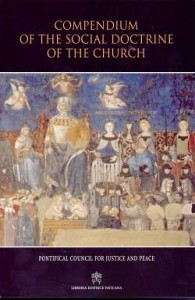
Episode 22- Regnum Novum: Bringing forth the New Evangelization through Catholic Social Teaching with Omar Gutierrez – We continue the study of the “Compendium of the Social Doctrine of the Church” Â Chapter 2 Section 2
[powerpress]
CHAPTER TWO
THE CHURCH’S MISSION AND SOCIAL DOCTRINE
II. THE NATURE OF THE CHURCH’S SOCIAL DOCTRINE
a. Knowledge illuminated by faith
b. In friendly dialogue with all branches of knowledge
c. An expression of the Church’s ministry of teaching
d. For a society reconciled in justice and love
e. A message for the sons and daughters of the Church and for humanity
f. Under the sign of continuity and renewal
We live at a very special time. The confluence of many things has brought forth the clear need to be able to articulate the Social Teaching of the Catholic Church in a way that is accessible and applicable. This is not to be an effort where high-minded theories are to be bandied about. Rather, this is a time of opportunity wherein we can apply the Social Doctrine to the concrete so as to bring about a New Kingdom, a Revolution. – Omar G.
Also visit Omar’s “Discerning Hearts” page Catholic Social Teaching 101
Tags: compendium of the social doctrine of the church
This entry was posted on Tuesday, October 2nd, 2012 at 10:43 am
You can follow any responses to this entry through the RSS 2.0 feed.
Episode 1 -The Way of Mystery: The Eucharist and Moral Living–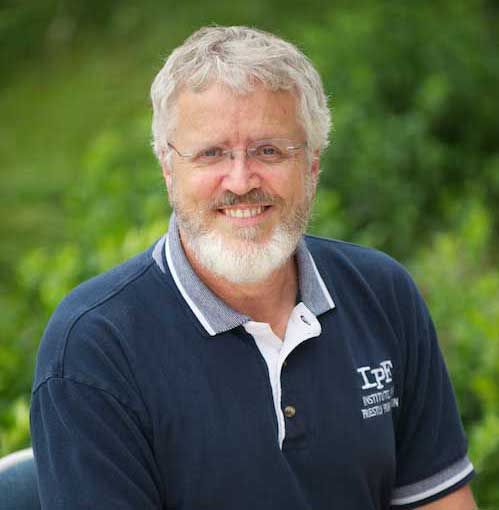 Placing the Eucharist as the center of who we are as Catholics part 1
[powerpress]
Deacon James Keating, PhD, the director of Theological Formation for the Institute for Priestly Formation, located at Creighton University, in Omaha, is making available to â€Discerning Hearts†and all who listen, his series of programs entitled “The Way of Mysteryâ€.
The Vatican II documents remind us that the spiritual journey is not made in a vacuum, that God has chosen to save us, not individually, but as The People of God. The Eucharist must help Christians to make their choices by discerning out of Christ’s paschal mystery. For this process to take place, however, Christians must first understand how the Eucharist puts them in touch with Christ’s passion, death, and resurrection, and what concrete implications being in touch with this mystery has for their daily lives.
For more information on the “Institute of Priestly Formation†and for other material available by Deacon Keating, just click here
Don’t forget to pickup a copy of “Communion with Christ†, it is one of the best audio sets on prayer…ever!
Check out Deacon Keating’s “Discerning Heart†page
Tags: choices, creighton university, Deacon James Keating, Deacon Keating
This entry was posted on Monday, October 1st, 2012 at 11:37 am
You can follow any responses to this entry through the RSS 2.0 feed.
USCCA22 Chapter 20 Holy Orders Part 2
[powerpress]
Archbishop Lucas offers insights on the US Catholic Catechism for Adults Chapter20:
A bishop is given the grace to teach in the name of Christ; to sanctify the Church through the celebration of the Sacraments; to guide, govern, and defend the Church; and to be a sign of the unity of the Church.
A priest is given the grace to proclaim the Gospel and preach, to celebrate the Sacraments (except Holy Orders), and to shepherd the people entrusted to him.
A deacon in the Latin Church is ordained to proclaim the Gospel and preach, to baptize, to assist the bishop or priest in the celebration of the Eucharist, to assist at and bless marriages, to preside at funerals, and to serve the community through works of charity.
United States Conference of Catholic Bishops (USCCB)
The Most Reverend George J. Lucas leads the Archdiocese of Omaha.Â
For other episodes in the visit our Archbishop George Lucas page
This programs is based on:
More information can be found here.
We wish to thank the USCCB for the permissions granted for use of  relevant material used in this series.
Also we wish to thank Matt Willkomb for his vocal talents in this episode.
[ezcc]
Tags: holy orders, united states catholic catechism for adults
This entry was posted on Monday, October 1st, 2012 at 11:27 am
You can follow any responses to this entry through the RSS 2.0 feed.