 Site Type
 Featured
 Fonts
Fonts Skins
Skins
“Why is this granted me, that the mother of my Lord should come to me?”
[powerpress feed=”daily-scripture”]
an excerpt from today’s reflection by Don Schwager:

Do you recognize the indwelling presence of the Lord Jesus in your life? Blessed are you if you see and recognize the Lord with the “eyes of faith”. The word “blessed” [makarios in Greek] literally means “happiness” or “beatitude”. It describes a kind of joy which is serene and untouchable, self-contained, and independent from chance and changing circumstances of life. There is a certain paradox for those “blessed” by the Lord. Mary was given the “blessedness” of being the mother of the Son of God. That blessedness also would become a sword which pierced her heart as her Son died upon the cross. Anselm, a great teacher and Archbishop of Canterberry (1033-1109), spoke these words in a homily: “Without God’s Son nothing could exist; without Mary’s son, nothing could be redeemed.” To be chosen by God is an awesome privilege and responsibility. Mary received both a crown of joy and a cross of sorrow. Her joy was not diminished by her sorrow because it 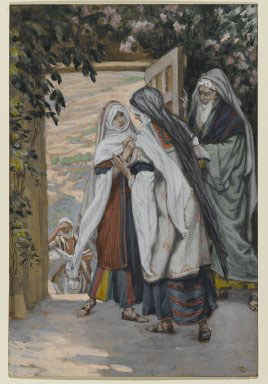 was fueled by her faith, hope, and trust in God and his promises. Jesus promised his disciples that “no one will take your joy from you” (John 16:22). The Lord gives us a supernatural joy which enables us to bear any sorrow or pain and which neither life nor death can take away. Do you know the joy of a life given over to God in faith and trust?
What is the significance of Mary’s visit to her cousin Elizabeth before the birth of Jesus? When Elizabeth greeted Mary and recognized the Messiah in Mary’s womb they were filled with the Holy Spirit and with a joyful anticipation of the fulfilment of God’s promise to give a Savior. What a marvelous wonder for God to fill not only Elizabeth’s heart with his Holy Spirit but the child in her womb as well. John the Baptist, even before the birth of the Messiah, pointed to his coming and leapt for joy in the womb of his mother as the Holy Spirit revealed to him the presence of the King to be born. The Holy Spirit is God’s gift to us to enable us to know and experience the indwelling presence of God and the power of his kingdom. The Holy Spirit is the way in which God reigns within each of us. Do you live in the joy and knowledge of God’s indwelling presence with you through his Holy Spirit?
“Lord Jesus, fill me with your Holy Spirit and give me joy in seeking you more closely. Increase my faith in all your promises, my hope in the joys of heaven, and my love for You as my All.”
for the full reflection visit : Daily Reading and Meditation
Tags: catholic, catholic podcast, catholic prayer, cathollc spirituality, don schwager, faith, gospel of luke, holy spirit, joy, mother
This entry was posted on Tuesday, May 31st, 2011 at 12:29 am
You can follow any responses to this entry through the RSS 2.0 feed.
“I have called you friends, for all that I have heard from my Father I have made known to you“
[powerpress feed=”daily-scripture”]
an excerpt from today’s reflection by Don Schwager:
What is the greatest act of love – of self-giving for the sake of another? Jesus defines friendship, the mutual bond of trust and affection between two or more people, as the willingness to give totally of oneself even to the point of dying for one’s friends. How is such love possible or even desireable? God made us in love for love. That is our reason for being, our purpose for living, and our goal in dying. God is love and everything he does flows from his love for us. He loved us so much, some might even mistakenly say too much, by giving us the best of all gifts, the offering of his beloved Son who gave his life as the atoning sacrifice for our sins. God gave up his Son so that we might become his sons and daughters, his adopted children (Romans 8:14-17).
True love is costly. Those who truly love give the best they can offer and are willing to sacrifice everything they has for the beloved. God willingly paid the price for our redemption – the sacrifice of his only begotten Son. That’s the nature of true friendship and love – the willingness to give all for the beloved. True friends will lay down their lives for each other. Jesus tells us that he is our friend and he loves us whole-heartedly and unconditionally. He wants us to love one another just as he loves us, whole-heartedly and without reserve. His love fills our hearts and transforms our minds and frees us to give ourselves in loving service to others. If we open our hearts to his love and obey his command to love our neighbor, then we will bear much fruit in our lives, fruit that will last for eternity. Do you wish to be fruitful and to abound in the love of God?
“Teach us, good Lord, to serve you as you deserve, to give and not to count the cost, to fight and not to heed the wounds, to toil and not to seek for rest, to labor and not to ask for any reward, save that of knowing that we do your will; through Jesus Christ our Lord.” (Prayer of Ignatius Loyola)
for the full reflection visit : Daily Reading and Meditation
Tags: catholic, catholic podcast, catholic prayer, cathollc spirituality, don schwager, gospel of john
This entry was posted on Friday, May 27th, 2011 at 5:24 am
You can follow any responses to this entry through the RSS 2.0 feed.
For Complete Updated Text in English click here
VATICAN CITY, 25 MAY 2011 (VIS) – Continuing with his catecheses on prayer, Benedict XVI spoke in today’s general audience about the Patriarch Jacob and his fight with the unknown man at the ford of the Jabbok. The audience was held in St. Peter’s Square with 15,000 people in attendance.
The Bible, explained the Pope, describes Jacob as an astute man who obtains things through deception. At a certain point, he sets out to return to his homeland and face his brother, whose firstborn birthrights he had taken. Jacob waits overnight in order to cross the ford safely but something unforeseen occurs: he is suddenly attacked by an unknown man with whom he struggles the entire night. The story details their struggle, which has no clear winner, leaving the rival a mystery. “Only at the end, when the struggle is finished and that ‘someone’ has disappeared, only then will Jacob name him and be able to say that he had struggled with God”.
Once the fight is over Jacob says to his opponent that he will only let him go if he blesses him. Jacob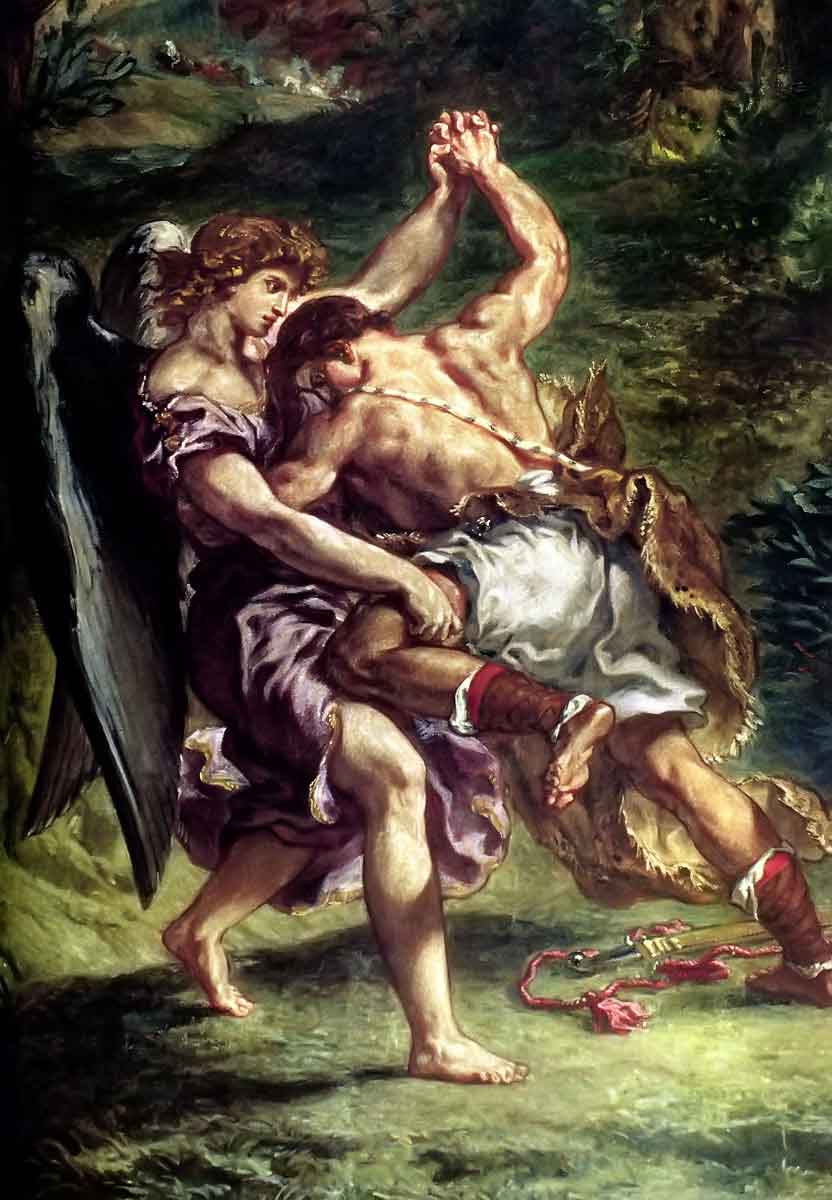 “who had defrauded his brother out of the first-born’s blessing through deceit, now demands [a blessing] from the unknown man, in whom he perhaps begins to see divine traits, but still without being able to truly recognize him. His rival, who seems restrained and therefore defeated by Jacob, instead of bowing to the Patriarch’s request, asks his name. … In the Biblical mentality, knowing someone’s name entails a type of power because it contains the person’s deepest reality, revealing their secret and their destiny. … This is why, when Jacob reveals his name, he is putting himself in his opponent’s hands. It is a form of surrender, a complete giving over of himself to the other”.
Paradoxically, however, “in this gesture of surrender, Jacob also becomes the victor because he receives a new name, together with the recognition of his victory on the part of his adversary”. The name “Jacob”, Benedict XVI continued, “recalls the verb ‘to deceive’ or ‘to supplant’. After the struggle, in a gesture of deliverance and surrender, the Patriarch reveals his reality as a deceiver, a usurper, to his opponent. The other, who is God, however, transforms this negative reality into a positive one. Jacob the deceiver becomes Israel. He is given a new name as a sign of his new identity … the mostly likely meaning of which is ‘God is strong, God wins’. When, in turn, Jacob asks his rival’s name, he refuses to say it but reveals himself in an unmistakable 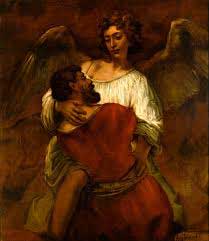 gesture, giving his blessing. … This is not a blessing obtained through deceit but one given freely by God, which Jacob can now receive because, without cunning or deception, he gives himself over unarmed, accepts surrender and admits the truth about himself”.
In the episode of the fight at the ford of Jabbok, the Pope observed, “the people of Israel speak of their origin and outline the features of a unique relationship between God and humanity. This is why, as also affirmed in the Catechism of the Catholic Church, ‘from this account, the spiritual tradition of the Church has retained the symbol of prayer as a battle of faith and as the triumph of perseverance'”.
“Our entire lives”, concluded the Holy Father, “are like this long night of struggle and prayer, passed in the desire of and request for God’s blessing, which cannot be ripped away or won over through our strength, but must be received with humility from Him as a gratuitous gift that allows us, finally, to recognize the face of the Lord. And when this happens, our entire reality changes: we receive a new name and God’s blessing”.
AG/Â Â Â Â Â Â Â Â Â Â Â Â Â Â Â Â Â Â Â Â Â Â Â Â Â Â Â VIS 20110525 (620)
updated…the complete text in English from Vatican.va:
top
BENEDICT XVI
GENERAL AUDIENCE
St. Peter’s Square
Wednesday, 25 May 2011
[Video]
Dear Brothers and Sisters,
Today I would like to reflect with you on a text from the Book of Genesis which recounts a rather curious incident in the narrative of the Patriarch Jacob. It is a passage that is not easy to interpret, but it is important for our life of faith and prayer; we are talking about the story of his struggle with God at the ford of the Jabbok, a portion of which we just heard.
As you will recall, Jacob had deprived his twin brother Esau of his birthright in exchange for a dish of lentils and then, by trickery, managed to receive the blessing from his father Isaac, now very elderly, taking advantage of the latter’s blindness. Having fled from Esau’s wrath, he took refuge with one of his relatives, Laban; he married, acquired some wealth, and was returning to his homeland, ready to face his brother having first put into place some prudent provisions. However, when everything was ready for this meeting, after having had those who were with him cross the ford of the stream that marked the boundary of Esau’s territory, Jacob, who had remained behind alone, was suddenly set upon by an unknown man with whom he wrestled the whole night. This hand-to-hand combat, which we find described in chapter 32 of the Book of Genesis, became for him a singular experience of God.
Night is the favourable time for acting secretly, the best time, therefore, for Jacob to enter his brother’s territory unseen, perhaps thinking to take Esau by surprise. It is he, however, who is surprised by an unforeseen attack, one for which he was unprepared. Having used his cleverness to try to escape a dangerous situation, he thought he had managed to have everything under control; instead he now finds himself forced to enter a mysterious struggle that catches him alone and gives him no opportunity to organize a proper defence. Unarmed, in the night, the Patriarch Jacob wrestles with someone. The text does not specify the identity of the aggressor; it uses a Hebrew word that indicates “a man†in a generic sense, “one, someoneâ€; it is, therefore, a vague, indeterminate definition that purposely keeps the assailant shrouded in mystery. It is dark, Jacob does not manage to see his opponent clearly, and even for the reader, for us, he remains anonymous; someone is opposing the Patriarch, and this is the only certain data supplied by the narrator. Only at the end, when the wrestling is over and that “someone†will have disappeared, only then will Jacob name him and be able to say that he had wrestled with God.
The episode, therefore, takes place in darkness and it is difficult to ascertain not only the identity of Jacob’s assailant, but also how the struggle is going. On reading the passage, it is rather difficult to determine which of the two contenders is gaining the upper hand; the verbs used often lack a specific subject, and the actions take place almost in a contradictory manner, so that when it looks as though one of the two is winning, the next action immediately denies that and shows the other to be the victor. At the beginning, in fact, Jacob seems to be the stronger and of his opponent, the text says, “he did not prevail over him†(v. 25); yet he strikes Jacob’s hip at its socket, dislocating it. Thus one thinks that Jacob would have to give in, but instead it is his opponent who asks him to release him; and the Patriarch refuses, setting one condition: “I will not let you go, unless you bless me†(v. 27). The one who tricked his brother and robbed him of the blessing of the firstborn now claims it from the stranger, thus perhaps beginning to perceive some kind of divine meaning, but without yet being able to recognize it for certain.
His rival, who seems to be held back and therefore defeated by Jacob, rather than giving in to the Patriarch’s request, asks him his name: “What is your name?â€. And the Patriarch replies: “Jacob†(v. 28). Here the struggle takes an important turn. In fact, knowing someone’s name implies a kind of power over that person because in the biblical mentality the name contains the most profound reality of the individual, it reveals the person’s secret and destiny. Knowing one’s name therefore means knowing the truth about the other person and this allows one to dominate him. When, therefore, in answer to the unknown person’s request Jacob discloses his own name, he is placing himself in the hands of his opponent; it is a form of surrender, a total handing over of self to the other.
However, in this act of surrender paradoxically Jacob too emerges victorious because he receives a new name with the recognition of his victory by his adversary, who says to him: “You shall no longer be spoken of as Jacob, but as Israel, because you have contended with divine and human beings and have prevailed†(v. 29). “Jacob†was a name that recalled the Patriarch’s problematic beginnings; in Hebrew, in fact, it recalls the term “heel†and takes the reader back to the time of Jacob’s birth when, as he left his mother’s womb, he held onto the heel of his twin brother (cf. Gen 25:26), almost prefiguring the unfair advantage he would take over his brother in adulthood; however the name Jacob also recalls the verb “to deceive, to supplantâ€. Well, now, in the struggle in this act of surrender and submission, the Patriarch reveals his true identity as a deceiver, the one who supplants; however the other, who is God, transforms this negative reality into something positive: Jacob the deceiver becomes Israel, he is given a new name as a sign of a new identity. Here, too, the account maintains its deliberate duplicity because the more probable meaning of the name Israel is “God is strong, God is victoriousâ€.
Therefore Jacob has prevailed, he won — his adversary himself says so — but his new identity, which he has received from the adversary himself, affirms and bears witness to God’s victory. And when Jacob in turn asks his opponent his name, the latter refuses to say it, but reveals himself in an unequivocal gesture, giving him the blessing. The blessing that the Patriarch had requested at the beginning of the struggle is now granted him. However, it is not a blessing obtained through deceit, but one given freely by God, which Jacob can receive because he is now alone, without protection, without cunning or tricks; he gives himself over unarmed, agrees to surrender and confesses the truth about himself. Therefore, at the end of the struggle, having received the blessing, the Patriarch can finally recognize the other, the God of blessings: Truly, he says, “I have seen God face to face, and yet my life is preserved†(v. 30), and now he can cross the ford, the bearer of a new name but “conquered†by God and marked forever, limping because of the injury he received (v. 31).
Biblical exegetes give many interpretations to this passage; the scholars in particular recognize in it literary connotations and components of various genres, as well as references to some popular accounts. But when these elements are taken up by the authors of the Sacred texts and incorporated into the biblical narrative, they change their meaning and the text opens up to broader dimensions. For the believer the episode of the struggle at the Jabbok thus becomes a paradigm in which the people of Israel speak of their own origins and outline the features of a particular relationship between God and humanity. Therefore, as is also affirmed in the Catechism of the Catholic Church, “from this account, the spiritual tradition of the Church has retained the symbol of prayer as a battle of faith and as the triumph of perseverance†(n. 2573). The Bible text speaks to us about a long night of seeking God, of the struggle to learn his name and see his face; it is the night of prayer that, with tenacity and perseverance, asks God for a blessing and a new name, a new reality that is the fruit of conversion and forgiveness.
For the believer Jacob’s night at the ford of the Jabbok thus becomes a reference point for understanding the relationship with God that finds in prayer its greatest expression. Prayer requires trust, nearness, almost a hand-to-hand contact that is symbolic not of a God who is an enemy, an adversary, but a Lord of blessing who always remains mysterious, who seems beyond reach. Therefore the author of the Sacred text uses the symbol of the struggle, which implies a strength of spirit, perseverance, tenacity in obtaining what is desired. And if the object of one’s desire is a relationship with God, his blessing and love, then the struggle cannot fail but ends in that self-giving to God, in recognition of one’s own weakness, which is overcome only by giving oneself over into God’s merciful hands.
Dear brothers and sisters, our entire lives are like this long night of struggle and prayer, spent in desiring and asking for God’s blessing, which cannot be grabbed or won through our own strength but must be received with humility from him as a gratuitous gift that ultimately allows us to recognize the Lord’s face. And when this happens, our entire reality changes; we receive a new name and God’s blessing. And, what is more: Jacob, who receives a new name, and becomes Israel, also gives a new name to the place where he wrestled with God, where he prayed; he renames it Penuel, which means: “The Face of Godâ€. With this name he recognizes that this place is filled with the Lord’s presence, making that land sacred and thus leaving a memorial of that mysterious encounter with God. Whoever allows himself to be blessed by God, who abandons himself to God, who permits himself to be transformed by God, renders a blessing to the world. May the Lord help us to fight the good fight of the faith (cf. 1 Tim 6:12; 2 Tim 4:7) and to ask, in prayer, for his blessing, that he may renew us in the expectation of beholding his Face. Thank you.
top
Tags: catholic, catholic podcast, catholic prayer, cathollc spirituality, Patriarch Jacob, pope benedict xvi, the Patriarch
This entry was posted on Thursday, May 26th, 2011 at 8:22 am
You can follow any responses to this entry through the RSS 2.0 feed.
Episode 1 – Seeking Truth with Sharon Doran, hosted by Bruce McGregor.  Ep 1 – An Introduction to the life and work of  St. John.
[powerpress]
 Sharon Doran serves as the teaching director of “Seeking Truth.†An experienced Bible Study teacher, Sharon has a passion for scripture that will motivate and challenge you to immerse yourself in God’s Word and apply His message to your every day life.
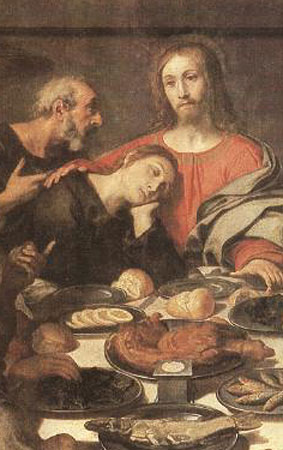
 Episode 1 – An Introduction to the life and work of St. John. Â Sharon and Bruce also discuss many aspects of Sacred Scripture and the importance of why serious study should be guided by the Church. Â And why everyone should know, value and treasure the gift of God’s Word.
 “Seeking Truthâ€Â is an in depth Catholic Bible Study, commissioned by the Archdiocese of Omaha in response to John Paul II’s call to the New Evangelization as well as Pope Benedict XVI’s exhortation for all Catholics to study scripture.  To learn more go to:  www.seekingtruth.net
Tags: catholic, catholic podcast, catholic prayer, cathollc spirituality
This entry was posted on Wednesday, May 25th, 2011 at 1:42 pm
You can follow any responses to this entry through the RSS 2.0 feed.
“Him whom comes to me I will not cast out“
[powerpress feed=”daily-scripture”]
an excerpt from today’s reflection by Don Schwager: 
Why did Jesus call himself the bread of life? The Jews understood that God promised them mana from heaven to sustain them on their journey to the promised land. Bread is the very staple of life. We could not live without food for very long. Bread sustains us. But what is life? Jesus clearly meant something more than mere physical existence. The life Jesus refers to is connected with God, the author of life. Real life is a relationship with the living God, a relationship of trust, love, obedience, peace, and joy. This is what Jesus makes possible for us – a loving relationship with God who created us for love with him. Apart from Jesus no on can enter that kind of life and relationship. Are you satisfied with mere physical existence or do you hunger for the abundant life which Jesus offers?
Jesus makes three claims here. First he offers himself as spiritual food which produces the very life of God within us. Second, he promises unbroken friendship and freedom from the fear of being forsaken or cut off from God. Third, he offers us the hope of sharing in his resurrection. Those who accept Jesus as Lord and Savior will be raised up to immortal life with Jesus when he comes again on the last day. Do you know the joy and hope of the resurrection?
“Lord Jesus Christ, your death brought life and hope where there was once only despair and defeat. Give me the unshakeable hope of everlasting life, the inexpressible joy of knowing your unfailing love, and the unquestioning faith and obedience in doing the will of our Father in heaven.”
for the full reflection visit : Daily Reading and Meditation
Tags: catholic, catholic podcast, catholic prayer, cathollc spirituality, don schwager, gospel of john
This entry was posted on Wednesday, May 11th, 2011 at 12:02 am
You can follow any responses to this entry through the RSS 2.0 feed.
“I am the bread of life; he who comes to me shall not hunger“
[powerpress feed=”daily-scripture”]
an excerpt from today’s reflection by Don Schwager:
Do you hunger for the bread of life? The Jews had always regarded the mana in the wilderness as the bread of God (Psalm 78:24, Exodus 16:15). There was a strong Rabbinic belief that when the Messiah came he would give manna from heaven. This was the supreme work of Moses. Now the Jewish leaders were demanding that Jesus produce manna from heaven as proof to his claim to be the Messiah. Jesus responds by telling them that it was not Moses who gave the manna, but God. And the manna given to Moses and the people was not the real bread from heaven, but only a symbol of the bread to come.
Jesus then makes the claim which only God can make: I am the bread of life. The bread which Jesus offers is none else than the very life of God. This is the true bread which can truly satisfy the hunger in our hearts. The manna from heaven prefigured the superabundance of the unique bread of the Eucharist or Lord’s Supper which Jesus gave to his disciples on the eve of his sacrifice. The manna in the wilderness sustained the Israelites on their journey to the Promised Land. It could not produce eternal life for the Israelites. The bread which Jesus offers his disciples sustains us not only on our journey to the heavenly paradise, it gives us the abundant supernatural life of God which sustains us both now and for all eternity. When we receive from the Lord’s table we unite ourselves to Jesus Christ, who makes us sharers in his body and blood and partakers of his divine life. Ignatius of Antioch (35-107 A.D.) calls it the “one bread that provides the medicine of immortality, the antidote for death, and the food that makes us live for ever in Jesus Christ” (Ad Eph. 20,2). This supernatural food is healing for both body and soul and strength for our journey heavenward. Do you hunger for God and for the food which produces everlasting life?
“Lord Jesus Christ, you are the bread of life. You alone can satisfy the hunger in my heart. May I always find in you, the true bread from heaven, the source of life and nourishment I need to sustain me on my journey to the promised land of heaven.”
for the full reflection visit : Daily Reading and Meditation
Tags: catholic, catholic podcast, catholic prayer, cathollc spirituality, don schwager, gospel of john, jesus christ, manna from heaven
This entry was posted on Tuesday, May 10th, 2011 at 12:01 am
You can follow any responses to this entry through the RSS 2.0 feed.
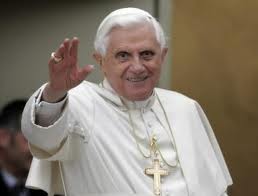
Part 2…It just gets better when discussing our Holy Father’s teachings with Mark Brumley! It’s hard to find an equal to our Holy Father when you combine his gifts and talents as a theologian and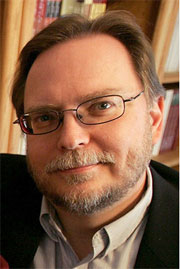 biblical scholar! As  a profound teacher and spiritual leader,  Pope Benedict XVI, through his Wednesday audience catechesis,  brings us the life and  legacy of St. Paul.  Mark Brumley joins us once again to discuss the richness of this work and offers us insights on this extraordinary saint.  Warning: Mark will inspire you to race out and pick up a copy (you’ll be so glad you did).
[powerpress]
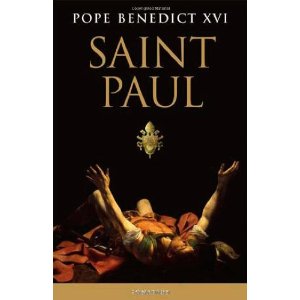
Check out more on the book here
Tags: catholic, catholic podcast, catholic prayer, cathollc spirituality, mark brumley, pope benedict xvi
This entry was posted on Monday, May 9th, 2011 at 10:08 am
You can follow any responses to this entry through the RSS 2.0 feed.
Part 1…It’s hard to find an equal to our Holy Father when you combine his gifts and talents as a theologian and biblical scholar! As  a profound teacher and spiritual leader,  Pope Benedict XVI, through his Wednesday audience catechesis,  brings us the life and  legacy of St. Paul.  Mark Brumley joins us once again to discuss the richness of this work and offers us insights on this extraordinary saint.  Warning: Mark will inspire you to race out and pick up a copy (you’ll be so glad you did).
[powerpress]
Check out more on the book here
Tags: biblical scholar, catholic, catholic podcast, catholic prayer, cathollc spirituality, mark brumley, pope benedict xvi
This entry was posted on Monday, May 9th, 2011 at 9:08 am
You can follow any responses to this entry through the RSS 2.0 feed.
“Doing the works of God“
[powerpress feed=”daily-scripture”]
an excerpt from today’s reflection by Don Schwager:
What do you most hunger for – wealth, peace, health, love, the good life? Jesus addressed this issue with those who sought him after the miracle of the multiplication of the loaves. Were they simply hungry for things which satisfy the body or for that which satisfies the heart and soul? Jesus echoes the question posed by the prophet Isaiah: “Why do you spend your money for that which is not bread, and your labor for that which does not satisfy” (Isaiah 55:2)? There are two kinds of hunger – physical and spiritual. Only God can satisfy the hunger in our heart and soul – the hunger for truth, for life, and for love.
Jesus also spoke about the works of God and what we must do to be doing the works of God, namely to believe in God’s Son whom he has sent into the world. Jesus offers a new relationship with God which issues in a new kind of life: A life of love and service, and the forgiveness of others which corresponds to God’s mercy and kindness; a life of holiness and purity which corresponds to God’s holiness; and a life of submission and trust which corresponds to the wisdom of God. This is the work which Jesus directs us to and enables us to perform in the power of the Holy Spirit. Do you hunger for the bread which comes down from heaven and thirst for the words of everlasting life?
“Lord Jesus, you alone can satisfy the deepest longing and hunger in our hearts. May I always hunger for the imperishable bread, that I may be satisfied in you alone as the True Bread of Heaven. Nourish and strengthen me that I may serve you with great joy, generosity, and zeal all the days of my life”
for the full reflection visit : Daily Reading and Meditation
Tags: catholic, catholic podcast, catholic prayer, cathollc spirituality, don schwager, gospel of john
This entry was posted on Monday, May 9th, 2011 at 12:06 am
You can follow any responses to this entry through the RSS 2.0 feed.
“He who believes in the Son has eternal life”
[powerpress feed=”daily-scripture”]
an excerpt from today’s reflection by Don Schwager:
Jesus makes a claim only God can make: He is the true bread of heaven that can satisfy the deepest hunger we experience. The sign of the multiplication of the loaves when the Lord says the blessing, breaks and distributes through his disciples prefigures the superabundance of the unique bread of his Eucharist or Lord’s Supper. When we receive from the Lord’s table we unite ourselves to Jesus Christ, who makes us sharers in his body and blood. Ignatius of Antioch (35-107 A.D.) calls it the “one bread that provides the medicine of immortality, the antidote for death, and the food that makes us live for ever in Jesus Christ” (Ad Eph. 20,2). This supernatural food is healing for both body and soul and strength for our journey heavenward. When you approach the Table of the Lord, what do you expect to receive? Healing, pardon, comfort, and rest for your soul? The Lord has much more for us, more than we can ask or imagine. The principal fruit of receiving the Eucharist is an intimate union with Christ. As bodily nourishment restores lost strength, so the Eucharist strengthens us in charity and enables us to break with disordered attachments to creatures and to be more firmly rooted in the love of Christ. Do you hunger for the “bread of life”?
The feeding of the five thousand shows the remarkable generosity of God and his great kindness towards us. When God gives, he gives abundantly. He gives more than we need for ourselves that we may have something to share with others, especially those who lack what they need. God takes the little we have and multiplies it for the good of others. Do you trust in God’s provision for you and do you share freely with others, especially those who lack?
“Lord Jesus, you satisfy the deepest longing of our heart and you feed us with the finest of wheat (Psalm 81:16). Fill me with gratitude and give me a generous heart that I may freely share with others what you have given to me.”
for the full reflection visit : Daily Reading and Meditation
Tags: catholic, catholic podcast, catholic prayer, cathollc spirituality, don schwager, gospel of john
This entry was posted on Friday, May 6th, 2011 at 12:04 am
You can follow any responses to this entry through the RSS 2.0 feed.
“He who believes in the Son has eternal life”
[powerpress feed=”daily-scripture”]
an excerpt from today’s reflection by Don Schwager:
God’s truth has consequences and he gives us the freedom to choose how we will respond. The choice he gives us has eternal consequences – everlasting life or everlasting death. God challenged his people in the Old Covenant: “See I have set before you this day life and good, death and evil. …I call heaven and earth to witness against you this day, that I have set before you life and death, blessing and curse; therefore choose life, that you may live, loving the Lord your God, obeying his voice, and cleaving to him” (Deuteronomy 30:15-20). And he issues the same challenge to the people of the New Covenant today. Do you weigh the consequences of your choices? Do they lead you towards life or towards death? If you choose to obey God’s voice and to do his will, then you will know and experience that life which comes from God himself. If you choose to follow your own way apart from God and his will, then you choose for death – a spiritual death which poisons and then kills the soul until there is nothing left but an empty person devoid of love, truth, goodness, purity, peace, and joy. Do your choices lead you towards God or away from God?
“Lord Jesus Christ, let your Holy Spirit fill me and transform my heart and mind that I may choose life – abundant life in you and with you. And give me the courage and strength to always discern good from evil and to reject everything that is false and contrary to your holy will.”
for the full reflection visit : Daily Reading and Meditation
Tags: catholic, catholic podcast, catholic prayer, cathollc spirituality
This entry was posted on Thursday, May 5th, 2011 at 12:35 am
You can follow any responses to this entry through the RSS 2.0 feed.
“God so loved the world that he gave us his only Son”
[powerpress feed=”daily-scripture”]
an excerpt from today’s reflection by Don Schwager:
Do you know the love which surpasses all else? A true lover holds nothing back but gives the best that can be offered, even everything in their possession for the beloved. God proved his love for us by giving us the best he had to offer – his only begotten Son who freely gave himself as an offering to God for our sake and as the atoning sacrifice for our sin and the sin of the world. Abraham’s willing sacrifice of his only son, Isaac prefigures the perfect offering and sacrifice of God’s beloved Son, our Lord Jesus Christ. This passage in the gospel of John tells us of the great breadth and width of God’s love. Not an excluding love for just a few or for a single nation, but a redemptive love that embraces the whole world, and a personal love for each and every individual whom God has created. God is a loving Father who cannot rest until his wandering children have returned home to him. Saint Augustine says, God loves each one of us as if there were only one of us to love. God gives us the freedom to choose whom and what we will love.
Jesus shows us the paradox of love and judgment. We can love the darkness of sin and unbelief or we can love the light of God’s truth, beauty, and goodness. If our love is guided by what is true, and good and beautiful then we will choose for God and love him above all else. What we love shows what we prefer. Do you love God above all else? Does he take first place in your life, in your thoughts, and actions?
“Lord Jesus Christ, your love is better than life itself. May your love consume and transform my life that I may desire you above all else. Help me to love what you love, to desire what you desire, and to reject what you reject”.
for the full reflection visit : Daily Reading and Meditation
Tags: catholic, catholic podcast, catholic prayer, cathollc spirituality, don schwager, gospel of john
This entry was posted on Wednesday, May 4th, 2011 at 1:34 pm
You can follow any responses to this entry through the RSS 2.0 feed.
Philip said to Jesus, “Lord, show us the Father, and we shall be satisfied”
[powerpress feed=”daily-scripture”]
an excerpt from today’s reflection by Don Schwager:
One of the greatest truths of the Christian faith is that we can know the living God. Our knowledge of God is not simply limited to knowing something about God, but we can know God personally. The essence of Christianity, and what makes it distinct from Judaism and other religions, is the personal knowledge of God as our Father.
Jesus makes it possible for each of us to personally know God as our Father. To see Jesus is to see what God is like. In Jesus we see the perfect love of God – a God who cares intensely and who yearns over men and women, loving them to the point of laying down his life for them upon the Cross. Jesus is the revelation of God – a God who loves us unconditionally – without reservation, unselfishly – for our sake and not his, and perfectly – without neglecting or forgetting us even for a brief moment. Jesus promises that God the Father will hear our prayers when we pray in his name. That is why Jesus taught his followers to pray with confidence, Our Father who art in heaven ..give us this day our daily bread (Matthew 6:9,11; Luke 11:2-3). Do you pray to your Father in heaven with joy and confidence in his love and care for you?
“Lord Jesus, you fill us with the joy of your saving presence and you give us the hope of everlasting life with God our Father in Heaven. Show me the Father that I may know and glorify him always.”
for the full reflection visit : Daily Reading and Meditation
Tags: catholic, catholic podcast, catholic prayer, cathollc spirituality, don schwager, gospel of john
This entry was posted on Tuesday, May 3rd, 2011 at 8:22 am
You can follow any responses to this entry through the RSS 2.0 feed.
“Unless one is born anew, he cannot see the kingdom of God“
[powerpress feed=”daily-scripture”]
an excerpt from today’s reflection by Don Schwager:
Do you nourish your faith with prayerful reflection of the word of God? When Nicodemus heard about Jesus’ miracles and extraordinary teaching, he decided to meet with him privately, away from the crowds and the public spotlight. Nicodemus was no ordinary Jew. He was a religious ruler and member of the Sanhedrin, which was the supreme court of the Jews, and a teacher of Israel (John 3:10). He was a devout Pharisee who sought to perfectly follow the law of Moses, as prescribed in the Five Books of Moses (Genesis, Exodus, Deuteronomy, Leviticus, and Numbers) and further elaborated in the numerous scribal laws, recorded in the Mishnah and the Talmud. Nicodemus decided to meet with Jesus at night, possibly for two reasons. He may have been cautious and not ready to publicly associate himself with Jesus since many Pharisees opposed Jesus’ teaching and called him a Sabbath breaker. It is also likely that Nicodemus chose the night as the best time for seeking a private and undisturbed conversation with Jesus. The rabbis declared that the best time to study the law was at night after the day’s work was completed and the household was at rest. When Nicodemus saw Jesus he called him addressed him as a rabbi and teacher who came from God.
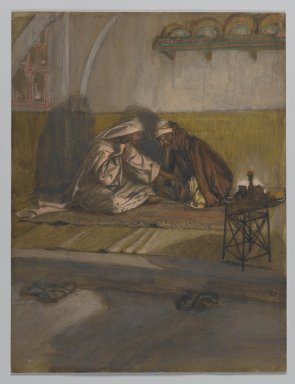 Jesus’ conversation with Nicodemus went to the very heart of the Mosaic law – how can one get right with God and enter God’s kingdom? Jesus’ answer brief and startling: “Unless one is born anew, he cannot see God.” The new birth which Jesus spoke about was not a physical birth but the beginning of a spiritual birth which is something completly new and radical, and from above, namely from God himself. Jesus said that rebirth was necessary to enter the kingdom of God. Nicodemus thought that to be born again, even spiritually, was impossible. He probably knew too well from experience that anyone who wants to be changed, can’t change himself. Jesus explained that this change could only come about through the work and action of the Holy Spirit. This rebirth in the Spirit is real and experiential, like the wind which can be heard and felt but no seen by the naked eye.
What does it mean to be reborn in the Spirit? The new birth Jesus speaks of is a spiritual birth to new life and relationship with God as his sons and daughters. This new birth is made possible when one is baptized into Christ and receives the gift of the Holy Spirit. God wants to renew all his people in the gift of new life in his Holy Spirit. This new life brings us into God’s kingdom and heavenly way of life. What is God’s kingdom? God’s kingdom is that society of men and women who acknowledge God as their Lord and who live according to his will, both on earth and in heaven (Matthew 6:10). To be reborn is to enter that society in which God is honored and obeyed, to live as his sons and daughters, and to enter into possession of that life which comes from God himself, a never-ending life of love, peace, joy, and freedom from sin and the fear of death. Do you know the joy and freedom of new life in Jesus Christ?
“Lord Jesus Christ, you offer us a new birth in the Holy Spirit. Renew in me the gift of faith and new life in your Holy Spirit. Help me to draw near to you and to believe in your life-giving word. May your kingdom come and may your will be done in my life today and always.”
for the full reflection visit : Daily Reading and Meditation
Tags: catholic, catholic podcast, catholic prayer, cathollc spirituality, don schwager, gospel of john, Nicodemus
This entry was posted on Monday, May 2nd, 2011 at 12:10 am
You can follow any responses to this entry through the RSS 2.0 feed.
“After this Jesus revealed himself again to the disciples by the Sea of Tibe’ri-as“
[powerpress feed=”daily-scripture”]
an excerpt from today’s reflection by Don Schwager:
Aren’t we like the apostles? We wont believe unless we can see with our own eyes. The gospels attest to the reality of the resurrection. Jesus goes to great lengths to assure his disciples that he is no mere ghost or illusion. He shows them the marks of his crucifixion and he explains how the scriptures foretold his death and rising. Jerome, an early church bible scholar, comments: “As he showed them real hands and a real side, he really ate with his disciples; really walked with Cleophas; conversed with men with a real tongue; really reclined at supper; with real hands took bread, blessed and broke it, and was offering it to them. ..Do not put the power of the Lord on the level with the tricks of magicians, so that he may appear to have been what he was not, and may be thought to have eaten without teeth, walked without feet, broken bread without hands, spoken without a tongue, and showed a side which had no ribs.” (From a letter to Pammachius against John of Jerusalem 34, 5th century)
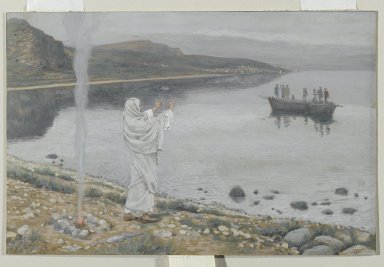 The centrality of the gospel is the cross; but fortunately it does not stop there. Through the cross Jesus defeated our enemies – death and Satan and won pardon for our sins. His cross is the door to heaven and the key to paradise. The way to glory is through the cross. When the disciples saw the risen Lord they disbelieved for joy! How can death lead to life, the cross to victory? Jesus shows us the way and he gives us the power to overcome sin and despair, and everything else that would stand in the way of his love and truth. Just as the first disciples were commissioned to bring the good news of salvation to all the nations, so, we, too, are called to be witnesses of the resurrection of Jesus Christ to all who live on the face of the earth. Do you witness the joy of the gospel to those around you?
“Lord Jesus, open our minds to understand the scriptures that we may fully comprehend the truth of your word. Anoint us with your power and give us boldness to proclaim the gospel in word and deed.”
for the full reflection visit : Daily Reading and Meditation
Tags: catholic, catholic podcast, catholic prayer, cathollc spirituality, don schwager, gospel of john
This entry was posted on Friday, April 29th, 2011 at 12:04 am
You can follow any responses to this entry through the RSS 2.0 feed.